Bottoms looks to put healthcare access at center of governor’s race
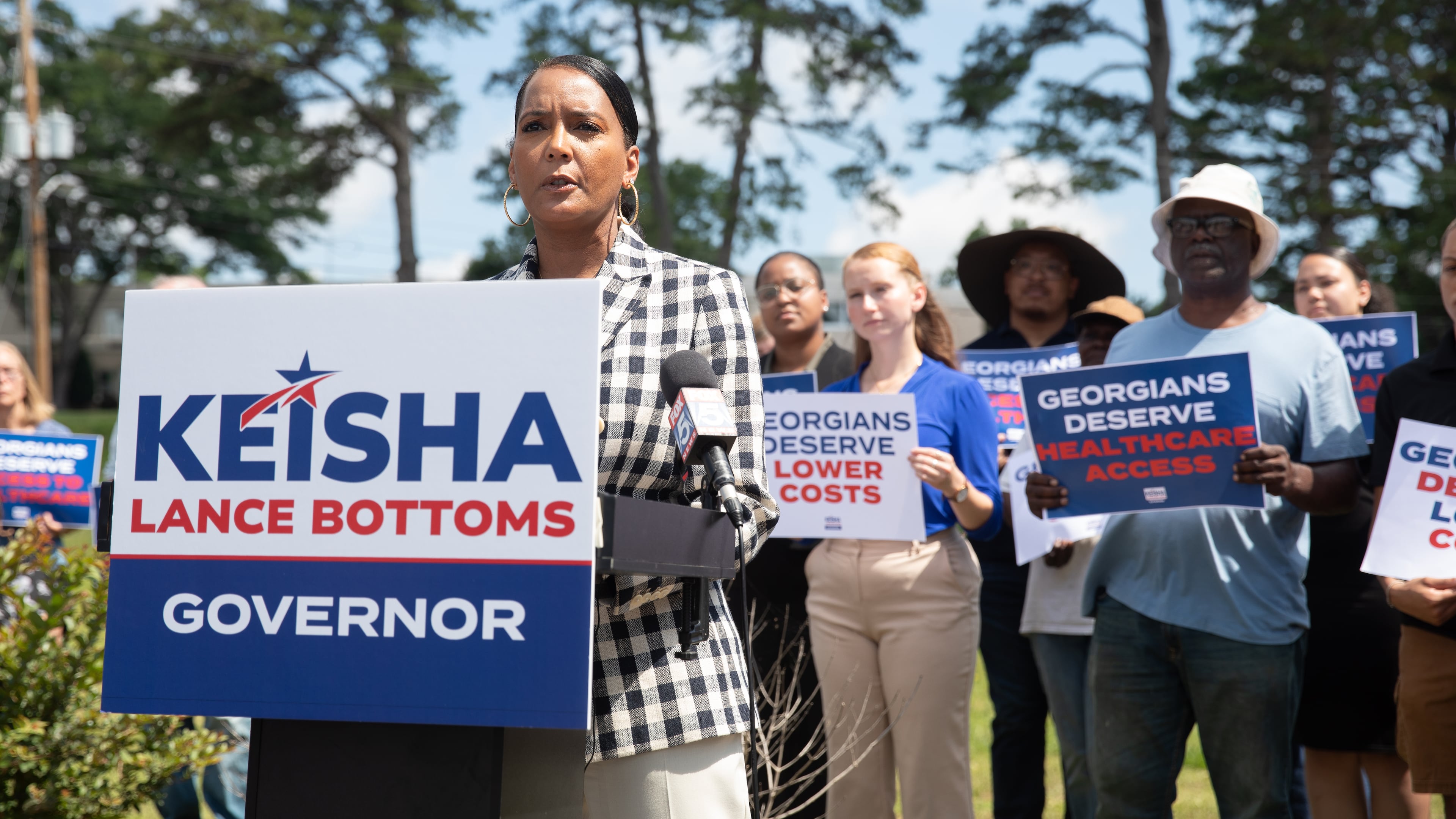
COMMERCE — The day after the primary runoff cemented her Republican opponent for November, Democratic nominee for governor Keisha Lance Bottoms launched her general election campaign outside the shuttered hospital, making Georgia’s rural healthcare access woes her opening line of attack.
“It’s the difference between life and death for so many people — when you can’t get to a hospital, when you can access medical care, when you can’t see a doctor when you’re in need,” she said outside the Northridge Medical Center, an acute care hospital about 20 miles north of Athens, which closed its doors during the COVID-19 pandemic.
It is a familiar scene. Four years ago, Democratic gubernatorial hopeful Stacey Abrams launched a statewide tour for her bid outside another closed hospital, the Southwest Georgia Regional Medical Center, 220 miles southwest in Cuthbert.
Georgia’s rural healthcare crisis has historically been a top issue for Democrats looking to flip the governor’s seat for the first time since 1998. But Bottoms may have more leverage on the issue than others did before her.
More than 350,000 residents lost coverage when the Affordable Care Act’s enhanced federal subsidies expired at the end of last year, and premiums soared for those who were able to hold onto their plans.
“It’s a dire situation that is touching every community,” she said, citing not only increased medical bills but the high cost of everyday living. “And I believe it’s going to be one of our No. 1 issues on the ballot in November.”
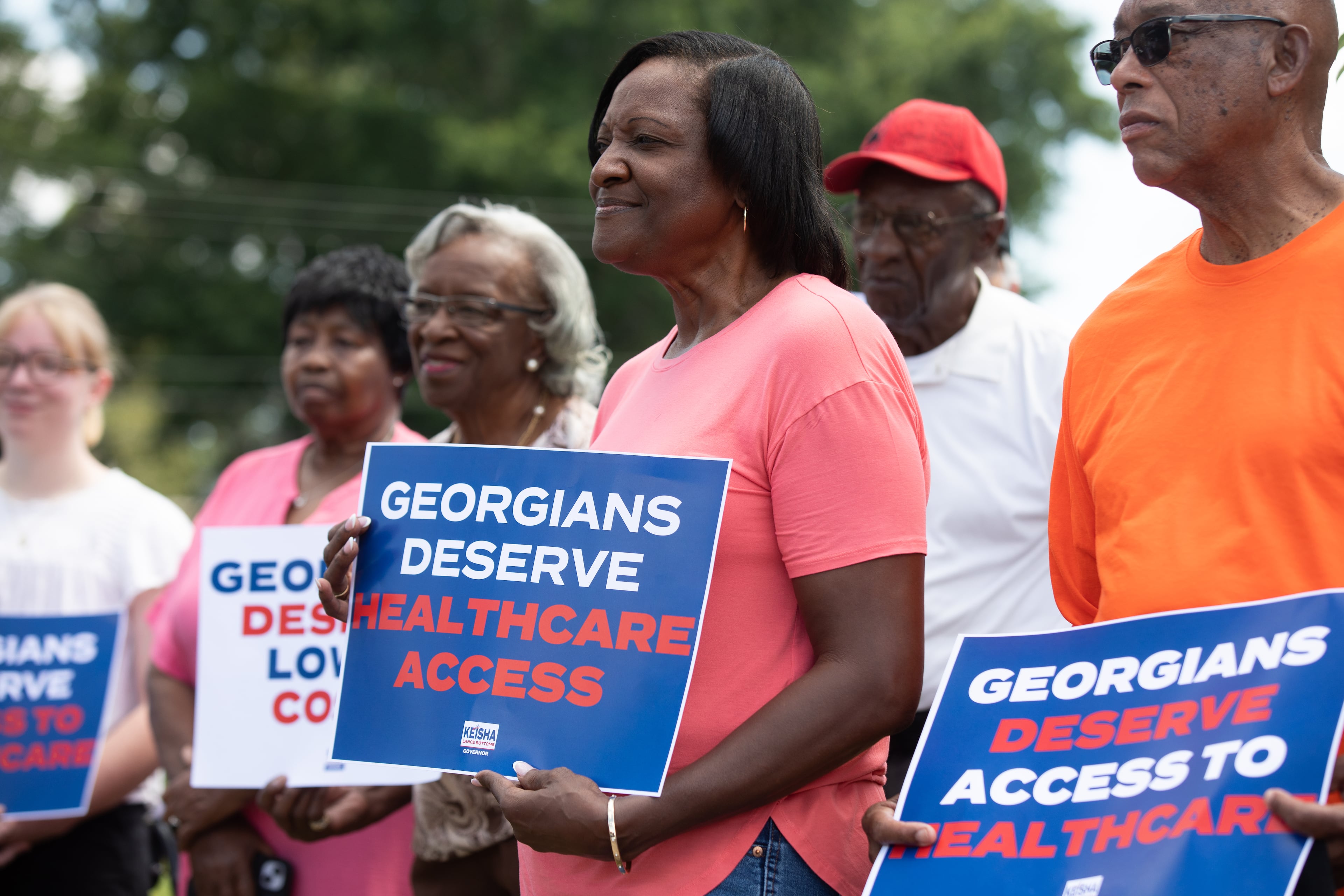
Bottoms is eyeing the opportunity to frame the healthcare debate and picked the backdrop of the vacant North Georgia hospital to launch her first jabs at Republican gubernatorial nominee Rick Jackson, a wealthy healthcare executive.
“This is a man who has made more than a billion dollars from the state in healthcare but doesn’t want to expand Medicaid,” Bottoms said on Wednesday.
Earlier this year, Jackson promised to “unwind” his company’s contracts with the state if he is elected. Onstage after his runoff win, Jackson pitched his healthcare background in a different light.
“I’m the only candidate in this race who actually understands healthcare costs,” he said. “I‘ve spent my life in it — I know where the costs are, I know where the wastes are, I know how the system works, and I know how it fails families.”

Bottoms joins a long line of Democratic candidates who have called on state lawmakers to expand Medicaid. She also promises to scrap Gov. Brian Kemp’s Georgia Pathways program, put into place in 2023 as the Republican’s answer to Medicaid expansion.
According to the Georgia Hospital Association, 18 hospitals have closed since 2013 — a bulk of them in rural communities where Republicans have relied on residents to outvote urban Democratic strongholds. Those that haven’t closed have had to tighten their budgets to brace for the financial impact of the expired subsidies.
Voters left without a nearby hospital — like those in Commerce, where the closest emergency room is now a 30-minute drive away in Athens — say the lack of care is crippling communities.
“It’s bad,” said Douglas Norwood, a 67-year-old who lives in nearby Jefferson. “We need someone (in office) who can help us rebuild and get back on the right track.”