Atlantan Rodney Mims Cook is Trump’s man for remaking the White House

Rodney Mims Cook, Jr. has long been known in Atlanta as a classical architecture advocate, developer and the son of Rodney Mims Cook, Sr., the alderman and Republican state lawmaker who became an instrumental white leader in Atlanta’s Civil Rights movement.
After steering multiple monuments and parks to completion in Atlanta, including the new Rodney Cook, Sr. Park in Vine City, the younger Cook made national headlines recently when President Donald Trump tapped him to become the chairman of the U.S. Commission of Fine Arts.
The seemingly low-profile role has been anything but since the commission voted last week to approve the design of a three-story, 90,000 square foot addition to the East side of the White House, which will primarily house the massive new ballroom that Trump has long wanted. (The commission had no role in the East Wing demolition that made it possible.)
“We should not be entertaining the world in tents,” Cook said of the existing White House protocol to erect a large tent on the South Lawn for state dinners with more than about 250 guests. “There are also security issues with entertaining foreign leaders in tents, much less our own leaders.”
Contrary to media reports that the commission essentially rubber-stamped Trump’s ballroom plans, Cook said he went to each commissioner’s home ahead of the meeting to discuss the structure. They also convinced the president to reduce its size from his even larger initial vision.

“We asked him to compromise on the ballroom wing and he did,” Cook said.
Once built into the property and surrounded by landscaping, Cook predicts it will appear softer and smaller than people may expect.
“The top does not go higher than the residence and, from the North Lawn, it looks absolutely proportionate and beautiful,” he said.
Atlanta roots
Cook himself has the kind of erudite, formal demeanor you’d expect from a historian or professor. After growing up in Buckhead, he skipped architecture school and studied engineering at Washington and Lee University instead on the advice of renowned Georgia architect Philip Shutze.
“Mr. Shutze asked me, ‘What is it you really want to do?’ I told him I wanted to design beautiful houses,” Cook said. With modernist architecture prevailing at the time, Shutze warned Cook that he would be “a voice in the wilderness.”
Cook went on to start an Atlanta-based architecture firm and “blow the horn of classical revival.” Through a friendship with the now-King of England, he also became a founding trustee of the Prince of Wales’ Institute of Architecture and eventually founded the Atlanta-based National Monuments Foundation and the enormous Arc de Triomphe-inspired Millennium Gate Museum in Midtown Atlanta, where he approved the ballroom design on a Zoom call from his office.
Trump connection
Cook met Trump briefly decades ago during family trips to Palm Beach, but they never spoke directly when the president first appointed him to the Fine Arts Commission in 2021. The Biden administration dismissed Cook the next year, he believes because of critical remarks he made about Biden at the dedication ceremony for a statue of Cook’s his longtime friend, former Atlanta Mayor Andrew Young.

“I think I said Biden was ‘galloping us into World War I all over again,’” Cook recalled. “(Biden) fired me the next day.”
Cook thought his role with the commission was over for good, until Trump called in 2025 to say he wanted to him to return as chairman.
“He said, ‘You need to return to the position that the Biden people stole from you.’”
Cook and the president spoke for four hours recently about updates to the White House bathrooms. Cook is also a member of the White House Historical Commission that approves interior changes for the residence.
“I was stunned at how much time he allowed for us,” Cook said. “He’s thoroughly knowledgeable of the residence and every single thing in every room.”
Although they have not spoken in detail about what is next for the White House exterior or the District of Columbia, Cook has a vision he’d suggest.
Just getting started
With the ballroom expanded to the East, Cook said a next step could be visually balancing the mansion with an addition to expand workspace in the West Wing.
“We’re a big, bustling nation,” he said. “Our seat of government needs to expand as the nation prospers, and the White House really hasn’t had much of that since Truman.”
In the District itself, Cook would recommend a moratorium for additional buildings on the ever-crowded National Mall, with a caveat.
“There is so much pressure on the Mall that I want to get the president’s permission to declare the Mall really finished, and see if we can extend the Mall (south) toward the harbor and make it just as important.”
Thinking even bigger, Cook said Pierre L’Enfant’s original vision of the capital had three “gateways” to the city that were never fully realized and could be done now to make Washington even more beautiful.
As for the Kennedy Center, which Cook is also now a board member of, he said he “awaits the president’s instruction” about what the renovation there could or should look like.
Although Cook has had detractors among preservationists in the past, Todd Groce, the president of the nonpartisan Georgia Historical Society, said he considers Cook “a visionary.”
“He is someone who understands the connection between architecture and our vision of who we are and our aspirations for the future,” he said.
Cook has not been surprised about the immense pushback to the ballroom expansion. Objecting to something “seems to be the American thing now,” he said.

But if there is a president who would think as big, or even bigger, than Cook about a future Washington, it’s clearly Trump, a builder, who seems always to be looking for something to build up, tear down, rebuild or expand.
But the commission’s vision goes beyond the president who appointed its members, Cook said.
“We’re making decisions for not only the current day, but for future Americans, to take care of what this nation requires of our leaders.”
About the Author
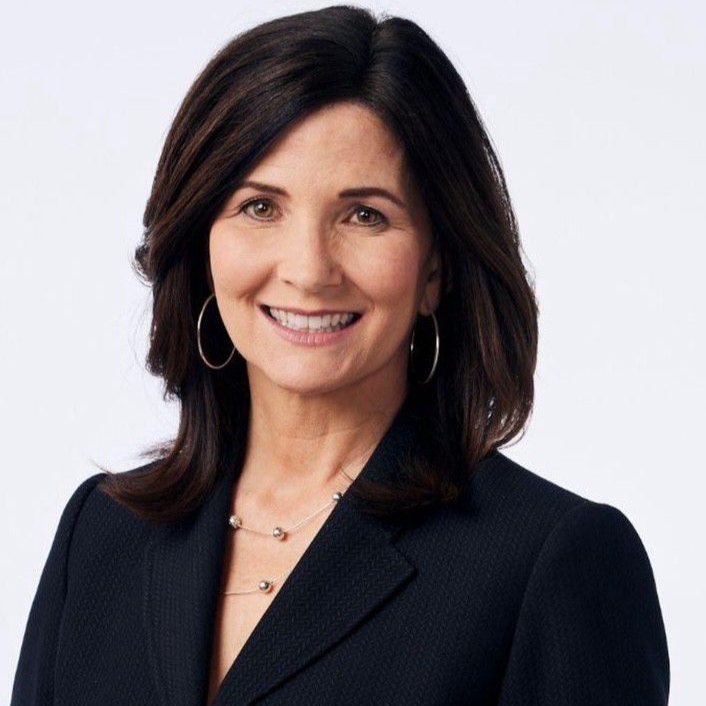
Patricia Murphy is the AJC's senior political columnist. She was previously a nationally syndicated columnist for CQ Roll Call, national political reporter for the Daily Beast and Politics Daily, and wrote for The Washington Post and Garden & Gun. She graduated from Vanderbilt and holds a master’s degree in journalism from Columbia University.


