Three savage attacks and a disturbed suspect make random crime hit home


Not all crimes are created equal.
It’s rare when a law-abiding citizen, who’s minding their own business in a very public place, is viciously attacked out of the blue by a stranger.
When it does happen, in the case of a woman stabbed to death on the Atlanta Beltline this month — and in two previous cases, involving a postal employee badly beaten outside work and another woman on MARTA — the public is rightfully disturbed.
Because they can see themselves as potential victims. That coulda been me.
The fear is not a calculus based on mathematical probability. But it doesn’t matter. Because that worry is a deep-seated, primitive emotion in the gut. And, however remote, it becomes real.
It’s like a bizarre reverse lottery. People play the Lotto in hope of hitting it big. They are buoyed by optimism when they hear of a stranger coming into untold riches.
Similarly, when something horrific hits home, they can place themselves in that nightmare.
Such is the case of Jahmare Brown, a 21-year-old homeless man accused of stabbing to death Alyssa Paige, a 23-year-old woman walking on the Beltline near the Ansley Golf Club.
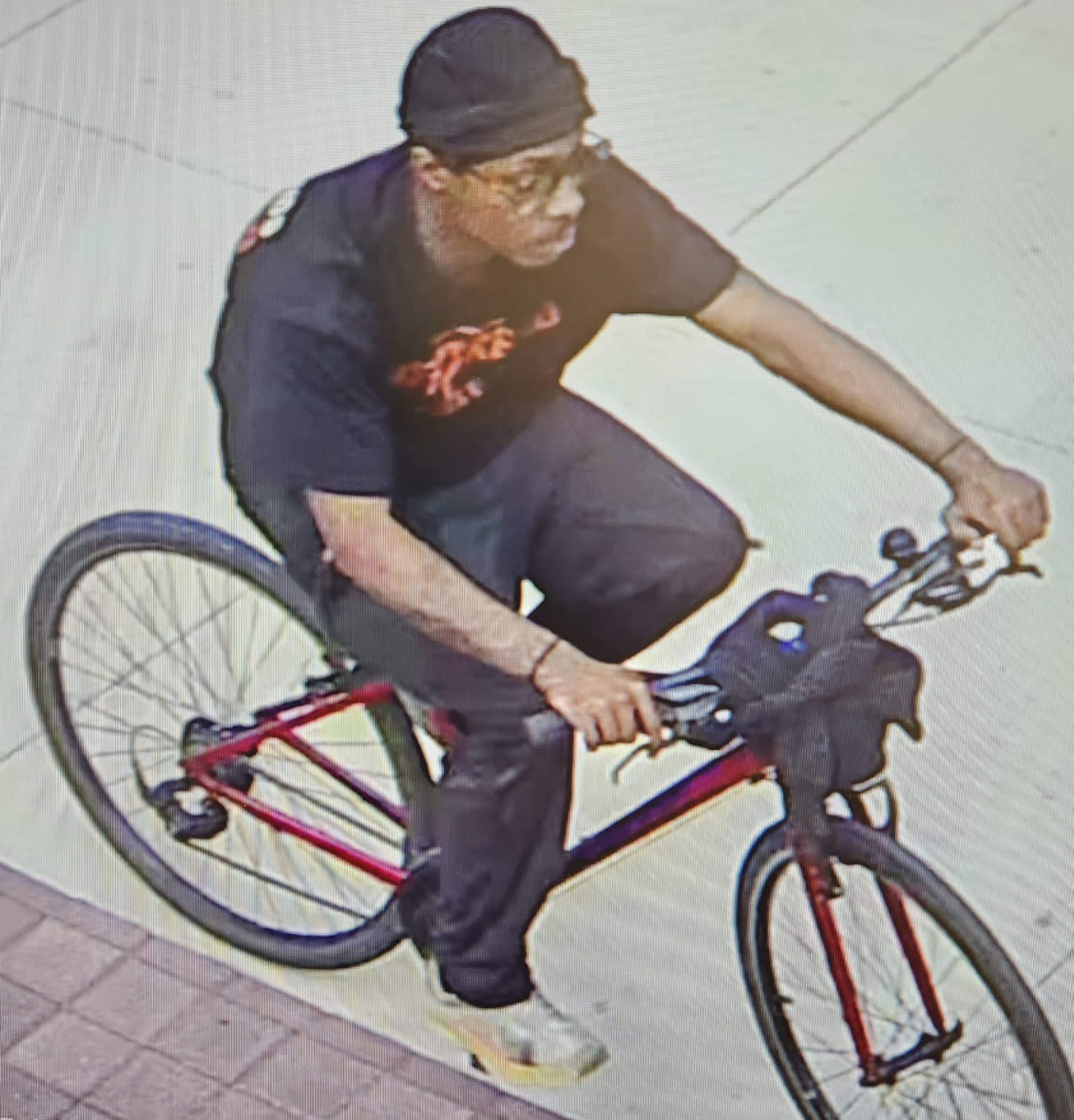
Minutes earlier and a half mile away, he allegedly smashed the head of a female postal worker with a rock outside her place of work. She survived. Then he escaped on a bike and was later captured near the Fox Theatre.
For more than a year, Brown has been a ticking time bomb, haunting Atlanta institutions and popular gathering places: Georgia State University, MARTA and allegedly outside a northeast Atlanta post office and on the Beltline.
He was riding his bike around the Georgia Tech campus the day before the killing, police said, presumably because he had been banned from Georgia State and MARTA.
Last year, he was arrested by GSU police and charged with loitering and disorderly conduct. A report said he acted in a “violent or tumultuous manner,” placing people in “reasonable fear of ... life, limb or health.”
Basically, he was one of many mentally disturbed people wandering downtown Atlanta. Most are harmless. A few are not.
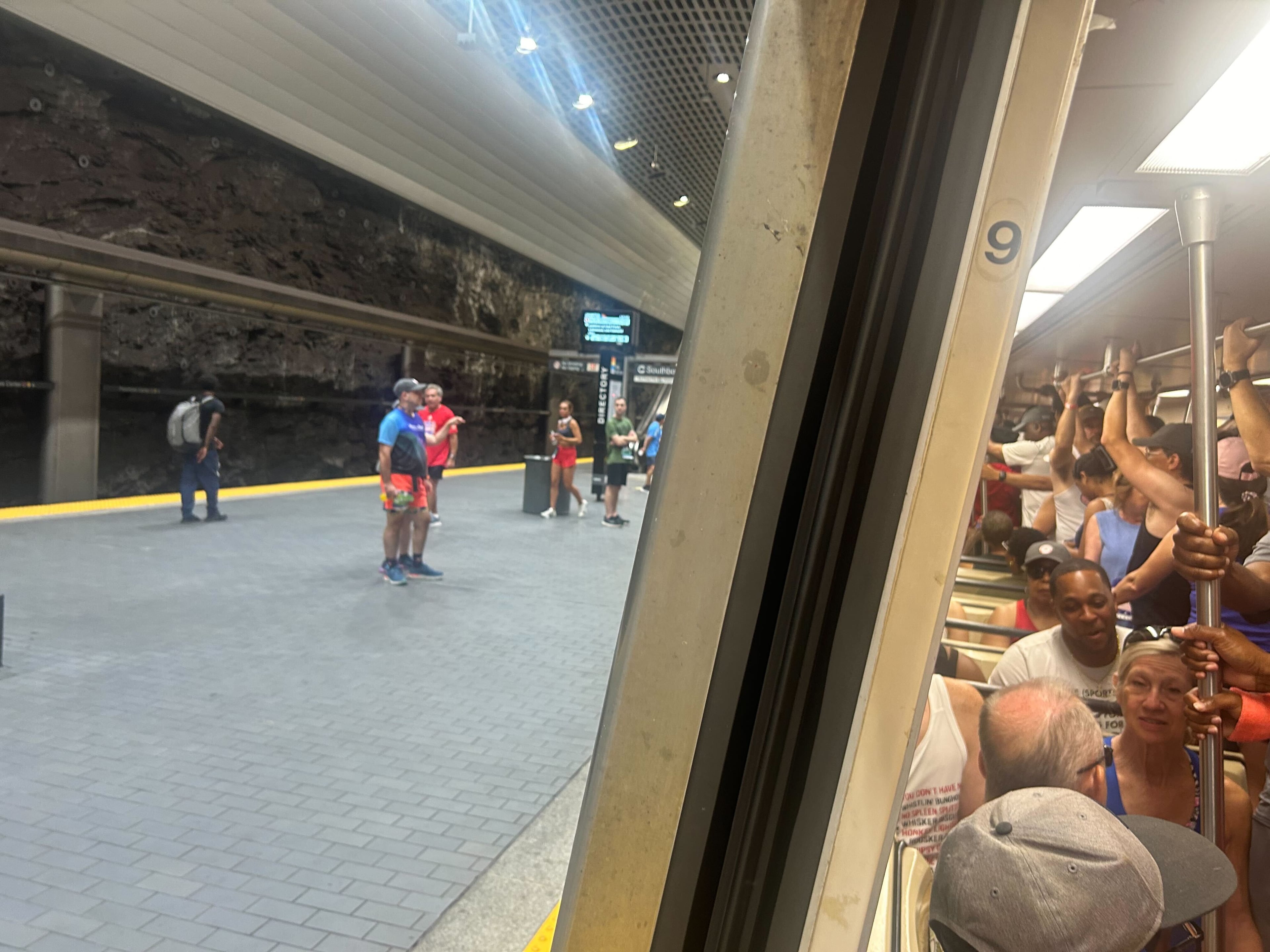
In January, he allegedly cold-cocked a young woman as she stepped off a MARTA train at the Peachtree Center station. The punch knocked her to the platform, and then, according to police, he battered her on the concrete floor. She bled profusely (25 stitches) and could not see from her right eye.
Brown, a small man standing 5 feet, 6 inches tall and weighing 135 pounds, was soon captured near Centennial Olympic Park. He was charged with misdemeanor battery.
Mind you, this was a man pounding a random woman senseless at rush hour at a train station. But it was deemed a misdemeanor.
The beating was so bad that Fulton County jailers would not initially take Brown because his hand was so swollen. One can wonder if this played into his later alleged attacks, when a rock and knife — not fists — were used as weapons.
Barely two weeks after the MARTA attack, Brown pleaded guilty and was sentenced to 120 days in jail. But he served only 60 and was back on the streets in late March. It is not known if he attended the violence reduction classes he was ordered to take.
Brown, getting released just two months after such a brutal attack, is an example of a case that slipped between MARTA police and the Fulton County solicitor’s office.
MARTA Police Chief Scott Kreher said the case was initially deemed a misdemeanor because police did not have medical reports to determine the extent of the victim’s injuries. He said detectives spoke with her at the hospital that night and contacted her the next day.
The initial report had a wrong phone number for the victim, he said, but it was later corrected. He added: “They had our number, we had theirs.”
Kreher said the woman’s father called police in mid-February to see what was going on with the case, and detectives were given the victim’s medical reports. She had a broken nose and a fractured orbital bone. Police went to a judge to upgrade to felony charges, he said, but found the case already had been pleaded out.

Fulton Solicitor General Keith Gammage said, “We received a (misdemeanor) battery charge and crafted a (plea deal) with the information we had.”
He added that a sentence of 120 days “in a tough jail,” along with a mental health evaluation, seemed like a “fair and balanced” resolution for a defendant with no other violent history.
Gammage said his prosecutors could not reach the victim to discuss the case (although two TV stations and the AJC did). He said prosecutors sometimes reach out to police officers in their cases but normally don’t.
“Some of these cases move pretty expeditiously,” he said. “It’s a fast-paced, under-resourced metro system.”
It’s a well-told story about the Fulton justice system: overworked cops and prosecutors, loads of cases coming before judges, a dangerous and crowded jail bursting at the seams. Cases often don’t get a second look.
“These cases are not only the greatest fears of a community but also the fear of judges and prosecutors — that something will get missed,” Gammage said.

And they do. Like here.
GSU professor Volkan Topalli, who studies crime and crime reduction, had seen Brown around campus randomly yelling at people.
The prof is not a lock-’em-up guy, but said, in Brown’s case, the random brutality of the MARTA attack should have been a “trigger” to the justice system. Charging the crime as a misdemeanor was “insane,” he said.
“That’s a perfect example that there should have been incapacitation,” Topalli said, whether it be a longer jail sentence or mental health treatment while being confined.
However, as the MARTA chief, the solicitor and the professor all told me, there’s lots of talk about needing more mental health treatment and not much action.
And so cases like this freak out the public.
Topalli’s wife, he said, knows she is not really at great risk walking the nearby Beltline. Still, she worries now.
It has to do with a victim who people “connect to their own identity coupled with a familiar sense of place,” he said.
“In Atlanta, the Beltline is a sacred safe space. It should be safe because it’s important to the city.”
But sometimes it’s neither safe nor sacred.