How the Democratic electorate’s natural tendency favored Keisha Lance Bottoms

My takeaway from election night: never underestimate Keisha Lance Bottoms. I started this column with a more conventional assessment that the Democratic primary electorate is 60% female, over half Black – and votes accordingly.
But then I saw The Atlanta Journal-Constitution’s map of the City of Atlanta precincts that Bottoms won compared to second-place finisher Jason Esteves. What is interesting is how similar this map was to the time when she won the Atlanta mayor’s race in 2017 – yet another instance where she was discounted and underestimated.
Both times, Bottoms swept the south Atlanta precincts, the gritty neighborhoods of Black working-class families who face a hardness to life that is quite alien to the middle and upper middle-class families east and north of the city – and by extension in the swing voters of the northern suburbs.
But that story is quite similar to the gritty life of white working-class families in rural Georgia and in the small to mid-sized cities across the state.
And in that is an interesting potential strength if she can capitalize on it.
Candidates often underestimate what it takes to win statewide

My baseline assessment of the Democratic primary results is pretty conventional.
Just to explain the basics: The challenge for most candidates is that they don’t have a well-defined brand or name recognition and so most voters have no idea who he or she is.
Voters then decide based on heuristics or “rules of thumb” that reflect an underlying preference for certain characteristics.
The heuristics are extremely predictable in a Democratic primary:
- all things equal, a female candidate will beat a male candidate,
- a candidate that can signal that he or she is Black is more likely to beat a candidate who is white, and
- voters also usually favor the candidate with the “I” (for incumbent) next to their name.
I have now seen this pattern so many times in Georgia over the past decade that I can almost go down the ballot and tell you exactly who will win each election.
If you look down the election night results for the Democratic primary, with a few interesting exceptions, you will generally see the pattern: female over male, Black over non-Black (to the extent that voters can discern this difference) and incumbent over non-incumbent.
I would note that the preference for Black candidates includes many non-Black Democratic voters – so it is not just the Black community voting for one of their own.
None of this is immutable, it’s just a strong preference or tendency in the electorate, but if a man or even more challenging, a white man, wants to win, it does require significant effort, including serious fundraising and smart campaigning to overcome.
My first-glance assessment of the Democratic governor’s primary is not that Keisha Lance Bottoms ran a particularly strong campaign, but that her male rivals – Jason Esteves, Michael Thurmond, and Geoff Duncan simply didn’t put up campaigns of sufficient strength and skill to overcome the natural tendency of the Democratic electorate.
Candidates frequently underestimate what is required to run a strong statewide campaign that gets a campaign message in front of voters.
To give a sense of scale, in my first beleaguered five-way primary and runoff in the 7th Congressional District, I managed to scrape up around $800,000. My main competitor was a businessman who put in over $1 million.
I had zero name recognition and of course, I’m white, but I was able to take advantage of the propensity of the Democratic electorate to support women and get in front of enough voters to eke out a win, but it was very tough.
This should give a sense of the scale required to have an impact – and this was just one congressional district out of 14 in the state of Georgia. A comparable number for a statewide race would be around $14 million.
Will Bottoms be able to do what Abrams and Harris couldn’t?
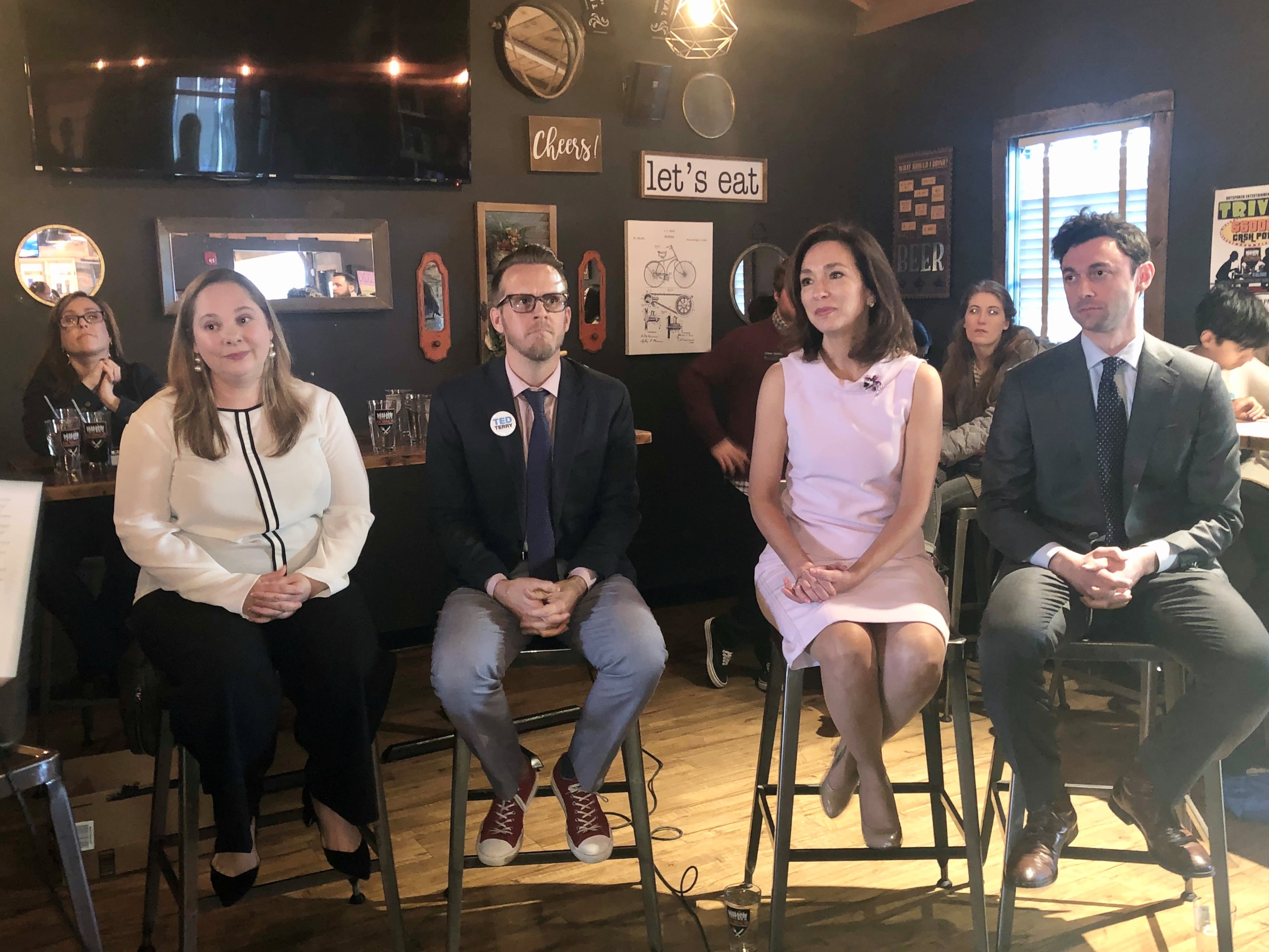
You can also compare to Jon Ossoff’s 2020 Senate race where he had the advantage of sky high name recognition coming out of the nationalized fight for Georgia’s 6th Congressional District in 2017.
He went up against two white women — so he did have to overcome some propensity of the electorate issues — but he raised over $4 million compared to former Columbus Mayor Teresa Tomlinson’s $2.5 million and went in with critical support from noted Black leaders like the late Congressman John Lewis, D-District 5.
By contrast in the recent governor’s race, Jason Esteves raised the most at around $2.8 million and that was enough to move him firmly into second place but not enough to overcome the natural propensity of the electorate. No other candidate even came close to this fundraising level, including Bottoms – but she had the significant advantage of high name recognition and was the only major woman in the race.
The conventional assessment of the general election is pretty straight forward as well. Bottoms faces some real challenges: she is going to have to defend the chaos of the George Floyd protest movement in the City of Atlanta and the skyrocketing crime that happened on her watch as mayor — no matter that these were national wave events, where she was swept along in the path to manage as best she could.
She is going to have to convince people that a Black woman can win after two-time gubernatorial nominee Stacey Abrams in 2018 and 2022 and presidential nominee Kamala Harris in 2024 failed to carry the state. She is going to have to show that she can put together a serious campaign, with an ability to raise money, much better than she did in the primary.

But I have seen her on the campaign trail and met her. She does not come empty-handed. She is an excellent speaker and a strong retail politician. She does not have the coastal elite patina that Harris had. She is a “girl named Keisha made good,” who has been through some things, who has made some mistakes, and yet gets up every morning, puts on her makeup and sets her feet firmly and with faith on the path ahead. And what strikes me is that there is the potential for a Black version of a younger Joe Biden and his “Scranton Joe” appeal.
Could she be the one to draw the line that Democrats have so often wanted to draw between the Black and white working class? Maybe. The economic chaos of Trump is going to open a political window, and one way or another, she will be up against a very rich white guy (Lt. Gov. Burt Jones or Rick Jackson) in a time when people, across the political spectrum, are sick of the corrupt, wealthy elites.
It would be a ballsy move – but everyone has underestimated her before.
Carolyn Bourdeaux is a former Democratic member of Congress from Georgia’s 7th District. She is a contributor to the AJC.
Send letters to the editor of 250 words or fewer with your name, city or town and contact information to letters@ajc.com.