Georgia’s data center boom requires a strategy, not just hoping for the best

In Georgia, data centers are becoming as common as peach orchards. What was once obscure digital infrastructure has turned into one of the state’s most consequential public debates — drawing residents to town halls, lawmakers to the Capitol and communities to the polls.
This growth isn’t just a tech story anymore; it’s a story about power, water, land use and household costs.
We’re not outsiders. As Georgia Tech researchers studying data centers and sustainable computing, we train the engineers designing these systems — and we believe AI and cloud computing have real promise.
But the impacts of data centers are immediate and local. Without proactive, evidence-based oversight, Georgia risks repeating mistakes seen in other states: locking in expensive grid expansions, stressing water systems and shifting long-term costs onto residents.
That risk is no longer theoretical. Georgia Power, with Public Service Commission approval, is planning roughly $16 billion in new generation — around 10 gigawatts, largely for future data centers.
That’s more than double the output of the Vogtle nuclear plant, raising the risk of overbuilding for demand that may not materialize.
AI has changed the grid — fast
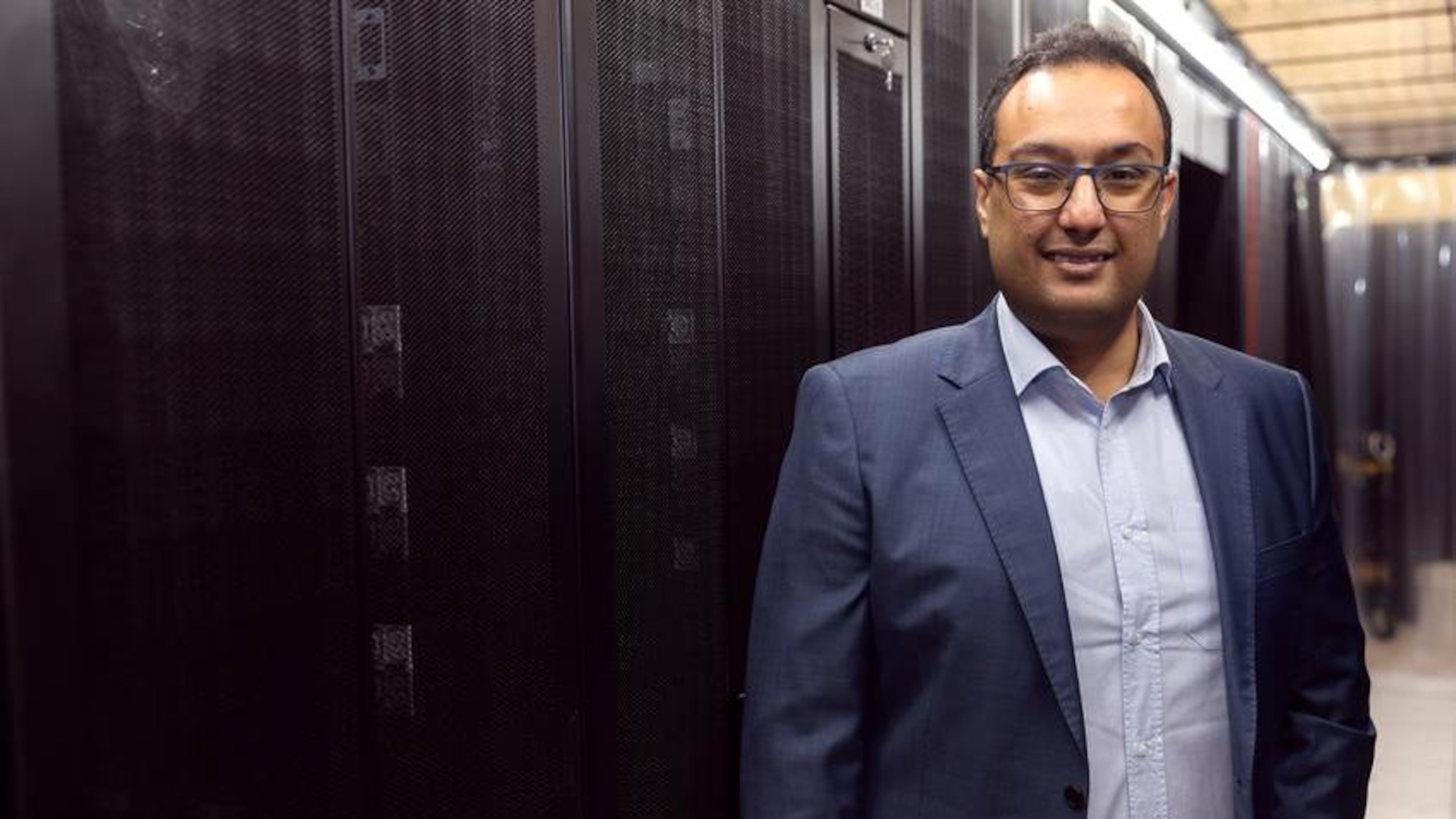
Data centers today are fundamentally different from those of even five years ago. Generative AI workloads rely on specialized chips that draw hundreds of watts each, producing massive heat that requires energy and water-intensive cooling.
These facilities don’t just use more power; they use it in new, volatile ways. Start an artificial intelligence training run and megawatts appear instantly. When it ends, they disappear just as fast.
That volatility complicates grid planning, pricing and reliability — especially during extreme weather or peak demand.
Even as operators improve efficiency, demand continues to rise. When systems become more efficient and cheaper, total consumption often increases. In computing, “better” doesn’t mean less power — it often means a lot more computing everywhere.
Water adds another layer of risk.
Many large data centers rely on evaporative cooling, consuming millions of gallons annually, especially in hot climates like Georgia’s. While new cooling technologies promise improvements, most are costly, energy-intensive or not yet proven at the scale AI requires.
“Build it and hope” is not a strategy

Much of today’s data center expansion rests on speculation that AI demand will keep growing indefinitely and that communities will benefit enough to justify the tradeoffs.
But recent analysis from the Southern Environmental Law Center suggests utilities are assuming unusually optimistic growth scenarios, creating a real risk that ratepayers, not developers, will absorb the costs if demand falls short.
In response to growing concerns, developers often point to future solutions: small modular nuclear reactors, advanced cooling or water-positive designs.
But none of these ideas are widely deployed or guaranteed in the timeframes needed. Future promises should not excuse present-day impacts.
Five solutions to make AI landscape fair
Data centers bring investment and construction jobs. But once operational, they employ relatively few people, as facilities are largely automated.
Tax revenue can be meaningful unless long-term abatements and infrastructure subsidies erode it.
If Georgia wants to remain an AI and cloud hub, growth must be legible, fair and locally beneficial. That requires clear rules now, not after costs are locked in.
In summary, that means:
- Transparency by default on electricity demand, load volatility, backup generation and water use
- Fair cost allocation, so households aren’t left paying for infrastructure built primarily for large new loads
- Real grid-responsibility requirements, including enforceable demand response and curtailment
- Trustworthy water accounting, grounded in local conditions, not marketing claims
- Stronger siting and community protections for land use, noise and light pollution
This isn’t anti-innovation; it’s pro-engineering — the same discipline we teach our students.
We don’t deploy complex systems by assuming best-case scenarios. We plan, test and design for failure.
Georgia deserves that same rigor when deciding how — and how fast — to build the infrastructure shaping its future.
Ahmed Saeed is an assistant professor in Georgia Tech’s School of Computer Science whose research focuses on the theory, design, and implementation of scalable computer networks and data‑center systems. Josiah Hester is an associate professor at Georgia Tech who researches sustainable and intermittent computing, including battery‑free systems, large‑scale sensing and energy‑efficient computing infrastructure.