It doesn’t add up. Georgia’s budget outlook is in trouble in the Trump Era.
I was elected in 2024 at 23 years old, becoming then the youngest person voted into the Georgia General Assembly.
My campaign focused on strengthening public education, expanding access to high-quality health care, including community-based care, and investing in small businesses and opportunity zones in economically disadvantaged communities.
Across each priority, I could point to practical changes we could make through one tool that touches every corner of life in our state: the budget.
As an economics major at Morehouse College who specialized in policy research, studying federal, state, and local budgets was my bread and butter.
That background made the work feel almost intuitive. The budget is our one constitutional obligation as a state legislature, and it is the responsibility I take most seriously because I have seen how responsible, community-driven investment can change outcomes for families and neighborhoods.
The budget is a moral document. It is a statement of values that tells the truth about what we choose to prioritize, and what we choose to leave behind. Policies come and go, but the investments we make reverberate across generations.
When I was elected, I was determined to advocate for District 56, a district that includes one of the poorest neighborhoods in the state alongside parts of one of the wealthiest.
The challenge was that I was elected on the same ballot as President Donald Trump.
Residents may lose access to food and health access
Since taking office, Donald Trump and his Republican allies have pushed targeted cuts that threaten decades of progress. H.R. 1, commonly known as the “Big Beautiful Bill Act,” has been framed as an economic plan, but it operates like a transfer of power and stability away from working people and toward the wealthy.

Even the official summary makes clear that it reduces taxes while reshaping spending across major federal programs. The result is deeper uncertainty for states like Georgia that depend on federal partnership to support health care, food assistance, education, and basic stability.
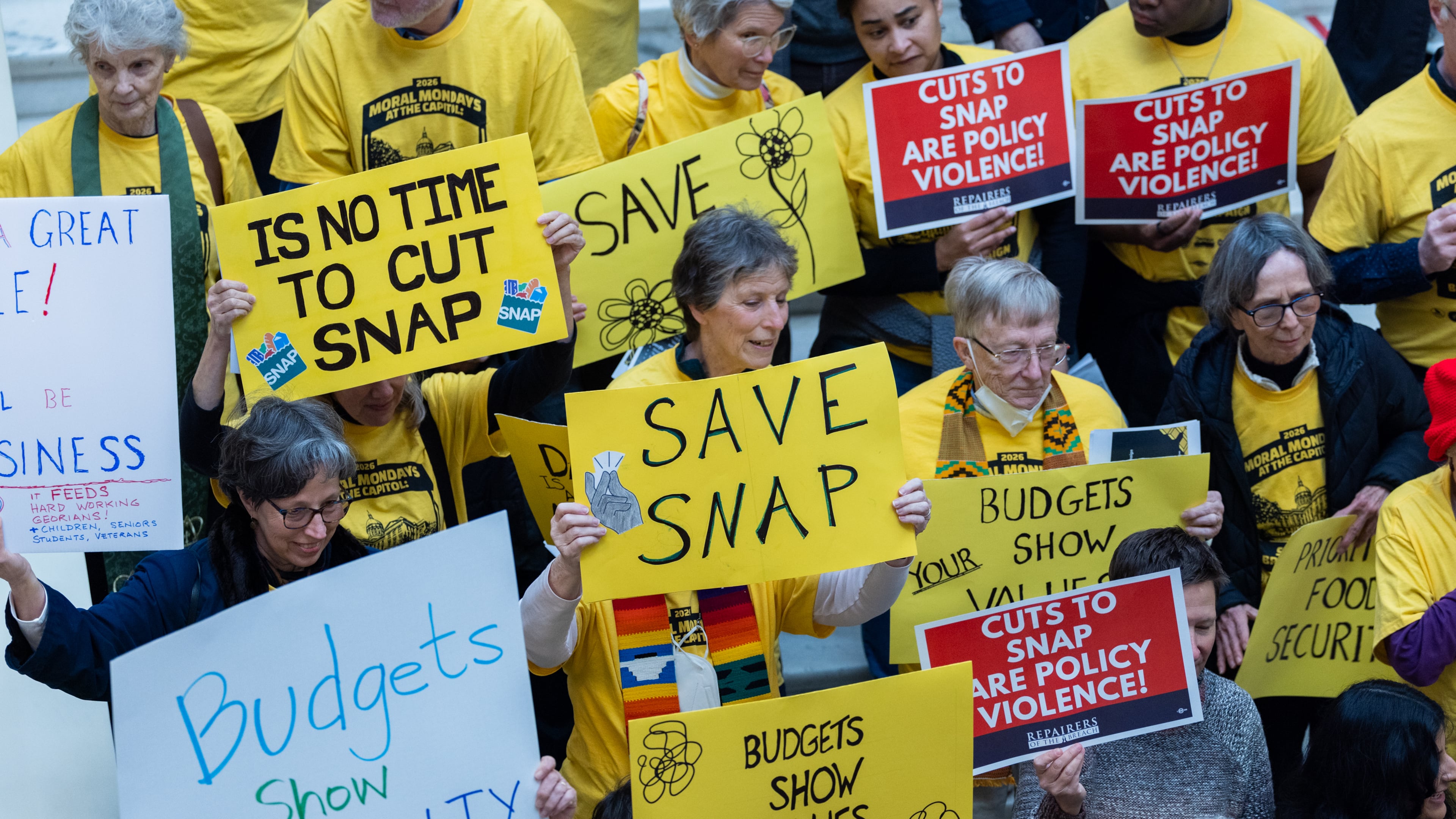
In Georgia, the stakes are not abstract. Supplemental Nutrition Assistance Program (SNAP) serves about one in eight Georgians, meaning families in every county rely on food assistance to make it through the month (AJC reporting).
And nearly one in five Georgians gets health coverage through Medicaid, including seniors, children, people with disabilities, and working families who are doing everything right but still cannot afford the cost of care (Georgia Health Initiative).
These are not niche programs. They are lifelines. When federal leaders choose cuts and instability, states are forced into impossible choices. They raise costs on working people, reduce services, and pretend the problem does not exist until it becomes a full-blown crisis.
Georgia’s state budget is already deeply intertwined with federal dollars. That is why it is so frustrating to hear state House Republicans brag about being “No. 1 state for business,” celebrate tax cuts, and pat themselves on the back for maintaining a surplus while refusing to grapple with the damage caused by the federal agenda they defend, excuse, and ignore.
You cannot separate state leadership from a president whose budget decisions they avoid confronting.
Ga. leaders shouldn’t just talk about affordability
In January, lawmakers held what is known as Budget Week, a deep dive into appropriations for the next fiscal year. Even when pressed, appropriators would not answer a basic question: What happens when these federal cuts hit?
How will we sustain the programs everyday Georgians rely on to survive? How will we continue our vague promises around affordability when those promises remain undefined? What is our role as state legislators when the federal government steps away?
The answer was silence.
Republicans are acting like this is all a ruse. But it is real. We cannot pretend that the money we have today will be the money we have tomorrow. Donald Trump’s unpredictability has plunged states into deep uncertainty, yet no one in the majority seems willing to tell the truth about what comes next.
Some seek his favor in pursuit of higher office. Others fear a primary challenge from extremists who demand loyalty to Trump over responsibility to Georgians.
I’m calling on Georgians from every background to ask their legislators simple questions: What are you doing to protect me and my family? Will this budget lower health care costs? Will it reduce the cost of energy? Will it bring down child care expenses? If affordability is truly the mantra, then the budget must reflect it. We must make the investments today that prepare Georgia for tomorrow.
This is where state Republicans fall short. They cannot deliver affordability while staying tethered to an agenda that undermines it. Campaign slogans are not a substitute for tangible legislation. Georgia deserves leaders who are willing to face the numbers, tell the truth and fight for working families.
We must hold this legislature and the appropriators accountable, not for what they say, but for what they do. The solutions exist. The need is real. Now we must be bold enough to meet the moment.
State Rep. Bryce Berry, D-Atlanta (District 56), was elected in November 2024, as one of the first Gen-Z members of the Georgia General Assembly after defeating incumbent Mesha Mainor.