Changing a culture
The new leader of Atlanta Public Schools doesn’t prettify. Asked about the challenges in recruiting administrators to come to Atlanta, a system tarnished by a widespread cheating scandal, Erroll B. Davis said, “There are only so many ways to perfume a pig.”
That candor was on display at a recent interview with The Atlanta Journal-Constitution.
Despite a bruising battle over redistricting and a likely new tussle over his opposition to a charter high school in east Atlanta, Davis is confident that Atlanta schools are on the mend.
The scandal aside, Davis pointed out that the system had 600 applicants for 17 principal openings.
“And they are asking questions. They are aware of how the school board has functioned in the past. They are asking questions about the CRCT and they are asking questions about resources. We can only postulate what we want to get done, what we stand for, and do you want to join us on this journey?”
As chancellor of Georgia’s public colleges and universities for more than five years, Davis came to education after a long and successful career in corporate America where he rose to president and CEO. He is decisive, saying his top priority is creating a culture in Atlanta that targets outcomes.
In taking stock of APS, Davis found more than 200 reform initiatives under way with no monitoring of whether they were succeeding. APS signed on with lots of well-intentioned groups who came offering $2 million grants if only the district kicked in $500,000, he said.
“We never met an initiative we didn’t like,” he said. APS opened its doors to everyone who announced, “I am here and I want to help. We had 1,000 points of light and no outcomes.”
He cited a well-respected community group that told him it had spent $5 million in APS over the last two years. “We have no idea what outcome we got from them.”
“Excellence has to not be an aspiration or a goal. It has to be the standard,” he said.
And the standard has to be set by leadership, said Davis, who is committed to firing principals in schools where systematic cheating occurred.
“When principals say to me that, ‘The investigators’ report said I wasn’t involved; why am I being removed from the job?’ I say, ‘Absolutely, you did not cheat but you failed. I put the malleable lives of young children in your hands and you failed.’”
Davis said, “You can predict for risk and you should manage that risk. That is what a leader has to do. You have to manage the risk. You are accountable. You are responsible for everything that happens on your watch.”
That doesn’t mean that Davis doesn’t believe teachers aren’t accountable as well. But he wants Atlanta to invest more in talent development.
He intends to use one of the city’s closed schools to house a teacher excellence institute. “In education, there is too polite a tolerance of ineptitude,” he said.
“If you can’t do it, you can’t work here. It is really that simple. I want to pull problem teachers out of the classroom early. We are wasting the lives of children while adults play games.”
Atlanta waits too long to recognize ineffective teaching, he said, explaining, “Kids know it in two weeks, parents know it in about a month. It should take some steps to fire a teacher. It should take a lot of steps. But it doesn’t take a lot to pull them out of the classroom.”
He wants to provide help to struggling teachers, including “avatars” that will allow them to deal with virtual classrooms and have their classroom management skills appraised by dispassionate panels of experts.
But if teachers can’t improve, Davis said, they won’t work for APS.
“They will come to you and say, ‘This is an evil man.’ They may be right. My goal is to put effective teachers in the classroom and get ineffective teachers out.”
Recently, Davis had lunch with the APS 2012 valedictorians, some of whom are bound for Yale, Georgetown, the University of Georgia, Georgia Tech and Emory.
“I was just stunned by them. Each had to get up and speak. They are very impressive young people,” he said.
The valedictorians told Davis that Atlanta schools need more Advanced Placement and language classes and greater consistency in application of discipline. “They do not want disruptive students in the classrooms,” he said.
“More than one referred to rigor,” he said. “All of them felt they got a good education. All felt their teachers cared about them. It made me think we may be doing better than we think but still not in a systematic manner.”
About the Author
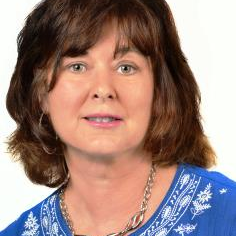
Maureen Downey has written editorials and opinion pieces about local, state and federal education policy since the 1990s.