UAE says FlyDubai co-pilot attacked captain with cockpit's crash axe
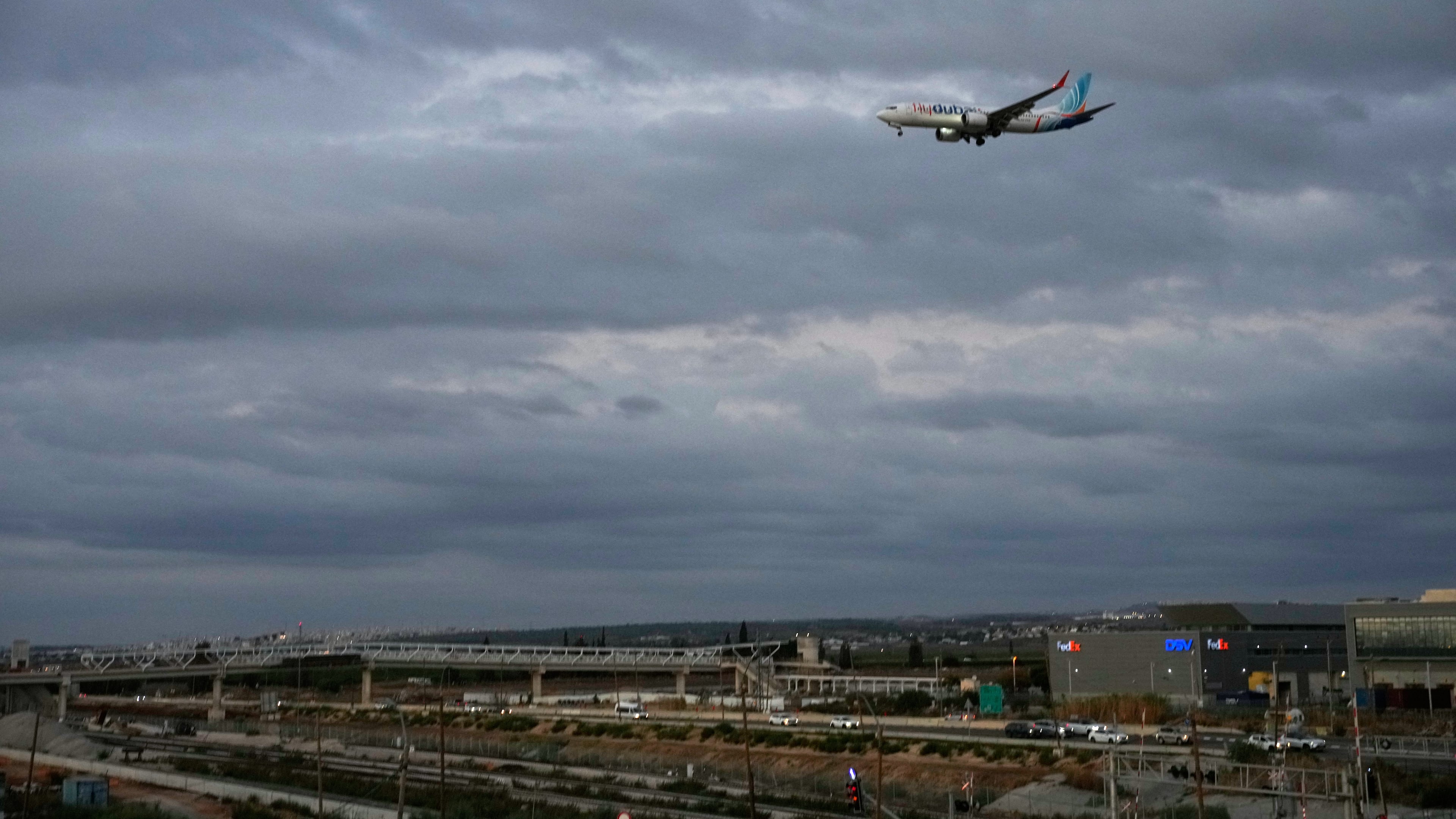
CAIRO (AP) — The co-pilot accused of attacking the captain of an Israel-bound FlyDubai flight before passengers and others tackled him is an Omani national named Hamam al-Hammami, three people with knowledge of the situation, including a Gulf and Western diplomat, said Saturday.
The United Arab Emirates, which is leading the investigation, said the co-pilot attacked with the cockpit’s crash axe and tried to take control of the plane in a “terrorist attack."
The people who identified the co-pilot spoke on condition of anonymity because they were not authorized to speak to the media. The Gulf diplomat said investigations are underway to establish whether he acted as a “lone wolf or has any connection with any extremist groups.”
The co-pilot, who officials said nearly crashed the sharply plummeting flight with 182 people aboard, was barred from flying by Oman over concerns he had adopted extremist views, a separate person familiar with the matter said.
The co-pilot was then hired by UAE-based airline FlyDubai, the person said, speaking on the condition of anonymity to discuss the ongoing investigation. It was not immediately clear to what extent the co-pilot was vetted when hired. Oman’s barring of him was first reported by The Wall Street Journal.
An official says the co-pilot was born in the UAE
How the co-pilot managed to be working in the cockpit on Wednesday morning is a central question for investigators. Israel says has it has agreements with foreign carriers to keep pilots from flying into the country if they are citizens of nations that don’t maintain diplomatic relations with it. Israel and Oman do not have formal diplomatic relations.
A FlyDubai spokesperson in an email said the airline could not comment beyond its official statements and acknowledged “there are many questions at this stage.” There was no immediate comment from Oman Air, and Oman’s government has said nothing publicly in response to repeated questions since the incident.
The co-pilot was born in the UAE and his mother is Syrian, according to another regional official with knowledge of the investigation. How he obtained Omani nationality was not immediately clear.
The official confirmed that the co-pilot worked with Oman’s national airline but was removed from flying because of concerns that he showed signs of extremist views. He was moved to an administrative job at Oman Air, the official said.
Security agencies from four regional countries were working to establish the co-pilot's motives, aided by the United States and other Western governments, the official said, speaking on condition of anonymity to discuss details of the investigation.
The incident is a test for the UAE government, which has earned a reputation for effective measures against extremist activities but has also bristled in the past over criticism of security lapses.
A social media account was deleted the day of the flight
Little else was immediately known about the co-pilot’s background. His Instagram account was active until the day of the flight and then deleted.
Israeli Prime Minister Benjamin Netanyahu on Friday said the co-pilot had undergone “Islamist radicalization,” but provided no evidence. There was no immediate comment Saturday from Israel's government.
The captain, who was badly wounded, has said he used his remaining energy while being attacked to unlock the cockpit door, allowing people who had noticed alarmingly unusual sounds to come in, tackle the co-pilot and stabilize the plane. It made an emergency landing in Saudi Arabia.
Both the captain and co-pilot were later taken to the UAE as it leads the investigation.
___
Mednick reported from Tel Aviv, Israel. AP Washington bureau chief Anna Johnson contributed to this report from Washington.