Vibrant, colorful wildflowers bedeck Georgia’s countryside in autumn
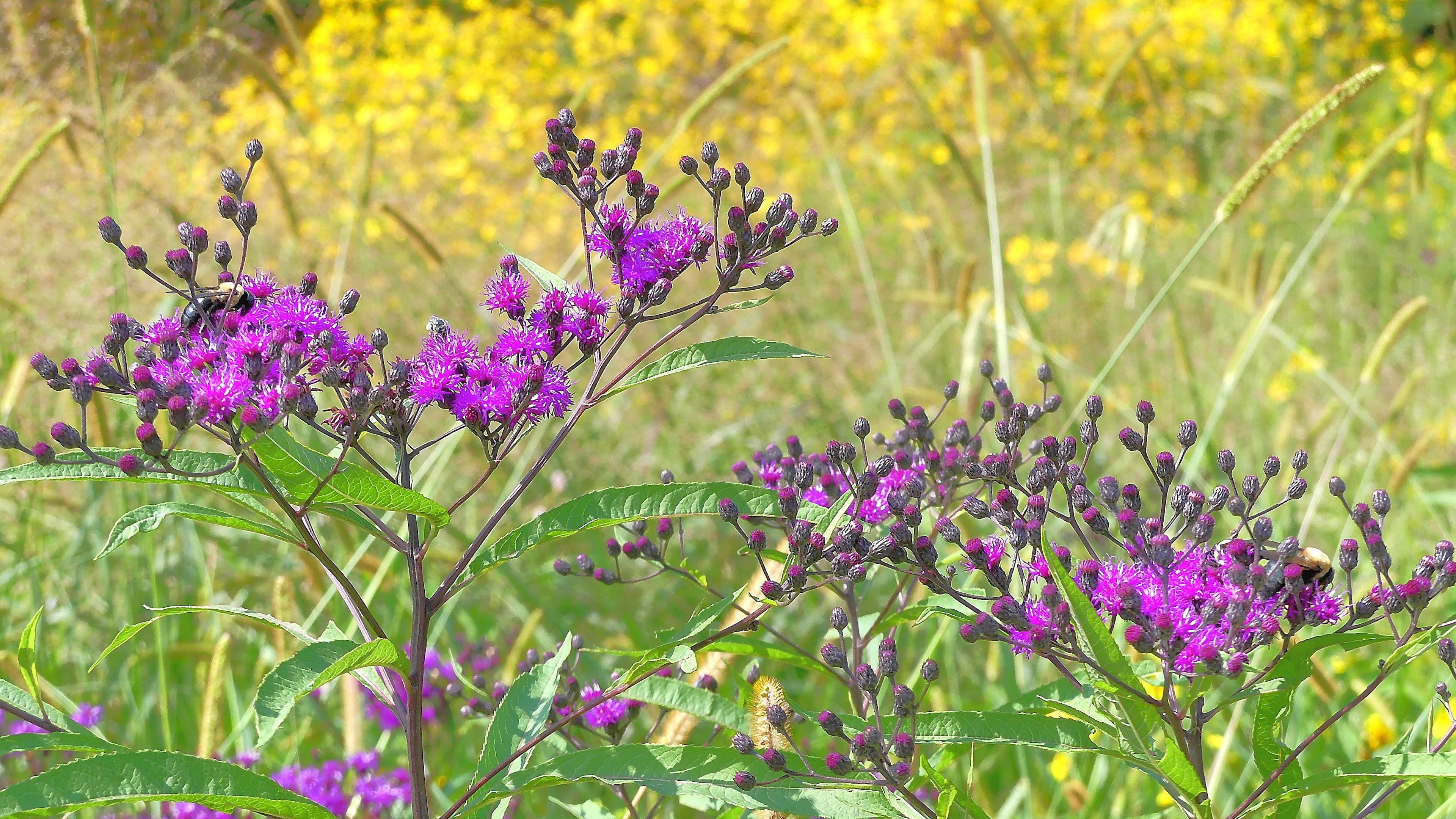
Every March, I eagerly anticipate the spring wildflowers that seem to burst from the ground and blanket forest floors, streamsides and mountain slopes with riots of color. Now, in early September, I am just as enthusiastic about the year’s second explosion of color — the vibrant wildflower blooms of late summer and early fall.
Many folks think of spring as the definitive wildflower season. However, Georgia’s wildflower surge in September certainly rivals — and sometimes surpasses — the soft pastels of spring.
Early spring brought delicate ephemerals like trilliums, bluebells and trout lilies to forest floors. September transforms open fields, roadsides and mountain meadows into bold, vivid landscapes of brilliant yellows, purples, reds, whites and other hues.
Goldenrods and asters take center stage
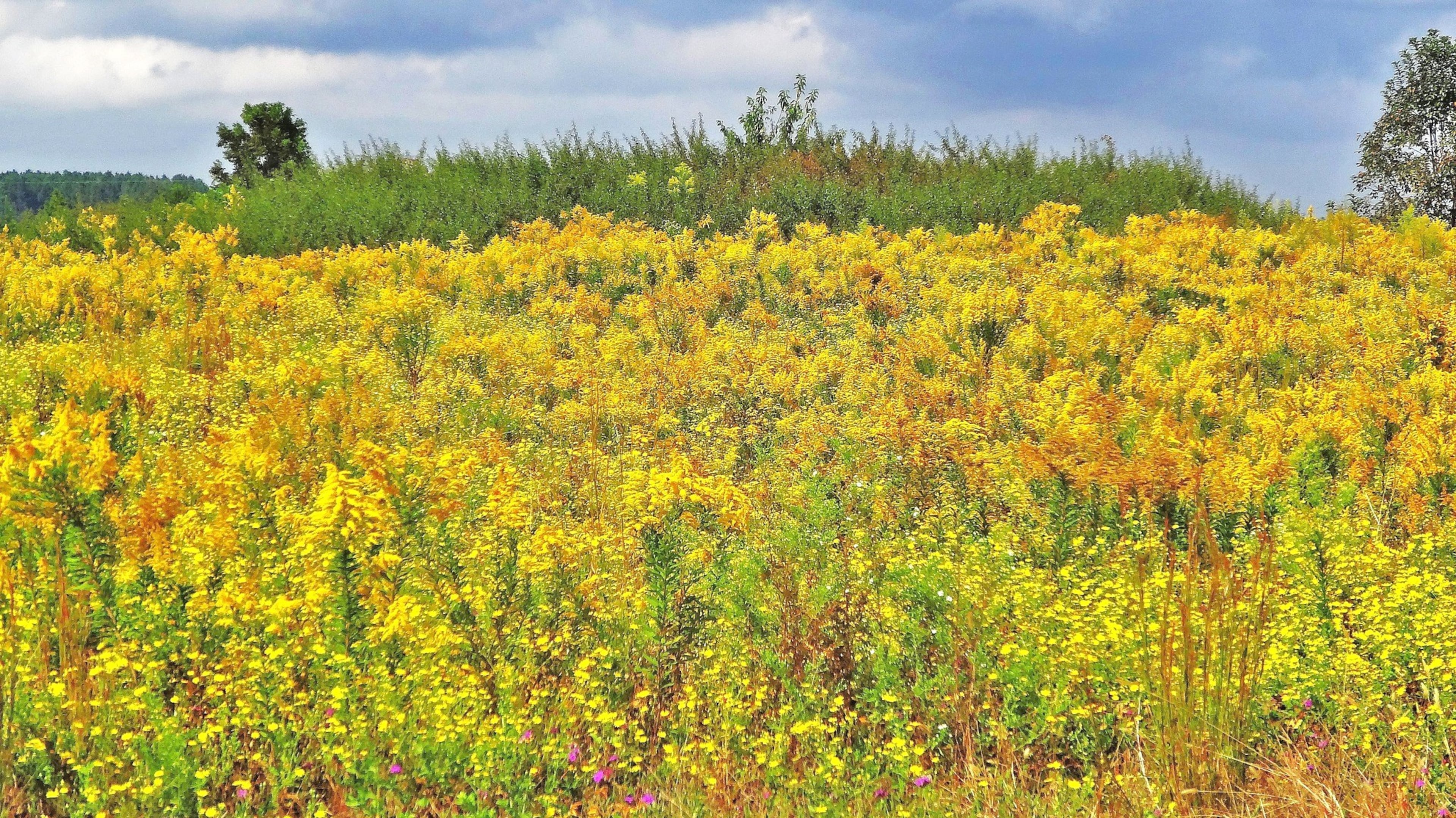
Undeniably, the stars of autumn’s wildflower extravaganza are the goldenrods and the asters. About 30 species of goldenrod and a like number of aster species are native to Georgia. Several species of the two groups often grow close together during autumn, creating splendid palettes of complementary colors along country lanes and in sunny fields across Georgia.
Goldenrods (Solidago) paint fields and roadsides with bright gold hues. Asters (Symphyotrichum) offer a striking contrast with their shades of purple, blue, lavender, pink and white.
Some of nature’s most breathtaking sights in autumn are these natural, side-by-side displays of goldenrods and asters. It’s no coincidence that they often bloom together in the same spot and at the same time: Despite looking like opposites, asters and goldenrods are close cousins, both belonging to the Asteraceae family (daisy/sunflower), one of the largest plant families in the world.
An explosion of color
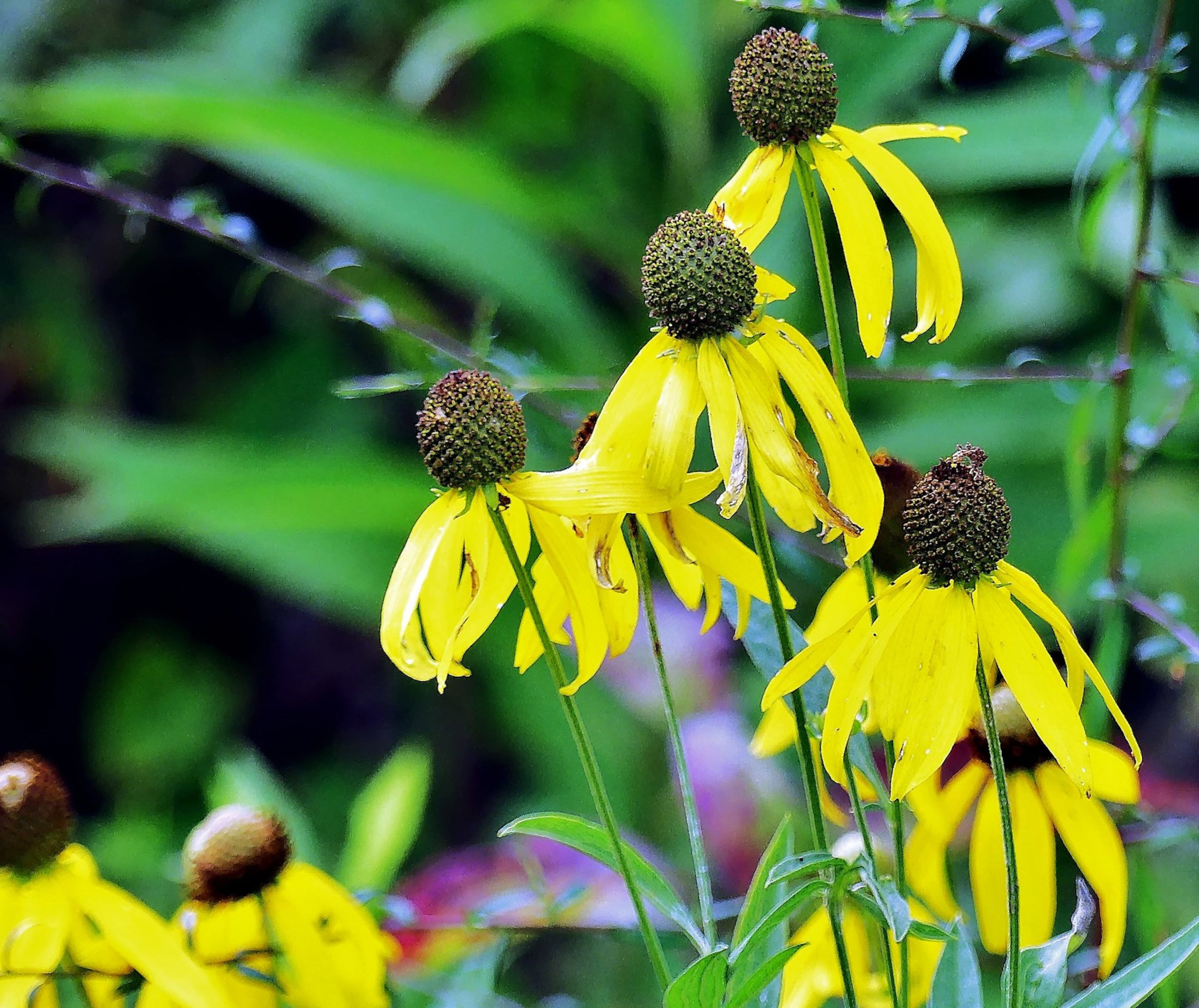
But other wildflowers blooming now are equally spectacular, especially those that vie with goldenrods for dazzling yellow. They include golden-aster, yellow silk-grass, coneflowers and several wild sunflower species — particularly swamp sunflower, common sneezeweed and tickseed sunflower. In southeast Georgia’s vast Okefenokee Swamp, the tickseed is the most prolific fall flower, forming massive, dense yellow carpets in the wetland.
Other yellow-flowered attention-getters include the towering blooms of wing-stem and Southern crownbeard, which grow in floodplains and woodland edges in North Georgia. On granite outcrops — most notably Stone Mountain and Arabia Mountain near Atlanta — dense clusters of rare yellow daisies (also called Confederate daisies) are starting to bloom.
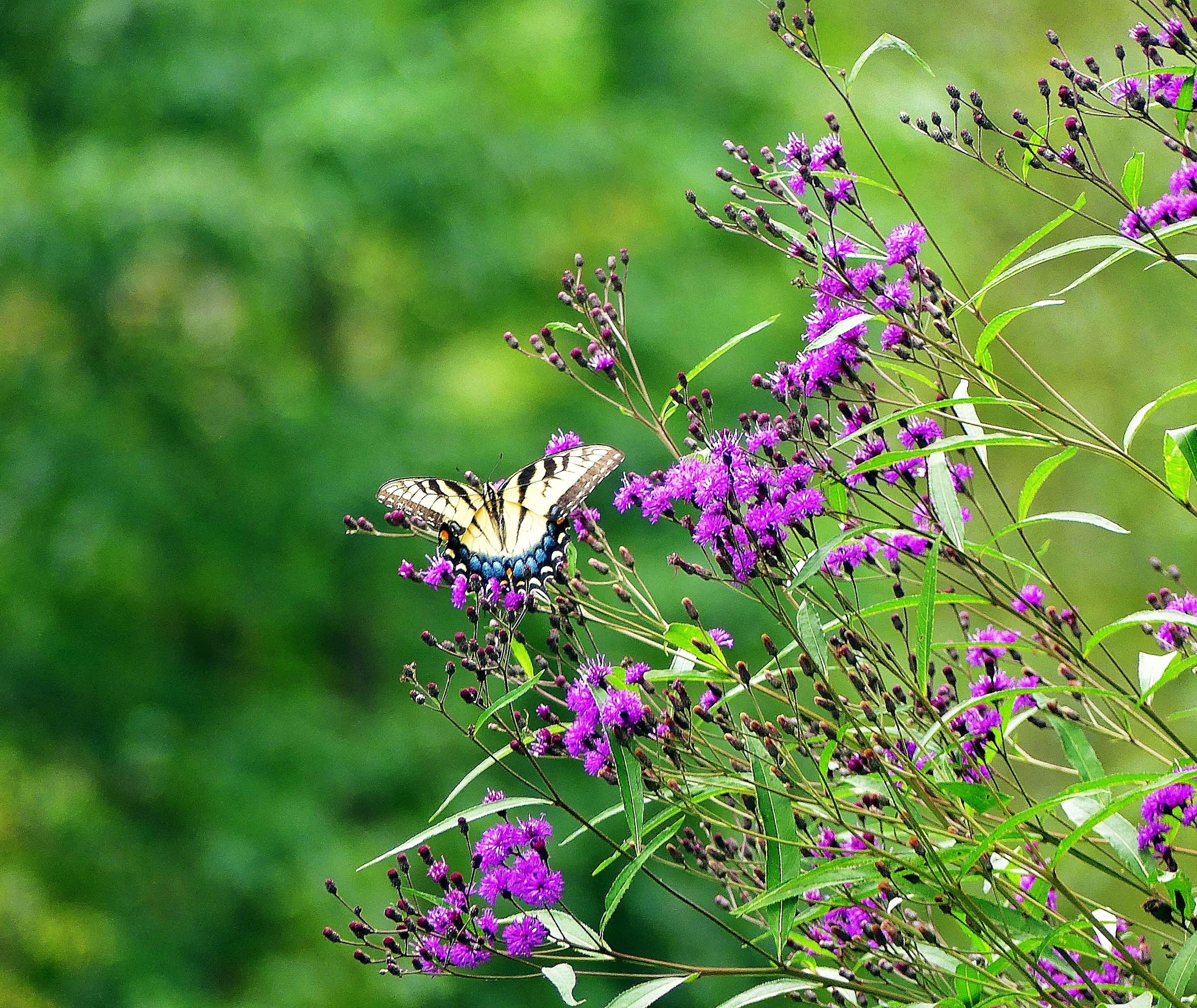
Particularly striking now in fields, meadows and roadsides are the deep purple and magenta blooms of tall ironweed, which grows up to 10 feet and towers over most surrounding plants. Its common name comes from its “ironlike” stalks. Another tall, blooming wildflower beloved by plant lovers is Joe-Pye weed, which features large, showy clusters of pink and purplish blooms.
Adding more late-season purple and lavender to wild landscapes are several species of blazing stars. Another plant, the purple false foxglove, is especially alluring with its showy, bell-shaped flowers.
A special favorite of mine in bloom now is the cardinal flower, whose gleaming crimson color is said to be the reddest of reds in nature. The mistflower, which sports gorgeous sky-blue blooms, often grows near cardinal flowers in moist areas, providing an arresting contrast of colors fit for an artist.
Berries and fruit
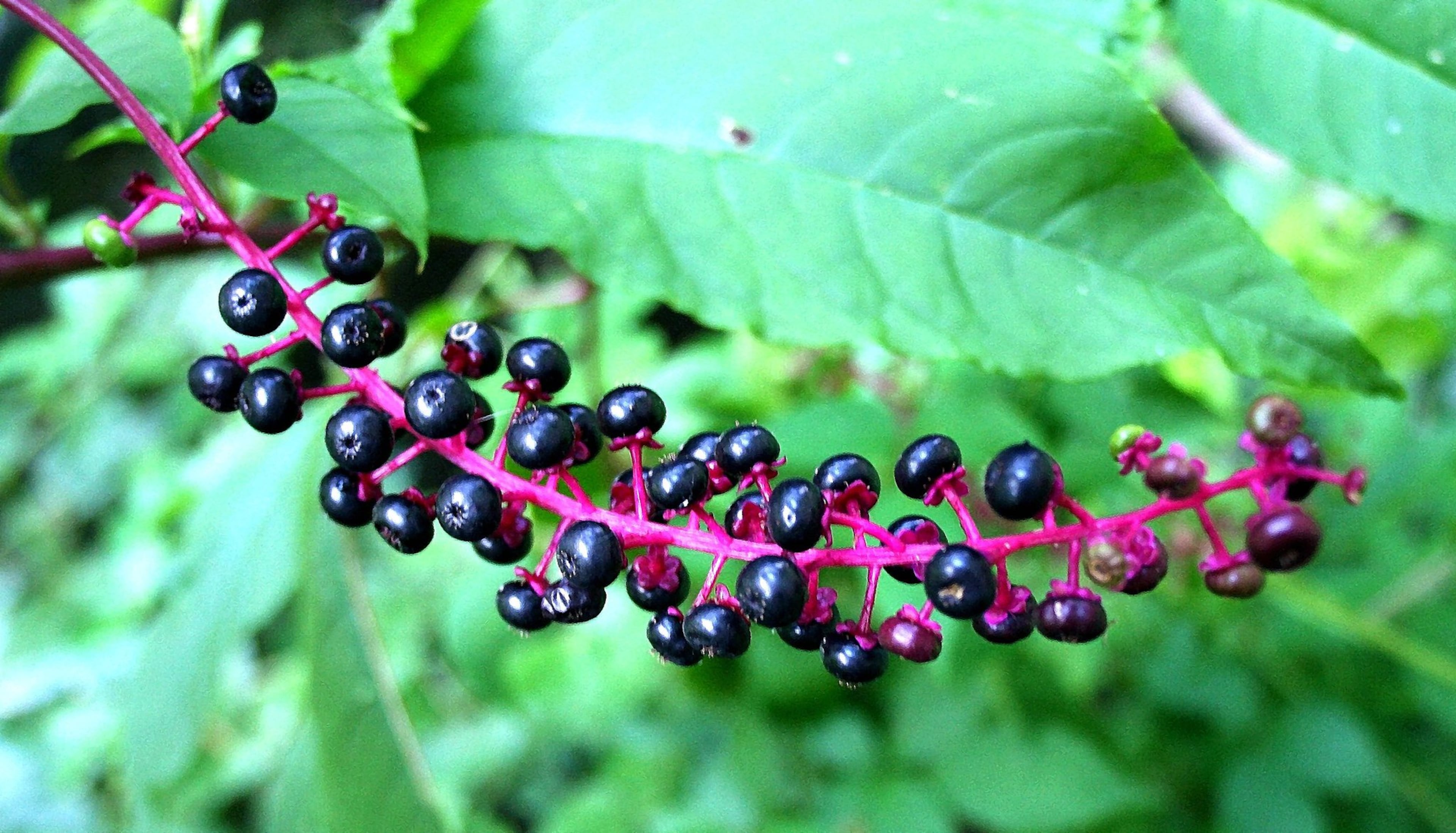
Of course, these are only a few of the dozens of wildflower species that show off their majestic colors across Georgia this month and into October. Adding even more color are ripening native berries and fruits — such as the metallic purple berries of American beautyberry; the ink-dark berries of pokeweed; the deep, crimson berry clusters of sumac; the dark purple fruits of elderberry; and the brilliant red berries of dogwood, American holly, chokeberry, strawberry bush and partridgeberry.
The ripening berries, fruits, nuts and seeds provide essential calories, fats and sugars that help birds and mammals build energy reserves to survive winter. Equally important, the late summer and fall wildflowers are ecological necessities — vital sources of nectar and pollen that provide nourishment for bees, butterflies and other pollinators preparing to overwinter or embark on migratory journeys.
IN THE SKY: From David Dundee, retired Tellus Science Museum astronomer: The moon, now in last quarter, will be new on Thursday. Over the next two weeks, Mercury and Venus are very low in the west just after dark. Mars rises in the east an hour before midnight and will appear near the moon Saturday night. Jupiter rises in the east a few hours before dawn. Saturn rises in the east just after sunset.
Charles Seabrook can be reached at Charles.Seabrook@yahoo.com.