Wall Street drifts lower as bond yields rise and oil prices swing
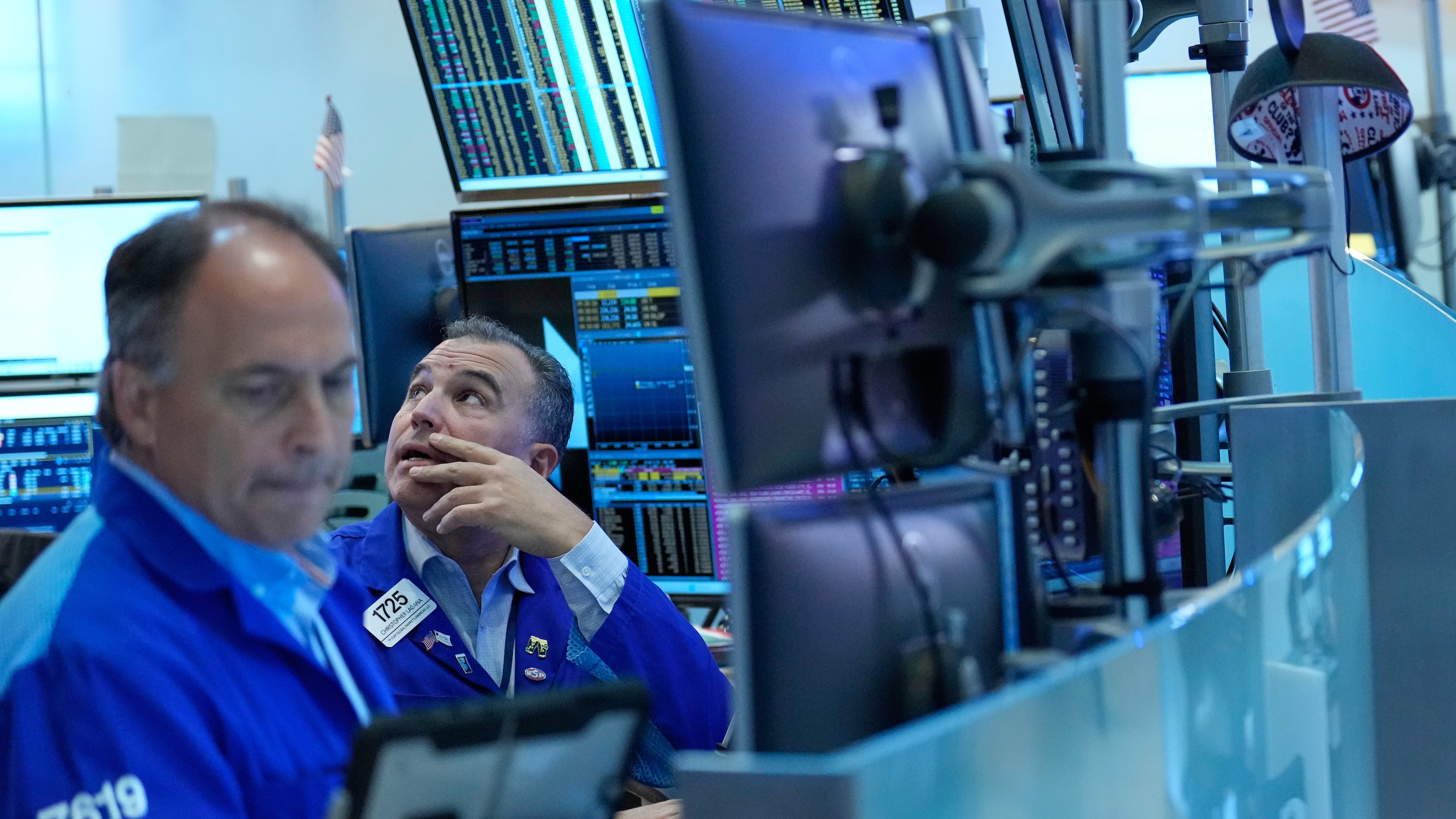
NEW YORK (AP) — Wall Street is drifting lower toward the finish of an up -and- down week on Friday, and U.S. stock indexes are mixed as bond yields rise and oil prices swing.
The S&P 500 fell 0.3% in afternoon trading. The Dow Jones Industrial Average was down 246 points, or 0.5%, as of 12:01 p.m. Eastern time, and the Nasdaq composite fell 0.2%.
The majority of stocks on Wall Street fell, and helping to weaken them was rising pressure from the bond market. The yield on the 10-year Treasury climbed to 5.00% from 4.94% late Thursday after it topped the 5% level early this week for the first time since 2023.
Higher yields slow the overall economy by making it more expensive for everyone to borrow money, from the U.S. government to people looking to buy houses to businesses wanting to build AI data centers. They also tend to undercut prices for stocks and other investments.
Yields have been climbing in a long march since the COVID pandemic knocked them nearly to zero in 2020. The ascent has accelerated recently because inflation has remained stubbornly high for years.
Inflation is well above 3% by several measures. It worsened due to higher oil prices caused by the war with Iran.
The price for a barrel of Brent crude, the international standard, got to nearly $110 early this week, up from a little over $70 in July. It has been seesawing since.
It briefly dropped below $102 in overnight trading before erasing much of the loss and pulling back to $104.58, down 0.2% from the day before.
Rising oil prices have pushed gasoline prices to $4.47 per gallon, up from $3.20 per gallon a year ago, according to AAA. That is tightening the squeeze on household budgets. Diesel prices are at a record $6.45 per gallon and that has a more direct impact on shipping costs for everything from groceries to clothing.
High inflation has been raising expenses for everyone, and more companies are giving details about how much.
Steel maker Nucor said late Thursday that it expects to report an increase in profit from its steel mills business in the third quarter from the second because it’s able to charge higher prices. But it’s also having to absorb higher costs. It gave a forecast for overall profit in the third quarter that fell short of analysts’ expectations, and its stock sank 5.9%.
Elsewhere on Wall Street, Berkshire Hathaway slipped 0.3% after famed investor Warren Buffett said he’s giving up his role as chairman of the company. Buffett already gave up his role as CEO of the company, where he built a reputation for buying stocks at relatively cheap prices and being patient with his investments.
In stock markets abroad, indexes slumped across Europe, including drops of 1.5% for the CAC 40 in Paris and 1.5% for London’s FTSE 100.
Asian indexes did better. South Korea’s Kospi jumped 2.7%, and Japan’s Nikkei rose 1.4%.
The Bank of Japan raised its benchmark interest rate in a widely expected move, up to its highest level in 31 years. It followed the Federal Reserve, which raised its federal funds rate earlier this week for the first time in three years in efforts to rein in high inflation.
“With consumer spending resilient, the AI buildout continuing, and the labor market solid, the Fed was running out of reasons to stay on the sidelines after more than five years of above-target inflation,” said Angelo Kourkafas, senior global strategist, investment strategy, at Edward Jones.
The Fed’s move could keep upward pressure on Treasury yields, particularly because officials suggested they may need to hike the federal funds rate again this year. But it also helped strengthen faith that the Fed would do what’s necessary to get inflation back to its 2% target. That’s even if it causes pain for the economy in the short term and upsets President Donald Trump, who has been calling for lower interest rates.
___
AP Business Writer Yuri Kageyama contributed to this report.