Bond yields crank higher and undercut US stocks as uncertainty drags on about the Strait of Hormuz
NEW YORK (AP) — Yields in the U.S. bond market cranked higher Monday and again reached their highest levels in roughly two decades, which knocked U.S. stocks further from their record high.
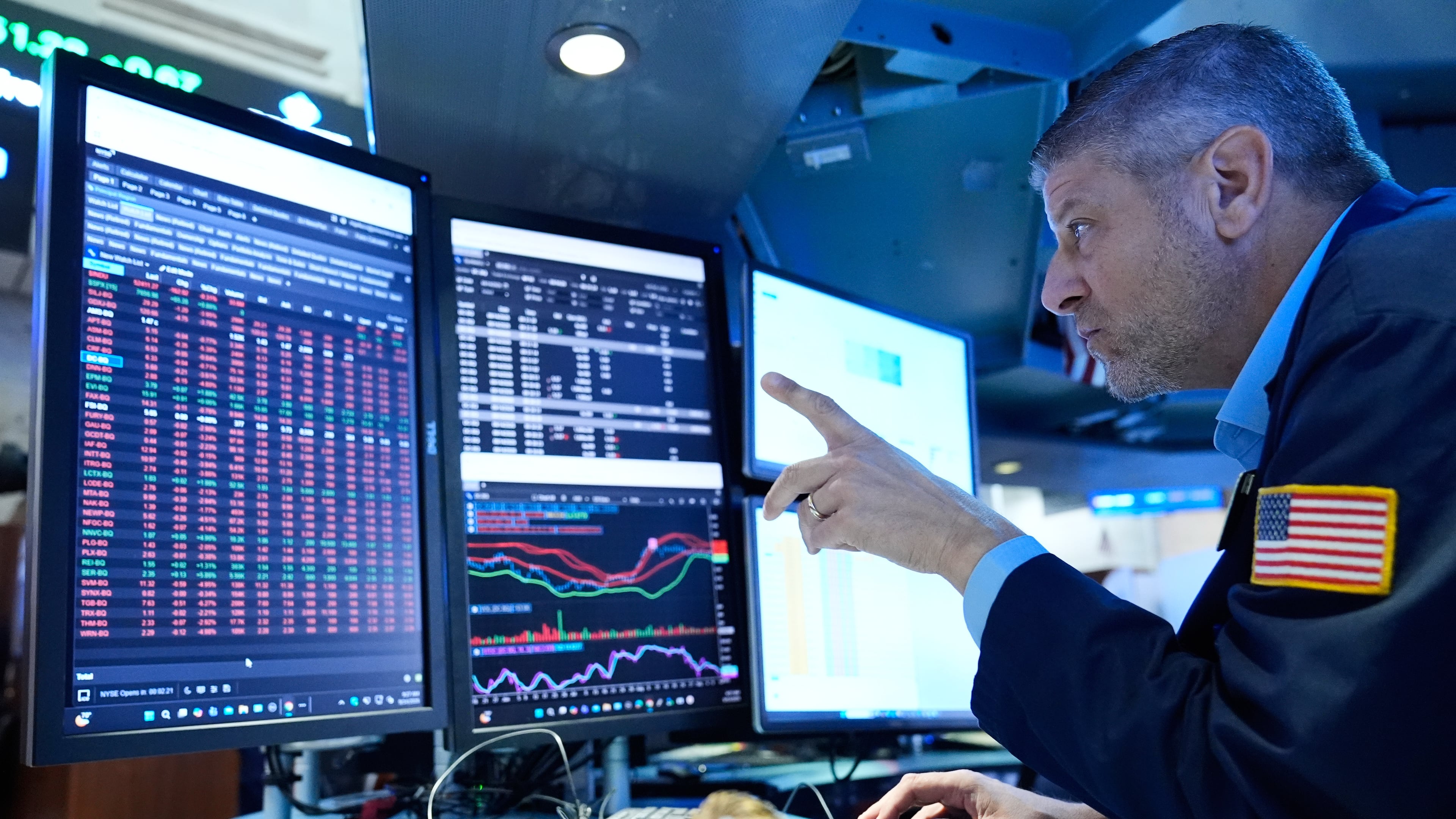
The S&P 500 fell 0.6% and gave back much of its gain from last week, which had brought it to the brink of its all-time high. The Dow Jones Industrial Average was down 292 points, or 0.6%, with an hour remaining in trading, and the Nasdaq composite was 0.7% lower.
Stocks felt pressure as the yield on the 10-year Treasury jumped to 5.24% from 5.17% late Friday. That’s a considerable move for the centerpiece of the U.S. bond market, and the 10-year yield is back to where it was in 2007, before the financial crisis and Great Recession sent yields toward zero.
The 30-year Treasury yield, which leaped to 5.57% from 5.49%, is back to where it was in 2004.
Treasury yields have been jumping for a range of reasons, from worries about inflation to Washington's massive debt load to signs that the U.S. economy's growth remains relatively solid despite its many challenges. That pressures the economy because it makes borrowing money more expensive for everyone, while also undercutting prices for stocks and other investments.
Monday's rise in yields followed the latest swings for oil prices, which have been yo-yoing on uncertainty about when the war with Iran will allow tankers to flow freely again through the Strait of Hormuz and deliver oil from the Middle East to customers worldwide.
The latest turns came after President Donald Trump said over the weekend he’s rejecting an offer from Iran to reopen the Strait of Hormuz and resume talks on its nuclear program.
“I’d like to make a deal, too,” Trump said Saturday. “But that deal would not be acceptable.”
The price for Brent crude in the most actively traded part of the oil market briefly climbed above $101 per barrel Monday morning, but it pared its gains as U.S. officials said mediators were still working with Iran and the United States on a deal to end the fighting and open the strait. It settled at $97.83, up 0.4%.
For all its ups and downs, a barrel of Brent remains much higher than the roughly $72 it cost before the United States and Israel attacked Iran in late February. That has helped worsen inflation, and the average price for a gallon of regular gasoline is up to nearly $4.48 from $3.13 a year ago, according to AAA.
On Wall Street, stocks of airlines and other companies with big fuel bills sank because of the rise in oil prices.
American Airlines fell 2.1%, and United Airlines lost 1.6%.
Gold miners were also weak after the price of gold sank 3.5%. Gold has a reputation for helping to protect its investors from high inflation, but its price tends to weaken when rising yields mean bonds are paying investors more in interest. Gold struggles to keep up because it pays its investors nothing.
Newmont, the Denver-based mining giant, slid 4.1%.
One of Wall Street's bigger losses hit MongoDB, which dropped 16.9% after the database company said its CEO, Chirantan “CJ” Desai, is stepping down immediately to pursue a senior role at Meta Platforms.
Such losses helped more than offset a 2.1% rise for Nvidia, Wall Street's most influential stock.
The chip company said it approved a plan to send up to another $150 billion to its shareholders in a stock buyback plan, bringing the program’s total remaining size to $235 billion.
Nvidia has the power to do so after the frenzy around its chips used for artificial-intelligence technology helped it more than double the amount of cash on its books in the first half of its fiscal year. The company also on Monday unveiled a new security platform that the chipmaker said can stop artificial intelligence agents from going rogue.
AI stocks have broadly come under pressure after leaders of the industry said it needs to slow its development to give safety measures time to catch up.
In stock markets abroad, European indexes were mixed following weaker performances across much of Asia.
Indexes dropped 2.7% in Seoul and 1.7% in Shanghai for two of the world’s bigger moves.
___
AP Business Writers Yuri Kageyama and Michelle Chapman contributed to this report.