$2M fine for law firms over ‘widespread, long-running cover-up’ in Georgia case
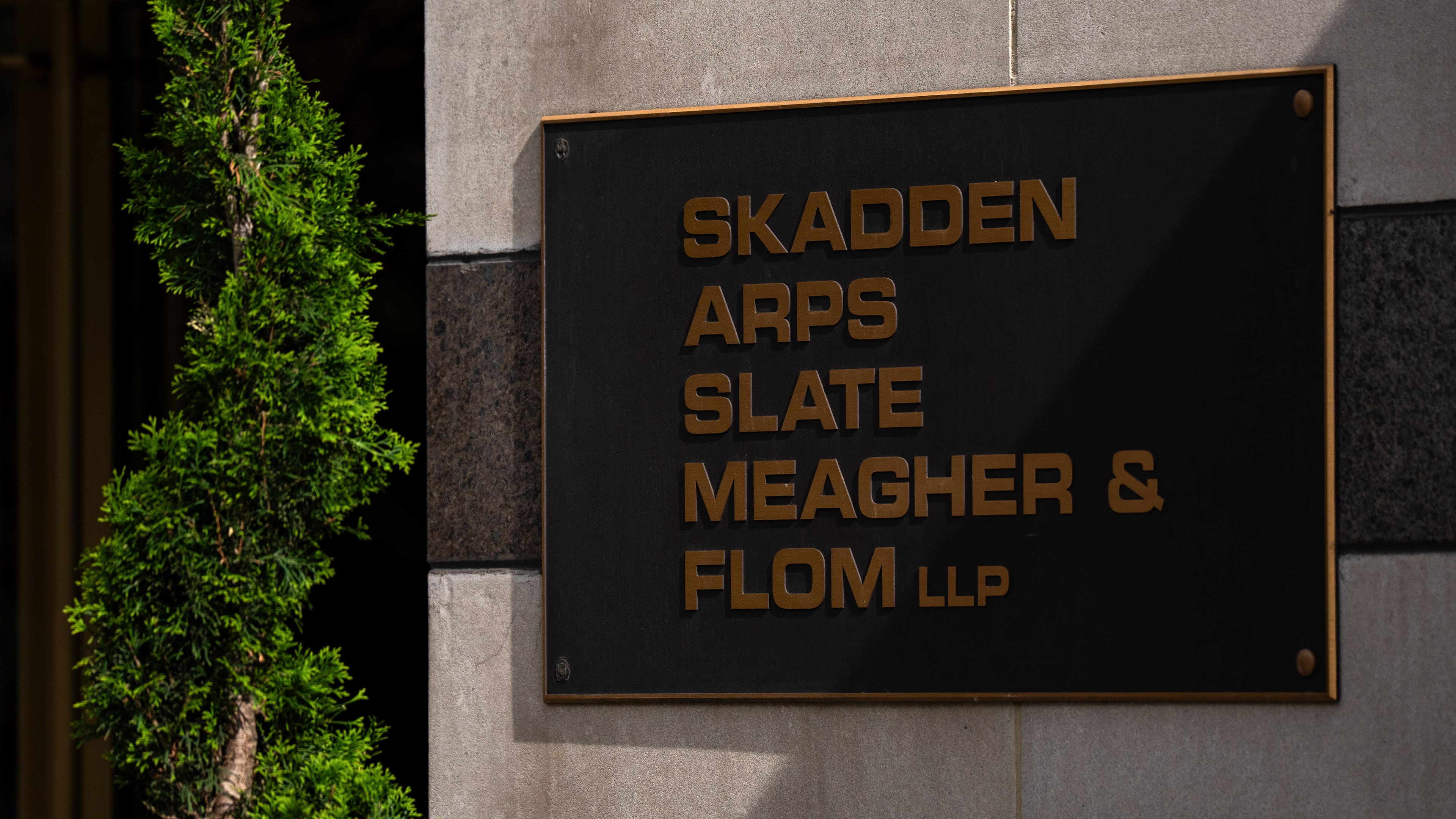

A federal judge found that repeated deception by defense attorneys in a Georgia fraud case warranted a $2 million sanction against their law firms.
U.S. District Judge Marc Treadwell ordered Kirkland & Ellis and Skadden, Arps, Slate, Meagher & Flom to pay $2 million Wednesday, saying the firms had agreed to hand over the money within 10 business days.
Treadwell, who’s based in the federal court in Macon, said the court will use the money for “promoting instruction on the subjects of ethics and professionalism in Georgia’s accredited law schools.”
In a June order attached for context to Wednesday’s order, the judge said the misconduct by defense counsel — Richard Bernardo of Skadden and Geoffrey Wyatt of Kirkland & Ellis — was “a widespread, long-running cover-up.” He said they were found to have repeatedly hidden evidence unfavorable to their client and lied about it.
The lawyers represented the defendant in the case, a Massachusetts-based company called eClinicalWorks that provides electronic health record software to doctors and other medical professionals worldwide.
“The Court finds that clear and convincing evidence shows that eCW’s misconduct — its own and misconduct imputed from its lawyers — constitutes subjective bad faith,” the judge wrote. “eCW repeatedly lied to the [plaintiffs] and the Court for strategic gain.”
eClinicalWorks, Skadden, Kirkland & Ellis, Bernardo and Wyatt did not respond Thursday to inquiries about the sanction. Kirkland & Ellis is the highest-grossing law firm in the U.S., according to Am Law 100’s 2026 rankings. Skadden came in at No. 5.
Rob Snyder, lead counsel for the Georgia-based plaintiffs who sued eClinicalWorks, told The Atlanta Journal-Constitution the $2 million sanction is the largest he’s seen.
“It’s reasonably rare that a court will sanction a lawyer and this is the first time, at least in my career, that I’ve ever seen the judge instruct a defense law firm to pay a monetary sanction to fund legal ethics education,” he said Thursday. “Essentially we spent two years fighting to get information that should have been given to us.”
The sanction comes after the case, accusing eClinicalWorks of fraud, settled midtrial at the end of July.
Snyder said the settlement was confidential.
The plaintiffs in the case, Alex Permenter, Eric Rodighiero and Chris Wheeler, are computer and information technology specialists who provide services for medical practices in Middle Georgia.
They filed the case in 2018, alleging eClinicalWorks fraudulently claimed federal certification for its software, causing medical providers using it to unwittingly submit false Medicare and Medicaid claims worth tens of millions of dollars.
The company, in operation since 1999, denied the allegations and sought to dismiss the case. It argued, among other things, that the plaintiffs did not plausibly allege that the claims submitted by healthcare providers using its software were false.
In previous sanction orders, the judge admonished eClinicalWorks and its lawyers for repeatedly failing to disclose evidence but stopped short of fining them. He said the hidden evidence included consulting work that confirmed some of the plaintiffs’ allegations and differed from the opinions of a key expert witness for the defense.
Treadwell said it was inexplicable the defense “went to extraordinary, and improper, lengths to maintain the fiction” it had no duty to disclose the evidence. He previously ordered eClinicalWorks to pay the plaintiffs the fees and costs they had incurred fighting to get the information.
Snyder said that totaled more than $1.5 million, indicating how much work was involved in uncovering the truth.