Florida sheriff blasts Georgia officials over prisoners’ scams
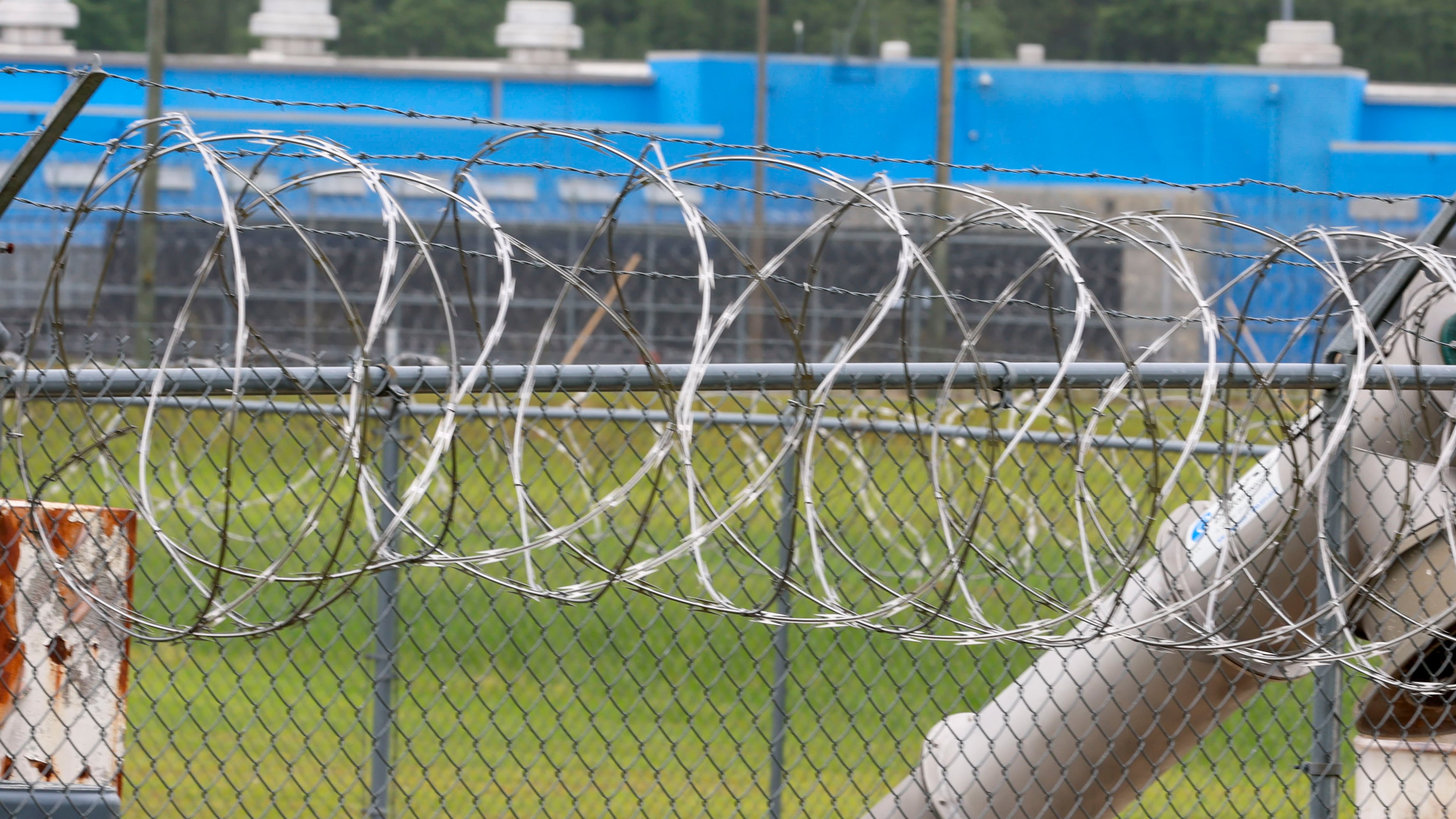

A Florida sheriff arrested a woman accused of participating in a scam network through Georgia prisons and called for officials to put a stop to the scammers’ operations within the prison system.
Volusia County Sheriff Mike Chitwood, in a video posted to social media, said investigators there linked an Atlanta woman and three others to $15,000 taken from a woman near Daytona Beach, Florida.
Annie Ashley of Atlanta has been charged with grand theft, Volusia sheriff’s officials said.
She is one of roughly two dozen people arrested in the past year by Volusia County in the “huge scam” the Florida sheriff says is being run out of two Georgia prisons: Calhoun State Prison and Wheeler Correctional Institution.
The scammers usually call people, tell them they missed jury duty and have a warrant out for their arrest, then get them to pay, Chitwood said.
“Hopefully, Georgia authorities will wake up and get off their ass and realize the scams that their prisoners are running,” Chitwood said in the video.
In response to Chitwood’s message, Georgia Department of Corrections spokesperson Joan Heath said in a statement to the AJC that “the use of contraband cell phones by inmates as a tool to carry out their crimes from behind prison walls is a fight we continue to battle and is paramount in our commitment to public safety.”
“For context, and contrary to the claims made in the video, the GDC utilizes all resources at our disposal to combat this and other similar crimes being carried out inside and outside our prisons by those using contraband cell phones,” Heath said in the statement. “The cell phone and drone challenge affects every state’s correctional system.”
Sgt. Julian Elmazi works in the Volusia County Sheriff’s Office financial crimes unit. He said in an interview with The Atlanta Journal-Constitution that his agency has arrested roughly two dozen people accused of being connected to these scams, typically individuals who are related to or are friends with those running the operation behind bars, he said.
The prisoners aren’t supposed to have phones, but the devices get smuggled into the prisons anyway, sometimes by the guards or with drones, Elmazi said.
The inmates “start calling people, typically older people, telling them they have missed jury duty and they have a warrant for their arrest, and they direct them to withdraw cash and deposit that to Bitcoin ATMs,” he said.
Investigators trace the money through online payment systems and cryptocurrency exchanges and link the individuals who receive the cash funds to the inmates directing the scam, Elmazi said.
Heath said the recent passage of legislation by Congress to give law enforcement more authority and tools to combat drones, including those that drop contraband into prisons, will aid the department in their efforts to prevent crime behind bars. Some prisons have also begun utilizing “managed access systems” which help identify and prevent unauthorized cell communications inside.
The department has also coordinated with Volusia County to identify inmates involved and gather evidence for their cases, Heath said in the statement.
Contraband smuggling and criminal activity have been rampant behind bars in Georgia prisons in recent years, an AJC investigation found.
The AJC reported on the crisis within Georgia’s prison system in an extensive, yearslong investigation that revealed hundreds of guards smuggling contraband, prisoners dying from drug overdoses, drug rings operating, severe understaffing and record numbers of homicides.
Last year, the state Legislature allocated an additional $600 million in funding to the Georgia Department of Corrections and acknowledged the crisis required a serious influx of funding and would take years to rectify, the AJC previously reported.