Florida man faces execution for 1996 killing connected to 'Hog Trail Murders' in woods
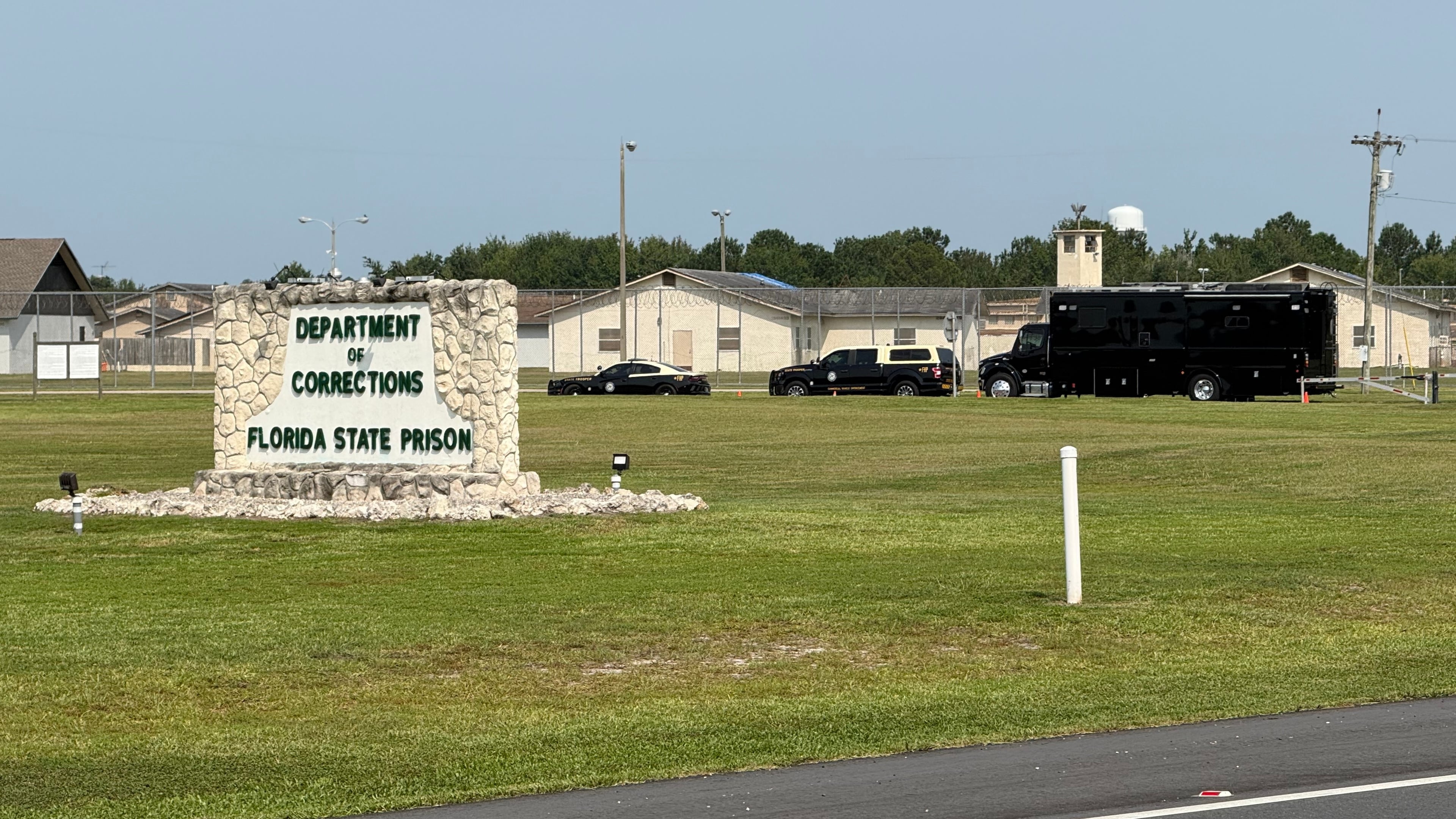
A Florida man convicted in one of a series of suspected killings that became known as the “Hog Trail Murders” in the 1990s is scheduled Thursday to become 15th person executed in the state this year.
Daniel Owen Conahan Jr., 72, was sentenced to die for the 1996 kidnapping and strangling of Richard Allen Montgomery, whose mutilated body was found in a wooded southwest Florida area, where authorities found the remains of at least six people over a three-year span.
Conahan, who has maintained his innocence, was previously identified by authorities as a person of interest in the other deaths, but he was never charged. He argued the evidence against him was circumstantial.
Conahan is scheduled to die by lethal injection in the nation's busiest death chamber. Florida has carried out more than half of the 24 total executions in the U.S. so far this year under Republican Gov. Ron DeSantis, who leaves office in January.
Multiple bodies found in popular hunting area
Conahan was arrested in July 1996 after local and state law enforcement officials spent more than two years investigating a series of homicides in which mutilated and decomposing bodies were discovered in a wooded area of Charlotte County, north of Fort Myers.
As the number of bodies increased, so did media coverage. The deaths eventually were dubbed the “Hog Trail Murders” because of the swampy, wooded locations where the bodies were found. The case has been featured many times over the past three decades on true-crime television shows, YouTube channels and podcasts.
Hunters found the first body in February 1994, and at least five more were discovered over the next three years. While most of the remains were severely decomposed, investigators believed Montgomery was found within 24 hours of his death. Investigators eventually determined the killer was targeting homeless men.
Investigators found similarities in cases
Detectives started looking into Conahan in 1996 after a man in prison for stealing Conahan’s car claimed Conahan had lured him to a remote area and offered to pay him to pose for nude photos. The man said he drove off in the car after seeing a knife.
Later, detectives learned about a case with similarities in Fort Myers, in which a victim claimed a man who offered cash for nude photos had tied him to a tree and attempted to strangle him. Conahan was arrested and charged with attempted murder, and several months later was also charged in Montgomery’s death.
Conahan waived his right to a jury trial and was convicted by a judge of murder and kidnapping in August 1999.
Conahan was never charged with any other homicides, but a sheriff's office report about the investigation concluded that all of the victims discovered within a 10-mile (16-kilometer) radius were likely killed by the same person.
In 2007, a land survey crew discovered eight bodies in Fort Myers. The four victims identified by authorities were homeless, and officials said they all suffered similar injuries to the Charlotte County victims. Investigators at the time publicly identified Conahan, who was already on Florida's death row, as a person of interest, but he was never charged.
The Florida Supreme Court last week denied Conahan's final appeals, including one requesting additional testing on DNA collected from the victim. The court ruled that proving Montgomery had DNA on his body from someone other than Conahan wouldn't exonerate him.
The U.S. Supreme Court on Thursday denied his final appeal.
Florida leads the way in executions
A total of 47 people were executed in the U.S. in 2025. Florida led the way with 19 lethal injections, a state record since the death penalty was reinstated in 1976.
In July, Florida executed two prisoners in one day, the first state in nearly a decade to do so.