Fed watchdog finds no crimes in $2.4B building renovation, only mismanagement
WASHINGTON (AP) — The Federal Reserve’s internal watchdog said Wednesday that the central bank has broadly mismanaged an expansive building renovation project but did not find any criminal violations, as alleged by Trump administration prosecutors.
A variety of missteps by the Fed's Board of Governors and staff inflated the cost of the $2.4 billion renovation, the Fed’s inspector general said. The board did not secure a comprehensive cost estimate at the beginning of the project, nor did it nail down a maximum overall cost, a step that could have forced the building contractor to absorb the impact of inflation, the IG said in a 120-page report. Prices spiked after construction began in 2022.
“Our review found that the Board has not effectively managed and executed its ... contract and repeatedly deviated from its cost-management provisions,” the report said.
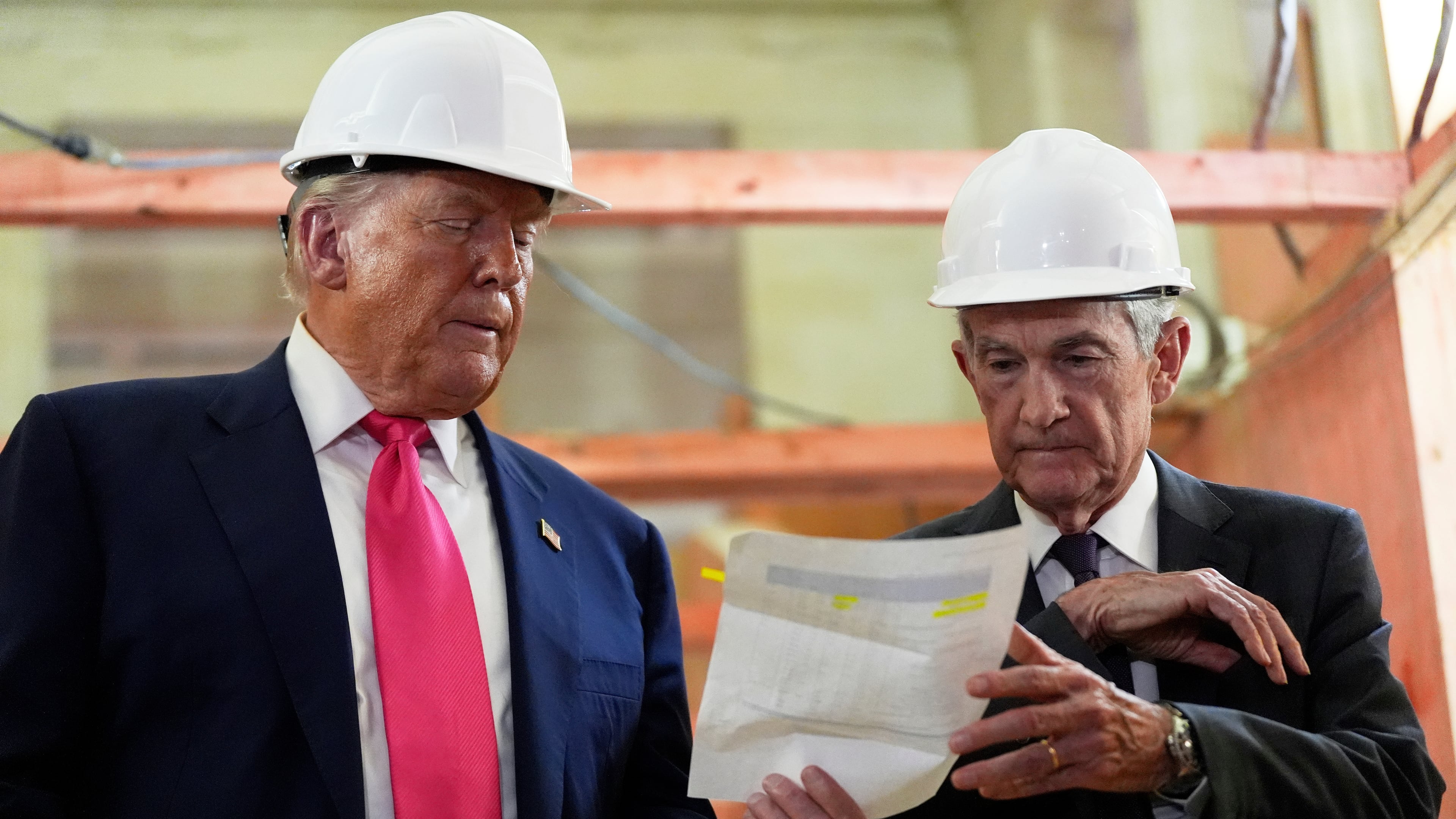
The building project became a high-profile flashpoint in the Trump administration’s efforts to pressure the Fed into cutting its key interest rate. President Donald Trump even visited the construction site last July, when then-Chairman Jerome Powell corrected Trump’s estimate of the project’s expected costs as the two stood in hard hats before TV cameras.
Criticism of the project also mounted in Congress, leading Powell to request in July 2025 that the inspector general, Michael Horowitz, investigate the renovation.
The building project then became the focus of a criminal investigation by Trump’s Justice Department, specifically into whether Powell had committed perjury during brief testimony about the renovation before a Senate committee. That investigation was dropped in April after a judge quashed subpoenas issued by Jeanine Pirro, the U.S. attorney for the District of Columbia. Pirro said then she would await the outcome of the inspector general’s investigation before deciding whether to take any further action.
“At no point during our evaluation did we find reasonable grounds to believe that a violation of federal criminal law had occurred requiring a referral to the U.S. Attorney General,” the IG’s report said.
Tim Lauer, a spokesperson for Pirro's office, said the report is under review.
Powell's term as chair ended in May, but he took the highly unusual step of remaining on the board as one of seven governors. His term as a governor lasts until January 2028. Powell said earlier this year he would remain on the board at least until he is convinced that Pirro's investigation is done. By keeping his seat, Powell has also prevented the Trump administration from filling another spot on the board.
Massachusetts Sen. Elizabeth Warren, the top Democrat on the Senate Banking Committee and a frequent critic of Powell's, said the report “confirmed that Trump lapdogs U.S. Attorney Jeanine Pirro and Attorney General Todd Blanche have no basis to restart the President’s witch hunt against former Fed Chair Jerome Powell.”
Current Fed chairman Kevin Warsh, who took office last May, welcomed the IG’s findings in a letter and said the General Services Administration, a federal agency that oversees most government buildings, would take over the management of the project.
He also said the Fed would engage an independent auditor to evaluate the building project and all its costs. The Fed, with the GSA, will review all the project's contracts and “pursue appropriate remedies,” including seeking reimbursement for any work paid for but not performed.
The report said that the construction costs to renovate two Fed buildings more than doubled from an original estimate of $921 million in February 2020 to $2.018 billion by December 2024. Construction is expected to last until December 2027, long past its originally slated completion date of mid-2024.
Some aspects of the project that were criticized by the Trump administration and Republican members of Congress for being luxurious — water fountains, private elevators and marble facades — were not significant drivers of the excessive costs of the project.
Instead, the IG said that a design change by the Fed in 2023 from a mostly open workspace to one with mostly closed office space caused a significant delay in the project's design. It also delayed the Fed from seeking a maximum cost ceiling for the project at that time.
The Fed has long blamed a range of factors for the cost overruns, including a spike in inflation that occurred as the economy emerged from the COVID-19 pandemic, unexpected expenses such as asbestos remediation, and additional demands from review agencies. For example, Trump appointees to a planning commission from his first term pushed the Fed to add more marble to the exterior of the renovated buildings, in keeping with Trump's preference for classical architecture.
The report said those factors all played a role, but added that they “do not account for the effect of key project management and contract execution decisions” that effectively transformed the contract to "a cost-plus reimbursement contract with a pay-as-you-go approach.”
“Inflation does not change the Fed’s responsibility to manage its resources prudently and be accountable to Congress,” Sen. Tim Scott, chairman of the Senate Banking Committee and a South Carolina Republican, said.