He faced felony charges. Now, DeKalb is giving him a second chance.

Amir Gilbert, 22, once found himself in the DeKalb County Jail facing felony charges.
Now, a year after joining a pretrial diversion program, his charges have been dismissed, he has his first job and says his life has been changed for the better.
“They helped me believe in myself,” Gilbert said to The Atlanta Journal-Constitution after the program’s graduation ceremony Monday. “What you put in there is what you’re gonna get out of it.”
Adults under 24 are statistically more likely to become repeat offenders and land back in jail than people older than them, according to research spanning the past two decades by the U.S. Department of Justice.
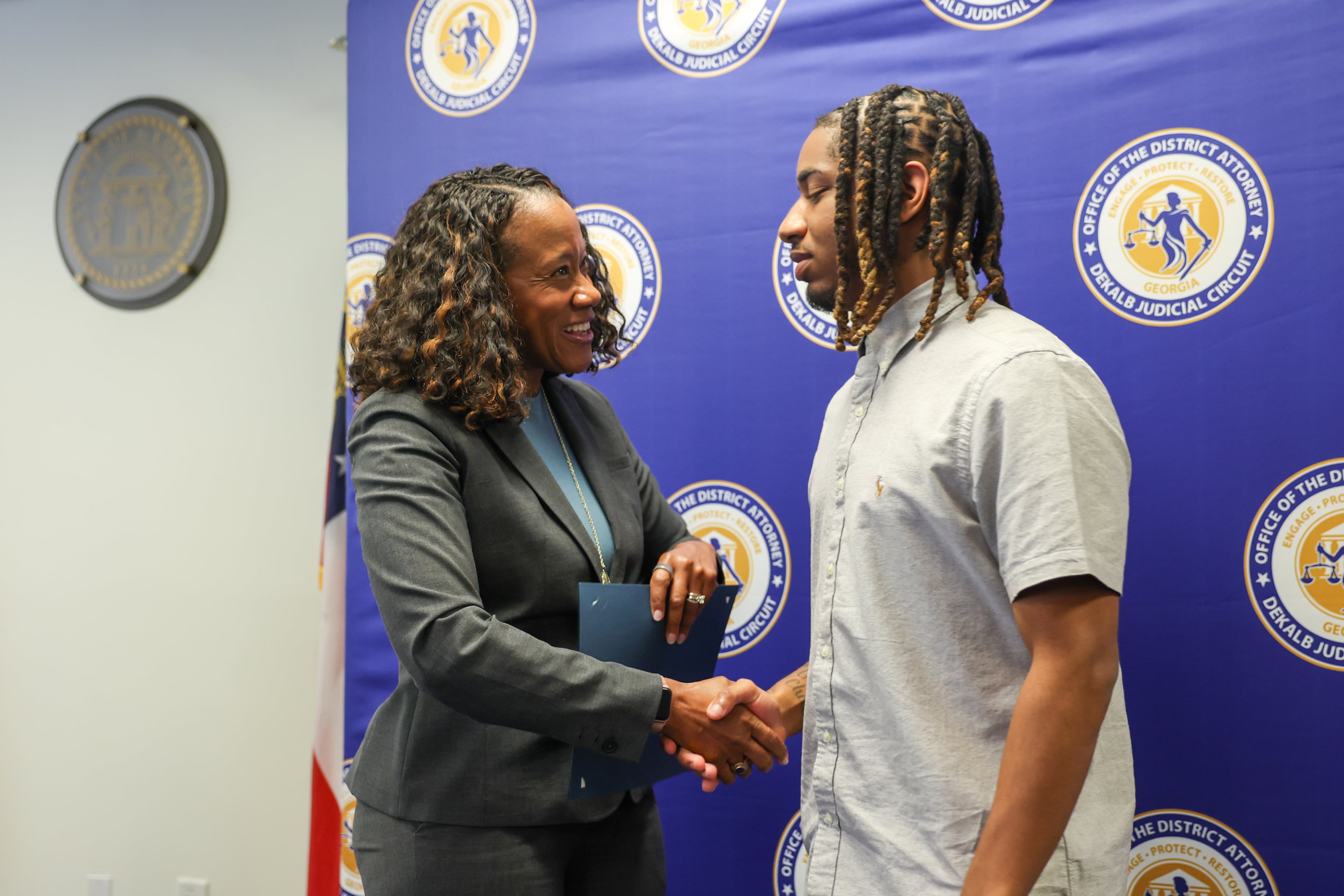
That’s the problem DeKalb District Attorney Sherry Boston is aiming to address with the diversion program, giving young adults facing felony charges in DeKalb County the “opportunity to earn a second chance and avoid permanent criminalization,” she said.
Fifteen young people celebrated their completion of the pretrial diversion program, called STRIDE — which stands for “Stopping Trends of Repeat Incarceration with Diversion and Education” — on Monday in Decatur.
It’s a voluntary 12-month program designed for young people ages 17 to 24 facing serious but nonviolent felonies. They must meet certain requirements, engage in monthly meetings, undergo cognitive behavioral therapy, partake in community service, civic engagement and restorative justice, and work or go to school full time, according to the DA’s office.
In exchange for staying out of trouble and completing the program, their charges are dismissed by the DA.
STRIDE, which launched in 2019, reached 75 total graduates with Monday’s ceremony. Because of record restriction guidelines, the majority of the participants’ identities are withheld and the charges have been dismissed so they can maintain employability, the DA’s office said.
Gilbert now works as a customer care representative with DeKalb County’s sanitation department.
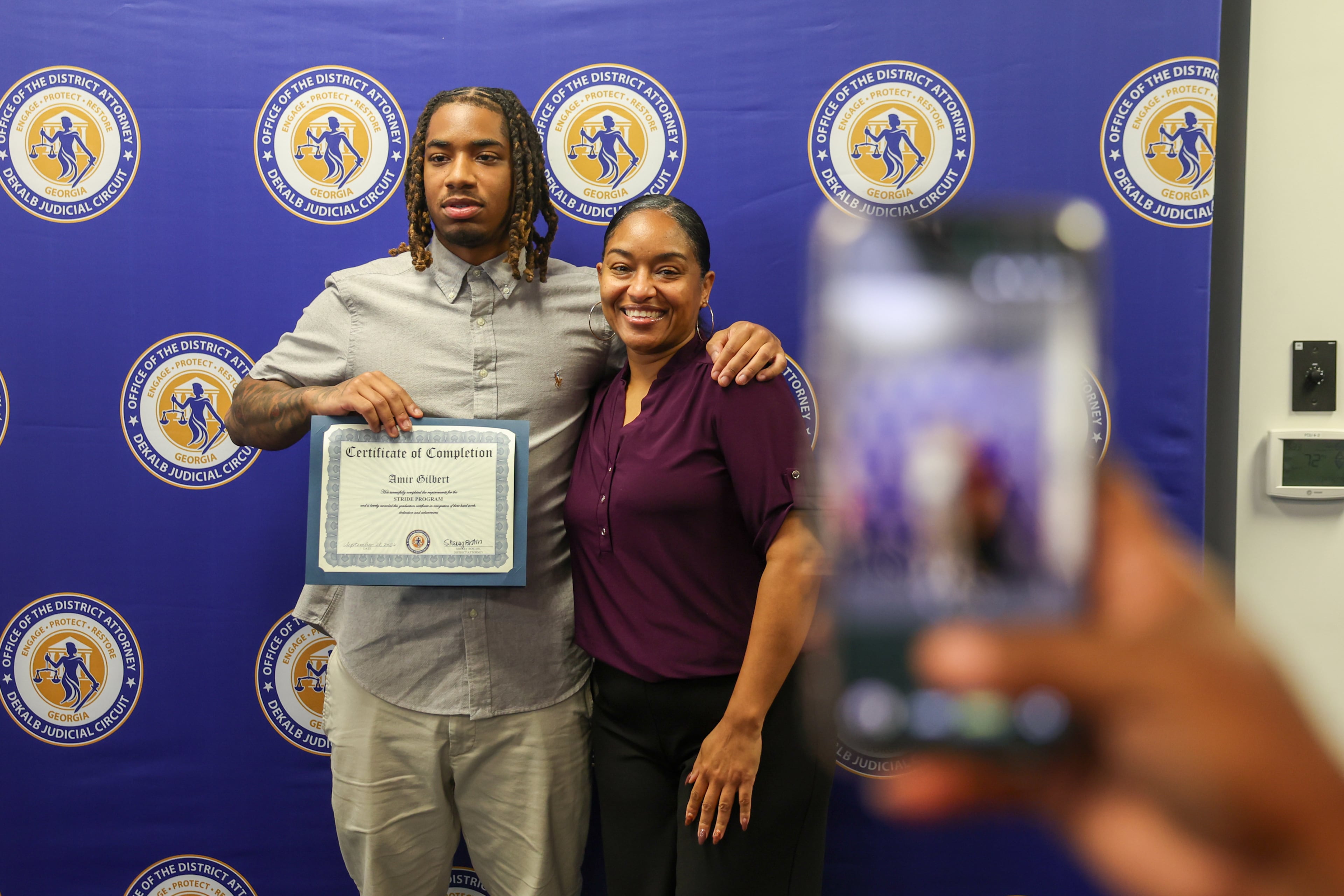
The program gave him “the opportunity to want better for myself,” he said in his speech at the graduation.
The Justice Department’s Bureau of Justice Statistics, in a study examining recidivism rates from 2012 through 2017, found that 81% of prisoners 24 or younger at release in 2012 were arrested again within five years. The rate for those ages 25 to 39 was 74%, and 61% of those age 40 or older.
In recent years, states have begun extending the age of acceptance into juvenile court beyond 17 or 18, according to Columbia University’s Emerging Adult Justice Project, recognizing the shift from adolescent to adult doesn’t happen overnight.
And not everyone makes it through the STRIDE program successfully, Boston said. Each year, 20-25 people are offered a spot. The largest cohort of graduates was last year with 17 people, according to the DA’s office.

“Let me be clear: you were charged with serious felonies,” Boston said to the graduates. “But instead of labeling you as criminals, we offered you the opportunity to become role models and contributing members of our community, and you have all risen to the occasion.”
The program administrators did more than just lead meetings and give instruction, Gilbert said. They made sure he had the proper clothes to wear to his office job, reminded him not to be out and about late at night, and provided a space where he felt comfortable opening up, he said.
“I hope they keep it up, because they can change people’s lives,” he said.