Brazil’s electoral court sets new standards for AI deepfakes after case involving Sen. Bolsonaro
SAO PAULO (AP) — Brazil’s top electoral court set new standards for what it will consider to be artificial intelligence -generated deepfakes in political advertising, a move aimed at curbing misinformation and manipulation ahead of October elections.
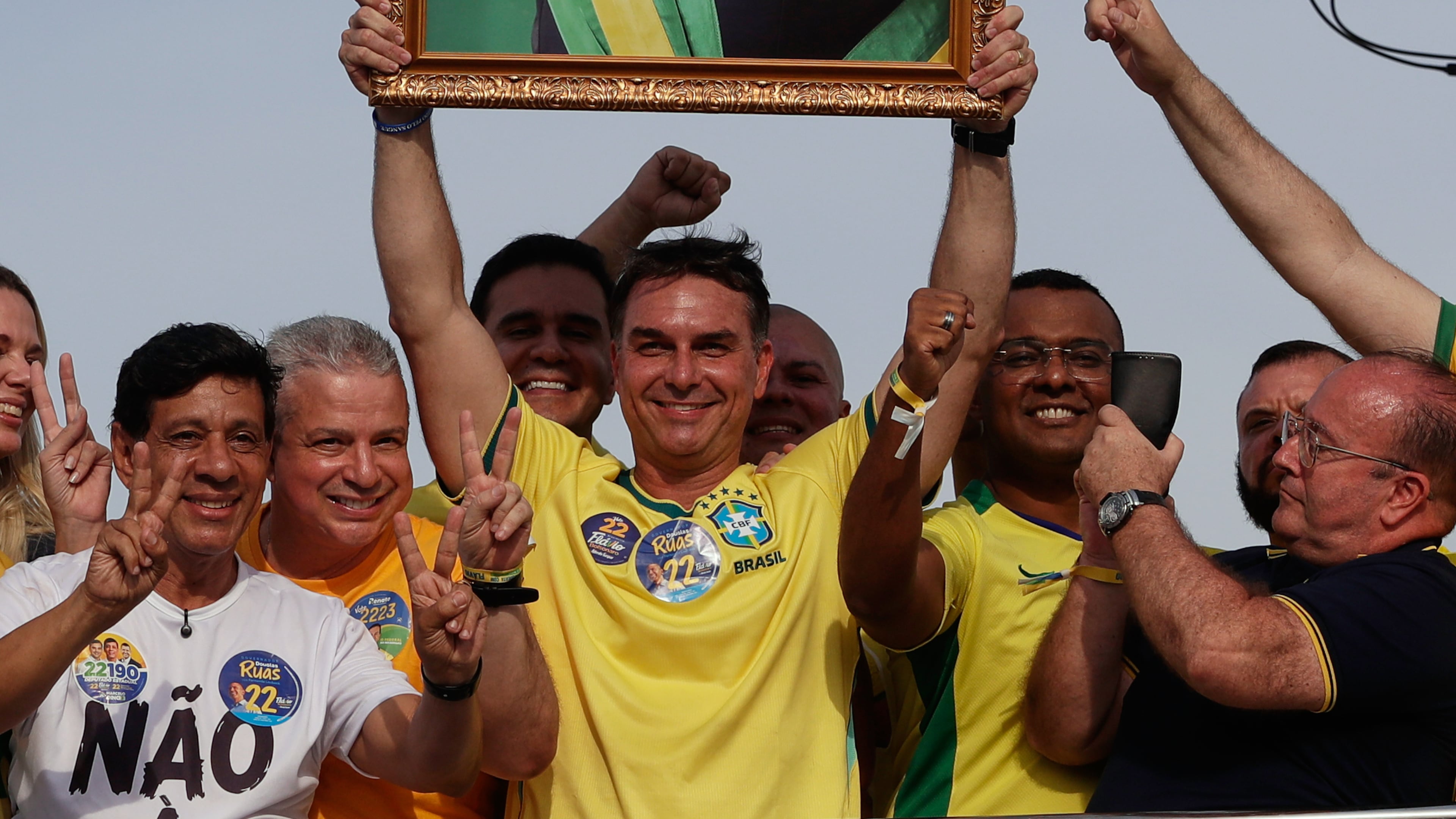
The court issued the ruling late Tuesday in a case involving opposition candidate Sen. Flávio Bolsonaro, who used the mechanism in his party's convention to feature AI-generated images of his imprisoned father, former President Jair Bolsonaro, endorsing his campaign against President Luiz Inácio Lula da Silva.
Jair Bolsonaro was sentenced in November to 27 years in prison for leading a coup attempt. At the Liberal Party’s convention in Sao Paulo in July, an AI-generated version of the former president appeared to urge attendees “to open arms” for his son and support his presidential bid.
In its decision Tuesday, the electoral court voted 4-3 not to punish Sen. Bolsonaro, ruling that the deepfake in question did not constitute a political ad for public airing, but one for a private event before his candidacy was officially announced.
However, in a separate 5-2 vote, the court defined what qualifies as a deepfake in political advertising as “synthetic content produced or manipulated via artificial intelligence or equivalent technology” with a degree of realism “to create, reproduce or alter the image, voice or speech of any living, deceased or fictional person.”
Brazil's presidential elections are heavily played online, though television and radio ads continue to set the talk of the town and sway voters.
The rules will apply to a vast amount of content from candidates ahead of the first round of voting on Oct. 4. Broadcasters must set aside 14 minutes a day for nearly 1,000 30-second ads, in addition to 12 1/2-minute blocks reserved exclusively for presidential candidates.
___
Follow AP’s coverage of Latin America and the Caribbean at https://apnews.com/hub/latin-america