AI stocks drop on calls for a slowdown as rising oil prices push the 10-year yield to 5%
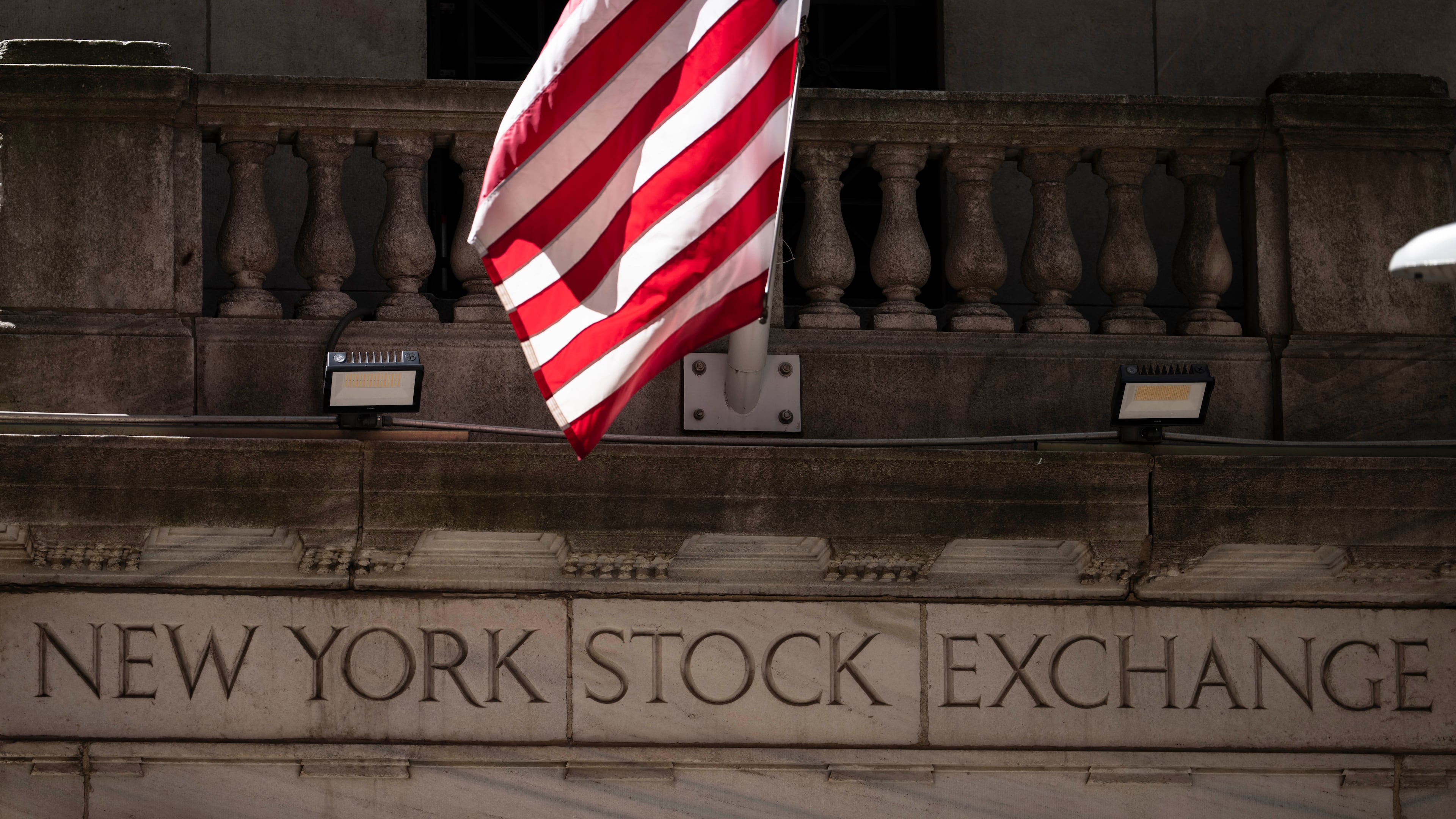
NEW YORK (AP) — Artificial-intelligence stocks are sliding worldwide Monday after leaders of the industry warned a slowdown is needed for the safety of humanity. Another jump in oil prices, meanwhile, sent the bond market to its latest pressure-raising milestone as the yield on the 10-year Treasury briefly touched 5% for the first time since 2023.
Despite all the downers for Wall Street, gains for many stocks outside AI helped limit the market's losses. The S&P 500 fell 0.6%. The Nasdaq composite, which has many more tech stocks, dropped a market-leading 0.7%, while the Dow Jones Industrial Average was down 209 points, or 0.4%, as of 11:30 a.m. Eastern time.
AI stocks have been under pressure a while because of worries their prices shot too high in the frenzy around the technology. The concerns jumped to another level over the weekend after one of the industry’s leading voices, Anthropic CEO Dario Amodei, called for a deliberate and global slowdown in the development of AI.
He cited safety issues, including the risk that AI becomes capable of leading a swarm of agents that could take over the entire internet within six to 12 months.
Nvidia, whose profits have soared because its chips are helping to train AI models, sank 3.1% and was the heaviest weight on the market because of its massive size.
SpaceX, which gets a chunk of its business from AI, fell 0.7% after Elon Musk said over the weekend that he agrees with Amodei. Softbank Group, the Japanese giant that is a major investor of OpenAI, lost 10.7% in Tokyo after OpenAI’s Sam Altman likewise supported the concept of a slowdown.
Altman also said in an interview with Fortune published Saturday that OpenAI would likely wait until next year for a sale of its stock on Wall Street, potentially delaying a gusher of cash for Softbank and other early investors in OpenAI.
In South Korea, the Kospi index dropped 3.3% due to losses for its two most influential stocks, Samsung Electronics and SK Hynix.
President Donald Trump played down the need for his administration to check the development of AI, saying he worried about ceding his country's edge over China in a global competition and that winning would help address the risks from the advancing technology.
Even with so many voices inside and outside the AI industry calling for a slowdown to protect humanity, Trump said on his social media network Monday that the only guardrail it needs “is a STRONG AND SMART (High IQ!) PRESIDENT, and the U.S.A. has that, in spades!”
Helping to limit Wall Street's losses on Monday were several software companies that tumbled earlier on worries AI-powered competitors would undercut their businesses.
Intuit, the company behind TurboTax and QuickBooks, rose 4.5%. Autodesk, whose software helps designers, climbed 6%, and Adobe added 3.5%.
Stocks in the oil industry also rose, including a 0.7% gain for ExxonMobil, following another jump in crude prices.
The price for a barrel of Brent crude rose 3.7% to $108.45 as fighting in the Middle East keeps squeezing the global flow of oil.
An important Saudi oil pipeline will mostly be out of service for weeks following an attack last week, two regional officials told The Associated Press. The pipeline offered a way for Saudi Arabia to shift exports to the Red Sea and avoid the Persian Gulf’s Strait of Hormuz, where Iranian attacks have stifled the movement of oil tankers.
Brent has jumped from less than $72 in early July as doubts rise that the United States and Iran can come to an agreement that would allow oil tankers to freely exit the Persian Gulf through the strait again.
While the prospect of a de-escalation of war in Iran may have dimmed, ING commodities strategists Warren Patterson and Ewa Manthey wrote in a commentary on Monday that the situation is still fluid and “sizable” volumes of oil have still been moving through the strait.
So far, the jump in oil prices has sent the average cost of a gallon of regular gasoline across the country to nearly $4.32 from $4.08 a month ago and $3.18 a year ago, according to AAA.
Such upward pressure on inflation has much of Wall Street expecting the Federal Reserve will hike its main interest rate on Wednesday at the end of its next meeting.
That’s the traditional way the Fed tries to rein in high inflation. Such a move then filters out through the rest of the bond market, slows the overall economy and undercuts prices for investments. That hopefully would remove some of inflation’s fuel, though Trump has been lobbying for lower interest rates instead of higher.
Besides high inflation, worries about rising debt for the U.S. and other governments and other concerns have sent longer-term Treasury yields to their highest levels in years.
The yield on the 10-year Treasury breached the 5.00% level during the morning for the first time in nearly three years. That's up from 4.96% late Friday and just 3.97% before the war with Iran began in February. It later pulled back to 4.96%.
The 10-year yield has not consistently remained above 5% since the turn of the millennium, and its jump has already made it more expensive for U.S. households and companies to borrow. That includes the highest average long-term mortgage rate in more than 14 months.
___
AP Business Writers Chan Ho-him and Michelle Chapman contributed to this report.