Japan to beef up its defense with drones, AI and missiles, defense budget plans show
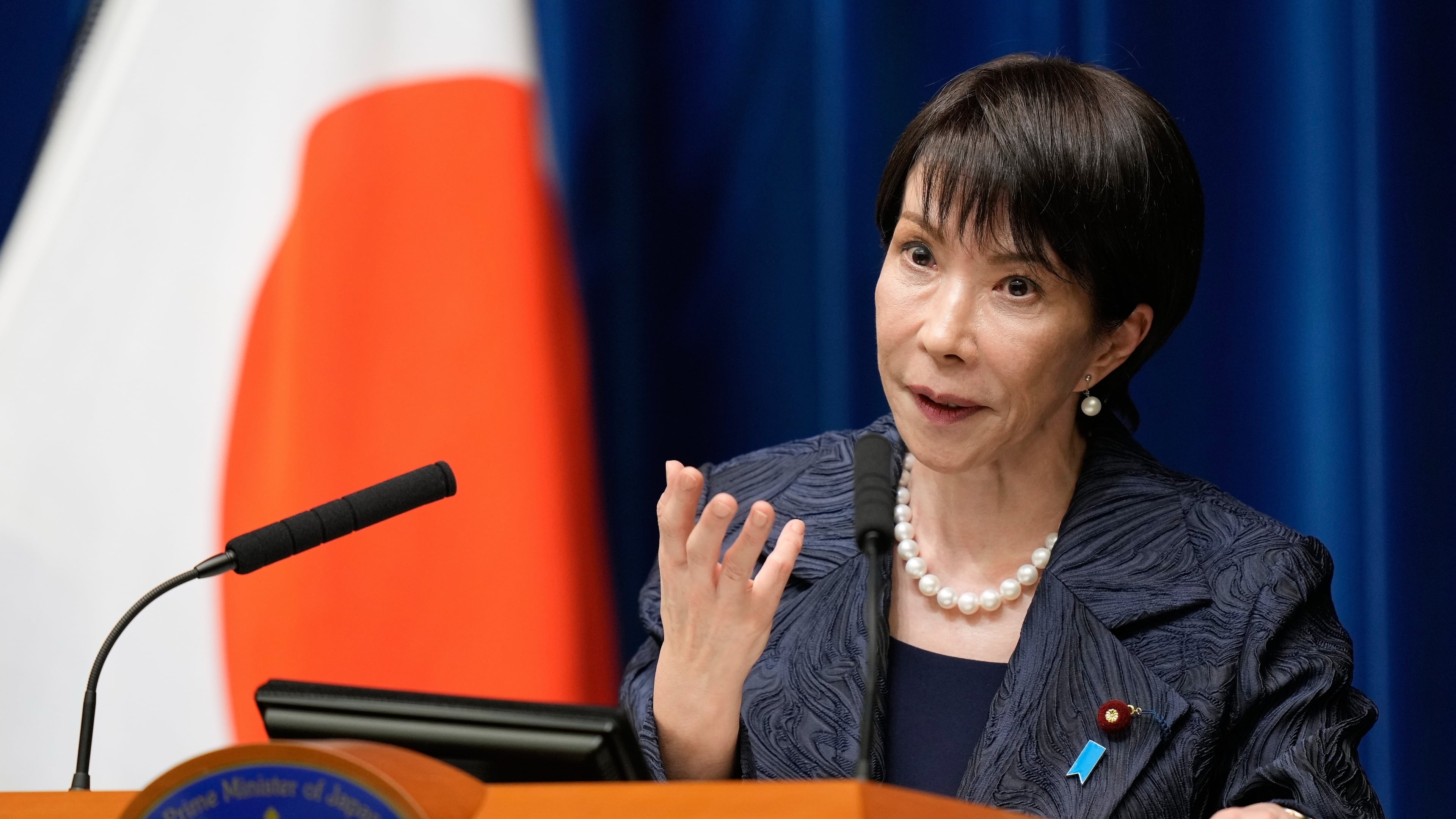
TOKYO (AP) — Japan plans to use drones, artificial intelligence and new methods of warfare as it adapts its defense strategies to suit changing times, according to details of an 8.9 trillion yen ($55.6 billion) budget request for the coming fiscal year disclosed by the Defense Ministry on Monday.
The preliminary total is only a small increase from the 8.8 trillion yen ($55 billion) defense budget requested for this fiscal year. It will be much higher eventually, but further details will come later this year after Prime Minister Sanae Takaichi's government approves the new security and defense strategy aimed at strengthening Japan's counterstrike capability.
Under its five-year defense strategy set in 2022, Japan has doubled its defense spending to about 2% of its gross domestic product to build up its Self-Defense Forces' offensive role to counter China’s growing assertiveness. Beijing has criticized Japan's defense buildup as “new militarism.”
Japan now aims to “drastically strengthen its deterrence and response capability by transforming its defense capability" by adapting to new warfare as in Ukraine’s deployment of drones, the ministry said in a pamphlet about its budget request.
Japan will use attack drones, long-range cruise missiles and interceptors
The ministry says new ways of warfare require domestic development and mass-production of low-cost uncrewed weapons to reduce costs, minimize casualties and build a more cost-efficient air defense network.
The ministry plans to use attack drones in coordination with long-range missiles for more cost-effective counterstrikes. For the fiscal year beginning in April 2027, it is requesting an unspecified amount of funding to acquire unmanned attack drones for launch from above or under water.
Officials say uncrewed weapons could also help Japan compensate for the falling number of military personnel as its population ages and shrinks. Experts say developing fully homemade drones, given that Japan's commercial market is dominated by imports from China, would be a challenge.
Japan in recent years has fortified its southwestern region with longer range missiles and interceptors.
To further strengthen its counterstrike capability, the ministry is seeking to develop hypersonic missiles that can be launched from submarines.
AI will be used to improve Japan's defense command
The ministry plans to introduce an integrated AI platform in command and control to improve speed and accuracy in decision-making, including assessing battlefields and choosing targets.
Japan is considering using existing foreign AI technologies, including those of the U.S., while also developing and strengthening domestically developed AI, or combining them, officials said.
The ministry seeks to build a next-generation platform, “AI orchestrator," which would integrate and use multiple AI systems while ensuring its autonomous selection and operation.
The ministry also plans to build a “Defense Ministry cloud” for highly sensitive data transmission and stable communications networks in an emergency or a disaster.
It did not specify the expected costs for such measures.
Government backing will strengthen the defense industry
Deterrence requires stable and sustainable defense equipment production, so Japan needs to reduce risks of shortages caused by suppliers withdrawing, officials said.
To address the concern, the ministry has requested an unspecified amount to fund a state-owned, contractor-operated system to ensure stable defense equipment production and supplies, with the government acquiring factories and outsourcing manufacturing to private firms.
The budget request also includes funding to support companies' defense-related research and development or restructuring to strengthen their production and efficiency.
Profits at major suppliers such as Mitsubishi Heavy Industries, Kawasaki Heavy Industries and IHI Corp. have risen as Japan builds up its military and expands arms exports. But the industry lags overall due to a constitutional limit on the use of force for only its own self-defense. Dozens of companies have withdrawn over the past decades due to poor profits, an uncertain business outlook and concerns about harm to their reputations from making arms, especially lethal weapons.