In Meta's trial, families of social media victims see a pivotal moment for online safety
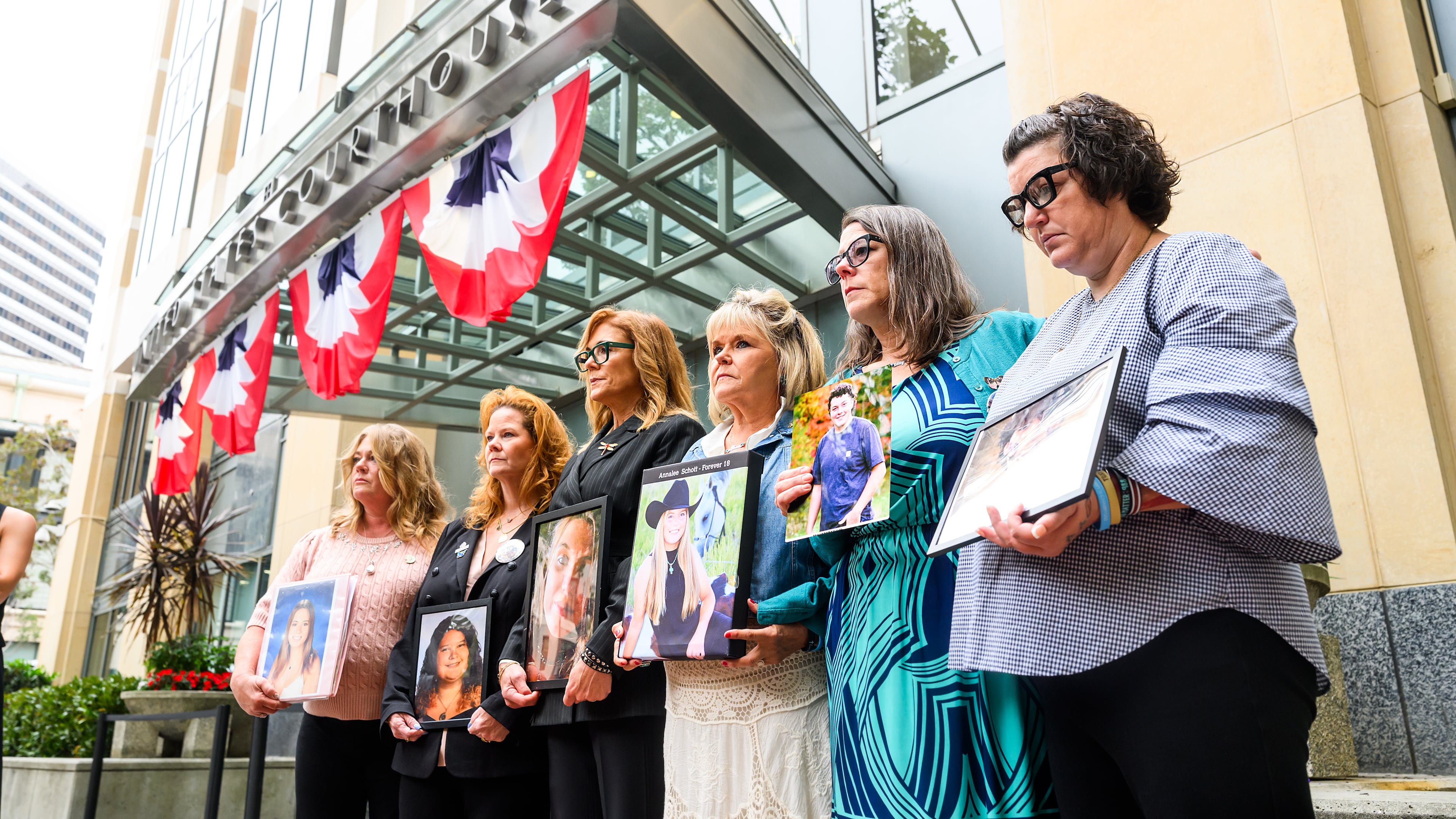
As opening statements kicked off Tuesday in a trial for Meta Platforms, advocates and parents of social media victims gathered outside the federal courthouse in Oakland, California, with a banner that stretched several feet across.
Written on it in black ink were the names of children and young adults who have died from social media related harms, including deaths by suicide after bouts of cyberbullying or sextortion. Giovanni, an 11-year-old, Bubba, a 13-year-old, and Englyn, a 14-year-old, were among the nearly 600 names. Parents said the names were “just the tip of the iceberg.”
“Behind us, justice is going to be served,″ said Lennon Torres, an advocate with the organization Heat Initiative. “The courtroom doors are open, and it is time that the public see what the executives at Meta have known all along: that their products are designed to addict and to harm children.″
Many of the gathered parents have attended previous trials, congressional hearings and other events related to online child safety. But they say this trial, in which the attorneys general from four states are seeking billions of dollars in damages for social media harms to children, marks a significant moment.
They see it as the culmination of years of work and public pressure on social media firms to do more to protect kids online. Social media companies are increasingly facing lawsuits over harms to young users, and Meta already has lost two pivotal cases over harms to children and teens this year, both of which it is appealing.
The trial represents a “groundswell of public perception changing against these companies,” said Amy Neville, whose 14-year-old son Alexander Neville died from fentanyl poisoning after being deceived by a drug dealer operating on Snapchat. Neville, like many other parents who have lost their children in similar ways, has dedicated her life to educating and spreading awareness of the dangers of social media.
“If we can keep holding them accountable over and over, something has to give, and I don’t want us to stop doing this until they’ve made their products safe by design,” she said.
Lawsuit focuses on broad claims
This lawsuit is not focused on any individual person, case or specific harm tied to social media, but rather broader claims that Meta made decisions in designing Instagram and Facebook that put young users at risk. The states also claim Meta knew the platforms to be dangerous and lied about how dangerous they were.
Meta has rejected the allegations and said the trial will show the work it has done to make its platforms safer.
The trial's outcome could have significant consequences for Meta’s bottom line and how its platforms are designed and operated. But many parents are eager for evidence from the trial, namely internal Meta documents, to be brought to light.
John DeMay, whose son Jordan died by suicide at age 17 after being subject to a sextortion scheme on Instagram, is one of those parents who will be closely watching the trial and the evidence that emerges.
“As this information starts to unfold and unfold and unfold, the American people, the American mothers and the American fathers who are not seeing this stuff every day can see it and go, ‘Oh my God, this is really what’s happening,’ ” he said.
Some of the parents present outside of the courtroom were residents of the four states that are the plaintiffs in this trial — California, Colorado, Kentucky and New Jersey — and they thanked their attorneys general for the work on the case.
Lori Schott of Colorado said Attorney General Phil Weiser has viewed the content that populated her daughter Annalee's social media feeds and read her journals after her death by suicide. Annalee, who was 18 when she died, wrote in her journals about feeling ugly and comparing herself to other girls' social media profiles.
Parents call for accountability
In a message to Meta, its CEO Mark Zuckerberg and the head of Instagram Adam Mosseri, Schott said outside of court that they have built one of the most powerful companies in the world, “but power does not excuse harm.”
“Profits does not erase the responsibility of Big Tech and no company — no matter how wealthy, no matter how influential, no matter how untouchable it feels it is — should get to stand above the truth, the law and our children," Schott continued.
Many parent advocates seemed to carry optimism with them on Tuesday. Erin Popolo, whose daughter Emily Murillo died by suicide after being subject to intense cyberbullying, was hopeful the trial's outcome could lead to meaningful change on social media.
“I think that we’re going to make history here," she said.
___
Associated Press journalist Terry Chea contributed to this report.