Congo begins vaccinations to fight the fastest-growing Ebola outbreak in history
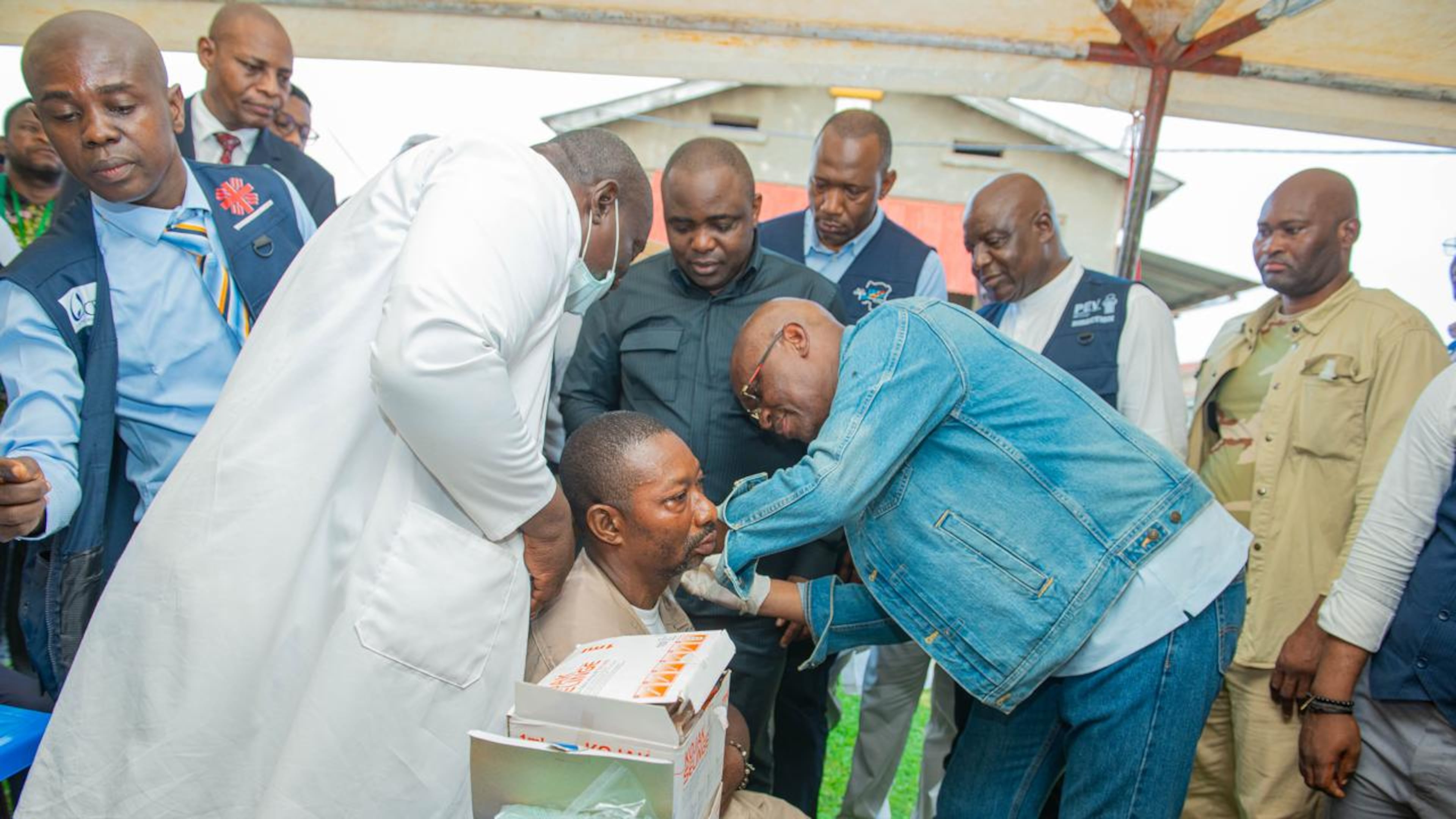
KISANGANI, Congo (AP) — Congo on Thursday began vaccinating people against Ebola as health authorities work to slow the fastest-growing outbreak of the disease in history.
Health workers and other frontline workers in the Ebola response are being prioritized to receive the Ervebo vaccine that was effective in past Ebola outbreaks caused by a different, more common type. Clinical trials are going on to find a licensed vaccine for the current outbreak.
“We have decided to use the Ervebo vaccine to protect first those who are on the front line,” Health Minister Roger Kamba said at the launch of the vaccination campaign in Kisangani, the capital of Tshopo, which is one of the six provinces affected by Ebola in the east.
As of Tuesday, the country had recorded 5,713 confirmed cases, including 2,744 deaths, according to government figures. It is concentrated in Ituri province and is known to be the deadliest of all past 17 Ebola outbreaks in the country.
The outbreak is spreading under extremely difficult conditions, fueled by insecurity, displacement, a health workers’ strike and intense population movements. The World Health Organization has said it remains out of control and is on track to surpass the 2014-2016 West Africa Ebola outbreak, the deadliest on record, which killed more than 11,000 people, primarily in Guinea, Liberia and Sierra Leone.
More than 50,000 doses of the Ervebo vaccine have been received, according to Congo’s state news agency.
The World Health Organization said last week that 70,000 doses of Ervebo had been approved for use in Congo.
About 50,000 doses are intended for frontline and health workers, while 20,000 doses will be used in a clinical trial to study whether the vaccine protects against Bundibugyo virus, which is causing the current outbreak and has no licensed vaccine nor treatment.
The vaccine is being used under a compassionate-use program, which allows a medical product to be used in a serious disease situation even though it has not been specifically approved for that particular use.
Health authorities said Ervebo could offer some protection against the Bundibugyo virus because the two viruses are related. But whether the vaccine can actually prevent illness in people infected with Bundibugyo Ebola is still being studied.
Placide Mbala Kingebeni, Africa CDC’s director for research, clinical trials and innovation, said data will be collected during the vaccination campaign to measure how well the vaccine works.
The campaign is expected to cover 14 health zones in Tshopo, Bas-Uele and Haut-Uele provinces.
Kamba strongly encouraged health workers to get vaccinated, saying the vaccine could protect them from the disease and help prevent them from carrying the virus into their communities.