Are cars getting too big for Atlanta’s parking lots?
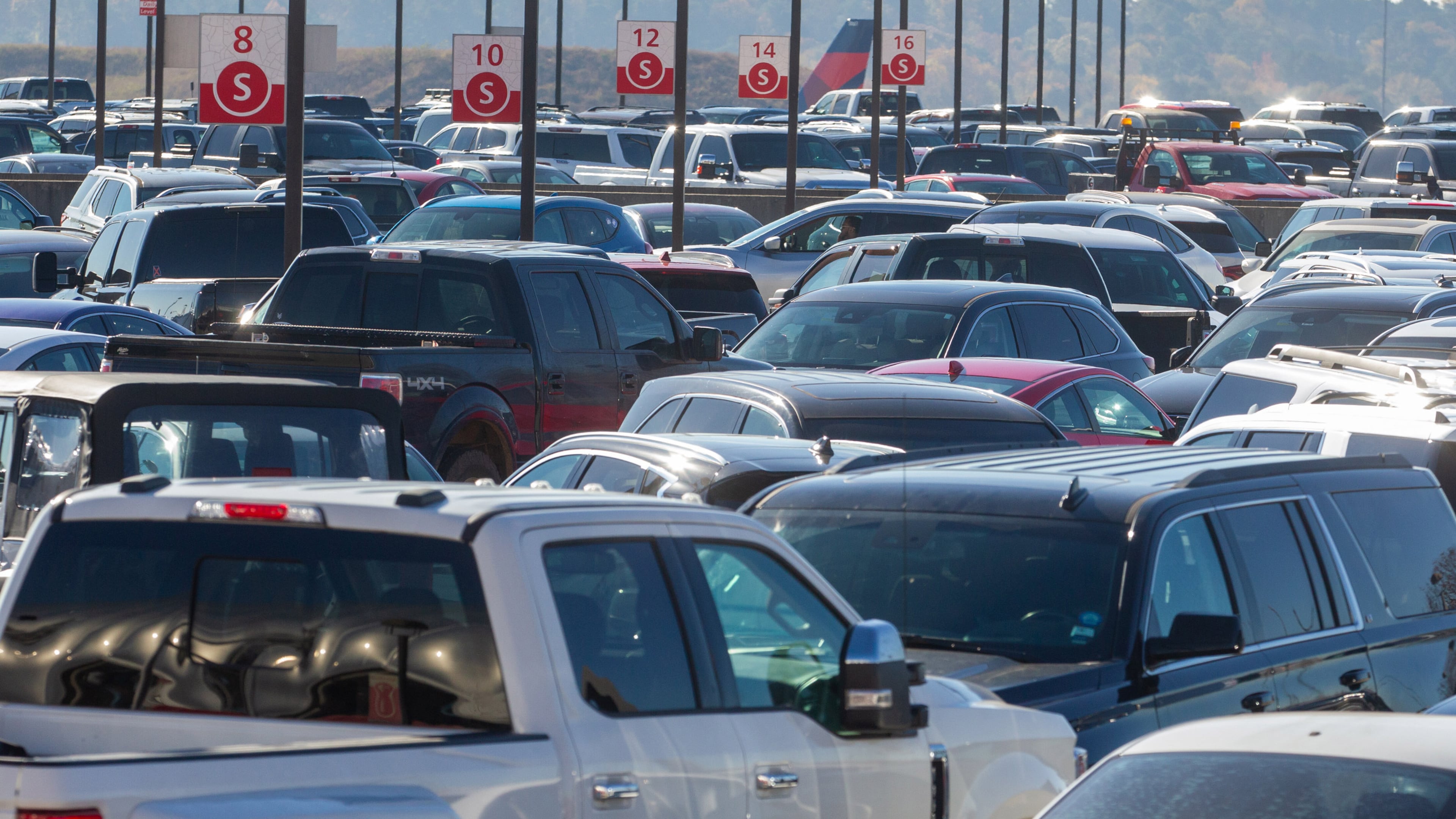
It’s a thought I’ve had for a while now: Are parking spaces getting smaller?
I drive a compact car, so I’m fortunate that it fits in almost any spot. However, when I drive my husband’s midsize SUV to the grocery store or mall, I am amazed at how claustrophobic a parking space can feel.
Cox Automotive sales data confirms what many of us see when we run errands: SUVs make up the largest share of the U.S. new-vehicle market. The category covers everything from compact crossovers to three-row luxury models.
For many buyers, SUVs have replaced the compact sedan or minivan because the broad SUV segment meets a wide range of needs and comes in various sizes. The length of a typical SUV is 14 to 18 feet. Considering that a typical parking space is 18 feet deep and 7.5 to 9 feet wide, that’s not a lot of wiggle room.
Outside of SUVs, trucks are also taking up space. The bestselling Ford F-150 is more than 19 feet long and almost 8 feet wide, including its mirrors.

Full-size pickups alone made up more than 14% of new-vehicle sales toward the end of 2025, according to Kelley Blue Book. Add in midsize trucks, large SUVs, and other oversized vehicles, and it’s easy to understand why parking lots can feel more crowded than they used to.
The bigger, the better?
In short, Americans are buying bigger vehicles, and vehicles sold in America are getting bigger, too. Some reports say that several car manufacturers increased the lengths of their vehicle offerings by as much as 20% from the 1990s to now. While those might be outliers, the mainstream is growing.

Take, for example, the Toyota Corolla. This staple in the compact car segment grew by 5% since 2002. Today’s models are 8.5 inches longer and 3.4 inches wider than 24 years ago.
One reason vehicles are getting bigger is that they are expected to contain more. Safety regulations require more equipment, shoppers demand more comfort and tech, and automakers are also responding to consumer expectations for roomier cabins.
Same small spaces
If vehicles in almost every segment are getting larger, why aren’t parking spaces also getting larger in response? One big deterrent is the cost of creating new parking spaces. Depending on the lot’s location, a redesign or new build can cost tens of thousands of dollars. Parking decks are even costlier. In the case of paid parking, the additional cost would be passed on to consumers. Local zoning laws can also dictate the dimensions of parking spaces.
When designing a parking lot, a “design vehicle” is used. This sample vehicle is a composite based on U.S. car sales data and is the size of a vehicle that is bigger than 85% of cars sold but smaller than the other 15%. This size is used to design every parking space, even though not all cars have the same measurements.
Parking space dimensions can vary depending on the type of business or institution the lot serves. The Urban Land Institute and National Parking Association recommend a minimum 9-foot width for stalls at high-turnover retail locations. Spaces at a school or office building can be six inches narrower.
Traditionally, parking lot designers aimed to leave 20 inches of space for car doors. However, as vehicles grow, the margin for error keeps shrinking.
Drivers may also feel the squeeze at home. Even a “standard” two-car garage can feel uncomfortably tight once you park a modern pickup or large SUV inside, especially if you still want room to open doors or store anything else.
The cost of parking
That cost calculation has real consequences for drivers. Parents loading children into car seats, wheelchair users and anyone with mobility issues often need more than the bare minimum stall width.
But with parking spaces costing thousands of dollars apiece — one transportation cost analysis put the land-and-construction cost of a surface parking space at about $8,000 in 2022 dollars — the incentive to design bigger spaces quickly fades. It comes down to inches, which can make the difference between profit and loss for a parking lot.
One size doesn’t fit all
One solution is obvious: Americans could gravitate toward smaller cars. This might seem unlikely now, but when gas prices rise, smaller cars with smaller fuel tanks can become more appealing. However, automakers are still churning out SUVs in greater numbers than other body types to meet current demand. EVs and hybrids are also available in bigger models.
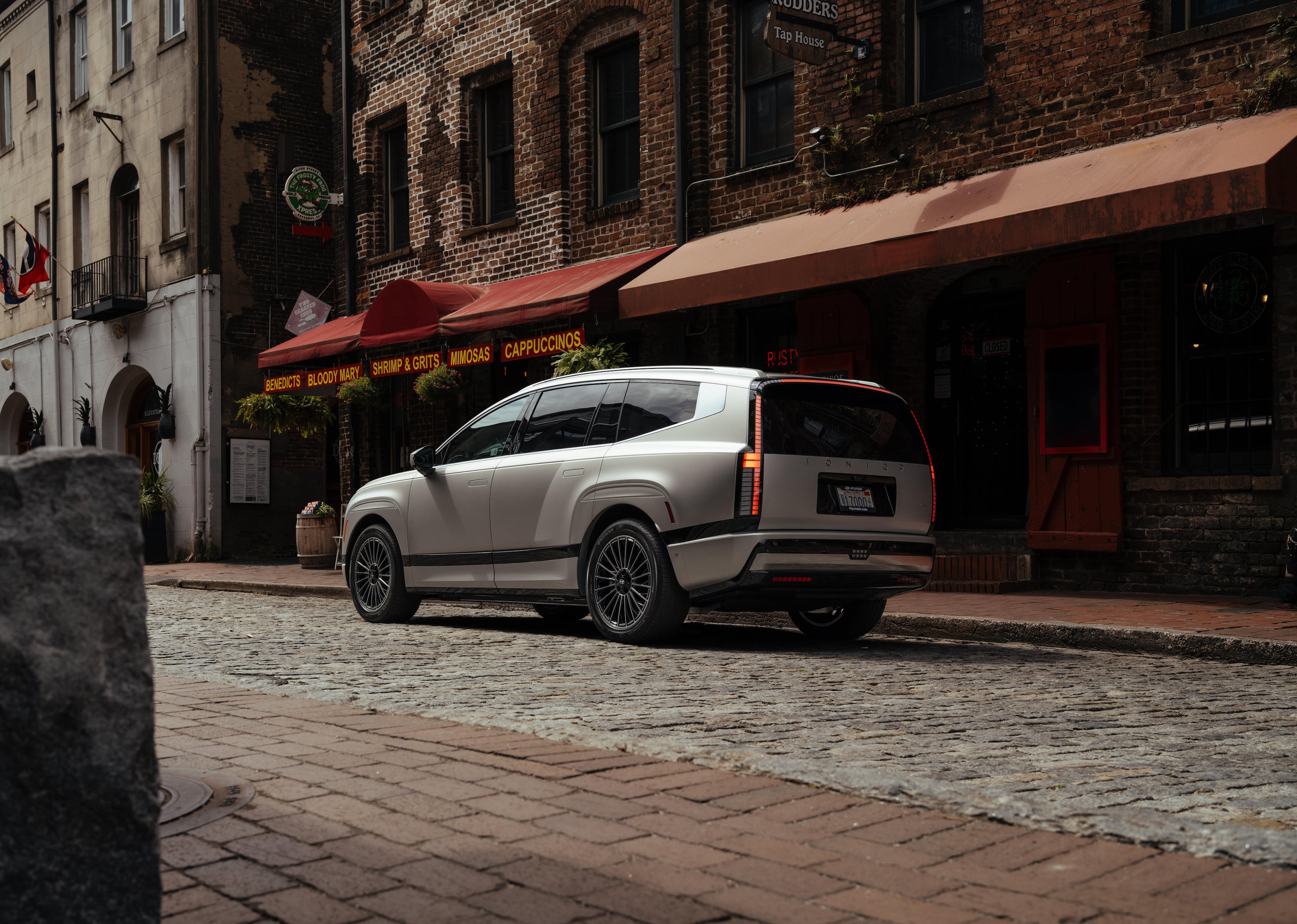
Another solution could be higher fees in public parking lots for drivers of larger vehicles. While no one likes paying more, this solution is perhaps a fair one. Drivers would pay more for using more space. The increase in cost would pay for the bigger spaces. Drivers of smaller cars would pay a lower rate for using a smaller space. The challenge, of course, would be enforcement: lots would need a simple way to classify vehicle size without slowing drivers down.
Until car sizes or costs trend downward, both drivers and developers will have to get creative with parking.
Beth Livesay is a Texas-based editor at Cox Automotive. Prior to her work writing about cars, she spent 12 years running print and digital magazines. She has written for HuffPost, The Tease, Revlon, Bloomingdale’s, and National Hardware, among other brands.
The Steering Column is a weekly consumer auto column from Cox Automotive. Cox Automotive and The Atlanta Journal-Constitution are owned by parent company, Atlanta-based Cox Enterprises.