Opioid crisis gets personal for judge who helped troubled youth
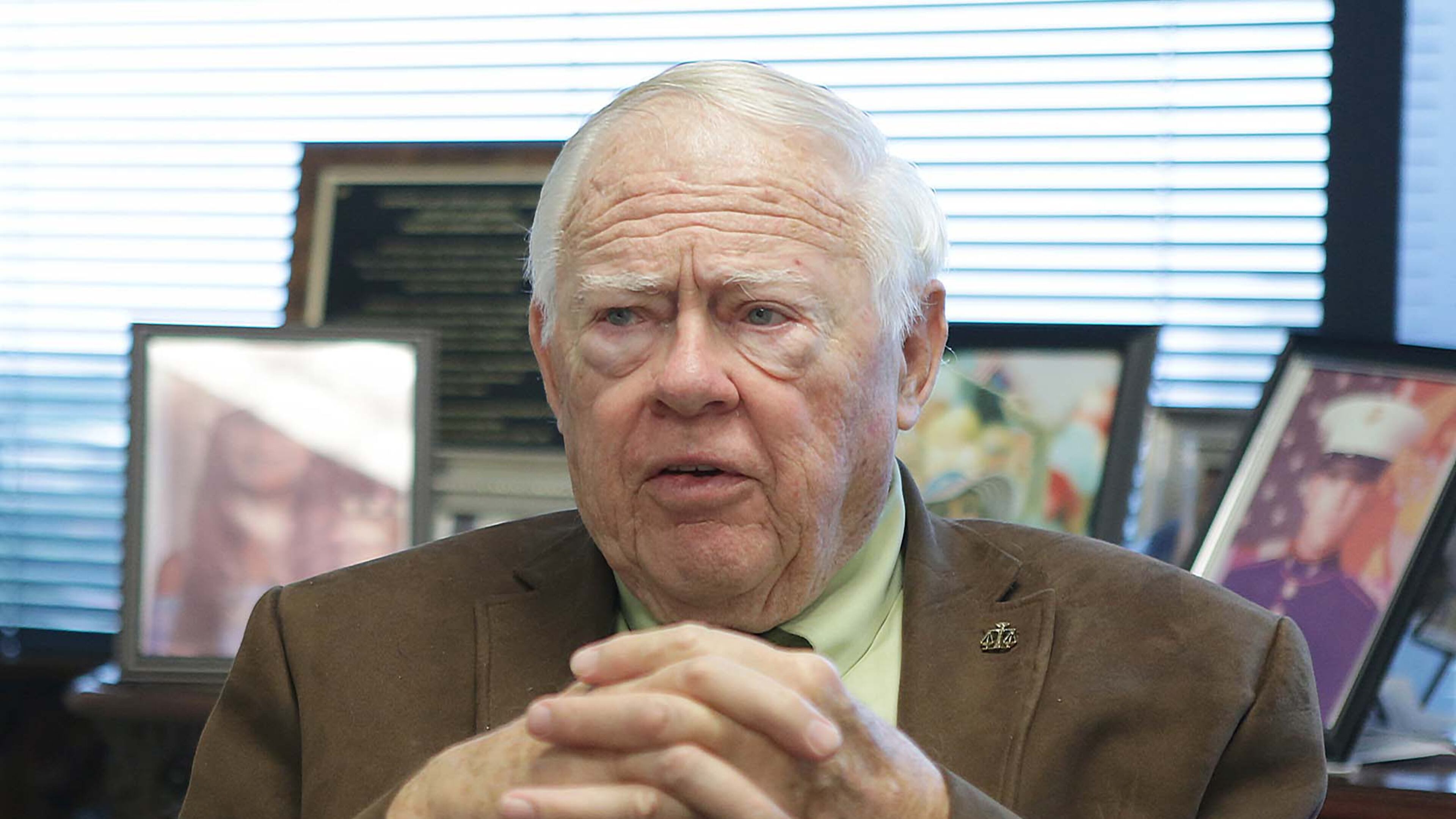
The Honorable Maurice H. Hilliard Jr., 84, awoke at sunrise that first Saturday morning in April, 2016. Morning dew clung to the first budding blooms of spring as he walked outside his Roswell home.
He hoisted himself into his Honda pickup truck and motored onto the same Roswell streets he’d protected since before they were paved. Hilliard set his course south for Atlanta’s Landmark Diner, where he ate breakfast with old friends. Sam Massell was there, the former mayor of Atlanta and founding president of the Buckhead Coalition. So was Eldrin Bell, Atlanta’s former police chief; Robert McMichael, once sheriff of Fulton County and later a U.S. Marshal; and another dozen or so retired leaders of metro Atlanta communities. The group has regularly met on Saturday mornings since sometime back in the 1970s.
“Dad is an old-school guy,” says George Hilliard, Maurice’s eldest living son and former owner of the Roswell Tap, among other establishments. “My dad is like a founding father in Roswell. A living legend. There are hardly any guys like him left.”
The ones that are were at breakfast that day.
It was 10:30 a.m. when Maurice finished breakfast, said his goodbyes in Buckhead and returned to Roswell. On his way home, he popped into The Roswell Tap on a whim, walking up the path to the restaurant’s front door, past the stately old oak tree in the front yard. With the door creaking closed behind him, the retired judge walked unknowingly into a dark new era for his family.
At the link below, read the rest of the story about how Hilliard and his family were changed forever on that day.

Personal justice
Despite a history of helping troubled youth, former judge Maurice Hilliard couldnt save his grandson.
Kicker
This is a kicker.The Honorable Maurice H. Hilliard Jr., 84, awoke at sunrise that first Saturday morning in April, 2016. Morning dew clung to the first budding blooms of spring as he walked outside his Roswell home. He hoisted himself into his Honda pickup truck and motored onto the same Roswell streets hed protected since before they were paved. Hilliard set his course south for Atlantas Landmark Diner, where he ate breakfast with old friends. Sam Massell was there, the former mayor of Atlanta and founding president of the Buckhead Coalition. So was Eldrin Bell, Atlantas former police chief; Robert McMichael, once sheriff of Fulton County and later a U.S. Marshal; and another dozen or so retired leaders of metro Atlanta communities. The group has regularly met on Saturday mornings since sometime back in the 1970s. Dad is an old\-school guy, says George Hilliard, Maurices eldest living son and former owner of the Roswell Tap, among other establishments. My dad is like a founding father in Roswell. A living legend. There are hardly any guys like him left. The ones that are were at breakfast that day. It was 10:30 a.m. when Maurice finished breakfast, said his goodbyes in Buckhead and returned to Roswell. On his way home, he popped into The Roswell Tap on a whim, walking up the path to the restaurants front door, past the stately old oak tree in the front yard. With the door creaking closed behind him, the retired judge walked unknowingly into a dark new era for his family.
**2**
**Tough but fair** Born in Griffin in 1934, Maurice Hilliard grew up in his maternal grandparents home with his mother and two younger brothers from the time he was born until the first grade. His father Maurice H. Hilliard Sr. served during his sons earliest years as an infantryman in World War II and fought in the Battle of the Bulge. When he returned home, he took a job selling insurance for Metropolitan Life in Atlanta. And so the Hilliards moved north from Griffin to Atlanta, where Maurice proved a gifted student from his first days in school. He graduated from Bass High School in 1952, then Mercer University and Atlanta Law School. It was no accident that Maurice chose law. In the years that followed his return from WWII, his father had returned to school and become a lawyer. Maurice revered his father and followed his example dutifully in life. It was at his fathers recommendation that Maurice sat for the bar after just one year of law school and passed on the first try. Atlanta Law School sent the first year student a diploma, and he never went back. And reverence for his father is why, after Maurice was named the first municipal court judge in Roswell, he developed a reputation for being hard on DUI offenses. His father had survived Nazi Germany only to come home from war and be killed by a drunk driver when his son was in his 20s. The judge knows loss. In the years after losing his father, Maurice started a family of his own. His firstborn son, Maurice H. Hilliard III, died from a brain aneurism at 12 years old. If losing his father to a drunk driver affected his stern demeanor in court, perhaps losing his son drove Maurices empathy toward the youth who came before his bench. The losses of a father and son had at once steeled and softened Maurice. He developed a sort of old\-school, kind\-but\-cranky demeanor during his years on the bench. At home, his daughter Joanie describes him as a a big ol teddy bear. In the community, friends describe him as acerbic and irascible. During the course of Maurices 32\-year tenure, Roswell transitioned from a rural community to a major metropolitan suburb as the population grew from less than 23,000 residents in 1980 to almost 100,000 today. In his courtroom, the joyriding shenanigans of high school football players who might unleash the occasional fire hydrant on a peer had given way to the methamphetamine dealers, the sex traffickers, and all other manner of big\-city crime. Perhaps no case in Maurices courtroom embodied the kind of demographic change reshaping Roswell than that of chicken man Andrew Wordes, whose battle with Roswell city officials over his right to keep chickens at his home reached Maurices court in 2009 and 2011. The case turned tragic when in 2012, Wordes who told The Atlanta Journal\-Constitution that he blamed Roswell officials for his impending home foreclosure summoned police and media to his home before igniting the gasoline\-soaked house, causing a fiery explosion and his own death. It wasnt long after that when Maurice decided to step down from the bench. Hed seen Roswell through an era of unprecedented growth and had watched as it changed his courtroom and the surrounding culture of politics in Roswell. For more than 30 years, if you went before my dad, says son George Hilliard, you knew you were going to get a fair shake.
**3**
**I cant describe it** And so it was that the retired judge arrived at our first meeting, pulling into the gravel parking lot behind his wifes art gallery in an old minivan. He hopped down from the drivers side door already talking at a mid\-conversational pace, his yellow short\-sleeved button\-up shirt hanging loosely at his biceps, and gray slacks freshly pressed. His gold watch slid around on his arm like a man whod lost a few pounds, and his thin hair still had a wisp of blond mixed into the white. He punctuated many of his thoughts with, oh, gosh, as he bought himself time to recall a fact or a name. The bags beneath his eyes looked heavy, as if hed taken a punch, but his spirit showed no signs of wear. Maurice projects an assured demeanor and is excitable by nature, prone to exaggerations about things he loves. About his grandson Alex, Maurice will quote his height at 64, when 62 is more like it. Harvard, he claims, sent the young football star an offer letter, when in truth, it was an interest letter. For all that is unchanging in Maurice the ethical backbone, the exaggerated story, the Saturday breakfast crew the world around him has changed a lot in 84 years. This is not that old Atlanta he and Sam Massell, and all the breakfast regulars at the Landmark shaped. Nor is this that old Roswell where chickens would be a perfectly acceptable thing to have in ones yard. Those worlds are gone now, replaced with something different. Even Maurice admits perhaps he, too, has changed. Which brings us back to that spring Saturday morning in 2016, when Maurice, two years retired from the Roswell municipal court bench, walked into his son Georges restaurant, The Roswell Tap. Inside, the restaurant was not yet open. Maurice spotted his daughter\-in\-law, Vladi Hilliard, and was surprised to see her doing the opening side work. _What are you doin here?_ he asked her. His grandson Alex Meador, 27, was set to open his uncle Georges restaurant that morning. But Alex hadnt showed up yet. Maurice shook his head. He knew where his grandson was. Alex had moved into the judges Roswell home the week before, and Maurice had heard him come in around midnight. The judge offered to go and wake the boy, and he pointed his minivan toward home around the corner. When he arrived, Maurice yelled down the basement stairs for Alex to wake up, but only the sound of a television emanated in response. Maurice grumbled down the steps and marched straight back to Alexs bedroom door, which he swung open with agitated force. An empty bed, never slept in. Turning around, the judge suddenly noticed what hed missed the first time: Alex, sitting on the basement couch. Maurice growled angrily at his grandson to get up, storming toward him in frustration, but Alex didnt budge. Then Maurice saw it. On the table in front of his grandson, the needle and the remains of a solution. The retired judge cried out and called Roswell Police Department _his_ Roswell police department. He checked Alex for a pulse and set his grandson down on the floor next to the couch. I touched him, and he was you know he I just I cant describe it. Alex was cold. The judge frantically performed CPR until his son, George arrived. Maurice cannot say if it had been two minutes or 20; time stood eerily still as hed tried so desperately to wrestle his grandson back from the darkness. _Dad?_ George pleaded gently. _Hes dead. You can stop._ _No he isnt! Get the hell out of here! Leave me alone,_ Maurice shouted wildly, thrusting at Alexs chest and breathing into his mouth. George didnt say another word. A moment later, the ambulance arrived and emergency workers pronounced Alex Meador dead from a heroin overdose. And just like that, Maurice lost his grandson, the same way he lost his firstborn son and his father: Too early.
**4**
**Deadly epidemic** In death, Alex joined the roughly 64,000 other Americans whose lives ended with overdose in 2016, according to the Center for Disease and Control. The 2016 death toll marks the largest annual jump a 22 percent increase in overdose deaths ever recorded in the United States. The numbers represent an average of 175 deaths every day, or another Alex every eight minutes, somewhere in America. Overdose is now the leading cause of death among Americans younger than 50. Today, opioid overdoses claim as many American lives as the 9/11 terrorist attacks did, every three weeks. Maurice regards our nations rise in addiction as an unintentional byproduct of the pharmaceutical industry. In 2015, 7.8 million painkiller prescriptions were issued in Georgia, which is enough to give more than one full bottle of pills to every adult in the state. I think we became more permissive with the pills, and the problem snuck up on us, says Maurice. Doctors prescribed pain medication without much thought to what the consequences might be. It became too easy to obtain pain medication, and that easy access created the problems we see today associated with addiction. Its a story he saw play out in both his courtroom, and his basement. What started at a doctors office ended with heroin. Ive seen it from the bench many times. The opiates, they grab you by the chest and wont let go until they own you. he said. Alex was a football standout as an offensive lineman at South Forsyth High School, and he attended Georgia Southern University. But the lasting toll of an injury to his shoulder in high school and his ankle in college kept him from ever joining the Eagles team. As his football career languished, his reliance on prescription drugs became an under\-the\-radar problem in his life. Eventually, the doctor said there was no medical reason to continue getting the medicine. So Alex turned to the streets, and eventually found heroin to be cheaper than Oxycontin and even more effective, says Maurice. When Alex returned from college, his addiction was in full bloom. And he proceeded to do what addicts often do. He stole from his family, and lied, and said he was going out to see friends when he meant dealers. All of it was done in the name of a secret he couldnt bring himself to share, that he had a problem too big to handle alone. When his family figured it out, they acted swiftly. Because Maurice was a judge, he had a few extra tools at his disposal that other families might not. He and a friend picked Alex up from his mothers home one night and drove him to the Roswell police station. They administered a lie detector test. When presented with the results, Alex admitted his problem and agreed to get help. He went that very night to a rehabilitation center in Macon. His family hoped that rock bottom was finally in the rear view mirror. To an extent, they blamed themselves for letting it get so bad. As parents, grandparents and well meaning friends, we tend to look the other way, Maurice says. We dont want to admit to ourselves that we have a problem in our family. But we have a responsibility to act when things arent quite normal. And, it shouldve been clear as day what was happening when things came up missing. Inanimate objects dont have legs. I think something couldve been different perhaps, if wed acted differently, he reflects. When Alex returned from rehab in 2015, his family was pleased to see him enroll at No Longer Bound, a long\-term residential care community with a mission of rescuing addicts, regenerating men and reconciling families. Alex was doing well. He had work and began to date a girl named Cheryl Hall. His return to the family was celebrated by all, until he relapsed. Once again, Alex was back in Macon getting sober. When he returned to his Atlanta family in 2016, everyone believed this time would be different. He moved into his grandfathers house. He got two jobs, landscaping during the day and working at his uncles restaurant at night. He and Cheryl made plans to move in together. And then, seven days out of rehab, he overdosed and died.
**5**
**Healing action** Youre not gonna freak out on me or anything, right? Joanie Meador asked me, reaching into her purse. Joanie is Maurices only daughter and was Alexs mother. She placed a small glass vial on the table next to my breakfast. It contained a gram of gray dust and little black crystals, sealed with a mechanical pencil eraser cork. This is my son, Joanie says. She puts Alexs remains into these little jars and sends them to addicts in crisis, with a card explaining how finite what shes giving away truly is. It is all thats left of him. I make sure everyone gets a little bone fragment in there, too she says. More than a year has passed since Alexs death. The Hilliards are strong people, but its clear to see they are not done healing yet. They are angry, and mournful, and worn. My son was not supposed to die this way, Joanie says. She clutches a folder of Alexs pictures and letters close to her chest, as if its contents might be carried away by wind. The bags beneath her eyes look even heavier than her fathers. Today, Joanie fights to save others on the battlefield where her son was lost. She is active in several Facebook groups devoted to addiction, recovery, loss and support. Living in that world the family of the addict comes with a playbook all its own. There are support groups and anon meetings and social media relationships with others of similar backgrounds. There are the newly inducted moms and brothers and husbands of addicts, and there are the road\-weary veterans of the cycle. And there are the warriors, the on\-the\-ground, scrappy moms and friends of friends who, though theyve perhaps never met the addict in question, will go to bat to find rehab, or funding, or something anything to help. They know what Joanie knows. This is a street fight to save a kids life, she says. Joanie is an addiction warrior now. But shes not the only Hilliard on a mission. Joanies surviving son Mickey, 24, has also pointed his future toward saving others. He didnt know what his calling in life would be before his brother died, but he does now. Hes pursuing a career as a first responder. Alexs uncle George Hilliard rails against the government and drug laws that he sees as complicit in his nephews death, while Alexs girlfriend Cheryl struggles with the ache of memory, and of what might have been. She volunteers her Saturdays at No Longer Bound. Alexs grandmother Joan the judges elegant wife tends to press the palm of her hand against her cheek at the mention of painful details, staring longingly into one of her paintings. She gently admonishes her husband for recounting the vivid details of Alexs death. Why discuss such terrible things, she asks him. To Joan, the haunted memories ought not be named. And for the Honorable Judge Maurice H. Hilliard Jr., there is little left to discuss in the way of emotional pain. Whats done is done. He has lost his father, his firstborn son and his eldest grandson all too soon. Hes seen countless family tragedies, community tragedies, and dark days from his bench in municipal court. Those who know him best will say Alexs death hurt Maurice more than hell ever admit. That pain, though, is the kind that exists mostly beneath the surface, only leaking into view in the passing facial expressions and cleared throats of a man in silent grief. If you ask the judge, Alexs death awakened in him an instinctive hunger for justice. Its my feeling that heroin traffickers need to be treated under the same laws that proactively seek to disrupt domestic terrorism, he wrote me in an email. The major cartels who produce and traffic the heroin need to be fully designated as international terrorist groups because opiates kill more of our young people each year than those who died in the Twin Towers at the hand of Terrorists.
**6**
**Swift justice** Maurice Hilliard chose a lifetime of service to his community, and was is a definitive public servant. The general consensus is that the judgments he rendered were made in the best interest of the defendants that stood before him particularly the youthful defendants. It was that legacy that sparked within local law enforcement communities a strong desire to rally on the judges behalf, to serve Alexs death with the best that law could muster. Roswells police chief and the municipal judge that replaced Maurice both came to the scene of Alexs death that day. Alpharetta lent their drug dog. Police confiscated Alexs two cell phones and his car, in hopes of finding out who his drug supplier was. Indications soon pointed to Miles Herve Lyons, 38, or Polo, as he was known on the streets. Lyons was a known entity among law enforcement. According to Maurice, a sting was set up with Lyons using Alexs phone, the dealer unaware of his clients death. Within a few weeks of Alexs demise, undercover officers had on three occasions purchased heroin totaling 1.5 ounces from Lyons. Then federal agents became involved and by June, that tally was up to 2.5 ounces and an unregistered gun. In July, a final transaction was arranged at a shopping center. Thats when the Drug Enforcement Agency moved in and made the arrest. Lyons sits today in Jackson County prison, doing 10 years for his crimes.
**7**
**Long arm of the law** In the death of the young, there are no tidy endings. But when Maurice tells his story, he brings it home with a story about how his past impacted his future. On a warm night earlier this year, the retired judge was seated at a table on the front lawn of The Roswell Tap. He was there with family hosting a Roswell High School class reunion. Maurice recalls a man walking up with wife in tow to introduce himself. _Judge Hilliard?_ the man said. _Not anymore,_ Maurice replied. The man told him about appearing in Maurices courtroom many years earlier, when a fire hydrant prank turned into an assault charge that threatened to derail the young mans life. Maurice showed mercy and released the youngster to the sentencing guidelines of his football coaches. _At the time I hated you for it,_ Maurice recalls the man saying. _But I never couldve been a law enforcement agent if Id been convicted of a crime that day. And I never wouldve joined the DEA, or been the man to put cuffs on Alexs killer._ Maurices eyes grow teary as he recounts the serendipitous effect of his lifes work on the scales of justice for Alex. What goes around comes around, I guess, he says, pressing a balled fist against his mouth. He clears his throat and sits silently for a moment. And when he does speak again, he makes no mention of his broken heart.
Behind the story

[Click above to read more of our Personal Journeys.](http://www.myajc.com/personaljourneys)
**ABOUT THE STORY** According to freelance writer Adam Kincaids research, someone dies of an opioid overdose in this country every eight minutes. Opioid abuse is now the No. 1 killer of Americans younger than 50. And as this story on the former Roswell municipal court judge Maurice Hilliard proves, no family is immune to the epidemic. This weeks Personal Journey is a sobering, cautionary tale for every family in this country. **Suzanne Van Atten** **Personal Journeys editor** **[personaljourneys@ajc.com](mailto:personaljourneys@ajc.com)**

**ABOUT THE WRITER** Adam Kincaid is a freelance writer for the Atlanta Journal\-Constitution and other outlets. His previous Personal Journeys were about Janea Cox's fight for medical marijuana reform, the emergence of Kyle Brooks' iconic street art and the tale of Matt Arnett's path to Grocery on Home, among others.