A sheet-pan game plan: Good equipment, plus ingredients that work well together
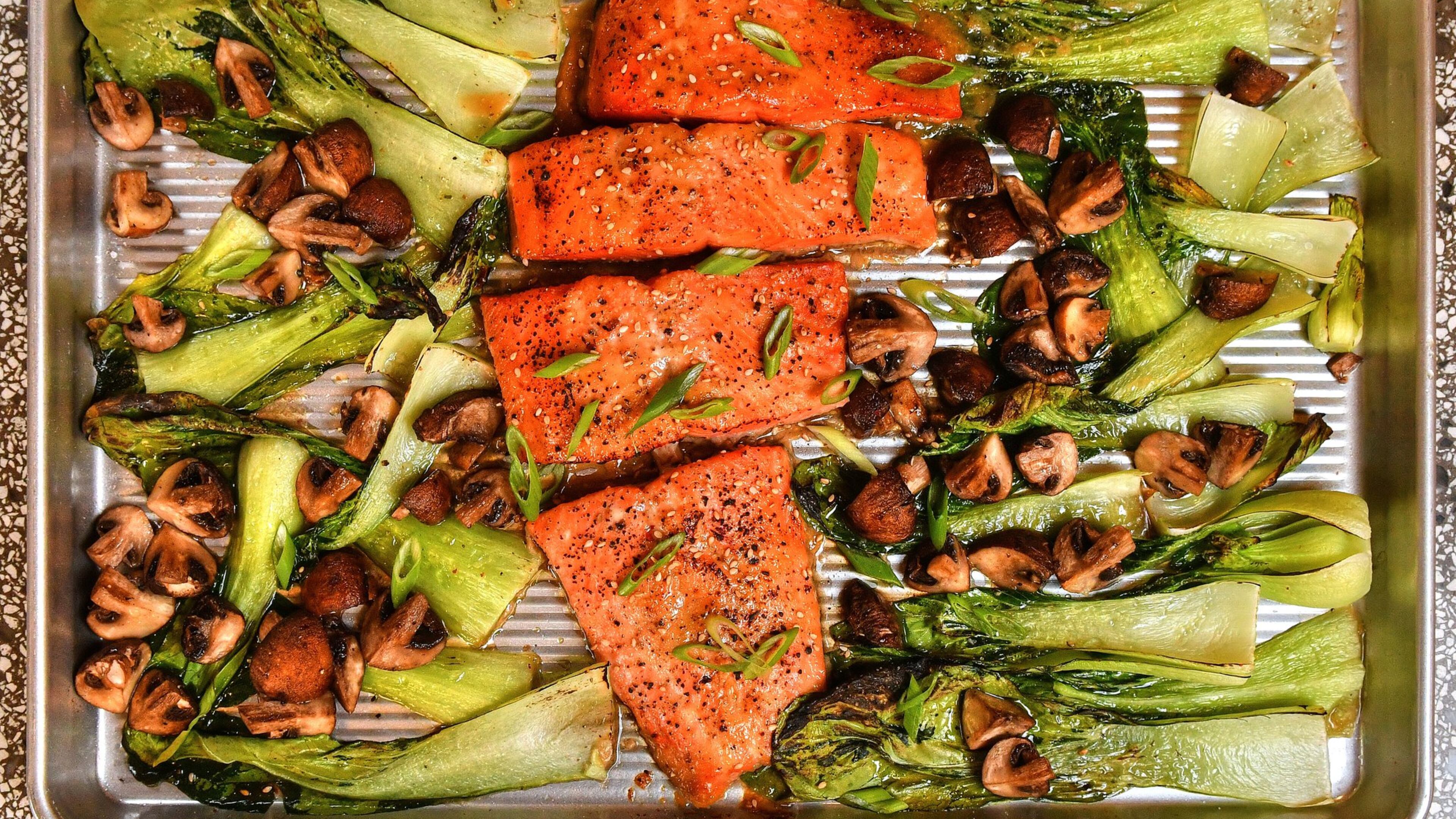
It’s not often that I splurge on a shiny new toy for my kitchen, but I finally did it. I broke down and bought a $25 heavy-duty, nonstick, restaurant-quality half-sheet pan, and what a game changer that investment has been.
For years, I’ve been enamored by the concept of sheet-pan dinners, where meats and vegetables roast together on one baking pan. I’m drawn to their promises of quick prep times and easy cleanup almost as much as the layered, caramelized flavors I already love about high-heat roasting.
I’ve made quite a few on the flimsy jellyroll pans and cookie sheets I’ve owned for decades that popped and warped in the hot oven, yet generally managed to produce decent, if somewhat uneven, results. But with practically every professional recipe writer and creative home cook in the universe nowadays dreaming up photogenic new sheet-pan combinations to show off on Instagram, I’ve been itching to step up my game.
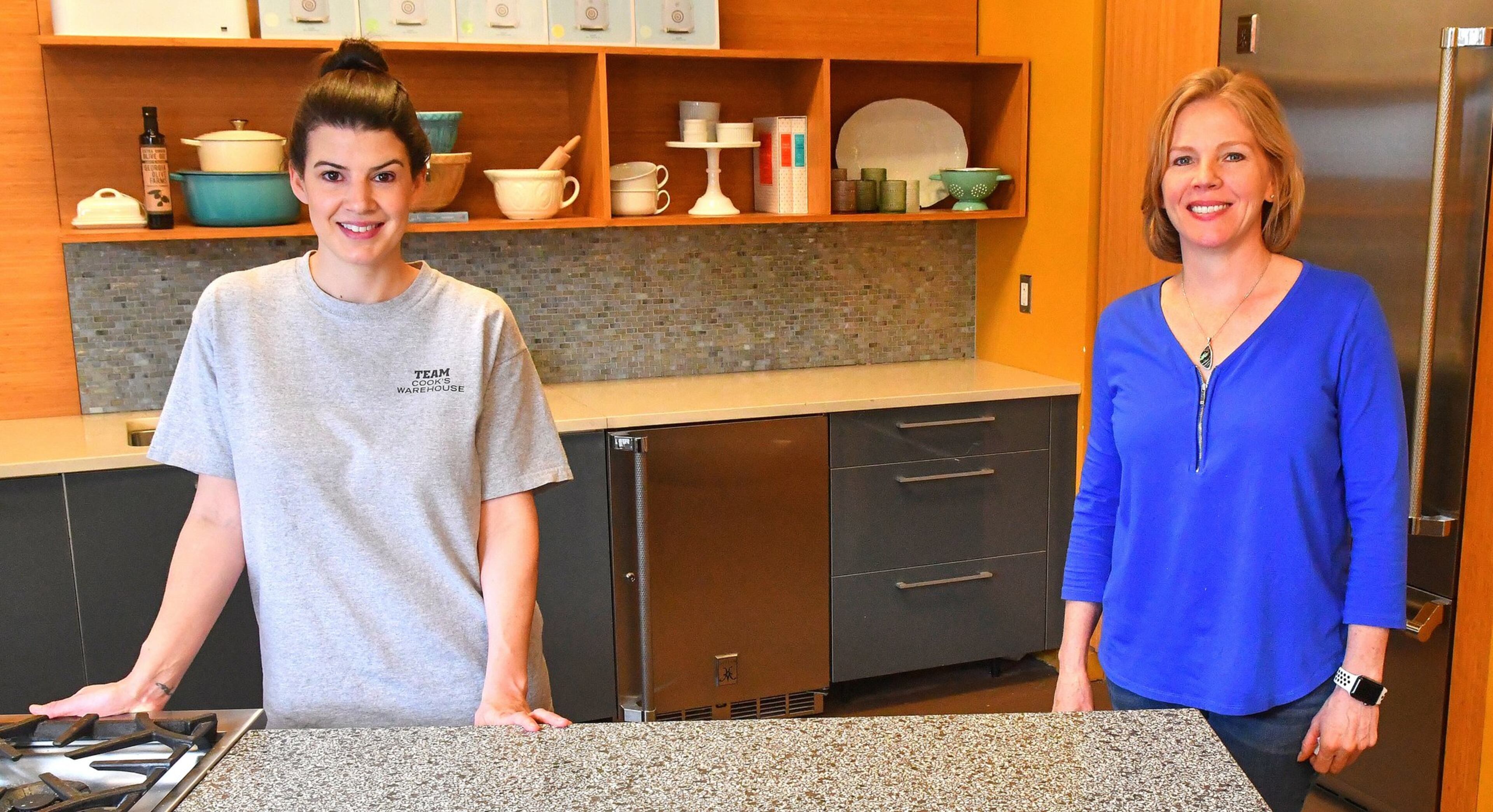
And my first step toward excellence, I knew, was upgrading my equipment. I turned to Cook’s Warehouse founder and CEO Mary Moore for guidance.
“Sheet-pan dinners are a quick, easy and efficient way to put a healthy meal on the table — one pan for cooking, one pan to clean,” says Moore. “One of the big keys to success is using a thick-gauge, high-quality pan that won’t warp or twist in the oven and cooks evenly.”
Her preferred model, and the one I bought, is the restaurant-style half-sheet (a little less than 18-by-13-inch) with a 1-inch rim made by USA Pan, which also comes in a quarter-sheet. (Full sheets are designed for commercial ovens.) Made of heavy-gauge aluminized steel, it has a fluted surface for even baking and a nonstick silicone coating for easy cleanup. Some sheet-pan aficionados swear by bare aluminum, and if you prefer that route, Nordic Ware gets high marks for one that’s about half the price.
“Almost any recipe from any cuisine can be adapted into a sheet-pan recipe — Mexican, Italian, Indian, Asian are all fair game,” says Nealey Thompson, Cook’s Warehouse’s cooking school director, who incorporates them often in her classes as well as dinners at home. “It’s fun to play around with favorite family recipes and flavor profiles to come up with your own sheet-pan version.”
Indeed, I’ve seen recipes for curries, stir-fries, and even shrimp boils (the recipe follows) adapted for the sheet pan.
But a top-quality pan alone, she notes, doesn’t guarantee top-quality results. Foods cook at different rates, depending on size, shape and density. How you cut, slice and position them on the pan can make a huge difference.
Before I get too inventive with my own, I’m experimenting with recipes from reliable sources using different combinations, paying close attention to the cooking times of each ingredient, and making notes so I can improvise.
And I’m taking care to heed these general rules supplied by the experts:
1. Choose flavor combinations that taste good together and cook at a similar rate. Or you can add them at different stages of the cooking process. If you see some parts are getting done before others, pull them out and tent with foil while the rest keeps roasting.
2. Coat everything well with oil so the ingredients don’t dry out. Season the ingredients first with salt and other seasonings, if you like, together or separately. A plain piece of fish or chicken can benefit mightily from a marinade or a savory spice blend.
3. Don’t crowd the pan. Foods should be spread out in a single layer to allow ample air circulation for caramelization. Use two pans if you need to. Or use a wire rack to raise meats and breaded ingredients, so that their juices baste the vegetables below while staying crispy all over.
4. Set a rack near the broiler in case your food could use some extra browning. But watch carefully so it doesn’t burn.
5. Brighten the flavor, color and texture with a squeeze of citrus and a generous shower of soft, fresh herbs or other raw garnishes before serving. A vinaigrette, grating of cheese, or drizzle of sauce on the side won’t hurt.
6. And by all means, choose a heavy-gauge, high-quality pan for the job. If your pan doesn’t have a nonstick surface, you can line it with foil or parchment for easy cleanup. But if you use parchment, you may sacrifice some of the crispiness.
RECIPES
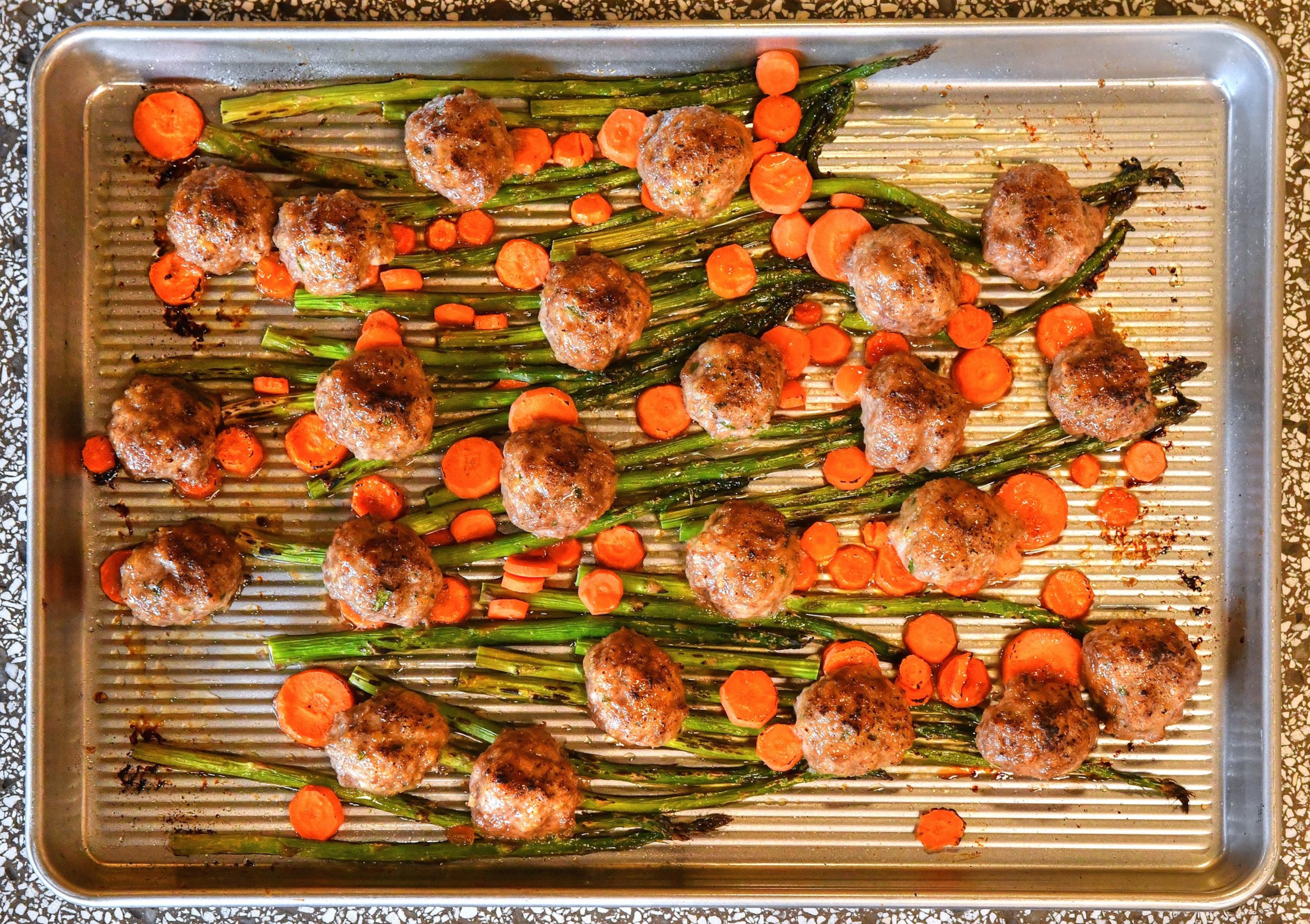
Lamb Meatballs with Marmalade Glaze and Spring Vegetables
“These moist and flavorful meatballs are a family favorite and can be adapted a million different ways,” says Nealey Thompson, cooking school director for Cook’s Warehouse. “Feel free to substitute ground beef, pork, chicken or turkey if that is what you have on hand. Vegetables can include carrots, parsnips, leeks, scallions or green beans.”
In place of orange marmalade, you could glaze the meatballs with pepper jelly, sweet chile sauce, balsamic glaze or most any kind of chutney. Or you could skip the glaze and drizzle the meatballs with Greek yogurt or sour cream mixed with a little lemon juice and chopped fresh herbs (mint, parsley, basil, etc.).
Lamb Meatballs with Marmalade Glaze and Spring Vegetables
- 2 or 3 tablespoons olive oil, plus more, for brushing
- 2 large carrots, peeled and cut into thin coins
- 1 bunch medium asparagus, woody ends removed, leave as whole spears
- 1 teaspoon kosher salt, plus more for seasoning vegetables
- 1/4 teaspoon freshly ground pepper, plus more for seasoning vegetables
- 1 pound ground lamb (or other ground meat)
- 1 egg
- 1/2 cup grated Parmesan or pecorino Romano
- 1 tablespoon chopped parsley
- 1 clove garlic, minced
- 1 cup fresh breadcrumbs
- 1/2 cup lukewarm water
- 1/4 cup orange marmalade, warmed, plus more for serving if desired
- Set one rack in the middle of the oven and another about 5 inches from the heat source. Heat the oven to 425 degrees.
- Place carrots and asparagus on a rimmed sheet pan. Drizzle olive oil generously over the carrots and asparagus, season with salt and pepper, and toss to ensure each piece is coated with oil. Arrange vegetables in a single layer and set aside.
- In a large bowl, combine lamb, egg, cheese, parsley, garlic, 1 teaspoon salt and 1/4 teaspoon pepper. Using your hands, combine ingredients together. Using a wooden spoon, stir the breadcrumbs into meat mixture, add the water and stir until thoroughly combined.
- Use a spring-form ice cream scoop (or the palm of your hands) to shape into 1 1/2-inch meatballs. Arrange meatballs evenly over the vegetables. Brush each meatball with a little bit of olive oil.
- Transfer sheet pan to the oven and roast 10 minutes. Remove pan from the oven and brush meatballs generously with orange marmalade.
- Set the oven to broil. Return pan to the oven and broil 5 minutes, watching carefully, or until the vegetables are caramelized and meatballs are cooked through.
- Serve, with orange marmalade on the side, if desired. Serves 4.
Nutritional information
541 calories (percent of calories from fat, 63), 26 grams protein, 24 grams carbohydrates, 3 grams fiber, 38 grams fat (15 grams saturated), 144 milligrams cholesterol, 826 milligrams sodium.
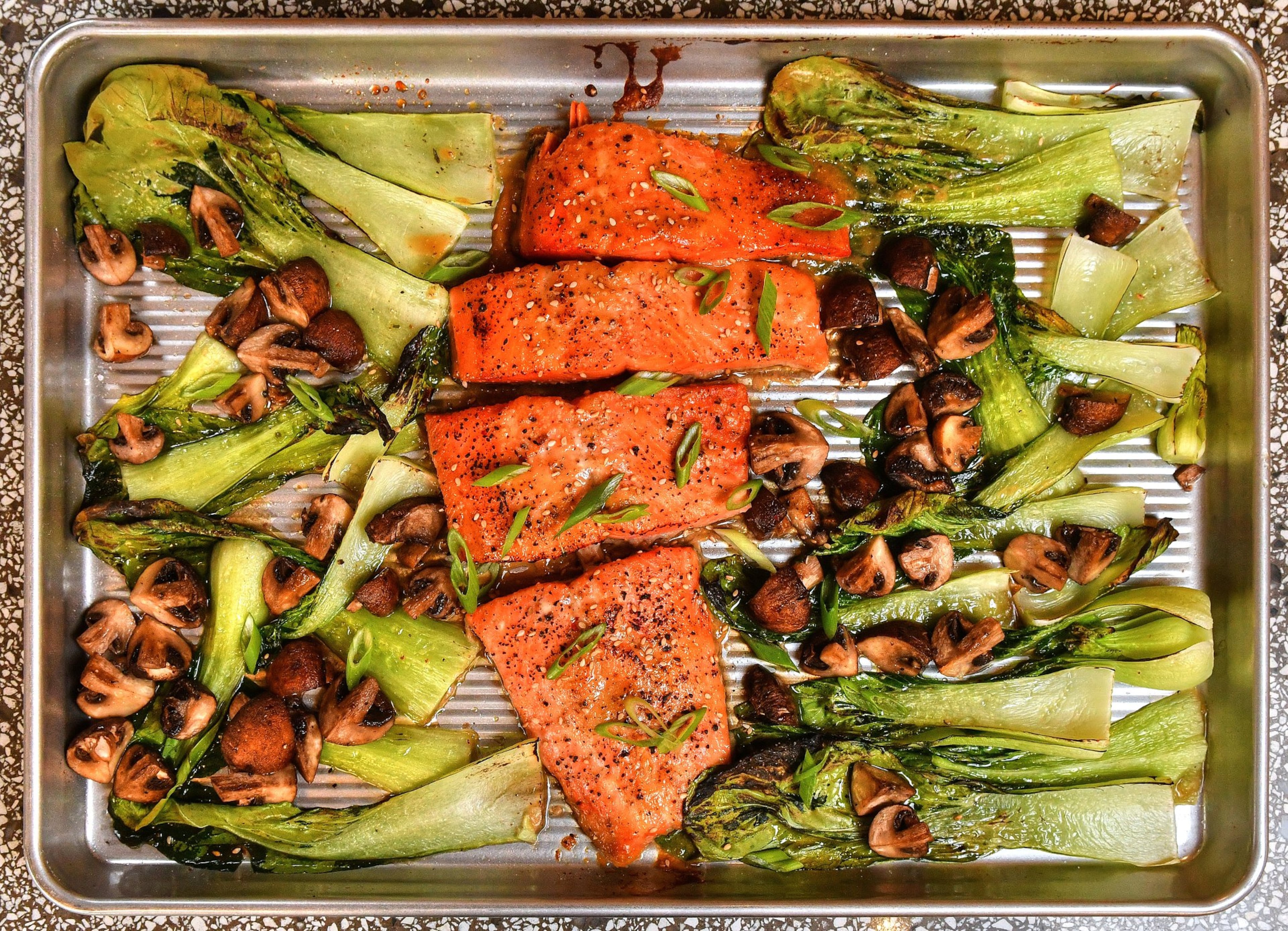
Miso Salmon with Bok Choy and Mushrooms
Cook’s Warehouse cooking school director Nealey Thompson keeps her freezer stocked with individually wrapped salmon fillets sold in bulk at Whole Foods for quick meals such as this. “They thaw quickly, and you only have to pull what you need.” Cod or other seafood could easily be substituted.
Miso Salmon with Bok Choy and Mushrooms
- 2 tablespoons white miso
- 2 tablespoons mirin or sake
- 2 tablespoons sugar, agave or honey
- 2 teaspoons sesame oil
- 1 teaspoon soy sauce or tamari
- 4 (4-5 ounces each) salmon fillets
- 1 pound baby bok choy, sliced in half lengthwise
- 8 ounces whole bella or white mushrooms, quartered
- 3 tablespoons olive oil, divided
- Kosher salt and pepper to taste
- In a small bowl, whisk together the miso, mirin, sugar, sesame oil and soy sauce until smooth. Transfer to a large plastic zipper bag. Add salmon to the bag, seal and gently mix to coat the fish. Refrigerate for a minimum of 8 hours, or preferably overnight.
- Heat the oven to 425 degrees.
- Arrange bok choy on sheet pan and toss with 2 tablespoons of the olive oil, salt and pepper. Toss mushrooms with remaining 1 tablespoon olive oil, salt and pepper and add to the pan.
- Remove salmon from the marinade and place fish skin-side down on the pan with the vegetables. Season salmon with salt and pepper.
- Roast 10 minutes (12 minutes if the salmon is thicker than 1 inch). Do not overcook the salmon. If the vegetables need more time, transfer the fish to a plate and return the pan back to the oven until vegetables reach desired doneness. Serves 4.
Nutritional information
383 calories (percent of calories from fat, 45), 38 grams protein, 14 grams carbohydrates, 2 grams fiber, 19 grams fat (3 grams saturated), 88 milligrams cholesterol, 623 milligrams sodium.
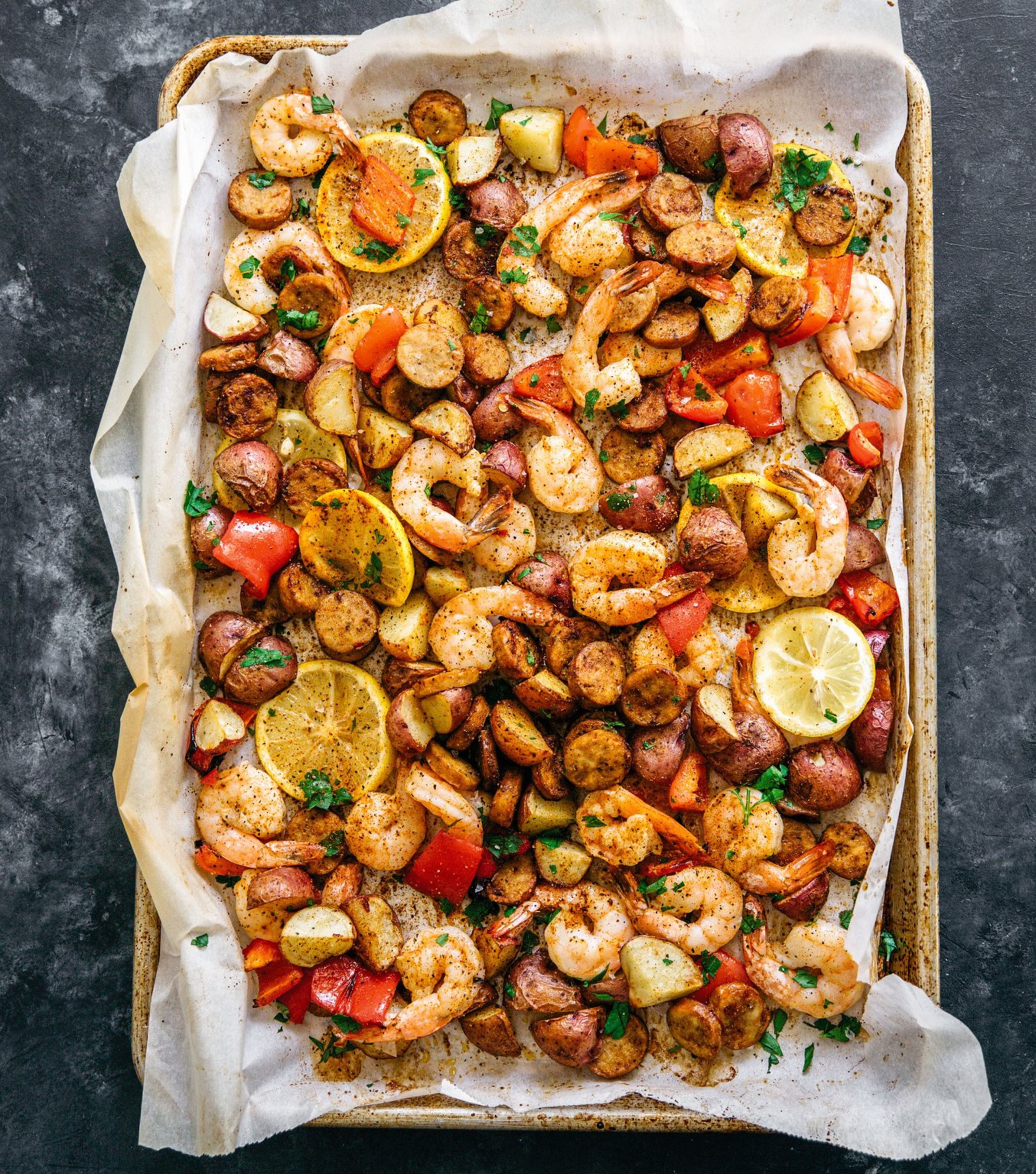
Cajun Sheet Pan Shrimp “Boil”
Alex Snodgrass, author of “The Defined Dish: Healthy and Wholesome Weeknight Recipes” (HMH Books, $30), riffs on the crawfish boils of her Texas youth with this incredibly easy and flavorful weeknight version using shrimp.
Cajun Sheet Pan Shrimp “Boil”
- 1 pound baby red or yellow potatoes, quartered
- 1 cup diced red bell pepper (1 medium)
- 12 ounces andouille sausage, fully cooked, sliced into 1/4-inch rounds
- 2 tablespoons extra-virgin olive oil
- 2 teaspoons Old Bay-type seasoning, or more to taste, divided
- 3/4 pound shrimp, peeled and deveined
- 1 lemon, sliced into 1/4-inch rounds
- 2 tablespoons chopped fresh flat-leaf parsley leaves, for serving
- Heat the oven to 400 degrees.
- On a parchment-lined baking sheet, combine the potatoes, bell pepper and sausage. Drizzle with olive oil and season with 1 1/2 teaspoons seasoning. Toss to coat.
- Place the baking sheet in the oven and cook 20 to 25 minutes, or until the potatoes are tender.
- Remove from the oven (but keep the oven on) and add the shrimp, lemon slices, and remaining 1/2 teaspoon seasoning and gently toss to coat evenly with the other ingredients.
- Return to the oven and cook an additional 7 to 10 minutes, or until the shrimp is cooked through and pink.
- Remove from the oven and gently toss all of the ingredients on the sheet pan to coat in the seasoning. Garnish with the chopped parsley and serve. Serves 4.
Nutritional information
608 calories (percent of calories from fat, 63), 30 grams protein, 26 grams carbohydrates, 3 grams fiber, 43 grams fat (13 grams saturated), 187 milligrams cholesterol, 900 milligrams sodium.
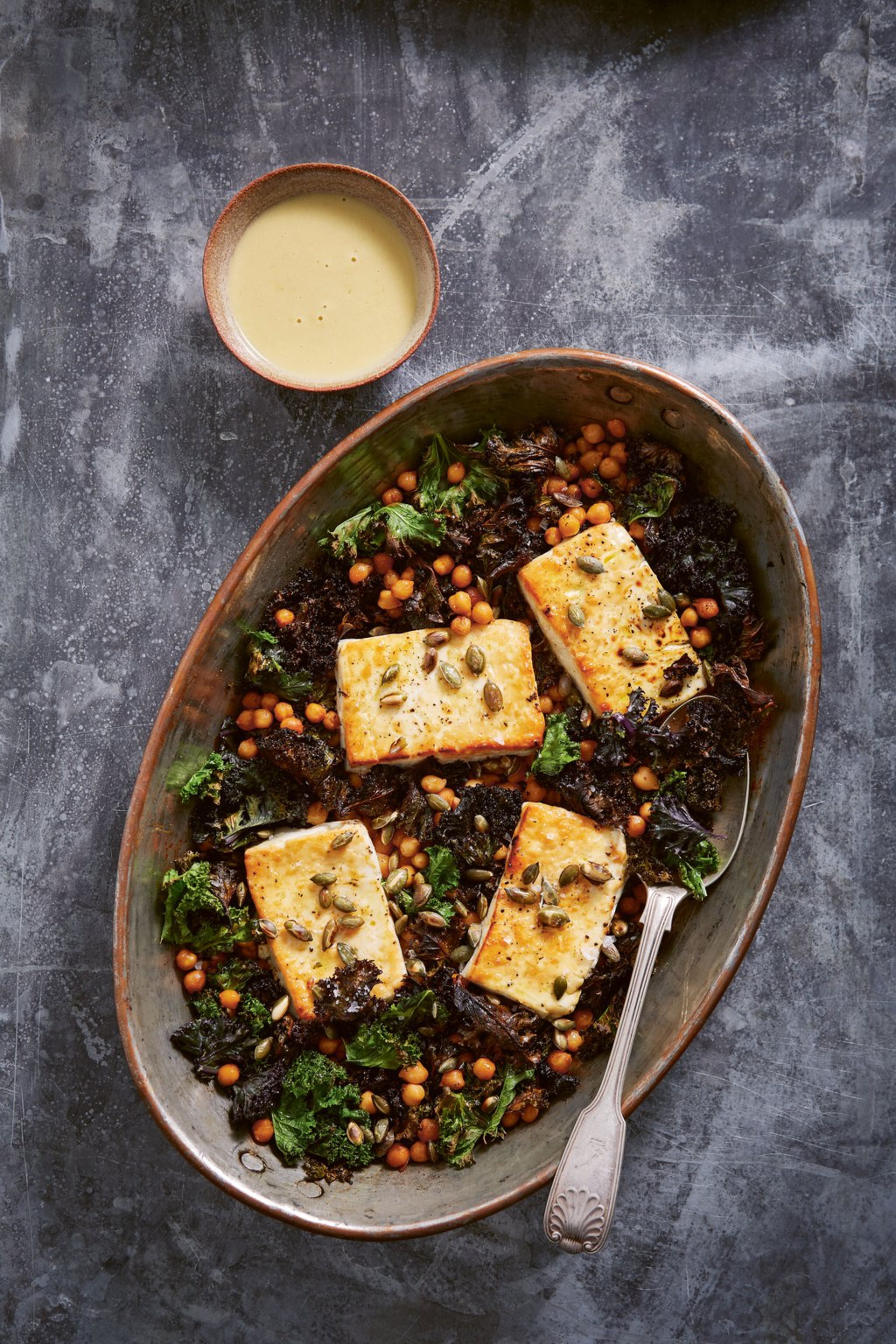
Baked Feta with Greens and Lemon-Tahini Dressing
Slabs of feta and chickpeas supply the protein in this inspired sheet-pan creation from “Keeping It Simple: Easy Weeknight One-Pot Recipes” by Yasmin Fahr (Hardie Grant, $24.99). Proportions are easily adjustable (2 ounces each of feta was plenty filling for me and my husband), and the leftovers are great. Fahr suggests mixing leftovers with scrambled eggs or using on top of cooked grains with the dressing. We loved it over bulgur. Halloumi cheese will work as a substitute for feta, and sunflower seeds can stand in for the pumpkin seeds.
Baked Feta with Greens and Lemon-Tahini Dressing
- 1 (15-ounce) can chickpeas (garbanzo beans), drained and rinsed
- 10 1/2 ounces red or curly kale, or cavolo nero (lacinato kale), stems removed, leaves cut or hand torn into 2-inch pieces (about 3 or 4 packed cups)
- 6 tablespoons extra-virgin olive oil, divided, plus more for drizzling
- Salt and freshly ground black pepper, to taste
- 1 teaspoon smoked paprika
- 1/4 teaspoon cayenne pepper
- 1 or 2 (8-ounce) blocks feta, preferably Bulgarian, halved horizontally to make 1-inch-thick pieces (see note)
- 1 ounce (1/4 cup) pumpkin seeds
- 1 tablespoon tahini
- Juice of 3 lemons, divided
- Place a sheet pan in the oven. Heat the oven to 400 degrees.
- When the oven is ready, remove the hot sheet pan and carefully add the chickpeas and kale, then toss with 3 tablespoons extra-virgin olive oil, salt and pepper to taste, the paprika and cayenne, using a wooden spoon or your hands, making sure not to burn yourself. Spread the ingredients evenly, then create little pockets to nestle the feta into, making sure they have direct contact with the baking tray. Drizzle the feta with olive oil and season with pepper.
- Return the pan to the oven and bake until feta has softened, the kale has browned in spots and the chickpeas become crisp with a darker brown hue, about 15 to 20 minutes. Stir the kale and chickpeas around with a wooden spoon halfway through and leave the feta as it is, but keep an eye on it toward the end of cooking time so it doesn't go from nice and crisp to burned. Add the pumpkin seeds during the last 5 minutes of cooking, when the kale has just started to crisp and become an intense green-brown.
- Meanwhile, in a small serving bowl, whisk together the tahini, the remaining 3 tablespoons extra-virgin olive oil, juice of 2 lemons and salt and pepper, adjusting the seasoning to taste. Remove the tray and squeeze the remaining lemon juice on the greens and chickpeas. Divide between plates and serve with the dressing on the side. Serves 4.
- Note: If you are not into feta, try halloumi and cut it into small cubes. Halloumi is a brined cheese with a high melting point, which makes it easy to grill, fry or bake without it falling apart. The only downside is that if you let it cool too long, it gets rubbery in texture.
Nutritional information
542 calories (percent of calories from fat, 59), 17 grams protein, 40 grams carbohydrates, 7 grams fiber, 37 grams fat (12 grams saturated), 50 milligrams cholesterol, 988 milligrams sodium.
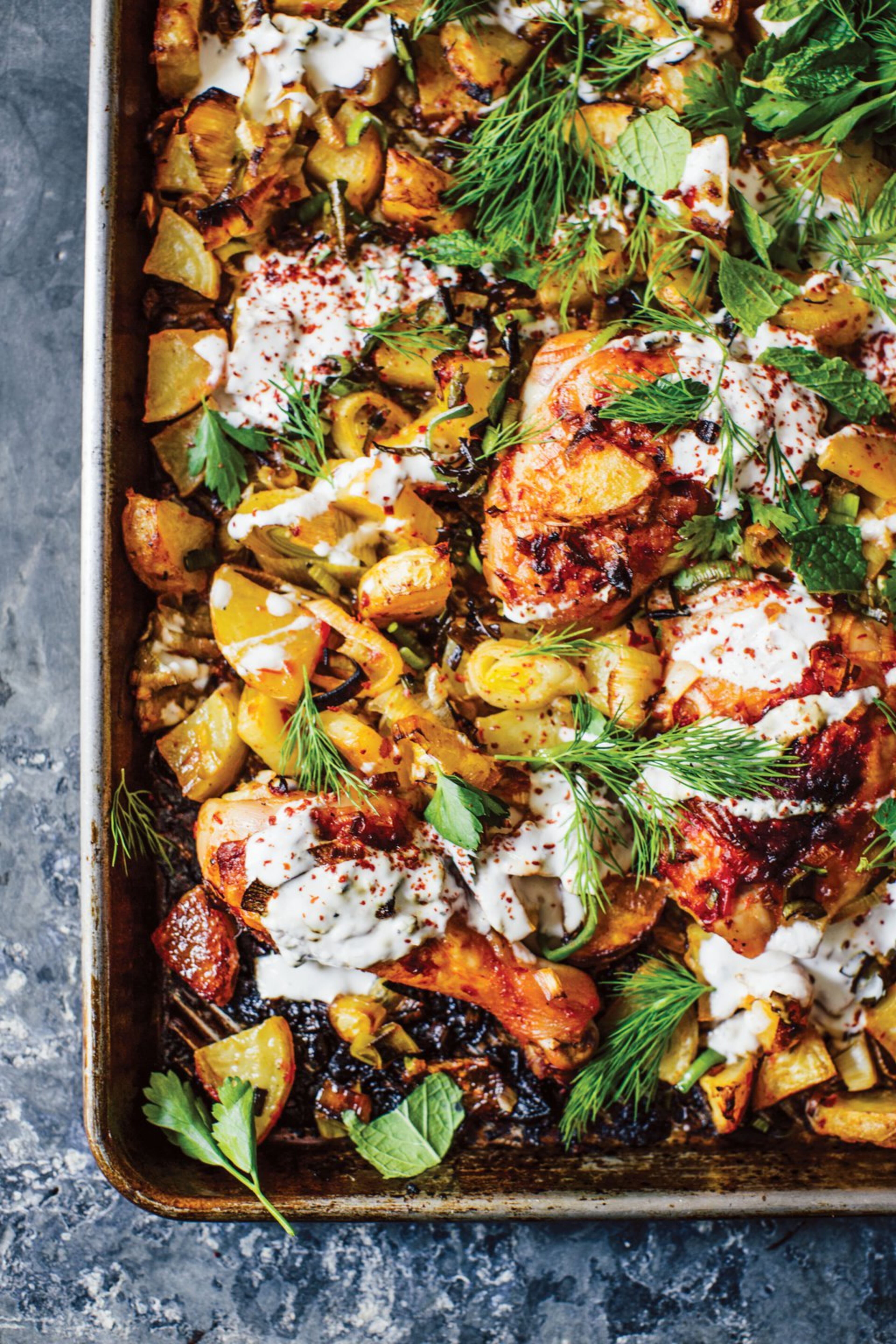
Harissa Chicken with Leeks, Potatoes, and Yogurt
New York Times food writer Melissa Clark is most often credited with igniting the sheet-pan craze when she wrote a column about their greatness in 2014, and later included many of her inventive combinations in her bestselling book, “Dinner: Changing the Game: A Cookbook” (Potter, $35). This recipe is one of her all-time favorites that’s now one of mine as well — a perfect example of how to make all the ingredients cook together at the same rate by cutting sturdy, denser things like potatoes into smaller chunks, and adding more delicate ingredients (here, the leeks) toward the end so they don’t burn. Leave space between things so ingredients can brown and crisp rather than steam.
Harissa Chicken with Leeks, Potatoes, and Yogurt
- 1 1/2 pounds bone-in, skin-on chicken thighs and drumsticks
- 1 1/4 pounds Yukon Gold potatoes, peeled and cut into 1-by-1/2-inch chunks
- 3 teaspoons kosher salt, divided
- 3/4 teaspoon freshly ground black pepper, divided
- 2 tablespoons harissa
- 1/2 teaspoon ground cumin
- 4 1/2 tablespoons extra-virgin olive oil, divided, plus more as needed
- 2 leeks, white and light green parts, halved lengthwise, rinsed and thinly sliced into half-moons
- 1/2 teaspoon grated lemon zest
- 1/3 cup plain yogurt, preferably whole-milk (if using Greek, thin it down with a little milk to make it drizzle-able)
- 1 small garlic clove
- 1 cup mixed soft fresh herbs such as dill, parsley, mint and/or cilantro leaves
- Fresh lemon juice, as needed
- Combine the chicken and potatoes in a large bowl. Season them with 2 1/2 teaspoons of the salt and 1/2 teaspoon of the pepper. In a small bowl, whisk together the harissa, cumin and 3 tablespoons of the olive oil. Pour this mixture over the chicken and potatoes, and toss to combine. Let it stand at room temperature 30 minutes.
- Meanwhile, in a medium bowl, combine the leeks, lemon zest, 1/4 teaspoon of the salt, and the remaining 1 1/2 tablespoons olive oil.
- Heat the oven to 425 degrees.
- Arrange the chicken and potatoes in a single layer on a large rimmed baking sheet, and roast 20 minutes. Then toss the potatoes lightly, and scatter the leek mixture over the baking sheet. Roast until the chicken is cooked through and everything is golden and slightly crisped, 20 to 25 minutes longer.
- While the chicken cooks, place the yogurt in a small bowl. Grate the garlic clove over the yogurt, and season with the remaining 1/4 teaspoon salt and 1/4 teaspoon pepper.
- Spoon the yogurt over the chicken and vegetables in the baking sheet (or you can transfer everything to a platter if you want to be fancy about it). Scatter the herbs over the yogurt, drizzle some olive oil and lemon juice over the top, and serve. Serves 4.
Nutritional information
536 calories (percent of calories from fat, 52), 28 grams protein, 36 grams carbohydrates, 3 grams fiber, 31 grams fat (7 grams saturated), 97 milligrams cholesterol, 1,533 milligrams sodium.
RELATED:
Read more stories like this by liking Atlanta Restaurant Scene on Facebook, following @ATLDiningNews on Twitter and @ajcdining on Instagram.