Back to Africa
HOW WE GOT THE STORY
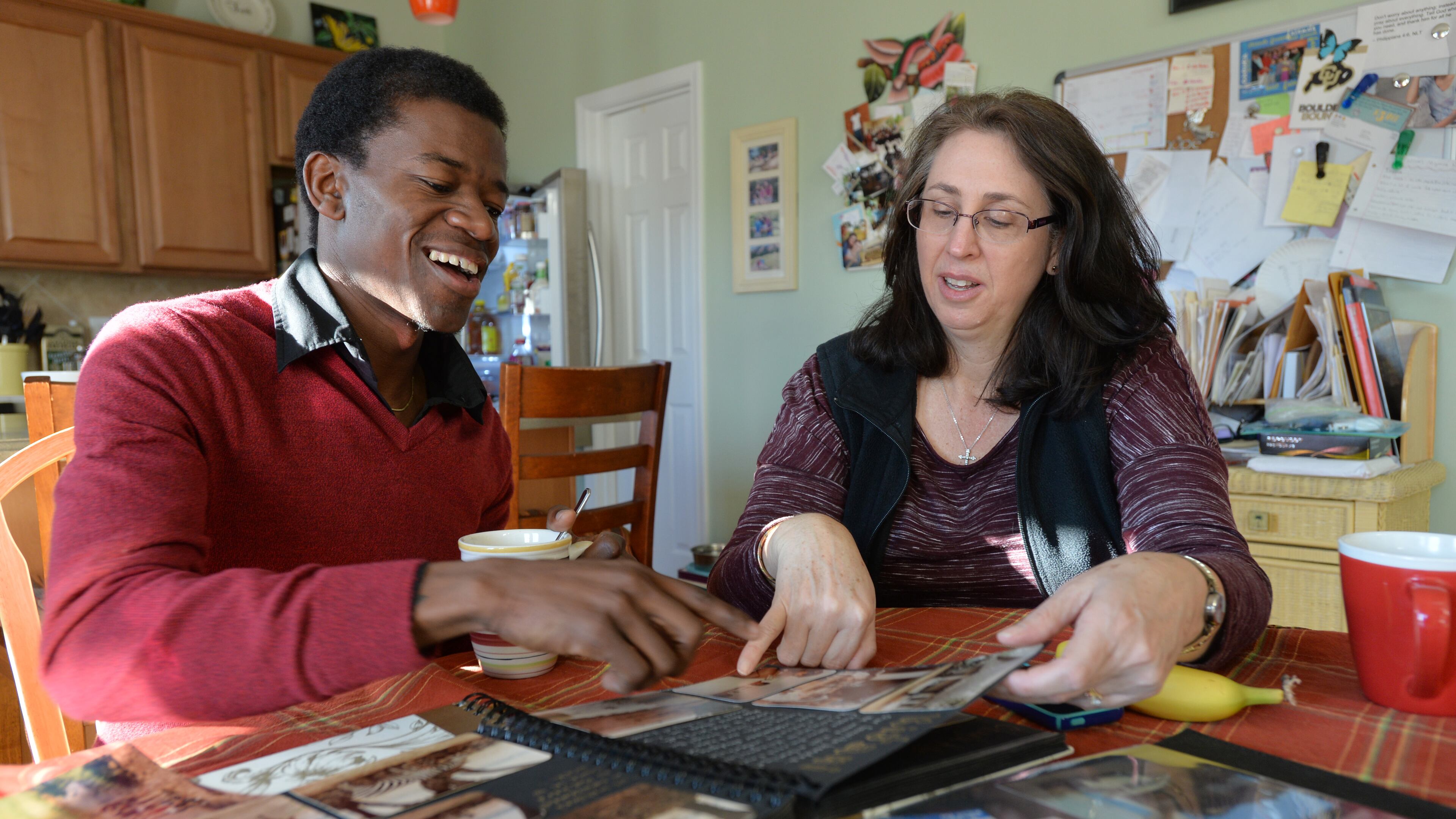
Every day at The Atlanta Journal-Constitution we get scores of emails and phone calls from people suggesting "a really great story" we should pursue. Sometimes we strike gold like staff writer Shelia Poole did with a pitch on this story about Samuel Johnson, his efforts to aid orphaned refugees in Guinea where he grew up and one of his benefactors, Teresa Cook. The result is an inspirational story about two people devoted to helping others in need. Readers can follow Sam's efforts at www.facebook.com/SamuelJohnsonvision. Contributions can be made to fundly.com/my-vision-bringing-hope-to-guinea.
- Shelia Poole has been a reporter for more than 30 years. Before joining The Atlanta Journal-Constitution, she worked for the Louisville Defender and the Lexington Herald-Leader. She's covered small and minority business, real estate, consumer affairs, nonprofits, religion, health, aging issues and Atlanta's changing global community. Shelia earned a bachelor's degree in history from Spelman College and a master's in journalism from Northwestern University.
- Hyosub Shin was born and raised in South Korea. Inspired by the work of National Geographic photographers, he came to the U.S. about 10 years ago to study photography. Past assignments include the Georgia Legislative session the Atlanta Air Show and the Atlanta Braves' National League Division Series.
For Samuel Johnson, the dirty track of land carved from the innards of a Guinean forest was home now.
Sam and his family had spent seven harrowing nights snaking through villages and forests, fearful of being discovered by rebel forces that had attacked their Liberian village in the middle of the night. Five other members of his family had managed to safely escape — his mother, two sisters, his twin brother and a half-brother. A sixth, his little sister, was missing.
Others fleeing the violence had joined the small group along the way. They passed dead bodies in the forest and along the roads. Some were picked over for anything that could be salvaged, like shirts and shoes.
It was 1999, and Sam was just 8 or 9 at the time.
“It was very scary. I saw my village getting burned and people getting killed,” he said.
Growing up in Lofa County, the northernmost point of Liberia, Sam had worried his family might be targeted by rebel forces because his father worked for the government in Monrovia. Now his father was missing. His mother had been told he most likely was murdered.
Today, Sam doesn’t remember much about his father, other than he liked soccer.
But back then, there was no time to mourn. They had to move and quickly.
Lainé refugee camp in southeastern Guinea was their new home. At the time, about 3,000 desperate souls had sought refuge there and were living in tents. The camp would ultimately swell to 32,000.
“When we crossed the border, the (aid workers) told us we were safe,” Sam recalled. “But a few days later, rebels attacked the camp.”
The camp had its own problems. Food lines stretched as far as the eye could see. People died from snake bites or animal attacks. Some lost hope.
“It was rough,” he said. “Basically, we had nothing.”
His life would never be the same.
2. Another time and place
Teresa Cook knew a different Africa.
The time she spent in Nairobi and the isolated Kenyan bush with her family were magical, the sights and sounds enough to fuel the imagination of an adventurous spirit.
She was just a young child when she and her mother first visited her father there in the late 1960s. A geography professor for the University of Miami, he was studying rhino and elephant populations in Tsavo National Park. Her famly returned in 1979, and she spent her junior year of high school in Kenya.
Teresa’s fond memories include the intense earthy smell of smoldering wood from the trees felled by residents, who used it to make charcoal for cooking and warmth during those chilly early mornings and evenings.
Or sitting in a tent listening to the rapid krrrrrrrr, oo-OO, oo call of the African mourning doves, the tuba-like sounds of hippos and the deep grunts of lions.
Today, her spacious Woodstock home is filled with African art, including Masai necklaces, beadwork, batiks, woven grass baskets and photographs of her family’s visits to Africa.
“Roughing it, surrounded by birds and wildlife and amazing scenery, I’m sure that impacted my choice to study biology,” she said. “As a child, I imagined I would be like Jane Goodall and go into the bush to watch elephants or lions or antelopes.”
She remembers one three-month trek to Meru National Park when they ran out of “real” food and had to live on reconstituted food and canned cheese. A local lodge keeper treated Teresa and her two brothers to a dip in his pool. Just then a busload of Kenyan schoolchildren on a field trip pulled up.
The kids were mesmerized to see Teresa and her brothers in the pool. Their own watering holes were too dangerous to enter because of crocodiles and hippos.
When Teresa would dive underwater and come back to the surface, the students would clap, cheer and shout. A year or so later, Teresa’s parents split.
“It was our last time together,” she said.
3. Life in the camp
The first few years at Lainé were probably the hardest for Sam. The whole family lived in a single white tent, and they were surrounded by refugees from Sierra Leone and Cote d’Ivoire, all speaking different languages.
“Hope was not too strong anymore,” he said.
He worried about the fate of his younger sister, Pauline, who had been staying with his grandparents when their village was attacked. He prayed that someone was watching over her. When new arrivals came in he would ask them if they had heard of Pauline and they would just shake their heads.
“I felt guilty,” he said. “If it were me, would I feel that my family hadn’t come back for me? I hope she doesn’t feel that way. I don’t want to think about it.”
He recalls the acrid scent of burning forest hanging in the air and the frightening sounds of wild animals lying in wait. Their meals consisted mainly of rice, potatoes, cassava and grains. Access to clean water was limited.
Sometimes fights would break out among the different groups, and there was the constant fear of rebel attacks.
“It was not a very civil place,” Sam said.
After seven years, Sam’s family left the camp, which had grown into a small village by then. They moved to Guinea’s capital city of Conakry, where his mother eked out a living selling baked goods and firewood or cleaning homes.
Anti-refugee sentiment was rampant. Sam, who speaks French and English, had to sneak into schools or sit outside classroom windows to get an education.
All the while, his frustration and anger boiled. The target of his ire were the people who killed his father, and he dreamed of exacting justice on them one day.
During early morning walks in the forest, he would vent his frustrations to his mother, a devout Christian.
It is because of them that we are suffering. Hopefully, one day I will be the man I am supposed to be and take revenge.
His mother would shake her head.
If you end up killing others, those sins will come back on you. You will carry that burden for the rest of your life. The Bible says when someone slaps you, you give them the other cheek.
He may not understand now, she said, but by having mercy on others, one day blessing would rain on his generation and the next.
4. A world away
Sam was 17 when he learned his family would soon resettle in the United States. Perhaps life would be kinder, he thought. Perhaps he could go to school and lead a normal life.
But one afternoon, government troops burst into their home in Conakry. They were rounding up refugees and returning them to the border. While Sam’s mother was being forced into a truck, she fell and injured her abdomen.
There was internal bleeding. Surgery was required. Complications developed. The family lacked the money to pay for the best care. Staff paid her little attention because she was a refugee. So the family took her home and treated her with whatever they could buy on the market.
It wasn’t enough. A month before the family left for the United States, she died.
Before she was was injured, Sam recalled his mother telling him a dream she’d had about their new lives. The family would make it to the United States and “white” people would help them.
But in telling her dream, “she didn’t include herself,” Sam said. He asked her, Where are you? “She kept quiet.”
Now his rock was gone.
Sam knew little about the United States and nothing about Georgia. And he was conflicted about leaving his adopted homeland.
“From the moment I got on that plane from Guinea, I felt that I was leaving my people,” he said. “We had suffered together. We had waited for meals together. We cried together.”
When the plane landed at Hartsfield International Airport, the family was greeted by staffers from Refugee Resettlement and Immigration Services of Atlanta who helped them get settled in Clarkston.
A small city east of Decatur, Clarkston had become home to many refugees and immigrants, and Sam discovered it was not always easy to fit in with the local population. Some resented the influx of new faces. Some were teased in school for their accents and the way they dressed. Sam remembers once going for an early morning jog and having a gang of men chase him.
But then something happened that brought his mother’s teachings into focus. Officials at Holy Innocents’ Episcopal School, a college preparatory school in Atlanta, took notice of the orphaned family. A village of teachers, school administrators and church members came into their lives. They drove Sam and his siblings to school. They took them to church. They helped feed them and gave them money. They found them a better place to live.
Although Sam and his siblings were behind in school for their age levels, they were hard-working students. Especially the eldest sister, Helena, who would spend hours studying, stop to cook food for her siblings, then study more until midnight. Sam studied hard, too. He was also a gifted soccer player and, like his father, loved the sport.
Things were going well. But by his junior year of high school, Sam was ready to go back to Guinea. The children there were never far from his thoughts. There had to be something he could do there to help. If it meant leaving school, so be it.
But a math teacher, talked him out of leaving.
What if you do go right now? You can’t do anything. But if you stay in school, you can do many things.
Trust doesn’t always come easily for Sam, who has a reserved manner. But he realized the support and love he received in Atlanta was like nothing he had experienced in his life.
“These people had our backs,” he said.
His emotional walls started to break down, and the anger he felt toward his father’s killers began to dissipate.
“Because of the way they treated me, I wanted to do good. I wanted to have mercy. They loved me. It was an important lesson for me to learn.”
In 2009, Sam enrolled at Mercer University in Macon. There he met his future wife, Mary Thompson, a native of Ghana who was studying engineering.
It wasn’t love at first sight — at least on her part.
“My first impression was that he was cocky,” Mary recalled. “I said, ‘This guy looks like he’s full of himself.”
Later, she realized, “Sam really cares about people.”
While at Mercer, Sam began to think again about returning to Guinea.
“Here I am enjoying all these privileges and I know most of the kids there don’t have water,” he said. “Every time I took a shower I thought about how they had to shower in the river. It was always in the back of my mind.”
Sam finally returned to Guinea in May 2012 to visit the camp and assess the situation. To reach Lainé, he took a day-long taxi ride before hiring a motorbike for the final leg of the eight-hour journey.
When he arrived at the camp, the sight knocked him to his knees. He saw children bathing in the same river in which he once bathed.
“I couldn’t help it,” he said, his voice filling with emotion. “I just started crying. Nothing had changed. People were trying to build houses with palm trees. Kids were running around with no shoes, their stomachs big with parasites.”
The scene reinforced his desire to help.
He’d brought textbooks along and helped teach the children basic English and math. And he identified the community’s most urgent need: a well for clean water. So Sam got back on the bike and rode another eight hours to hire a company with his own money to build a well for the village.
From that project he turned to others, making many return trips to Guinea from his home in Georgia.
With support from the village elders, Sam decided to focus his efforts on the children of Lainé. He bought them shoes and signed with a soccer team in Guinea so he could get them to donate soccer jerseys and gear. And he has started a relief effort called My Vision: Bringing Hope to Guinea, for which he hopes to get nonprofit status. His plan is to raise enough money to build an orphanage for children like himself, whose parents are dead or lost.
He’s identified more than a dozen children, ages 3 to 15, who will live at the orphanage. He met most of the children while volunteering in the town. He was struck by their desire to learn and reminded him of himself as a young child. “I wanted to know things. I wanted to learn.”
For now Sam has funded a private home where 13 children are living until he returns. When that is, he doesn’t know. In April he was forced to leave because of the Ebola outbreak.
He is determined to prevent the global health threat from derailing his plans or affecting his charges.
“I don’t want them separated,” he said. “I don’t want that on my conscience.”
5. One village for another
Teresa Cook, now a science teacher at Holy Innocents’ Episcopal School, was sitting in the sanctuary one day last March observing the induction of National Honor Society members when she took note of the young, slender, neatly-dressed man who had been invited at the last minute to address the gathering. She listened as he spoke briefly but passionately about his efforts to help people in Guinea.
She remembers being impressed with his maturity and humanity. Here he was, not much older than the students sitting in the audience, yet he had put his life on hold to go back to Guinea and help.
Listening to him speak about his life in Africa, Teresa was struck by the disparity between their experiences there.
“The way we lived was so different from how Sam and his family were living,” she said.
She was also impressed that he had moved past his anger and hatred toward those who contributed to his suffering.
“He was not bitter or defeated by his experiences as a war refugee, but instead he was driven to give back and help and forgive and bring hope and change to a fairly hopeless place,” she said.
Sam’s words haunted Teresa long after the school assembly.
One day she and her husband, Scott Cook, an electrical engineer, were taking a class on Christian values at City On A Hill United Methodist Church in Woodstock. The group was discussing their passions — the things that literally brought them to tears or made them lose sleep. That’s God calling them to make a difference, some said.
Teresa thought again about Sam and his efforts in Africa, and an idea began to germinate.
It started with an annual raise Teresa received at work. Without a second thought, she gave it to Sam, now a U.S. citizen, for his work in Guinea.
But that didn’t feel like enough.
She remembered Sam saying he and his wife were having to share a two-bedroom apartment with his sister and her family in Norcross. And she thought about the spare bedroom in her large house. With the blessing of her family, including daughters Nicole, 17, and Cara, 20, Teresa opened her home to Sam and Mary.
It was a radical move, letting strangers move into her family’s home. But Teresa didn’t see it that way.
“How can we be followers of Christ and not help?” Teresa asked. “How can we walk the walk and not just talk the talk?”
Sam and Mary moved into the Cook house last May and were given use of the family van until they can save enough to buy their own car. Mary works at AT&T, and Sam works for the U.S. military as a cultural advisor to West Africa, which requires him to travel often to North Carolina. They make a small monetary contribution to the Cook household and help out in other ways, like cooking dinner. And every month, Sam puts aside money from his paycheck to support the orphans in Guinea.
Despite their many differences, the two families have blended well beneath one roof.
They often watch television together, play games and share meals as their busy schedules allow. One night it’s pizza, the next time it might be African stew. During the World Cup, Sam, an avid soccer player, taught them the joys of the game.
Faith is important to both families, and they often attend church services together.
Sam describes Scott as an older brother or an uncle, but Teresa is like a mother.
“My mom used to say, ‘I’m not your only mother. You’ll have a lot of moms along the way.’” he said.
But it was Nicole, said Sam, who paved the way for bringing the two families together.
She was so unlike many of the American teens he knew, who spent shocking amounts of money on the latest fashions. Despite her affluence, she was content to scour the racks at Goodwill or other discounts stores for clothing. This impressed Sam.
He calls her “lil’ sis.” She begs him and Mary to never leave.
People often commend Teresa on her family’s generosity, but she’s quick to deflect the praise.
“We feel like we are helping in some small way. Sam will be doing the heavy lifting. He is devoting his life, his time, his finances to these children. Us providing a bedroom to him and Mary pales in comparison,” said Teresa.
The greatest blessing of the whole experience, said Teresa, has been the expansion of their family.
For Sam’s part, the Cooks’ largess is part of a greater plan.
“My God has come through again,” said Sam.
“My mother left a legacy that I can look up to. And she was right. I met people along the way — after 17 years — who were willing to go above and beyond to help me. They picked us up to go to school and we didn’t know these families. Coming here, people showed me what my mom used to say: If you put your trust in Him, you will always have joy in your life and you will see more charity from others.”
It seems she was right.
About the Author
Shelia has worked at The Atlanta Journal-Constitution for more than 30 years. Previously, she worked at The Lexington Herald-Leader and The Louisville Defender. Her beat is a bit of a mixed bag that includes religion and spirituality, culture and trends, race and aging. She earned degrees from Spelman College and Northwestern University.