3 things to know about National Homeless Persons’ Memorial Day
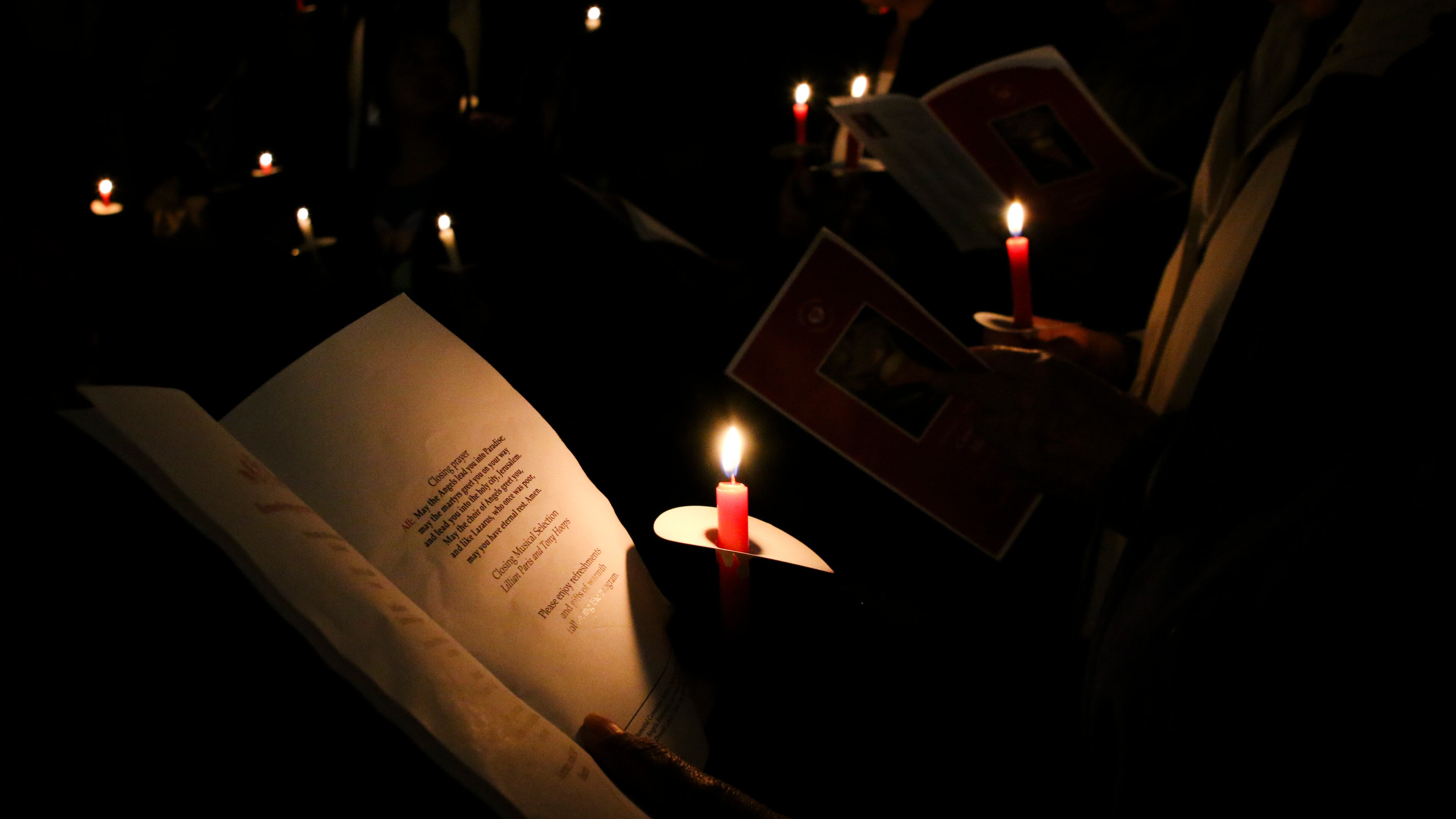
National Homeless Persons’ Memorial Day, which is on Dec. 21 this year, has its roots in Atlanta.
What is it?
Donald Whitehead Jr., executive director of the Washington D.C.-based National Coalition for the Homeless, said the idea originated from Anita Beaty, then overseer of the former Peachtree-Pine homeless shelter in Atlanta and a current coalition board member.
She had organized an annual memorial march in Atlanta in the late 1980s. The coalition and its partner, the National Health Care for the Homeless Council, created the first national day of commemoration in 1990.
Events marking the day occur on the winter solstice, which has the longest night of the year.
The purpose, Whitehead Jr. said, is to raise awareness about how criminalization, violence, hate crimes and environmental conditions impact people without reliable shelter.
“Many people in the general public just don’t realize that they often walk past people in homelessness without the understanding that this may be the last day of their lives,” Whitehead Jr. said.
Groups in more than 80 cities nationwide, from Anchorage, Alaska, to Key West, Florida, have set up commemorations this year.
How many have died?
The coalition estimates at least 13 people experiencing homelessness die each day in the United States, although Whitehead said this is a “dramatic undercount” due to spotty record-keeping.
Fulton is the only metro Atlanta county to publicly release the number of those who died while homeless. Per records gathered by Mercy Care, an affordable health center in Atlanta and a partner with the National Health Care for the Homeless Council, 54 people in Fulton died while homeless from December 2019 through September 2020. At least 137 have died in the past year in Fulton and DeKalb counties, Mercy Care shared.
The official number from Fulton’s 2019 annual report, the last year information is available, is 39 deaths for the year. Nine people experiencing homelessness in Fulton died from hypothermia in 2019 per county records, almost one in four.
Freezing and frostbite are serious problems for those experiencing homelessness alongside an increased risk of violence, said Bobby Watts, CEO of the National Health Care for the Homeless Council.
“A locked door can protect you from other people, but at a minimum it protects you from the elements,” Watts said. “If you don’t have that, you are (at a) tremendously increased risk of hypothermia and also heat stroke in the summertime.”
How is it commemorated?
Commemorators typically light candles and read the names of people who passed in the last year. The events are open to the public and due to the pandemic are a mix of in-person and virtual events.
- In Washington, D.C., local advocacy group People For Fairness Coalition and the NCH lead a procession, gather resources and offer a sheltered place to sleep for attendees who are currently homeless. The NCH went virtual in 2020, bringing together over 500 people online, Whitehead said. This year will feature a hybrid commemoration, including a procession and overnight vigil followed by a Facebook livestream of the NCH’s service at 11:30 a.m. on Dec. 21 (through facebook.com/NationalCoalitionfortheHomeless).
- Atlanta’s Mercy Care will hold a virtual vigil, like last year, at 5:30 p.m. Dec. 21. It is its 16th commemoration. Prior to the pandemic, Mercy Care also distributed meals, winter clothing and blankets at its vigils. You can find more info about participating in this year’s event, called the Robert L. Mason Jr. Candlelight Memorial, on its website, mercyatlanta.org/candlelightmemorial.
- Near Canton, the Cherokee County Homeless Veterans Program has planned a candlelight vigil starting at 5:15 p.m. at Cherokee Veterans Park. The ceremony will remember veterans nationwide who experience homelessness and include a wreath-laying at the park’s homeless veteran statue at sundown.
- Visit the projects page under “About NCH” on nationalhomeless.org for more information on how to set up a commemoration and to record events with the coalition, which has a presence in all 50 states.
While Whitehead said remembrance and awareness are important, he advocated community mobilization to prevent future deaths. Organizing with civic organizations and churches and reaching out to elected officials are two ways to do so, he said.
But he and Watts agreed homelessness requires federal intervention, particularly with affordable housing and mental health and substance abuse services.
“Homelessness is a federal problem felt at the local level,” Watts said. “We’re seeing that the same conditions are existing from Florida as it is in Alaska. So, that helps underscore that it’s a systemic problem and we need to address it systemically.”

MEET OUR PARTNER
Working closely with the American Press Institute, The Atlanta Journal-Constitution is embarking on an experiment to identify, nurture and expand a network of news partnerships across metro Atlanta and the state.
Today’s story comes from our newest partner, the Covering Poverty project, which is part of the Journalism Writing Lab, an initiative of the Cox Institute for Journalism Innovation, Management and Leadership at the University of Georgia.
This story and others will become part of an online toolkit, coveringpoverty.uga.edu, which is devoted to helping journalists across the country cover meaningful stories about people and poverty-related matters.
If you have any feedback or questions about our partnerships, you can contact Senior Manager of Partnerships Nicole Williams via email at nicole.williams@ajc.com.