
At Black Girls Code camp in Atlanta, girls learn to see themselves in tech
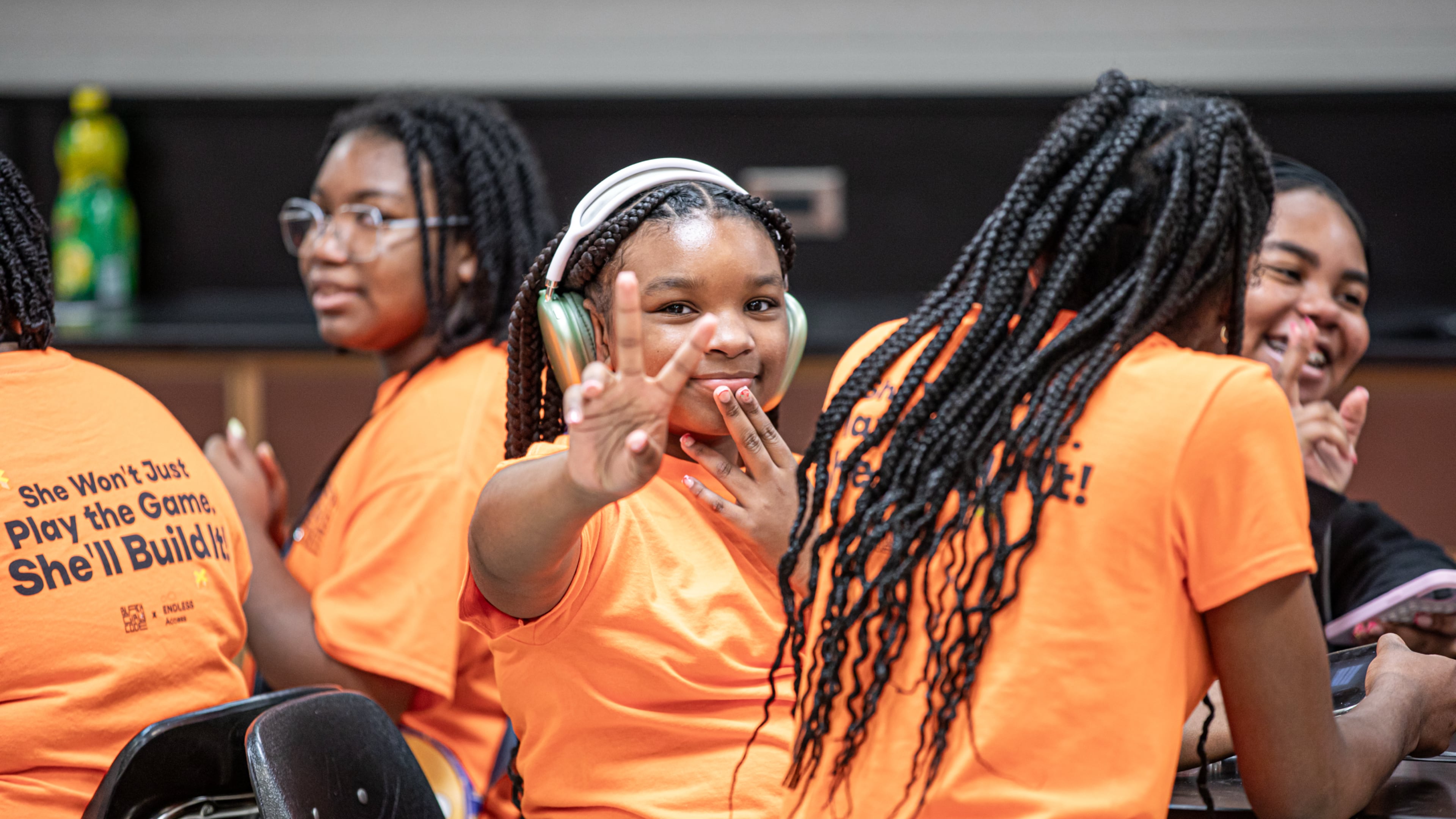
At a Black Girls Code summer day camp in Atlanta last month, roughly 50 girls built their own video games from scratch — part of a national push by the nonprofit to close a wide representation gap for Black women in the tech and gaming industries.
Founded in 2011, Black Girls Code has spent more than a decade trying to change who gets a seat at the table in tech.
Organizers point to stark numbers: Women remain sharply underrepresented across STEM fields, and Black women make up an even smaller share of that workforce in science, technology, engineering and math — around 3%.
It’s a gap the organization is trying to close by reaching girls before they ever set foot in a college computer science classroom.
Robert Robinson, vice president of student success for Black Girls Code, said the organization hosted two Atlanta camps with 50 young people each. “This reassures us that the folks in Atlanta want a program with us,” he said.
This year’s Atlanta session partnered with nonprofit Endless Access to teach girls how to design their own video games, from building sprites and other graphics to composing music. The week culminated Friday afternoon in a showcase for parents and guardians, where campers presented the games they built.
Girls used Godot, a free, open-source game engine, to build platformer games featuring pixel-art characters navigating shrinking platforms, spinning obstacles and hidden rooms. Vivian Phillips, an instructor at the camp and a freelance game designer, said the engine’s programming language, GDScript, closely resembles Python and JavaScript, giving girls a foundation that could carry into other coding disciplines even if they never work in gaming.
Phillips said she encourages campers to break their games on purpose and document what went wrong, a troubleshooting habit she said often leads them straight to the fix. She pointed to one camper who built a secret room by leaving out the collision physics that would normally make a wall solid, then marked it with a sign, without any instruction to do so.
“I was like, oh, I’m so proud of her,” Phillips said. “That was so cool to see.”
Black Girls Code has run summer camps for roughly a decade, predating both Robinson’s and Phillips’ time with the organization. Robinson, a computer science major himself, said the camps exist specifically to address how few women, and especially women of color, make it into the tech workforce at all.
“When you look at the STEM tech field, women are underrepresented,” Robinson said. “We want to help our young people realize that they do belong in the room, that even if it starts out hard, it’s something they could conquer.”
Robinson said the goal is not just exposure but a pipeline: Campers are meant to leave with the confidence to keep pursuing tech, whether that means returning for more Black Girls Code programming or eventually entering the field professionally. The organization brings in industry professionals to speak with campers throughout the week, he said, so girls can see what a career in the field could actually look like.
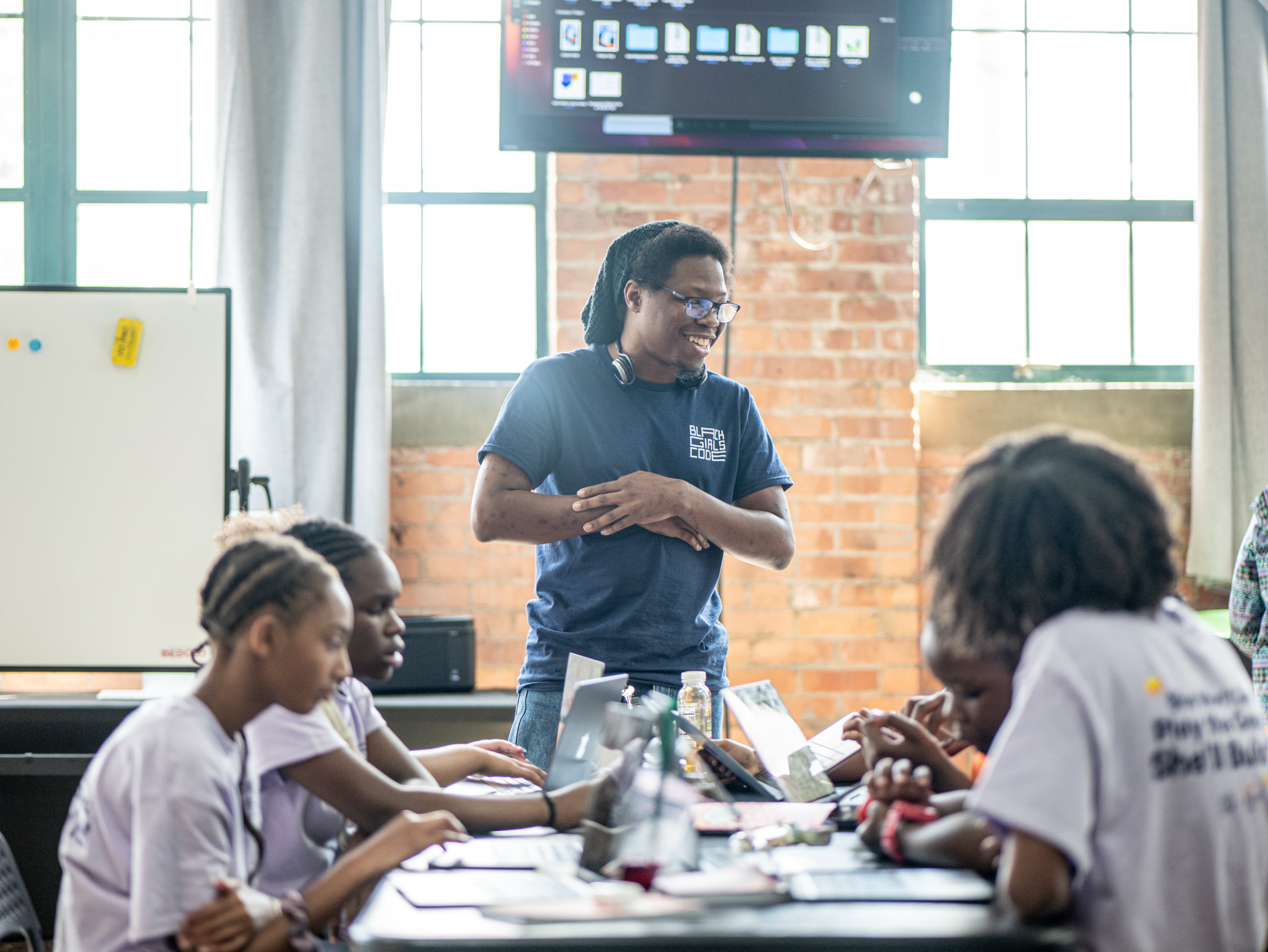
“You don’t know what you don’t know,” Robinson said. “The idea is that this is just a start.”
The representation gap is even starker in the corner of tech Phillips works in. Phillips said the low representation of Black women in computer science roles factored directly into her decision to teach at the camp, even as she juggles her own game design career.
“It became very apparent to me that there is not many of us,” Phillips said. “If I have a chance to expose more girls to computer science, coding, video game design — absolutely, I’m going to devote my time to that.”
For Yandy Smith, a serial entrepreneur who was on the cast of “Love & Hip Hop Atlanta” and whose 11-year-old daughter, Skylar, attended the camp, the appeal was practical as much as anything else. Smith said she has had to hire outside help to manage point-of-sale and other business systems and did not want her daughter to face the same gap in tech knowledge.
“I don’t want that to be the story for my daughter,” she said. “Tech is going to be the basis of whatever she decides to do.”
Smith, who had been traveling for a conference during the week, said her daughter’s enthusiasm for the camp stood out precisely because it looked like schoolwork.
“Our children just aren’t excited about school, regular traditional learning,” Smith said. “If there’s an opportunity for my daughter to learn coding, but it’s hidden through — you’re learning how to prepare for a game or to code a game, you’re still learning, but you’re learning to do something that you already fell in love with.”
Cristina Mancini, CEO of Black Girls Code, said this year’s camp put a heavier emphasis on food, working with local chefs including private chef Courtney Barnes, known as Chef Coco, to serve meals aimed at supporting focus and cognition rather than typical snack fare.
Barnes, who has run her own catering and private chef business in Atlanta since 2020, said cooking for children carried different stakes than her past corporate and filmset work.
“They will tell you right away if they like it or if they don’t,” Barnes said.
State Rep. Kim Schofield of Atlanta visited the camp and said her role is to translate what she hears from parents and organizers like Black Girls Code into policy and funding.
“My job is about making sure that we can advance women, and we start through girls,” Schofield said. “Partnering with Black Girls Code, for me, was just an amazing experience, because I hear, I see the girls. I know the potential.”
Mancini said the camp is designed to teach more than coding. Project management and public speaking skills were on display Friday as campers presented their finished games to family members.
“This opportunity is incredible, just being able to lead a space focused on creating safe spaces for girls, an organization focused on helping girls understand that their voices matter,” Mancini said.
Correction
This story has been updated to correct that Endless Access is the partner with the Black Girls Code summer camp in Atlanta.
AJC Her+Story is a series in The Atlanta Journal-Constitution highlighting women founders, creators, executives and professionals. It is about building a community. Know someone the AJC should feature in AJC Her+Story? Email us at herstory@ajc.com with your suggestions. Check out more of our AJC Her+Story coverage at ajc.com/herstory.