Make this soy glazed salmon recipe in less than 10 minutes
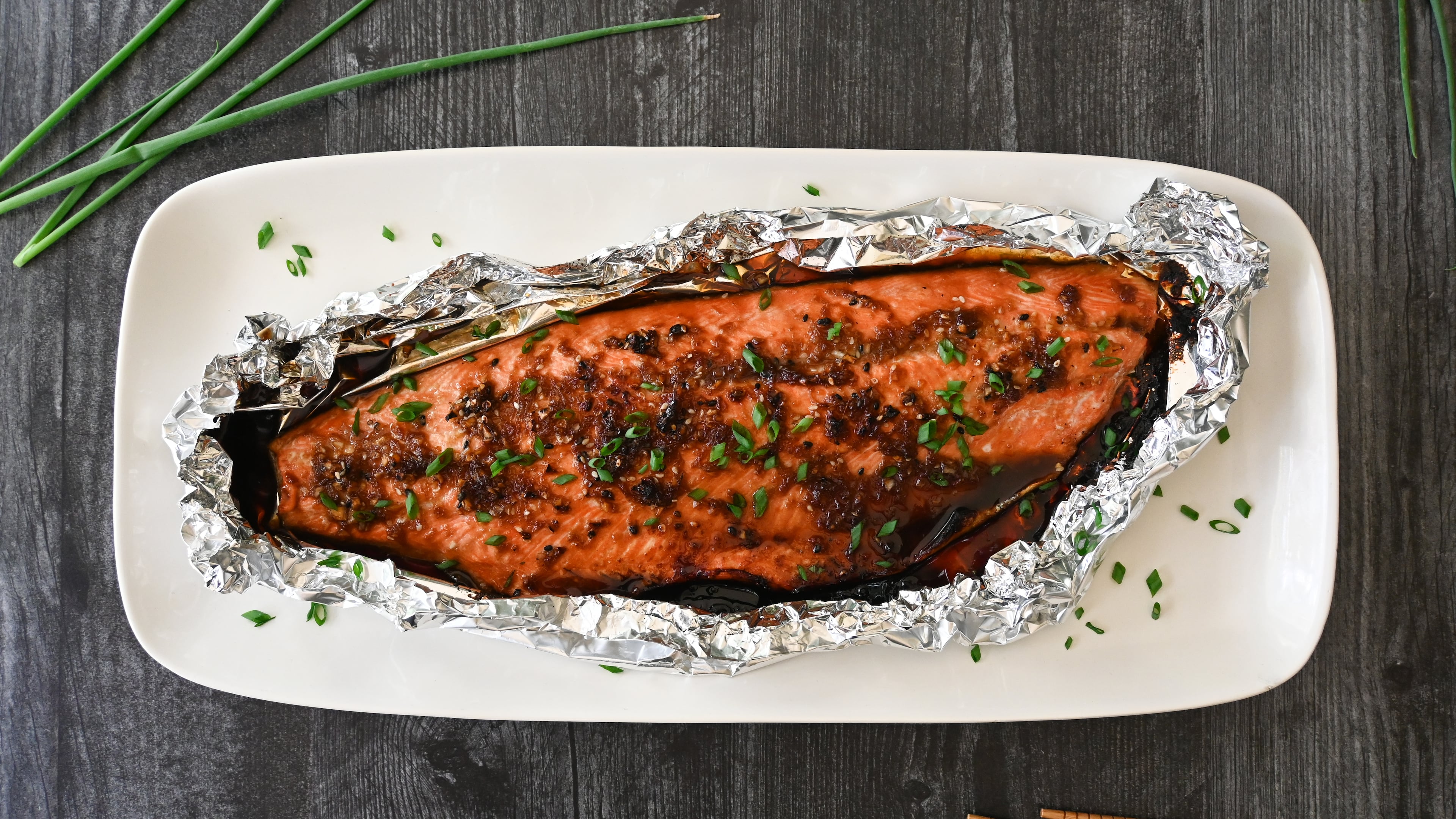
Salmon is one of the most versatile types of fish out there. It cooks beautifully whether steaming, pan-frying, smoking or broiling. For this quick-cooking recipe, we are doing the latter.
A simple glaze can be put together with common ingredients found in your fridge or pantry. This dish comes together in 10 minutes, including prep and cooking time. Serve it with steamed white rice and veggies to round out your meal.
What type of salmon should you choose?
The type of salmon you should choose depends on the flavor and desired fattiness.
If you’re not sure if your salmon is lean or fatty, wild-caught sockeye salmon tends to be on the leaner side, whereas farm-raised is fattier. The color is also an indicator — the darker the color, the leaner it is.
Lean salmon has a bolder flavor. It also cooks in a little less time than farm-raised as it lacks fat, so be careful it doesn’t dry out from overcooking.
Fattier salmon is more forgiving and harder to overcook. It stays moist because of the high fat content, and the meat is more buttery in flavor.
Aromatics cut fishy flavors
Similar to catfish recipes calling for a milk soak that neutralize fishiness, ginger and scallion are commonly used in Chinese preparations to cut odors while letting the fish retain its delicate flavors. Adding them to the glaze suspends the aromatics on top of the fish as it broils.
Use a Microplane to grate the ginger root; it helps catch the fibrous parts so you can easily discard them. Or, using a sharp knife, finely mince the ginger as you mince the garlic. Make sure the pieces are small enough to incorporate well into the sauce. Large chunks protruding from the sauce are more apt to burn under the broiler’s high, direct heat.
A handful of chopped scallions can be used as garnish before serving. It is not recommended to add the scallions to the glaze, as they are too delicate and prone to burning during the broiling process.
Use aluminum foil for easy cleanup
Place the fish on top of a large rectangular sheet of aluminum foil on a sheet pan to make cleanup easier. Build a border around the fish by using the foil to make a lip. You’ll be cooking this on the top rack of your oven, so flatten the foil wall a bit so it doesn’t make contact with the heating element above it.
When combined, the sauce becomes a thick, syrupy glaze with a texture similar to molasses. It coats the fish well, and the foil catches any sauce that pools around the bottom. After the salmon is cooked, spoon the bubbling sauce back on top of the fish.
How to check if your salmon is done
Depending on the thickness, weight and fat content of your salmon, you may need to adjust your cooking time. A lean, thinly cut 1-pound salmon fillet like the one pictured above should take you roughly 6 to 8 minutes, and a fattier one might need an extra minute or two. Check for doneness by flaking the thickest part of the fish with a fork. If it flakes easily, it’s ready.
Since the fish is cooked by direct flame and not indirect heat, feel free to keep the oven door open a crack (unless you have pets or small kids).
Substitutions for ingredients
If you’re watching your salt intake, feel free to replace the soy sauce with a low-sodium version. If you need a gluten-free option, there are gluten-free soy sauces or tamari available as well.
Sesame seeds and scallions are optional garnishes. The sesame seeds add a hint of nuttiness, and a handful of chopped scallions gives the salmon a pop of freshness.
Soy Glazed Salmon
Makes 3 to 4 servings.
Ingredients:
- 1 pound whole salmon fillet
- 2 tablespoons brown sugar
- 2 tablespoons soy sauce
- 1-inch knob fresh ginger, grated
- 1 tablespoon minced garlic
- 1/2 teaspoon sesame seeds, for garnish (optional)
- 2 scallions, chopped, for garnish (optional)
Instructions:
- Move an oven rack to the uppermost level, and heat the broiler. Line a sheet pan with aluminum foil.
- Place the salmon on the prepared sheet pan. Gather the edges of the foil and shape it around the salmon to create a lip and prevent the sauce from leaking. Press the lip down to prevent it from reaching the broiler flames.
- In a small bowl, combine brown sugar, soy sauce, ginger and garlic and mix until it becomes a syrupy consistency. Spoon the glaze on top of the salmon, and brush it so the top is evenly coated.
- Broil 6 to 8 minutes, then check to see if the thickest part of the salmon flakes easily. If not, cook 1 to 2 minutes more, or until the thickest part of the salmon flakes easily. Spoon any excess sauce over the salmon. Transfer the fish and foil onto a serving platter, top with sesame seeds and scallions (if using) and serve hot with steamed white rice and veggies.