After Trump bill killed grant, Stitch leaders try again for federal funding


1 / 7

The leaders behind a bold plan to cap Atlanta’s Downtown Connector and build a 17-acre park that can be an economic catalyst for the city’s core are trying again for federal funding.
The team behind the project known as the Stitch have applied for a $60 million federal transportation grant through the Promoting Resilient Operations for Transformative, Efficient and Cost-saving Transportation program.
The effort follows a major setback last year when more than $150 million of federal funding the Stitch scored under the Biden administration was clawed back when Congress passed President Donald Trump’s “One Big Beautiful Bill Act.”
The PROTECT program will provide about $787 million in funding to plan for and make surface transportation “more resilient” to current and future weather events, the U.S. Department of Transportation says.
The Stitch, in addition to greening Atlanta’s urban heart, will also double as stormwater infrastructure. The project is designed to capture more than 3 million gallons of rainwater per year that otherwise could flood the Downtown Connector and surrounding areas, Jack Cebe, CEO and president of Atlanta Downtown Stitch Inc., the nonprofit formed this year to push the project forward, said in an email to The Atlanta Journal-Constitution.
The Stitch will reuse stormwater for park irrigation, mitigate flood-related traffic and improve the city’s sewer system, he added.
But it’s not clear what appetite the federal government has to fund projects like the Stitch, which aims to fill a dead zone between downtown and Midtown and revitalize the northern edge of the inner city.
“According to the grant notice, we should hear back in December regarding this extremely competitive opportunity for limited federal investment,” Cebe said in the email, adding Stitch Inc. “consistently reviews funding opportunities.”
The Stitch is an ambitious engineering feat that would cap 14 lanes of interstate traffic. The project would be built in three phases between Ted Turner Drive and Piedmont Avenue.

The total project cost is estimated at $750 million to $1 billion in 2025 dollars, according to a presentation last week when new renderings were shared of the project and downtown stakeholders talked of its potential.
The Stitch would include open lawns, gardens, plazas, shade pavilions, play equipment and even a “fog forest,” an interactive water feature that would spray cooling mist.
“This is a continuous thread of green … an oasis in the city,” said Mary Margaret Jones, president and CEO of Hargreaves Jones, the landscape architect for the Stitch.
The first phase, which would cover 5 acres along Peachtree Street and Ralph McGill Boulevard, would cost nearly $200 million for the bridge component, or a total of $250 million to $275 million including the park features, Cebe said at the event.
The project so far has raised about $50 million for design and construction. Landing a federal grant could help ignite philanthropic support. November’s upcoming gubernatorial election could also influence the Stitch depending on which candidate takes office and how they view the project.
“We’re having conversations right now, and we hope we can raise the funding to get started,” Cebe told the AJC following the recent event, adding the team wants to kick off the first phase next year or soon after.
He said during the presentation that some street-level improvements would go ahead and start, “to be followed by the cap construction once that funding is finalized.”
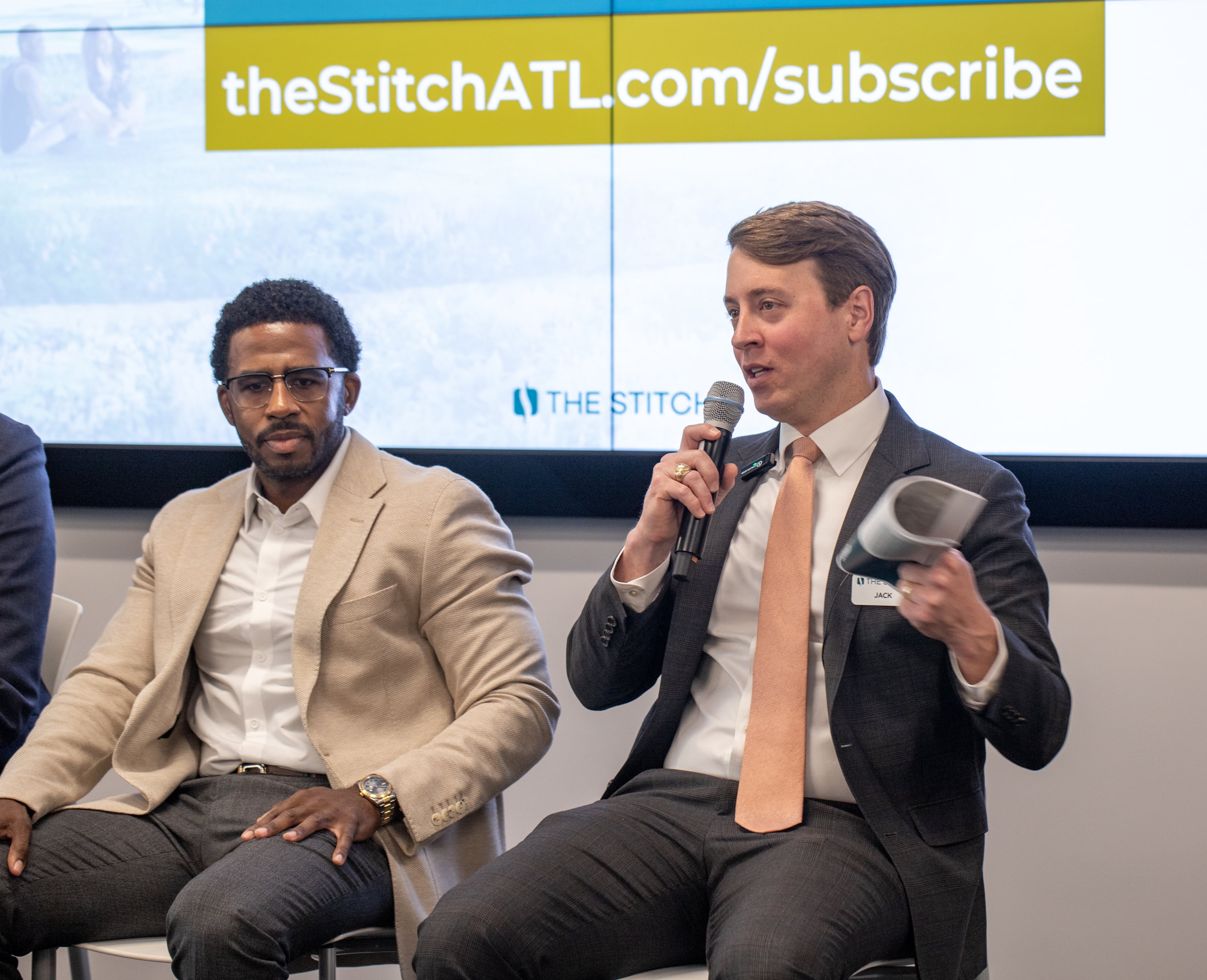
Project proponents believe the Stitch can be a spark to entice more people to live and work downtown, creating a central gathering spot in an otherwise concrete-clad part of downtown. The project could also bring new investment to the area like Historic Fourth Ward Park did along the Atlanta Beltline, supporters say.
“I think it just takes a little bit of magic dust to be sprinkled on this, and a few big investments to be made to unlock what could be acre after acre of opportunity,” Chris Eachus, founding partner of CP Group, the real estate firm that owns Bank of America Plaza and The Center, said during a panel discussion last week.
Lee Harrop, who recently joined the Stitch as vice president of design and delivery, told the AJC that the current stage of the Stitch is reminiscent of the early days of the Beltline, another ambitious project that has stretched across decades and recently completed its final land acquisition.
Harrop worked as a program director at the Beltline for about a decade, starting in 2008, according to his LinkedIn profile. Projects of the scale of the Stitch are “not new to me,” he said.
“I am wildly optimistic about this. People thought we couldn’t do the Beltline.”