From forests to flight, new commission to study Georgia’s biofuel potential
Every flight to and from the world’s busiest airport offers views of Georgia’s lush forests and fertile fields.
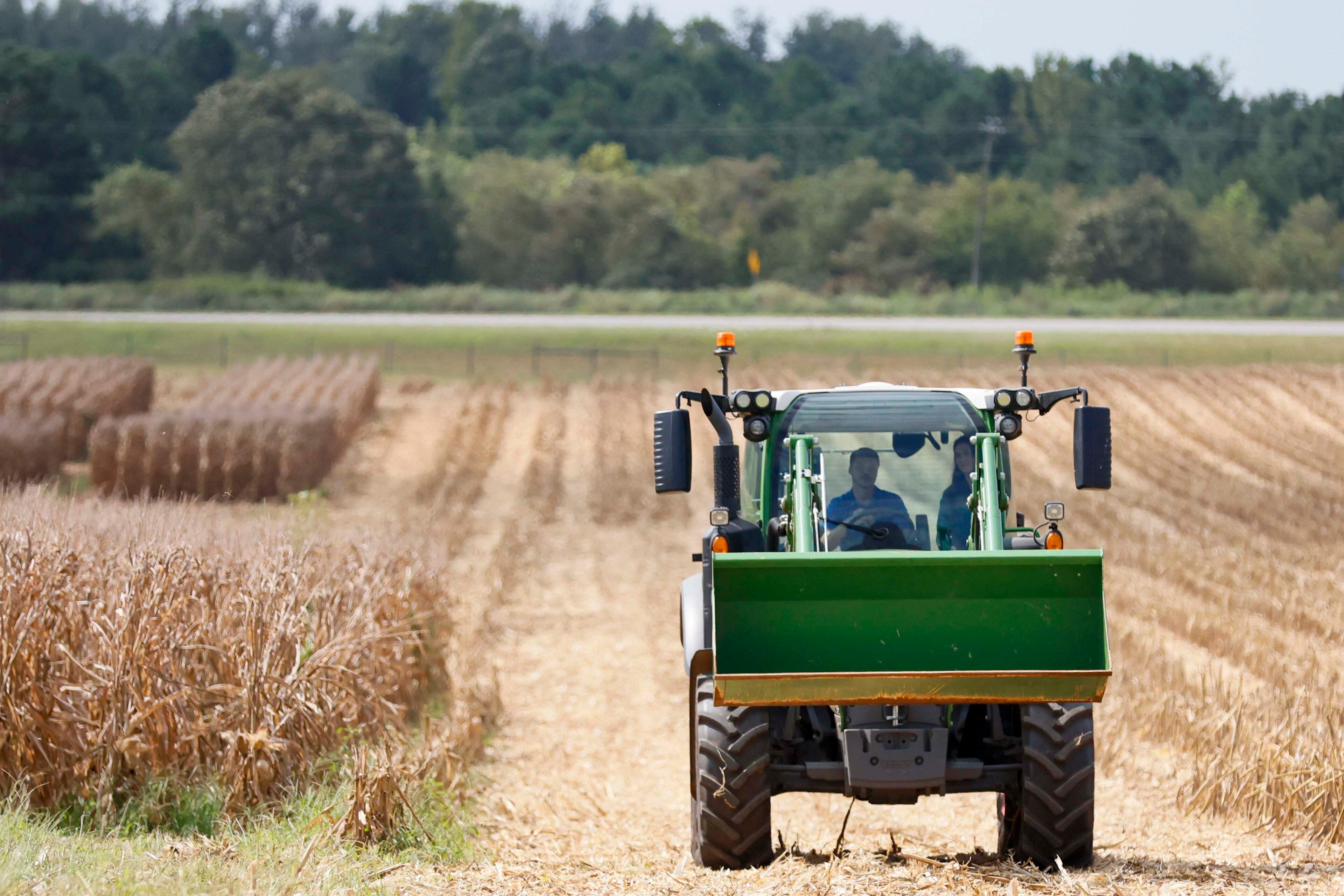
While timber and bountiful harvests may not seem to have anything to do with the planes dotting Atlanta’s skies, a new coalition sees potential in connecting the two. Perhaps the answer to cleaner, less polluting aviation is found within those forests and farms?
The Georgia Sustainable Aviation Fuel Coalition launched Wednesday to evaluate the economic viability of a homegrown biofuel industry. It’s anchored by the Metro Atlanta Chamber, farming organizations and Atlanta-based companies like Delta Air Lines and Norfolk Southern. The coalition looks to capitalize on marrying Peach State farms with companies whose long-term green initiatives rely on new sustainable fuel supply chains.
“You have those big end users that are looking at these biofuel products, and you have ample supply because of our agriculture and forestry industry,” said Adam Belflower, state affairs manager for the Georgia Farm Bureau. “So it’s connecting those dots.”
The aviation sector has committed to reaching net zero carbon emissions by 2050. The International Air Transport Association estimates sustainable aviation fuel production will account for less than 1% of global aviation fuel use this year.
Some of those launching the coalition say they believe Georgia, as the No. 1 forestry state in the nation and home of Hartsfield-Jackson Atlanta International Airport, could become a leader in producing sustainable aviation fuel, commonly known as SAF. Other states with similar SAF industries, such as Minnesota, focus on corn byproducts, but Georgia has a leg up when it comes to timber, poultry and other agricultural products.
“Because there’s so much need and so low supply, you’re not really competing against other states now. And the feedstocks are wholly different,” said Metro Atlanta Chamber President and CEO Katie Kirkpatrick.
Bridging that gap depends on striking public-private partnerships and working across companies, producers, researchers and agriculture, which the coalition aims to do. The coalition leaders also said it’s vital to make sure SAF production is met with sustainable demand, especially as biofuel and clean energy regulations change across the globe.
Who is in the Georgia SAF Commission?
Here are the companies, organizations and institutions that comprise the Georgia Sustainable Aviation Fuel Commission, which launched in late September 2026.
Founding members:
- Metro Atlanta Chamber
- Georgia Farm Bureau
- Georgia Forestry Association
- Delta Air Lines
A key factor that is driving the effort now is legislation signed into law in May that could help drive biofuel production and other forestry manufacturing by allowing companies to transfer certain tax credits to monetize them. Called the “Keep Georgia Forested Act,” its changes were designed to help Georgia catch up to other states that have already begun producing and using SAFs at scale.
“It just lets them build money in the beginning, which is really difficult,” said Cynthia Curry, senior director of Cleantech Ecosystem Expansion for the Metro Atlanta Chamber.
‘Make Georgia competitive’
There have already been some steps toward SAF production in Georgia.
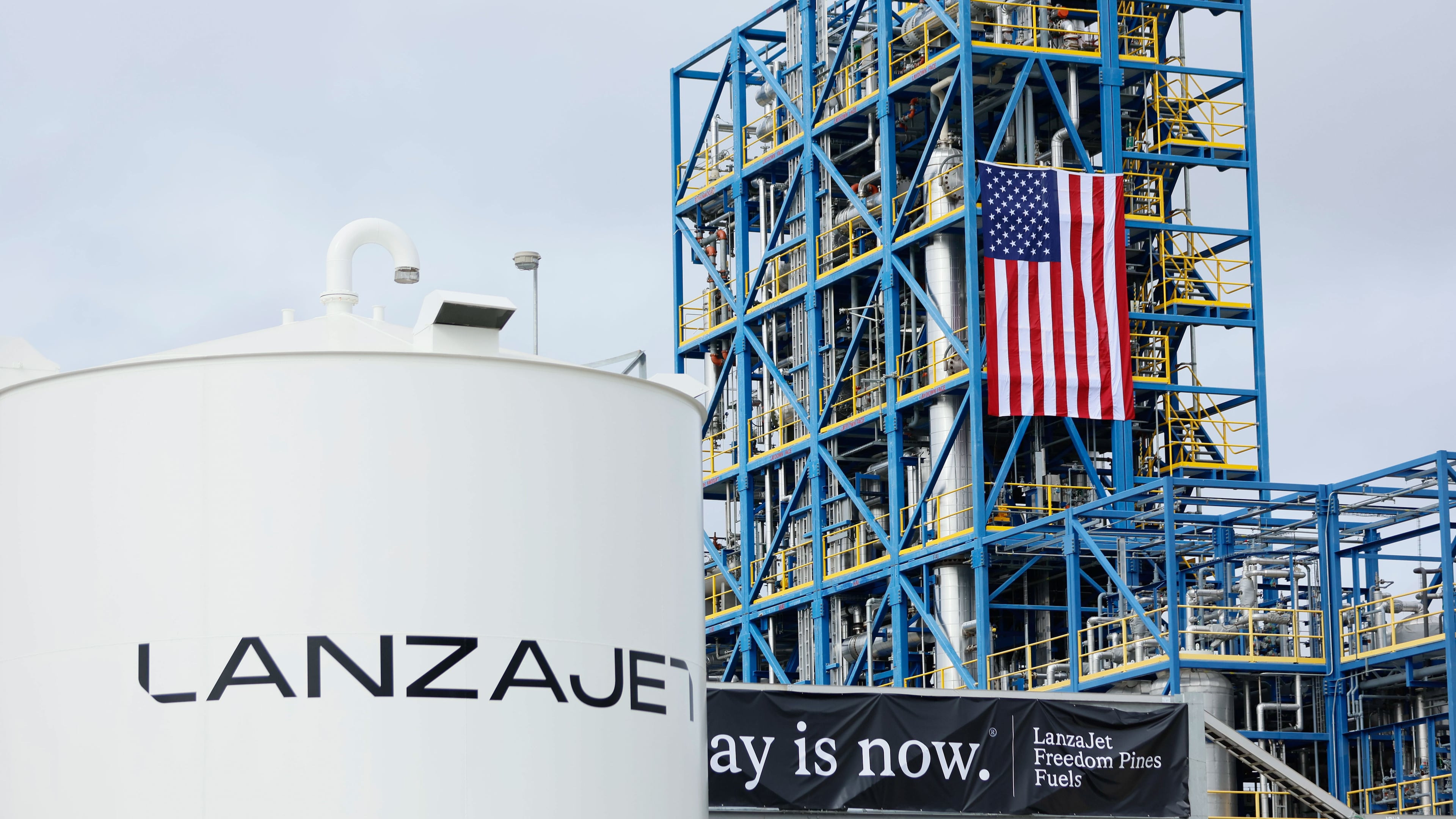
LanzaJet has a SAF production facility in Soperton, between Macon and Savannah, to turn ethanol into jet fuel. But the facility is still in the demonstration phase, said Charlotte Lollar, director of SAF and emissions at Delta.

Lollar said some states including California, Minnesota, Washington and Illinois have had “a head start” with policies that have spurred SAF development and use.
“We really do think (the coalition) is going to help make Georgia competitive when it comes to SAF development, SAF investment and innovation,” Lollar said.
Delta has been working on other efforts to reach its sustainability goals and reduce its carbon footprint in the future, like hydrogen-powered planes. But such efforts are years away from being commercially viable for airlines, while SAF is already in use — albeit on a small scale.
As a result, Lollar said, “We consider SAF to be one of the most important tools available to the aviation industry to help decarbonize.”
There are plenty of challenges: SAF can be two to five times more expensive than conventional jet fuel, and annual SAF production can’t meet even a week of global jet fuel demand. That also means SAF is just one piece of the decarbonization puzzle. Delta, for instance, had about $9.8 billion in fuel expense last year.
“The goal is not just to produce a million gallons of SAF. There are other things that have to be done that can ensure progress,” said Leanna Brown, the chamber’s vice president of business climate.
Sowing new markets
For farmers and forest owners, the interest in SAFs comes amid fundamental economic challenges.
Inflation has skyrocketed the cost of fertilizer and other products vital to farming, and tariffs and trade wars have eaten into international markets. Storms have ruined some harvests, and commodity prices haven’t increased enough to provide stability, Belflower said.
“The prices (farmers) receive for their products are not reflecting that, and a lot of that has been due to a decrease in demand for a lot of the products that we grow here in Georgia,” he said.
Multiple pulp and paper mills across the state have shuttered in recent years, leaving a log-sized hole that timber farmers are seeking to fill.
“We don’t have the demand that we had when all of those facilities were open,” Belflower said. “So something like biofuels presents a good opportunity to increase demand and fill that hole.”

Tim Lowrimore, president and CEO of Georgia Forestry Association, said there are roughly 22 million acres of working forests across the state. But there’s no way to make a return on that investment if the trees don’t have a market, and that removes an incentive to replant.
“Healthy markets drive healthy forests,” he said. “We believe SAF can play an important role in ensuring Georgia has a well-managed forest resource going forward.”
Several Georgia universities are part of the SAF coalition, providing research resources to help increase production efficiency. They’re also tasked with evaluating the scope of a sustainable biofuel sector as some countries have stringent regulations and others are more lax.
“Are you meeting consumer demand, or is this regulated demand that’s driving it?” Kirkpatrick added.
“Right now, my personal opinion is this is really driven by the global market at the moment,” she continued. “But it could be a cost differentiator — especially with where (the cost of) diesel is right now.”
Fueling growth
Delta’s primary role in the coalition is to be a secure source of demand.
“Atlanta being our hometown hub and the largest and busiest airport in the world, there is significant demand for SAF and jet fuel at that airport,” Lollar said. Yet there have been only a few pilot programs that brought in a small batch of SAF over the last couple of years, she said.
“It’s very, very small compared to other states that are more competitive right now when it comes to SAF,” she continued.
She noted that Delta is part of a SAF hub in Minnesota, where a SAF blending facility has been built to supply Delta’s hub at Minneapolis-St. Paul International Airport.

Delta aims to help with innovation and research, as well as development of SAF. “A lot of these technologies and feedstocks are pretty nascent,” Lollar said.
“There is a lot of forestry, woody biomass type of feedstock available in the state of Georgia, and resolving for feedstock is a huge part of the equation when it comes to SAF development,” Lollar said. “With this House bill in place, it will ideally help spur the investment that’s required to have some local production. What we’re hoping to do is help incentivize investment and innovation locally.”
One of the key drivers globally of SAF production is a requirement by the European Union for SAF supply, starting at 2% in 2025 and ramping up to 70% in 2050. Such mandates are also helping to guarantee demand to spur development of large-scale SAF production facilities.
If Georgia became a major supplier of SAF, “there should be opportunity to export some of that (to) markets like the European markets, even some of the Asian markets that have mandates in place,” Lollar said.
Biofuels aren’t only useful for airborne purposes. Rail companies are a large potential untapped market, and coalition members said shipping could be included in the future, especially with the rapid growth of Georgia’s sea ports.
Atlanta’s interconnectivity and status as a global logistics hub means it has exposure to global market trends and regulation, presenting both challenges and opportunities that the coalition seeks to study.