Rivian designed an urban playground for its Atlanta employees. Take a look.

When your company’s branding is centered around exploring the great outdoors, how do you convince workers to venture to a corporate office?
Rivian’s solution is to imbue the office with a sense of adventure, leveraging Atlanta’s renowned urban treescape.
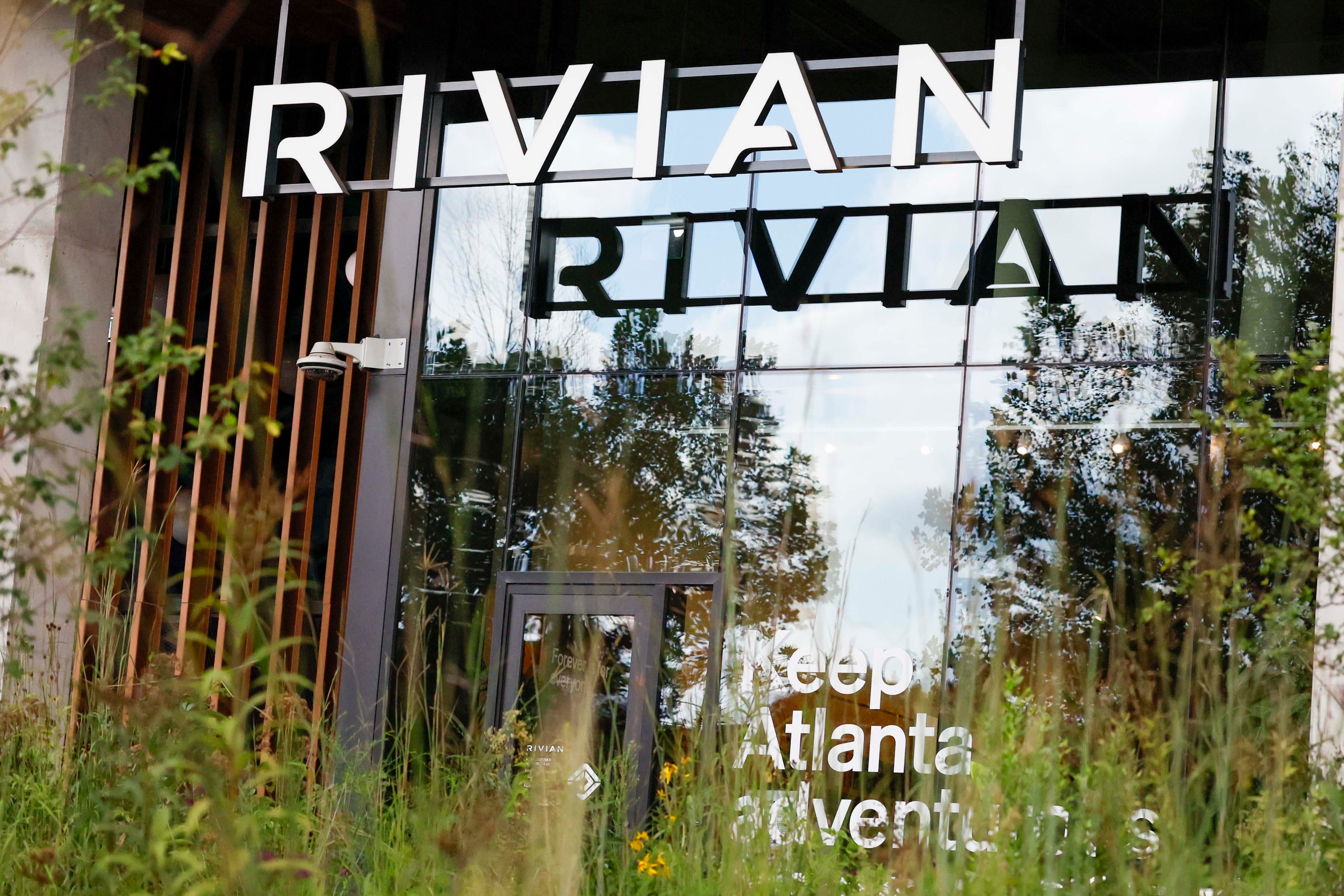
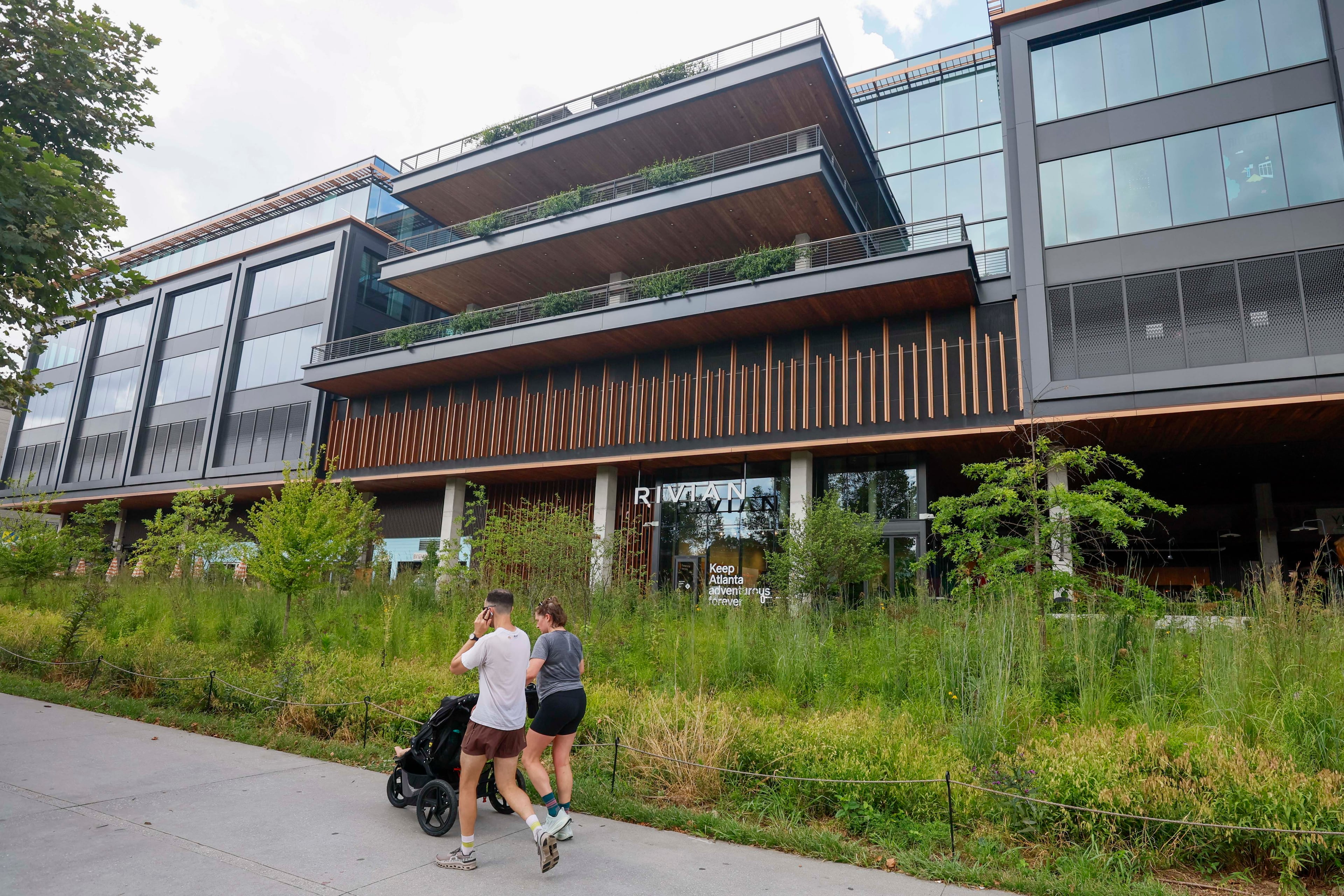
The electric vehicle startup this week debuted its new East Coast headquarters off the Beltline to media outlets, including The Atlanta Journal-Constitution. The 45,000-square-foot office at the Junction Krog District building aims to combine the trappings of a post-pandemic workplace with a sense that nature is just around the corner.
That’s exemplified by the expansive outdoor terraces and balconies that appear to hang over the bustling Beltline Eastside Trail.
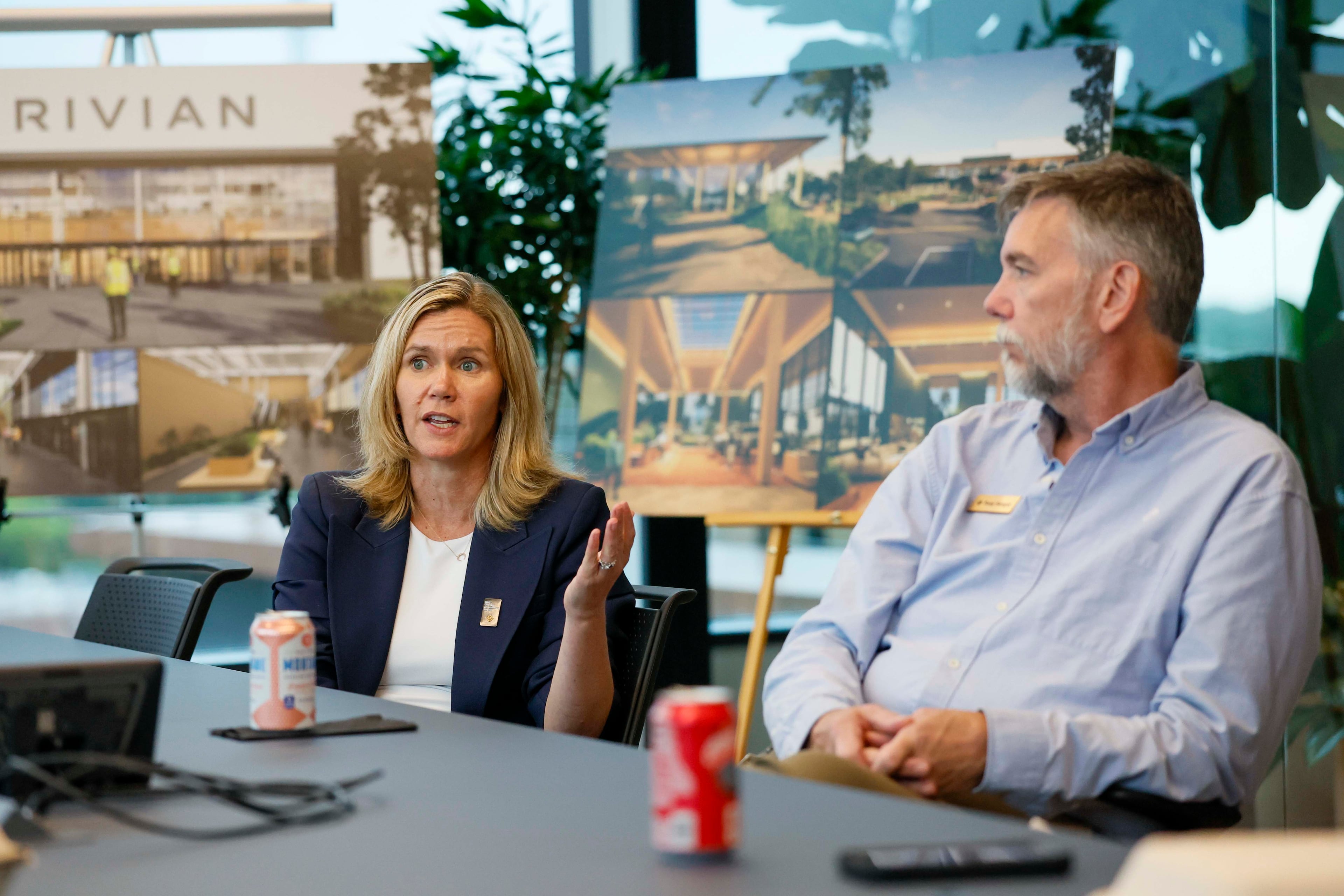
“When we started to tour office spaces, we toured 13 in one day,” said Elle Navarro, senior director of facilities operations for Rivian. “When they brought us up here, it was game over.”
Irvine, California-based Rivian opened its East Coast headquarters in December and has slowly been filling it up with employees. About 130 workers currently are based in the building, and Rivian expects to grow that figure to 500 by 2030.
The office investment is expected to ramp up as the startup builds its $5 billion EV factory an hour east of Atlanta, a project that itself is projected to employ 7,500 workers. Site work and construction at the 2,000-acre site in the Stanton Springs industrial park is picking up this summer, Rivian executives said, preparing to start vehicle assembly in 2028.
Claire McDonough, Rivian’s chief financial officer, said the proximity between the East Coast headquarters and the factory will pay dividends as the startup aims to scale to profitability.
“Once the ($5 billion manufacturing) facility is built-out in Stanton Springs, they will migrate more to be on-site,” she said of several Rivian employee teams.
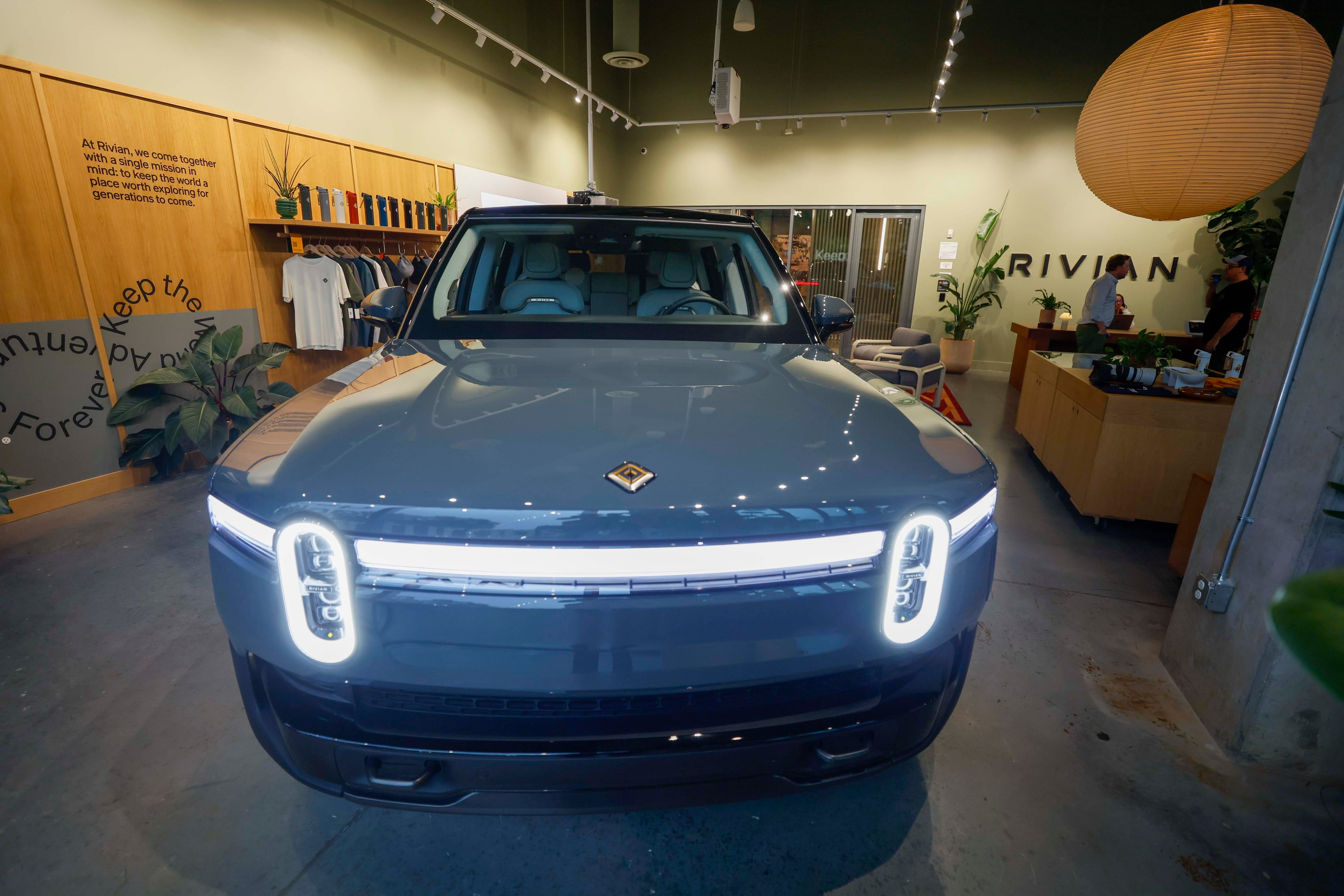
The Junction Krog District building was developed by Atlanta-based Portman Holdings and finished construction in 2023. Rivian in mid-2025 became the first office tenant to lease space in the six-story building, occupying its lobby and top floor. Lease terms were not disclosed.
“We see this as a home for us,” Navarro said. “We do not have plans to go anywhere else anytime soon.”
Office leasing struggled for years after the COVID-19 pandemic upended the market, popularized hybrid work schedules and forced companies to rethink their workplace investments. Leasing activity has recently begun to rebound, with the first half of 2026 being the strongest since pre-pandemic times.
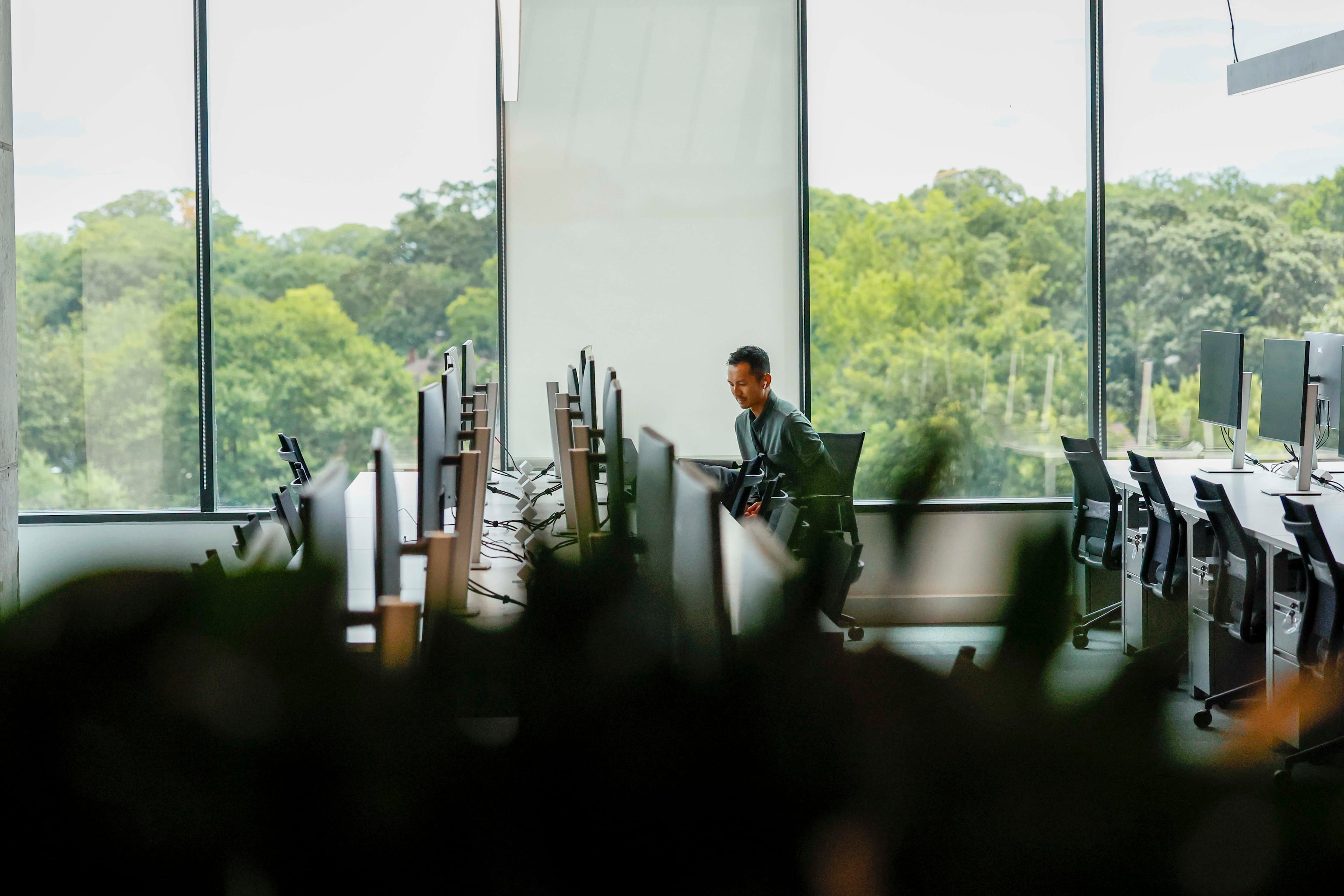
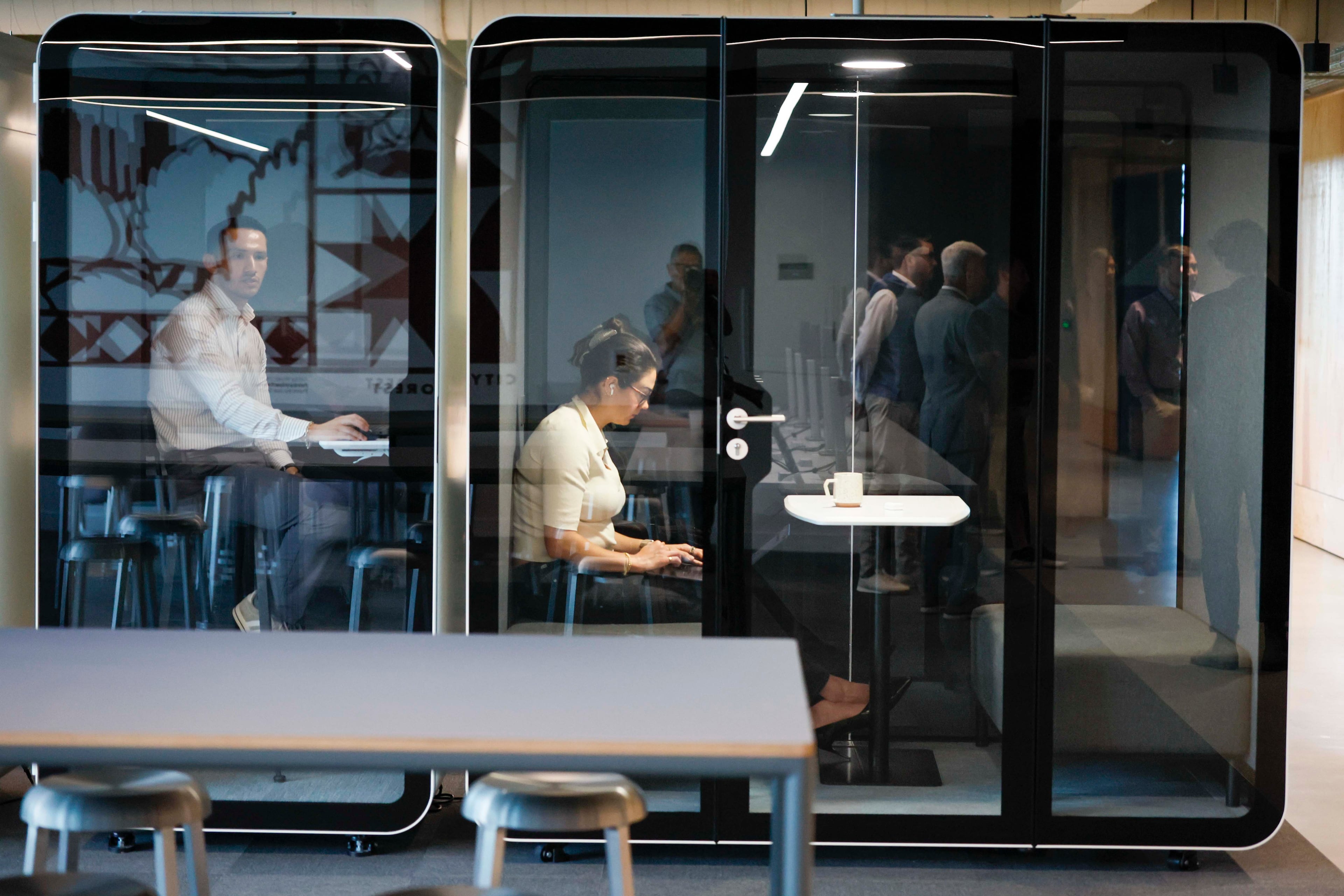
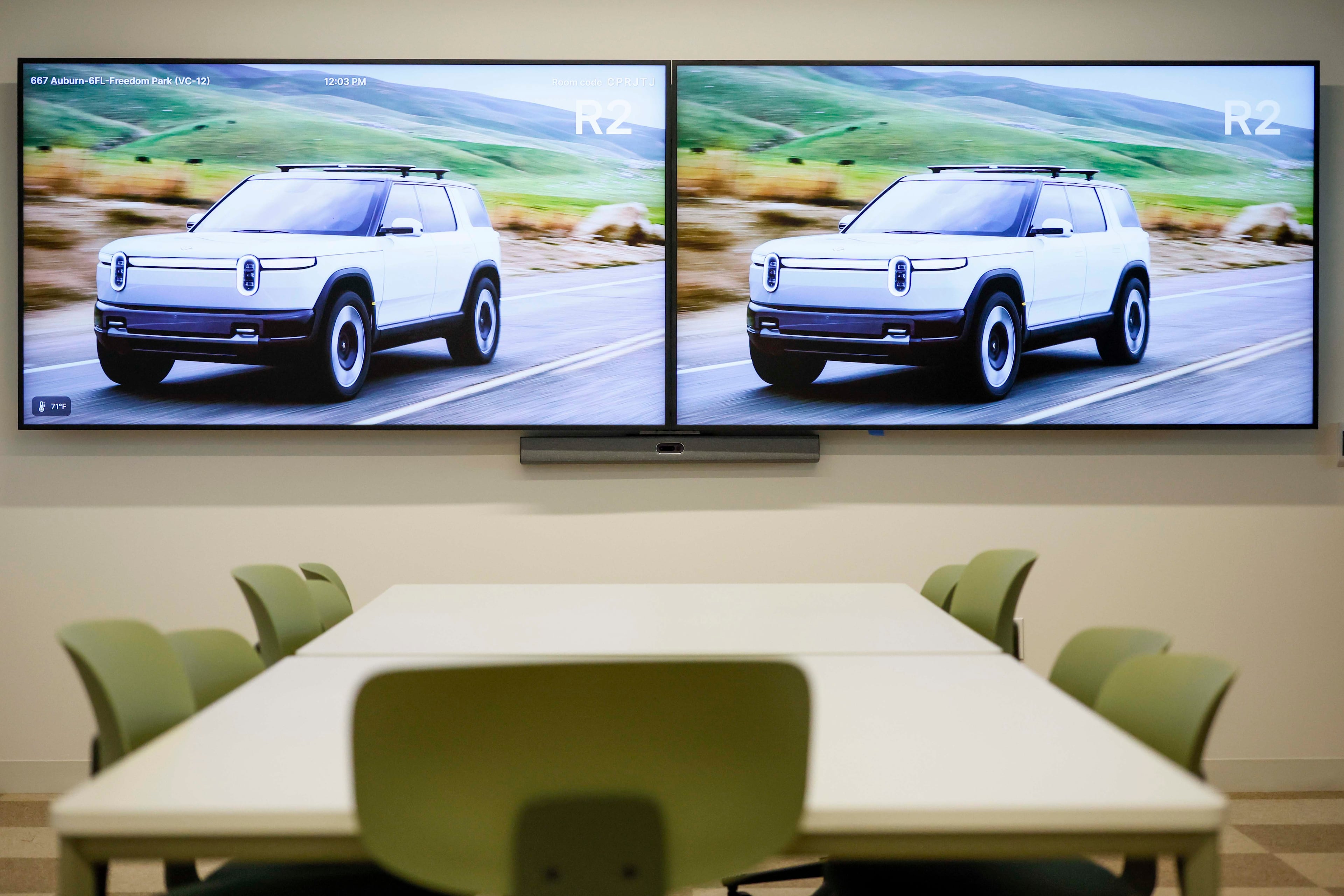
Rivian’s office design reflects many of the trends that have become standard fare to woo workers away from their home desks and to a physical workplace. Cold brew coffee and kombucha are offered on tap. Smaller office pods are strewn throughout the rows of sit-stand desks, providing private spaces for video calls.
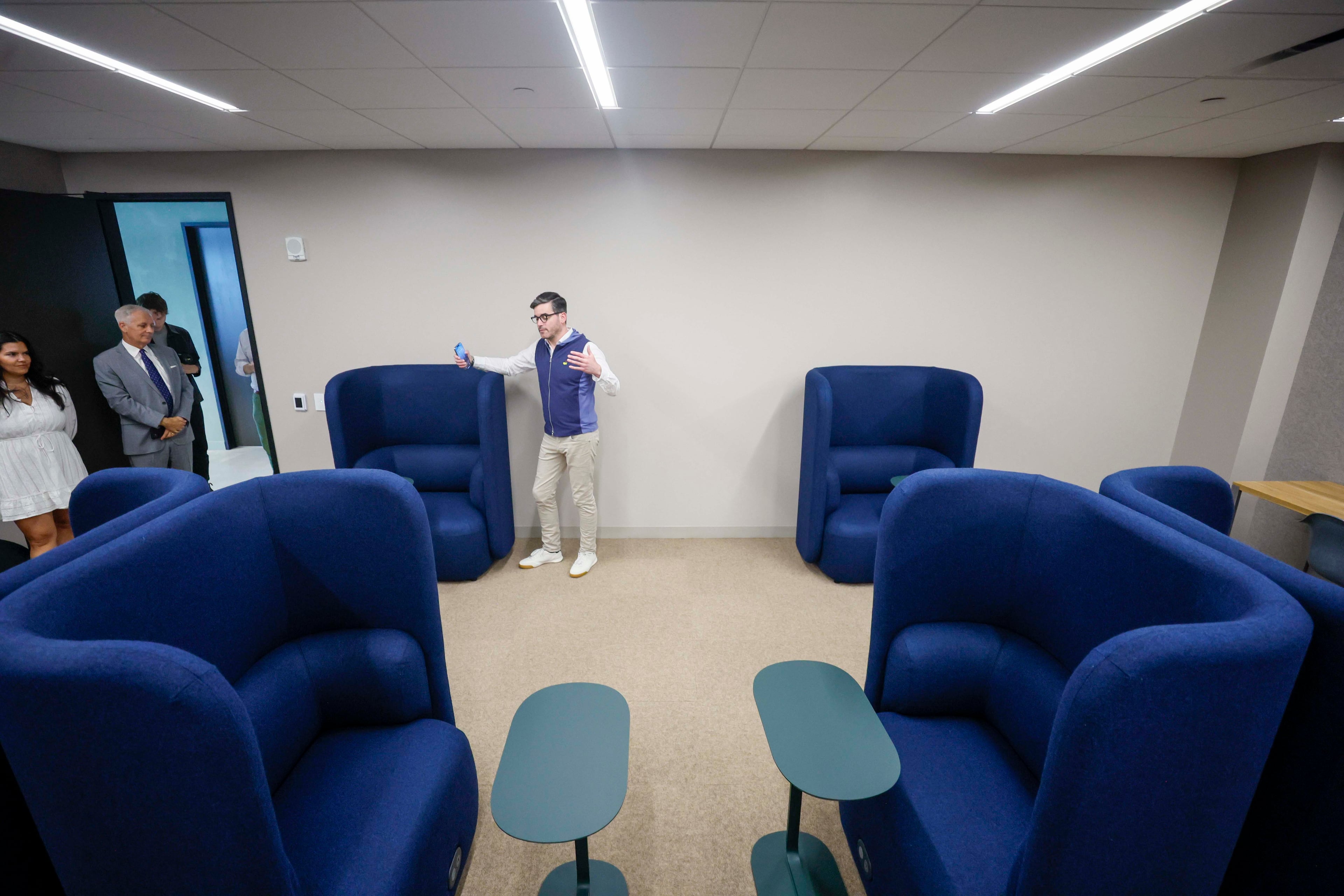
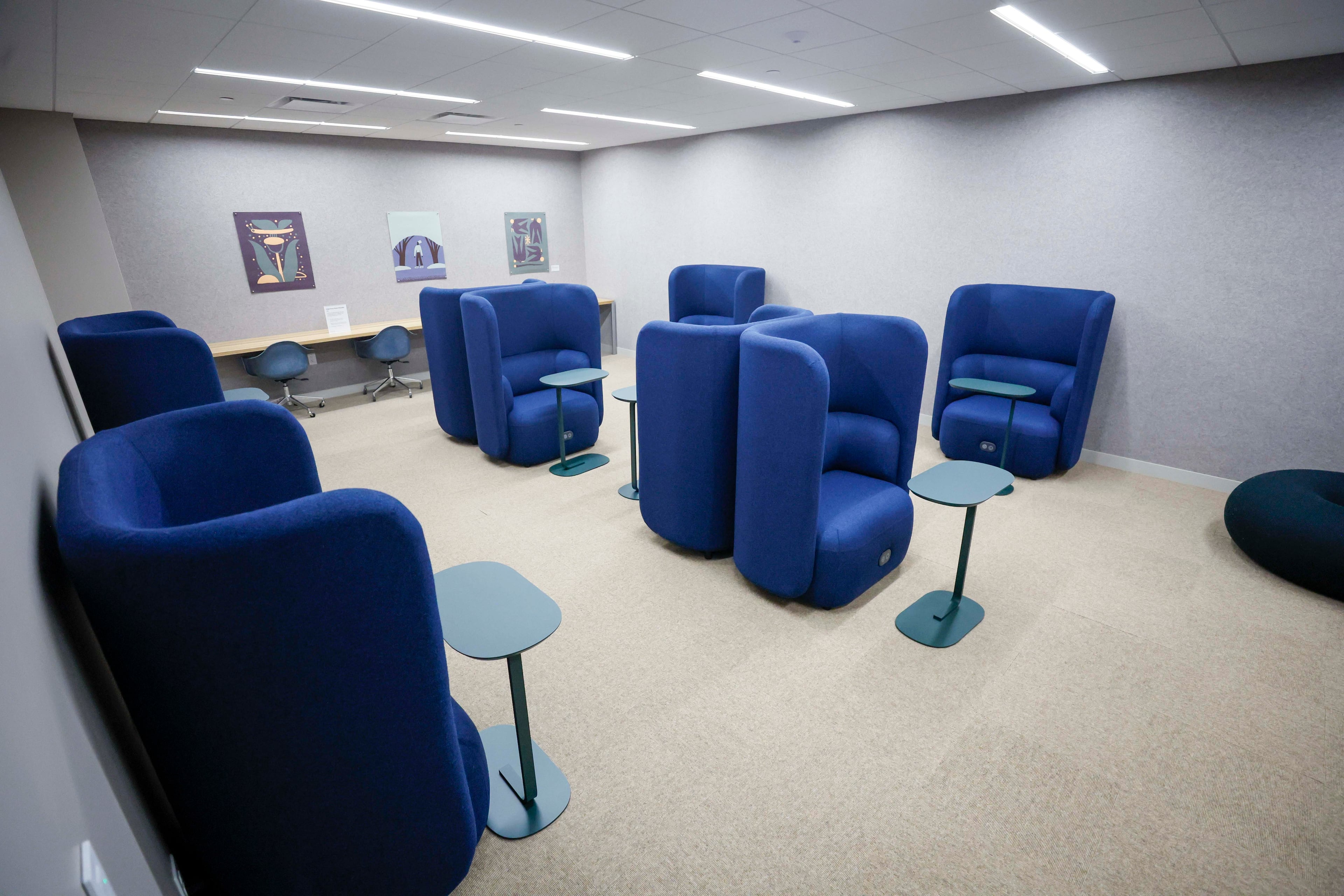
Garrett Page, director of commercial and workplace operations at Rivian, highlighted a sound-dampened room the company calls its “deep focus” room.
“Our development team got a lot of feedback that with this move to open office, they’re struggling to get some space where they can really put their head down, focus and be quiet without bright lights and distractions,” he said.
In the room, “Everything is on mute,” he added. It’s a concept that could be replicated at Rivian’s other offices, if it becomes a hit with employees.
The company has about 50 open jobs based out of the East Coast headquarters, which Rivian leaders said will soon be bustling with activity to mirror all the vibrancy taking place off the Beltline.
Navarro said having an office with the feeling of living “amongst the trees” struck a chord with the company and its focus on clean technology.
“This is very Rivian,” she said.
Cox Enterprises, which owns the AJC, also owns about a 3% stake in Rivian.