In Charlottesville and Atlanta, John Dewberry is known for half-built towers

Some call it the Rat Hotel.
In the downtown retail district of Charlottesville, Virginia, a building shell has sat exposed to the elements for more than 10 years. What was initially planned as five-star accommodations for visitors to the city has remained concrete and steel. The only signs of life, Charlottesville resident and journalist David McNair said, are rodents.
“You walk by at night and they’re pouring out of the bottom of the hotel,” McNair said.
Some 500 miles to the southwest sits another naked high-rise, the Campanile office tower at Peachtree and 14th streets, an eyesore at one of the most important intersections in Atlanta.
Both towers are owned by the same developer: John Dewberry, the Georgia Tech quarterback-turned real estate mogul, who for years scooped up undeveloped blocks and parking lots along Peachtree Street.

Dewberry had similar plans for both sites: spending millions to renovate each property into crown jewels. At least for the hotel, he would eventually have a proof of concept in Charleston, South Carolina, where he spent years renovating a hurricane-battered federal office building into a five-star hotel called, fittingly, the Dewberry.
More than a decade after acquiring the Charlotteville and Atlanta sites, however, the structures have become irritants to neighbors as development has boomed around them. In Atlanta, Dewberry has emphasized work is ongoing. In Charlottesville, not so much.
The twin challenges have raised questions among residents in both cities about whether he will ever complete these structures and about a developer’s responsibilities. Is it ethical or safe to let buildings languish for years?
Neither Dewberry nor his representatives responded to multiple requests for an interview, including a written list of questions. He has previously told The Atlanta Journal-Constitution and other outlets that his view is long-term, promising the patience in both projects will pay off.
Residents and leaders in both cities for years have called for construction to resume or for Dewberry to sell, but little enforceable action has been taken.
The tension is coming to a head in Atlanta. City council members Monday approved a measure to impose a blight tax on the office tower after residents demanded action over concerns about the incomplete structure.
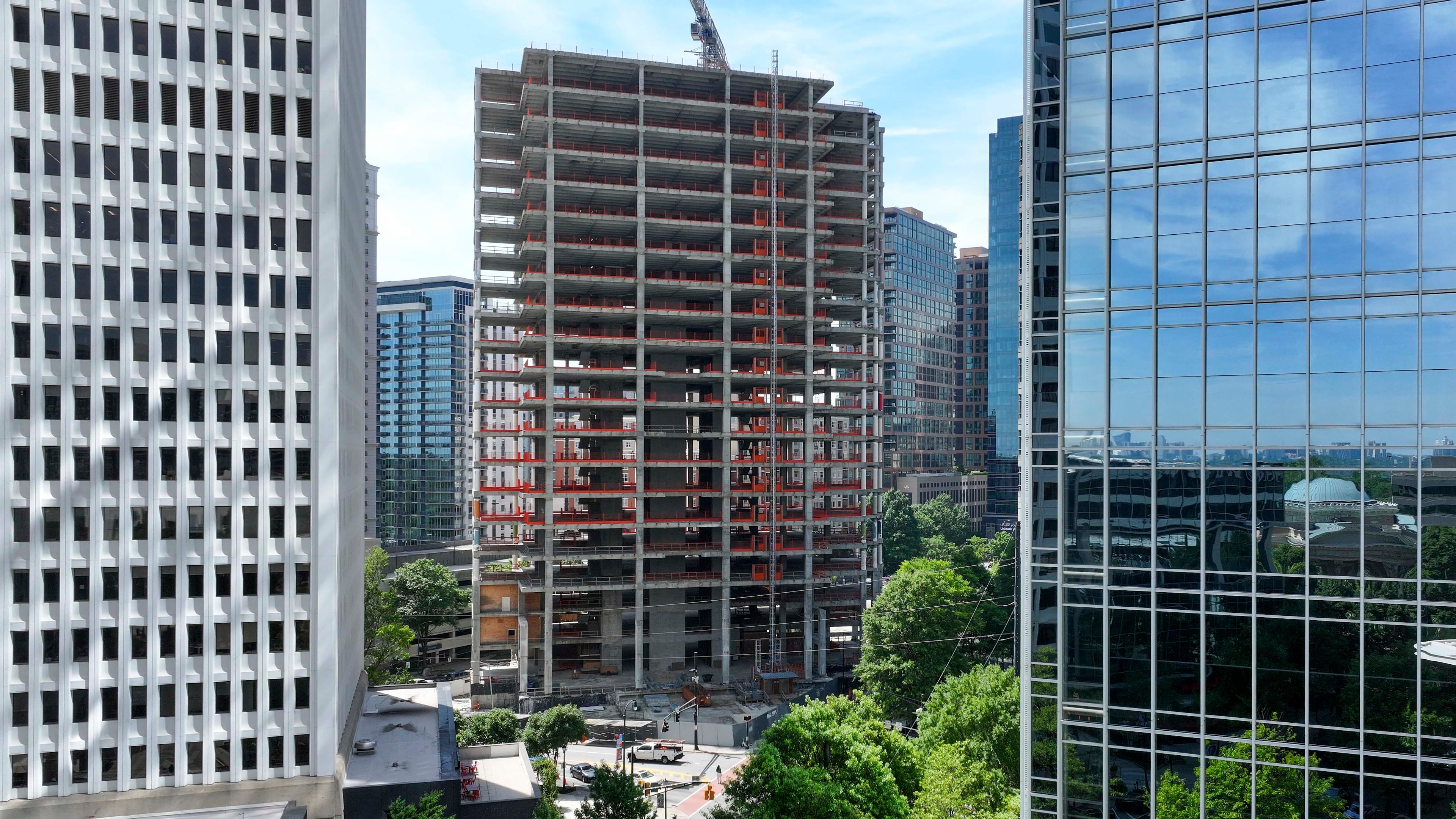
What’s happening with Campanile?
It’s rare for a large-scale real estate project in a major city to sit incomplete for years at a time.
The market usually creates enough pressure for them to move forward, said Rick Porter, the director of Georgia Tech’s master of real estate development program. Lenders and investors need to get paid, office tenants need space to lease and residents need apartments to rent.
“It makes no financial sense what’s happening there,” Porter said. But Dewberry is unlike many conventional developers active in Atlanta. He’s a self-described perfectionist, meticulous about his work and known as a maverick in an increasingly buttoned-up real estate market. Where some developers are serial flippers of properties, Dewberry is a long-term holder on high-profile sites along Peachtree Street, many of them debt-free.

His best-known Atlanta project is arguably Peachtree Pointe, an office complex along Peachtree Street he finished in 1999 and expanded in 2008. It’s the former home of financial giant Invesco.
Dewberry bought Atlanta’s Campanile tower in 2010 for $36 million, paying one-third of the price the previous owner paid. It was built in the 1980s and formerly housed BellSouth’s headquarters.
At the time, the building was mostly empty. In the early years of Dewberry’s ownership, he signed leases with several tenants, including SunTrust Bank.
With the acquisition, he was early to a commercial real estate development boom that would sweep Midtown over the next 10 years. Development within that time span was roughly equal to all development from the past five decades combined, according to a 2020 report from Bleakly Advisory Group.
He would eventually pitch a renovation project estimated at about $88 million, aiming to clad the building in white marble and installing a curtain wall with glass, as well as adding a new office and retail podium around the base of the tower. He wanted to add several new floors, a costly endeavor.
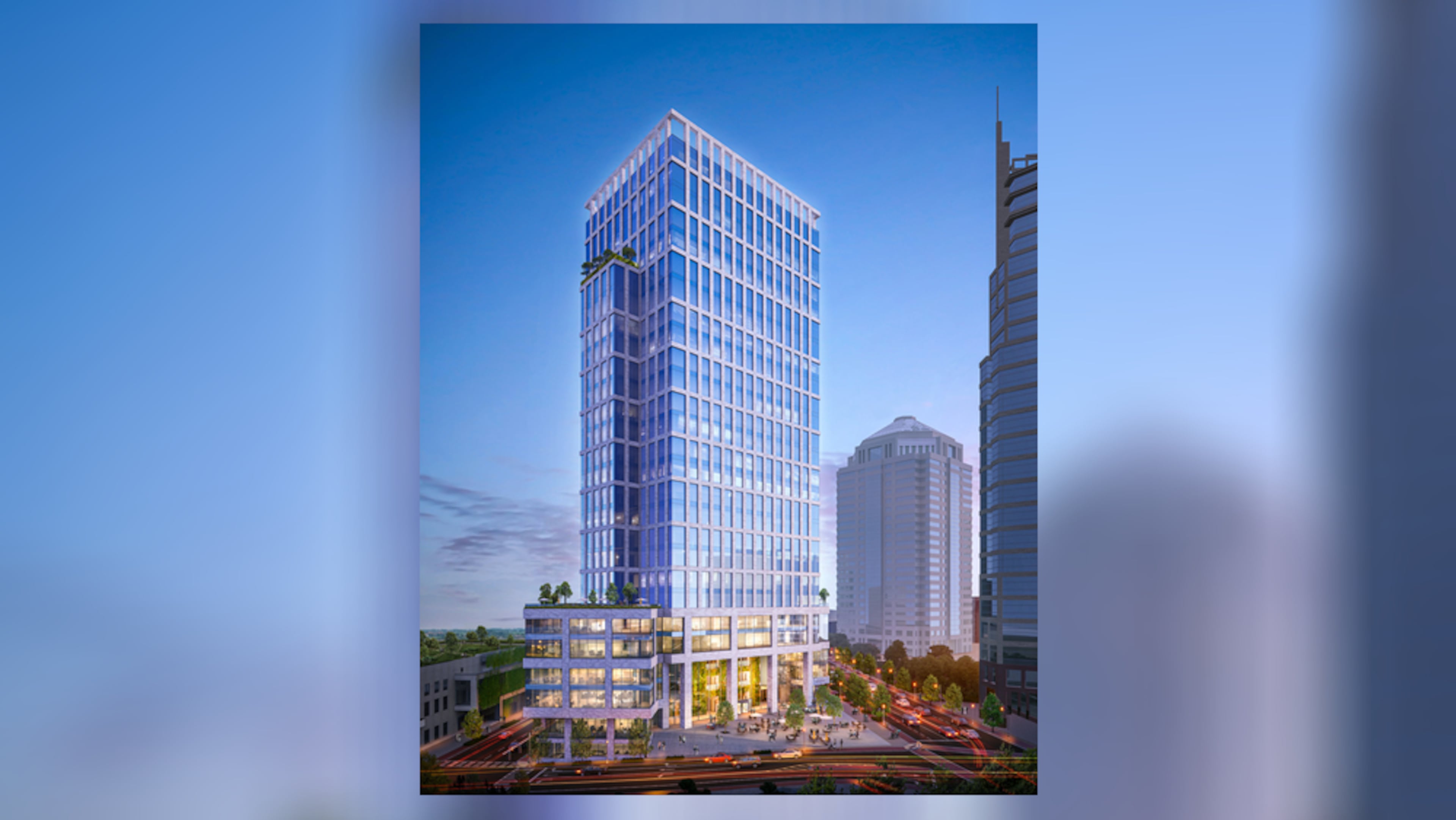
“I think she is short and fat, and I want to make her tall and slender,” Dewberry told the AJC in 2015. “We pride ourselves as a Tiffany developer, and she is ugly.”
Dewberry eventually was awarded a tax break in 2017 that could’ve been worth about $5.7 million over the next decade. His plans had also grown, promising to invest nearly $125 million into the project that would lead to roughly 1,350 jobs.
Work began in 2019. He eventually rechristened the office tower the Midtowne.
Paul Greever has lived at the neighboring Mayfair Renaissance building on 14th Street for decades. He remembers the green see-through top of the Campanile and the huge bronze light fixtures on granite pedestals at the entrance of the building. Mature trees lined the base of the property, shading much of the sidewalk of 13th Street on the south side of the tower.

When Dewberry began the renovations, Greever was curious about his reasoning because he believed it was such a striking property.
“He took what was a beautiful building and basically made it into just a tall box,” Greever said. “(It’s) no longer unique at all.”
Less than a year later, the pandemic halted progress on the Midtowne. It also upended the office leasing business, introducing much of Atlanta’s corporate world to remote work. Companies reduced their space needs and reconsidered what they valued in an office.
While Dewberry bought early, others beat him to the punch.
Neighboring Colony Square underwent a $400 million transformation that turned the aging development into what developer Mark Toro called “Midtown’s living room.” Since 2018, 53 projects have been completed in the core of Midtown, according to numbers from business and civic group Midtown Alliance. Currently there are another five projects under construction and nine projects in permitting.
Dewberry told the AJC in 2021 that the delays were caused by several factors, including a disagreement over price estimates with the former general contractor. Because the building hasn’t received a certificate of occupancy, he hasn’t received a cent of the promised tax break, according to the Development Authority of Fulton County, which approved the deal.
Dewberry in 2025 paid more than $440,000 in city, county and school taxes on the property. Last year’s property tax bill was more than nine times as expensive for Colony Square, an operating mixed-use district with dozens of tenants.
In a statement, the development authority said it “shares the disappointment of the community and other stakeholders that the development has not delivered on those expected outcomes.”
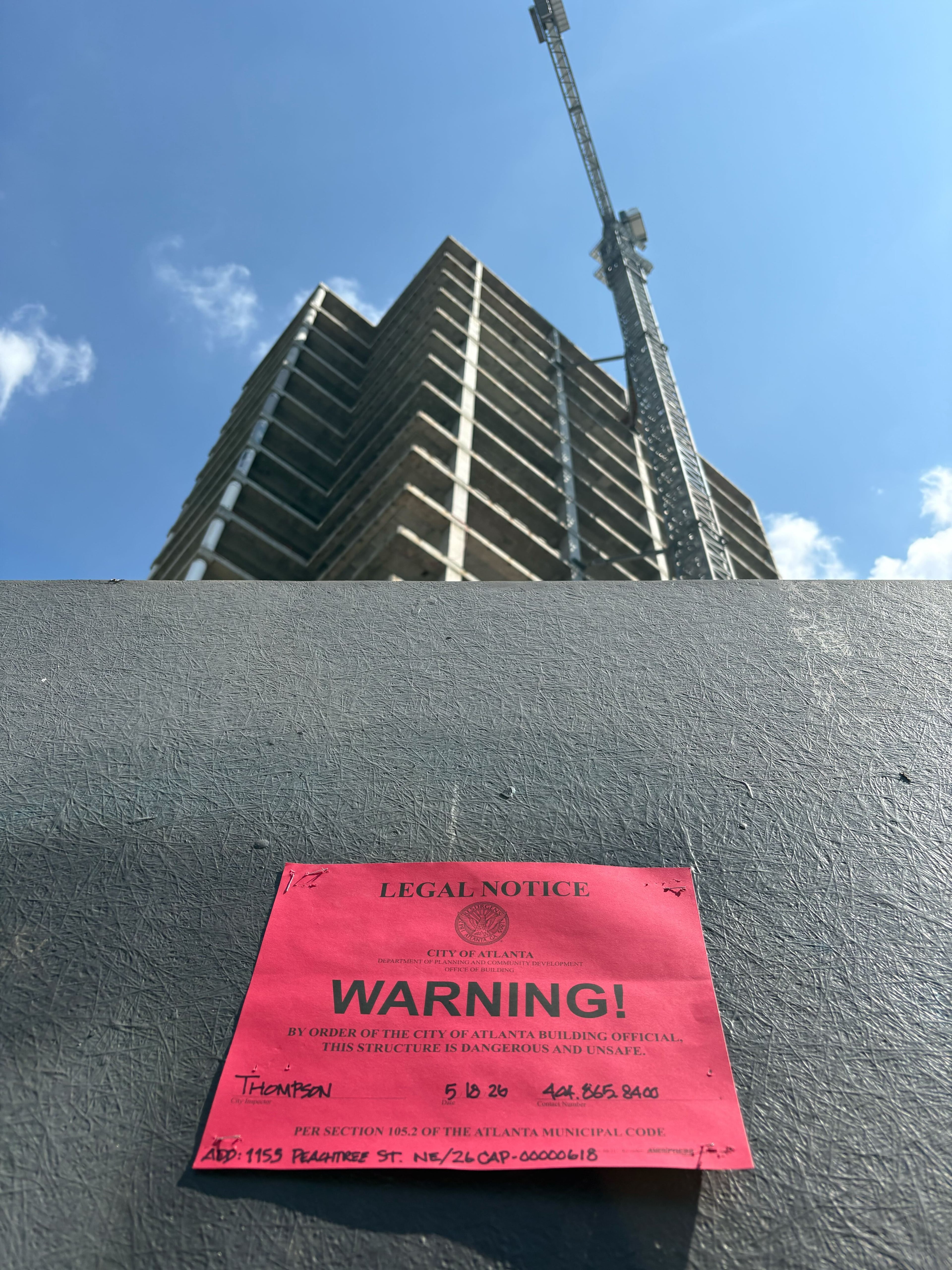
In May, the city posted a sign deeming the Campanile as unsafe. Dewberry declined to comment. But his wife, Jaimie Brown Dewberry, said in an interview with the AJC that the site was active and secure.
Weeks later, Atlanta City Councilmembers Kelsea Bond and Matt Westmoreland proposed a resolution requesting the city impose a tax increase on owners of neglected properties contributing to blight.
On Monday, the council members voted to apply the tax increase. If imposed by the mayor or his designee, a tax equivalent to 25 times the current city general operating levy millage rate can be applied to the Campanile. A blight penalty could increase the city general tax bill on the property from more than $91,000 to nearly $2.3 million.
But applying a blight tax is complex. The property must be investigated to see if it meets the city’s legal definition of blight. If it does, the tax can only be applied once a year, during the annual property tax assessment cycle. And commercial landlords almost always challenge the city’s decision in court.
If there’s an upside to the state of the Campanile, it’s that the building is not at a high risk of damage, Porter said. It’s not a wood structure that is about to rot or filled with interior furnishings.
Still, the condition of the structure impacts the surrounding community, said Henry Lorber, a distressed real estate expert.
“What do you think that does to your tax base? What do you think that does to your schools, your police department, fire department and your single-family homeowner?” Lorber said.
Both the current debt tied to the tower and the identity of the lender are uncertain. The loan Dewberry initially secured was sold in 2021 to California-based Dornin Investment Group, a firm specializing in distressed debt. That same year, Dewberry refinanced the tower with a $75 million loan from Acore Capital.
The Acore loan was set to mature in December 2025, according to real estate publication Bisnow, but Dewberry said he reached an agreement to push the maturity date back two additional years. Both Dornin and Acore did not respond to requests for comment.
Regardless, there are few commercial lenders who have the patience to let a development sit idle for years, Porter said. Construction costs and leasing activity have shifted wildly in the years since Dewberry has owned the tower, and the national real estate market has already endured one major cycle.
“To have a construction loan or something like that on the commercial side that sits here — I can’t see through that string that a lender is patient,” Porter said.
What’s happening in Charlottesville?
After acquiring Campanile in 2010, Dewberry turned his focus to Charlottesville, a city about an hour from Richmond and home to the University of Virginia. Dewberry eyed a half-built hotel stalled by the Great Recession.
In June 2012, he bid $6.25 million for a building shell that previous developers envisioned transforming into a 100-room, nine-story luxury hotel. The incomplete project broke ground in 2008, but ran into financial troubles, with all work halting the following year.
Dewberry aimed to complete the hotel, making it the second in his self-titled portfolio. He was already underway on what would become the Dewberry in Charleston, and said he hoped to start work on the Charlottesville project within a year, boosting the room count to 155, according to a 2012 article from local alt-weekly C-VILLE.
“It’s kind of like buying a horse,” Dewberry told C-VILLE in 2012. “You always feel good the day you buy.”
He aimed to start construction the following year. But progress lagged. In September 2013, James Tolbert, the director of Charlottesville’s Department of Neighborhood Development Services, sent a letter to a representative for Dewberry Capital stating that the property has been determined to meet the definition of a blighted property.
He said the structure appears to be in a deteriorating condition and the security fence around the site is often breached, creating unsafe and unsanitary conditions. Tolbert also said there was graffiti on the inside and outside walls.
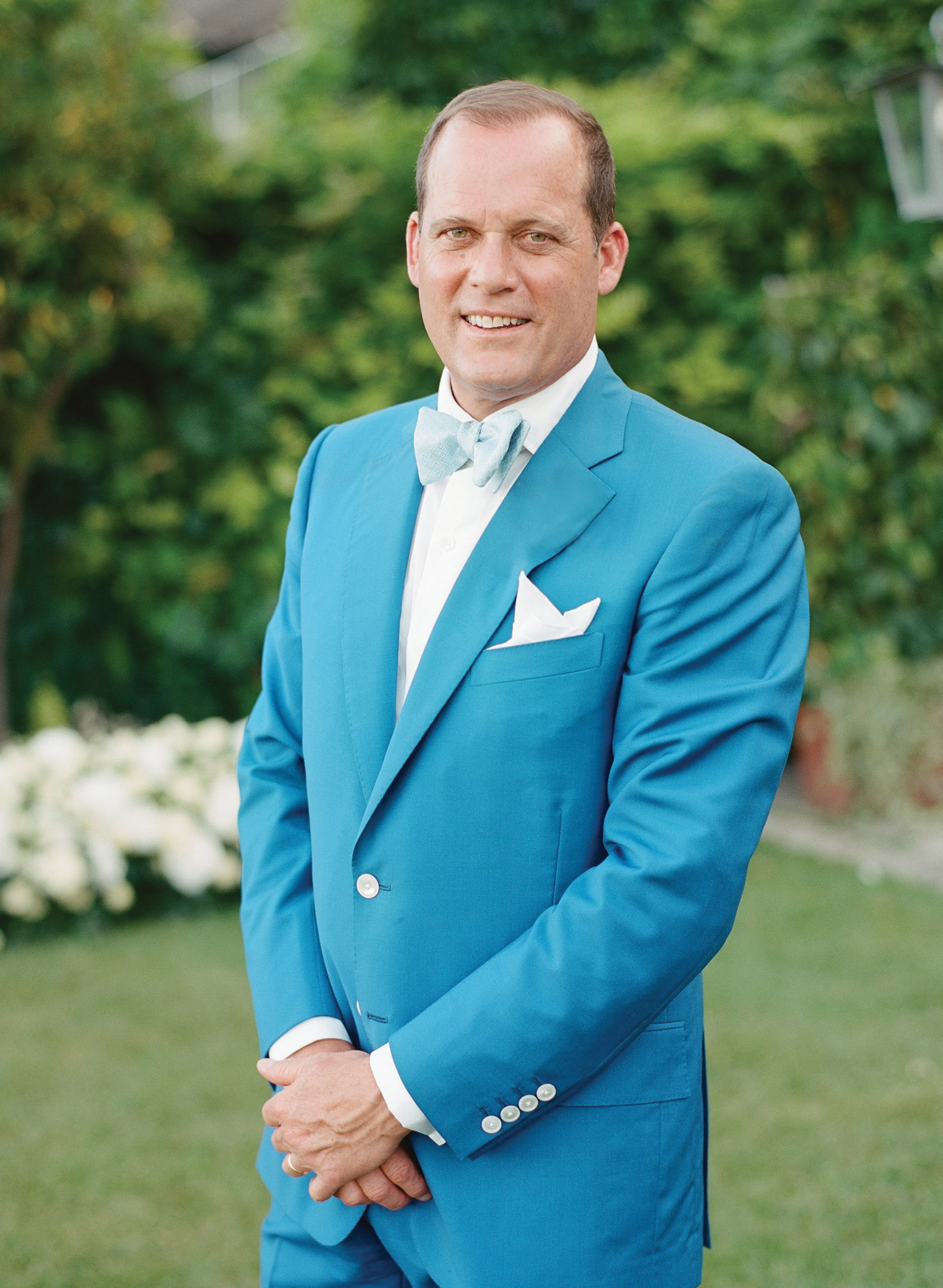
He requested Dewberry submit a plan to fix the blight, which Dewberry missed. On Oct. 21, 2013, he responded with his own letter, stating the property was secured with a padlock and there was no evidence of physical breach of the fence. Dewberry added: “I can never remember a property owner being held responsible for these acts of trespassing and vandalism.”
In the letter, Dewberry said when he purchased the property he said he would not develop it until he began construction on the Charleston hotel.
Much of Dewberry’s staff was redirected to his Charleston project, an undertaking that required remediation to a marble-and-brick building commissioned in the early 1960s by then-President John F. Kennedy. Finishing that hotel took significantly more time than he envisioned, totaling about eight years from acquisition to completion, and cost upwards of $70 million.
But no expense was spared in turning the property into a five-star hotel with a marble-slabbed lobby accented by midcentury Danish antiques. It debuted in 2016 to great fanfare, garnering glowing reviews for both its lodging and food-and-beverage programs. The brass bar on the ground floor serves its Old Fashioned with a “D” monogrammed into its ice block.
In January 2016, nearly four years after Dewberry acquired the property, the Charlottesville City Council directed staff to prepare a report analyzing any legal actions that the city could initiate to force work on the property. The following year, Dewberry approached the city to ask for incentives to help complete the project.
During his presentation, he blamed the Charleston hotel for part of the reason why the Charlottesville project was taking so long. He said he planned to spend about $450,000 per room on the Virginia project, with hopes of building 110 rooms.
“You can’t do five-star without some help,” he told the council members, according to C-VILLE’s report.
Councilmembers initially approved a resolution supporting the incentives, which included free parking and more than $1 million in tax breaks over the next 10 years if the hotel opened by 2020. When the actual agreement went up for a vote at the end of 2017, the Council voted it down.
Updates to the project slowed in the following years. Charlottesville newspaper the Daily Progress reported in June 2019 that Dewberry moved the project from the “hospitality” section on his website to the “living” section, though no plans to turn the property into apartments were formally pitched. Dewberry does not have a completed residential project in his portfolio.
Adjacent to the unfinished hotel is Jack Brown’s Beer and Burger Joint. General Manager Greg Kane doesn’t believe the lack of progress has impacted business, but it is a point of curiosity for many of its customers. There’s been a lot of speculation and rumors about Dewberry’s end goal with the property.
“I think that, as originally promised, that it was going to be a hotel, would’ve been a much larger benefit,” Kane said.
In February 2022, nonprofit Friends of Cville Downtown draped a vinyl wrap around the nine-story building shell that showcased abstract artwork of musical instruments. The addition was approved by John and Jaimie Dewberry, who were initially scheduled to attend the unveiling but did not appear because of illness, according to a report from C-VILLE.

The wrap was supposed to stay for 14 to 16 months, though it still remains more than four years later. It, too, has grown weathered over the years, Kane said.
Dewberry listed the property for sale in late 2024, with the brokers telling the Daily Progress at the time that interest in the property was high among “some of the industry’s premier developers.” But Dewberry took it off the market because he didn’t receive an offer he liked, he told Bisnow last year. The brokers representing the site did not respond to a request for comment.
The incomplete building has impeded economic development in the area, said Charlottesville Councilmember Michael Payne, who has kept tabs on the site since it broke ground 18 years ago.
It’s also raised safety concerns. When the weather is stormy or windy, Kane can hear the building clanking. He’s also seen people try to climb the structure.
If someone were to buy the site, Payne doesn’t doubt that another developer would build something quickly.
“The demand in that area is more than high enough for a project to be profitable and completed under a different owner,” Payne said.
Payne doesn’t believe a hotel is the best use for the site. There isn’t a huge tourism market in Charlottesville outside of the university or President Thomas Jefferson’s home, Monticello, a few miles southeast of downtown. In the years following Dewberry’s acquisition, other hotels were built in the city.
The residents of Charlottesville are not just mad at Dewberry for delaying the hotel. They’re mad at the city for not figuring out how to cut a deal or be more aggressive about forcing him to resume work, McNair said.
Years ago, McNair made a ticker clock to track the total time the site has remained unfinished. It’s since climbed to 18 years, 14 of which were under Dewberry’s control.
“It’s reaching almost absurd levels,” McNair said. “It’s been years of just sitting there, half built. It’s sad and pathetic.”