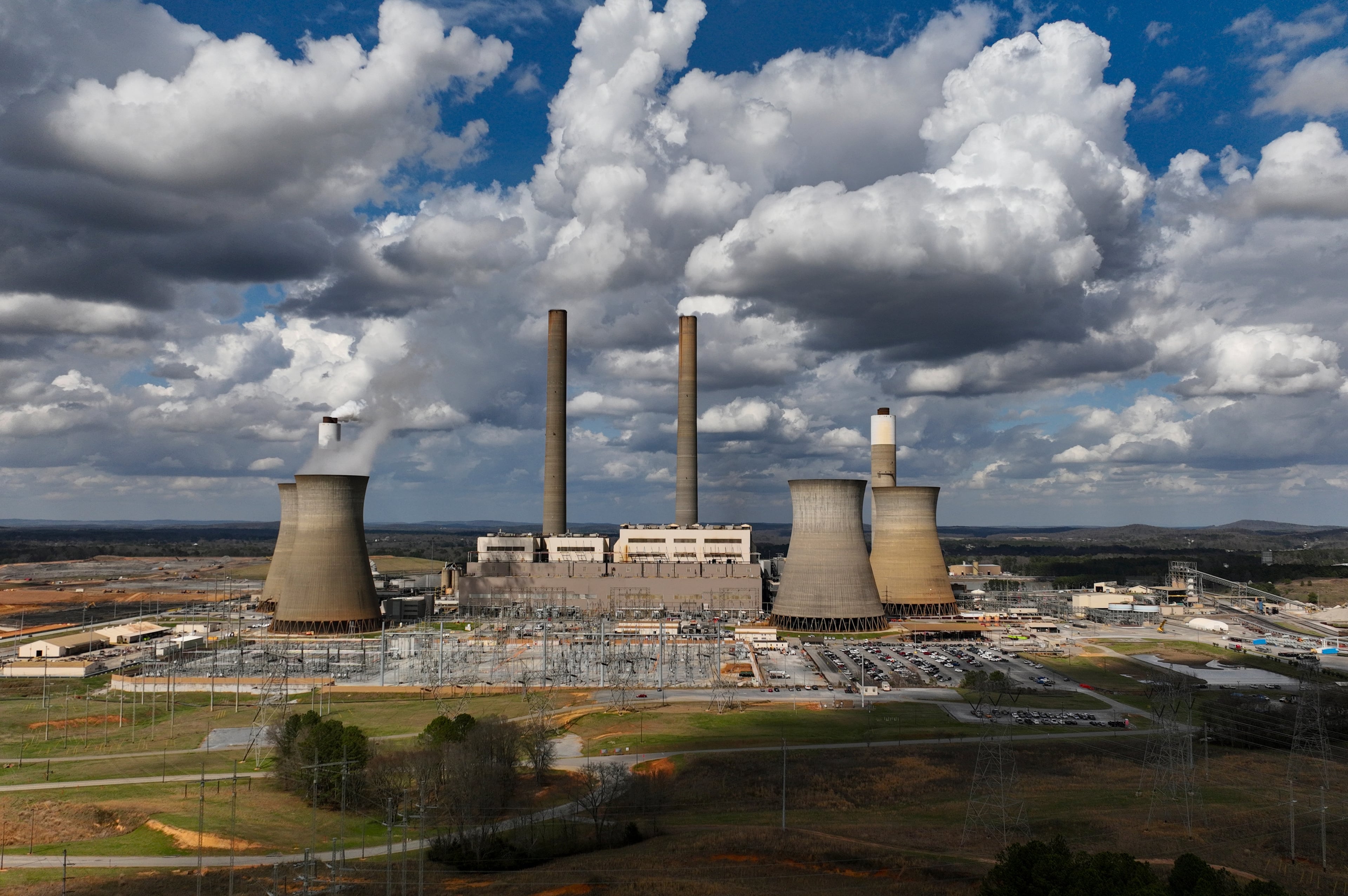
Georgia Power says the cost to clean up toxic coal ash is going up

Georgia Power said Tuesday it will cost more than half a billion dollars above previous estimates to clean up its toxic coal ash ponds across the state.
Those charges eventually will wind up in customers’ monthly utility bills.
In a semiannual report filed with state utility regulators, Georgia Power said “several market factors” have driven up project costs to $8.5 billion, up from $8 billion in a previous report. The electric company collects the money as part of a monthly charge previously approved by the Georgia Public Service Commission.
That amount is spread across Georgia Power’s 2.8 million customers, who have seen their bills rise six times since 2023. The company has recently agreed to freeze base rates through 2028, and an average 1% bill decrease is on the table because of lower fuel costs.
Coal ash is a byproduct of burning coal, which was once one of the largest fuel sources for Georgia Power to make electricity for the power grid. The company’s reliance on coal has fallen significantly in the past decade.
Georgia Power said it already has spent $2 billion in cleaning up 29 coal ash ponds in 11 sites across the state.
The “market factors” the company is referring to are inflation, the company said in response to questions from The Atlanta Journal-Constitution. Georgia Power updates its inflation forecast annually and said those expectations increased in the long and short term.
Expenses for 2025 were roughly 5% under budget, however, the company said.
Electric utilities used to dump the ash — which contains heavy metals like arsenic and mercury — into unlined ponds, allowing the waste to seep into groundwater or nearby waterways and eventually make its way into drinking water.

A massive coal ash spill in North Carolina more than a decade ago exposed the danger of these methods and led to federal reforms to prevent such disasters from happening again. Indeed, while Georgia Power has shuttered many of its coal plants, the utility must meet federal and state requirements for storing or disposing of the waste.
Georgia is one of just three states that oversees its ash disposal program, which environmentalists have long criticized. This is in part because Georgia Power has chosen to close many of its ash ponds and store the waste on-site — a method commonly known as, “cap and place,” instead of excavating the material and moving it to a landfill.
“The cost to clean up dirty coal is always going to go up,” said Isabella Ariza, staff attorney for the Sierra Club’s Georgia chapter. The group sued Georgia Power years ago to have shareholders, not customers, absorb the costs of coal ash cleanup, arguing it has been the company’s decision to continue burning coal instead of switching to cleaner sources of fuel to make electricity.
The Sierra Club’s legal challenge ended in 2022 after the Georgia Supreme Court said it would not hear the case. Fulton County Superior Court and the Georgia Court of Appeals had previously rejected the environmental group’s arguments.
What’s more, a review of the cost of Georgia Power’s ash cleanup happens during a formal look at the company’s rates and profits, which did not occur last year because of the rate freeze, Ariza said. This means there won’t be another chance for those costs to be scrutinized until 2028, she said.
“So we’ll see in the next rate-case cycle how much these costs have actually gone up,” she said.
Georgia Power had planned to close roughly all of its remaining coal plants by the next decade but has walked back that decision as electricity demand has risen sharply because of the influx of data centers. Georgia Power and the PSC have come to terms on billing changes they say will force data centers to pay for increased costs of infrastructure to serve the power-hungry computing campuses.
The company has said data center demand will put downward pressure on rates for other customers.
Ariza said keeping those coal power plants open will continue to drive up rates. The United States gets roughly one-quarter of its electricity from coal, which no longer can compete economically with other fuel sources. What’s more, the power plants are older, making them more expensive to run than newer, more efficient options.
“It’s Georgia Power’s promise that data centers are going to bring down costs for everyone, and we don’t really see how that’s happening, especially if they keep burning coal and spending all this money,” she said.
There are commercial uses for coal ash, including using it to make concrete for construction. Georgia Power also said it is working with the U.S. Department of Energy on a study for a commercial-scale processing system for rare earth elements and other critical minerals found in coal ash.
Critical minerals have become a flash point in the United States’ relations with other countries as it looks for ways to lessen its dependency on those imports. The minerals are viewed as key to economic and energy security.
A note of disclosure
This coverage is supported by a partnership with Green South Foundation and Journalism Funding Partners. You can learn more and support our climate reporting by donating at AJC.com/donate/climate.
About the Author

Kristi Swartz is an AJC contributing writer covering climate change and related matters. She writes about how climate change impacts people’s lives, from extreme weather hitting parts of the state more frequently, to higher electricity bills, insurance premiums and health care expenses.