Oscar-winning cinematographer shares secrets in new book, Atlanta screenings

If you don’t know the name, you know the films.
“The Shawshank Redemption,” “Fargo,” and “The Big Lebowski.” Or perhaps “Skyfall,” “No Country for Old Men,” and a Georgia-shot title metro Atlantans should know well: “Prisoners.”
That’s merely a fraction of the work master cinematographer Roger Deakins has produced in his nearly five decades-long career, one that had its origins in an interest in photojournalism and documentary filmmaking, and has culminated into receiving dozens of prestigious honors and a knighthood in 2021.
This week, he and his wife and co-collaborator James Deakins, with whom he also hosts the filmmaking podcast “Team Deakins,” are visiting Atlanta to promote the release of Roger’s latest book, “Reflections on Cinematography.”
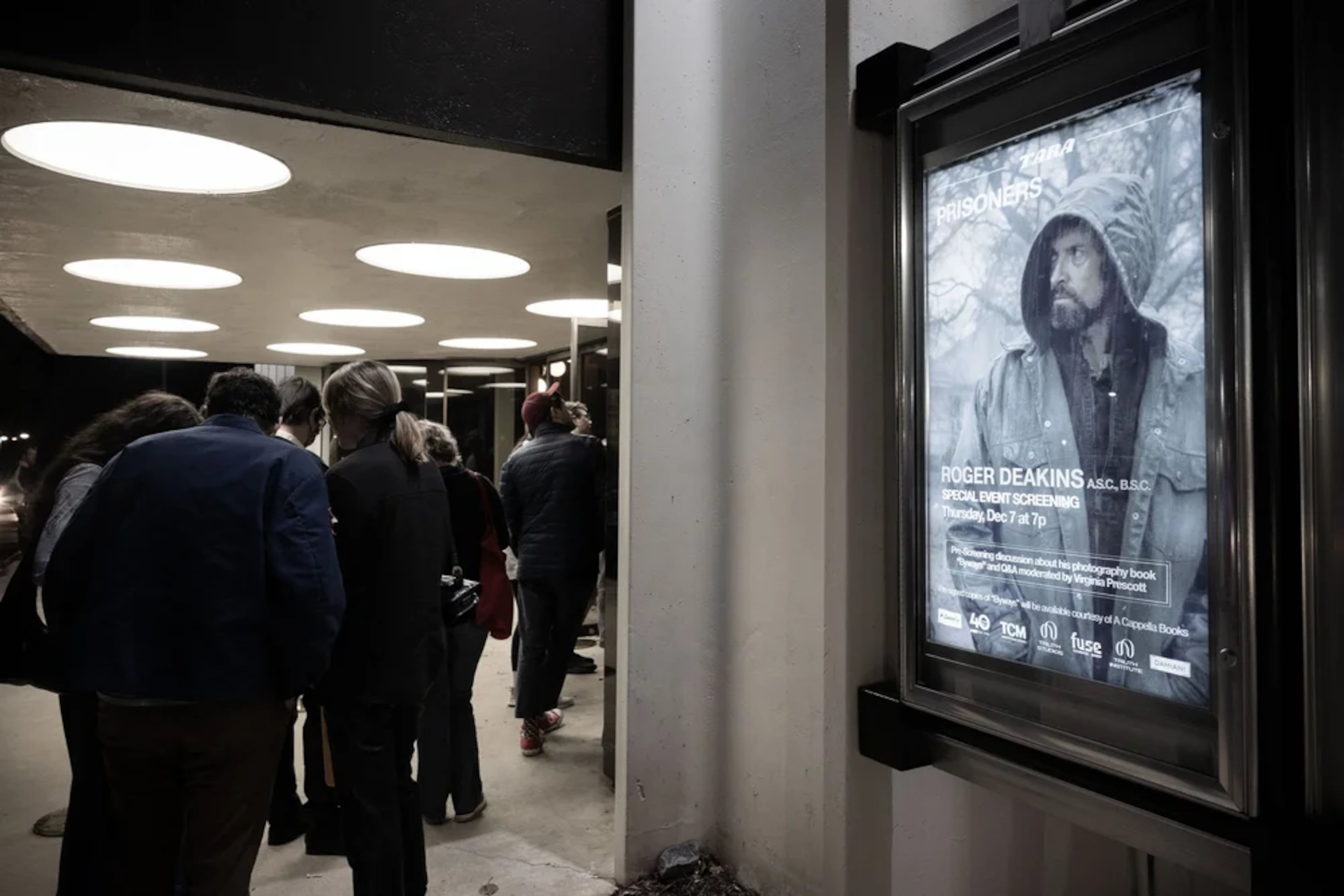
They’re screening three of their films at the Plaza and Tara Theatres: “Skyfall” on Tuesday, “Bladerunner 2049″ on Wednesday and “Sicario” on Thursday. Each screening sold out well in advance. On Wednesday, the duo will also host a master class for Georgia State University students.
“Reflections” offers a look at Roger’s upbringing, journey to making films and technical breakdowns of how he shot and problem-solved challenges on set. The book is detailed, and includes a wealth of behind-the-scenes photos, lighting diagrams and storyboard sketches.
Many of the world’s most celebrated filmmakers and writers never commit their tricks of the trade to paper. In an interview with The Atlanta Journal-Constitution, Roger, 76, said he is “quite an interior person,” and that he wouldn’t have thought about doing it until publishers approached the duo for a book that gave a behind-the-scenes look at a couple of their films. He wasn’t interested in that, but another suggestion came up: Why don’t they write a book that followed the same format of their podcast, where they interview filmmakers about their lives and careers?
“I’ve kept files of all the films I’ve ever worked on with lighting diagrams and notes,” Roger said. “I thought that would be a good way to allow me to throw out these things I have in the garage that has taken up too much space.”
Visiting the city
This isn’t the first time the Deakinses have visited Atlanta. In late 2023, the two came in support of Roger’s book of black and white photography, “Byways.” And a decade earlier, the two shot their first and only film made in Georgia: “Prisoners,” a crime thriller directed by Denis Villeneuve.
“Prisoners,” which earned Deakins an Academy Award nomination for best cinematography, is perhaps the best-known auteur film shot in Georgia in the modern era. It was made as Georgia’s film industry was on the precipice of ballooning into a major production hub.

Villeneuve’s crew shot around Conyers, Tucker and Stone Mountain, among other parts of metro Atlanta, in the spring of 2013, five years after the state supersized its film and television tax credit in a bid to woo the industry here. At this time, films were setting up shop in the state, but there were fewer resources for filmmakers than there are now, from soundstage space to production-specific vendors, and fewer crews with decades of experience.
In 2013, film and television studio company the Pinewood Group announced it would build its first film production facility in the U.S. in metro Atlanta, which would eventually become Trilith Studios. A flurry of productions, including billion-dollar-generating Marvel tentpoles “Avengers: Infinity War” and “Avengers: Endgame,” poured into Georgia, bringing with it crews from other film markets and opening up more doors for those who have always called Georgia home.
Roger said he had a great time filming “Prisoners.” It was the first time he worked with Villeneuve, with whom he would later collaborate on “Sicario” and “Bladerunner 2049.”
“Prisoners” has a dedicated section in “Reflections,” where Roger discusses manipulating light on residential streets in the suburbs, building a standing set in a warehouse because the abandoned apartment building used for exteriors was unsafe inside as well as the challenges and successes in finding specific locations that matched what was scripted.
He has an enduring memory of not seeing one cloud while he was scouting locations in Georgia. The fair weather was a problem. To give the film its dark and moody feel, he and Villeneuve planned to shoot exteriors on cloudy or rainy days and interiors on sunny days. The weather ended up working out for them, Roger said — they only had to shoot one exterior in the sunshine.
He likened their experience of filming in Georgia to working in New Mexico during the early days of its incentive program. At that time, there was less infrastructure such as soundstages and a smaller crew base.
“But then you worry what happens,” Roger said, referring to major productions gravitating toward other cities that have upgraded their incentives in recent years. “So how’s that impacting the future of the industry there?”
Atlanta is one stop on the Deakins’ tour in support of the book. Meeting audiences in cities outside of New York and Los Angeles can be a little different, they said. The audiences attend screenings because they’re interested in filmmaking, not just because they’re scouting for a new job.
“It’s also wonderful that you go to all of these different places and you realize we all talk the same language because we want to tell a story,” James said.
Generational changes
In his book, Roger reflects on his early interest in photojournalism, which appealed to him much more than the worlds of advertising and graphic design. (“I had no interest in helping to sell vacuum cleaners or dishwashers,” he writes in “Reflections.”)
Journalism has shifted significantly since Roger was growing up in Devon, England. Anyone with a cellphone can be a photojournalist, documenting conflict, tragedy and triumphs for audiences at the moment they’re occurring. Does he think that this has changed the visual literacy of audiences, and has it affected his approach to his craft?
“It’s changed to no end,” he said.
Images, both in cinema and photojournalism, were captured with more intention before digital technology made it possible to capture everything, James said. They were there for a reason.
There are so many images now that they almost blur into insignificance, the duo added. That’s not to even mention the threat of generative artificial intelligence, which has crept its way into social media and advertising.
“Everything becomes less significant,” Roger said. “I don’t know how we deal with that.”
In writing the book, Roger acknowledges he may have rose-colored glasses shading over some of the productions. He thinks some of the experiences were tougher than he remembers, which he thinks is a good thing.
Writing made him reflect on how lucky he has been in his career. He wrote the book for his teenage self.
“I mean, if my 17-year-old self had any idea of [my] future, I would’ve been much happier,” Deakins said.
About the Author

Savannah Sicurella is an entertainment business reporter with The Atlanta Journal-Constitution.


