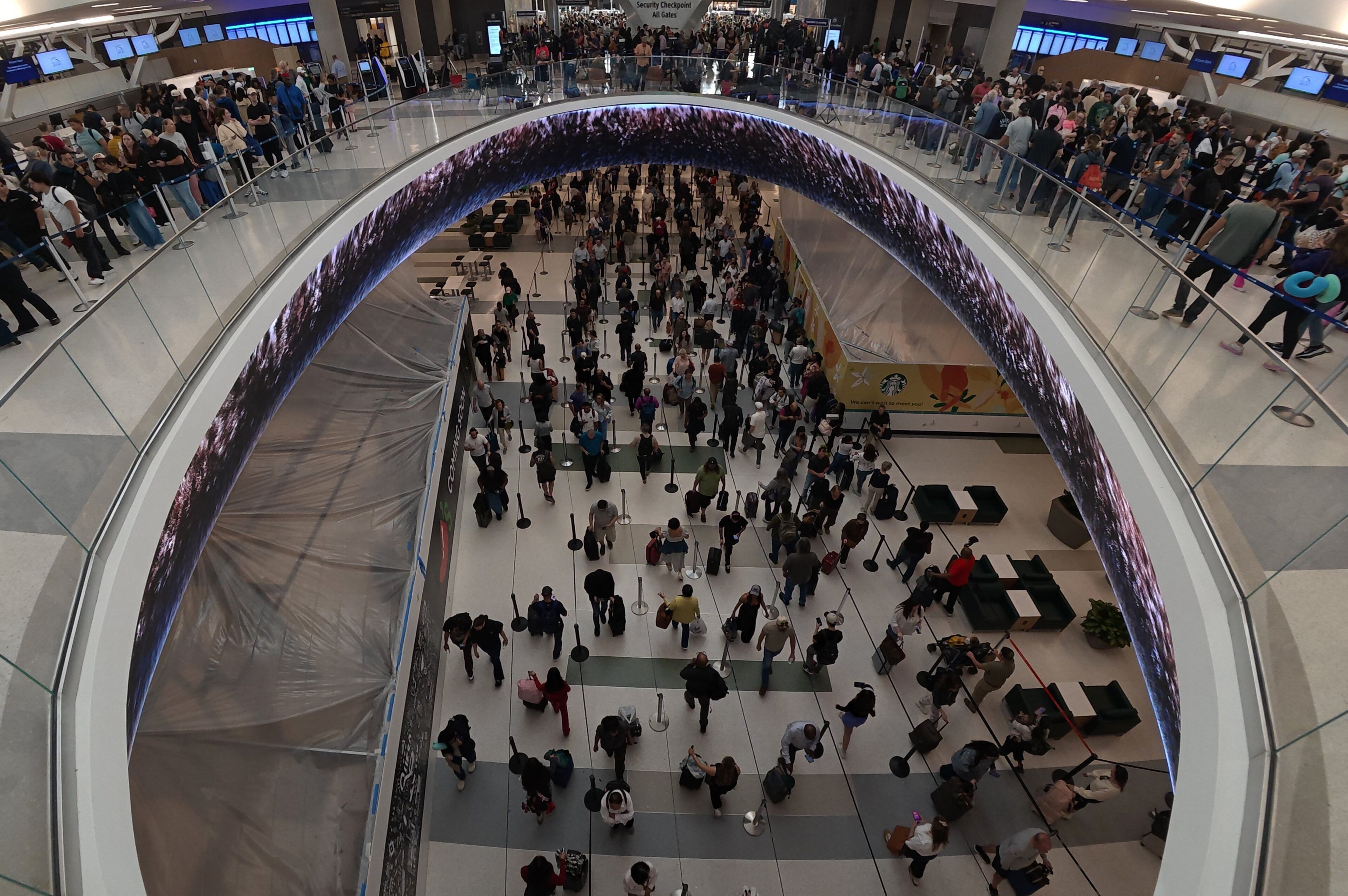
TSA officers working without pay during latest government shutdown

Funding for the U.S. Department of Homeland Security expired over the weekend, starting another partial federal government shutdown that could disrupt air travel for Americans.
It has left essential workers required to do their jobs without pay, including at the Transportation Security Administration and Customs and Border Protection, as travelers across the country start school winter break travel.
Employees are set to receive their first incomplete paycheck in early March, but the memory of last fall’s shutdown remains fresh, just 12 weeks later.
Ha Nguyen McNeill, acting TSA administrator, told a House committee last week that many officers “are just now recovering” financially and many are “still reeling from it.”
Democrats in Washington have refused to approve the department’s budget without new restrictions on federal immigration operations, and negotiations have failed to make progress, The Associated Press reported. Congress is in recess until Feb. 23.
Here’s how the funding lapse could affect travel at Hartsfield-Jackson Atlanta International Airport and elsewhere.
TSA and CBP are hit, not air traffic control
Unlike last fall’s shutdown, this funding halt affects only DHS agencies, including Immigration and Customs Enforcement, TSA and CBP.
Air traffic controllers and Federal Aviation Administration employees are unaffected, because funding has been approved for the U.S. Department of Transportation, which includes the FAA.
About 95% of TSA employees are considered “essential” and must continue to work without pay during a shutdown, McNeill testified.
About 93% of CBP employees, who manage customs and international border crossing and security, are also “essential” and must continue working, a DHS document outlined in September.
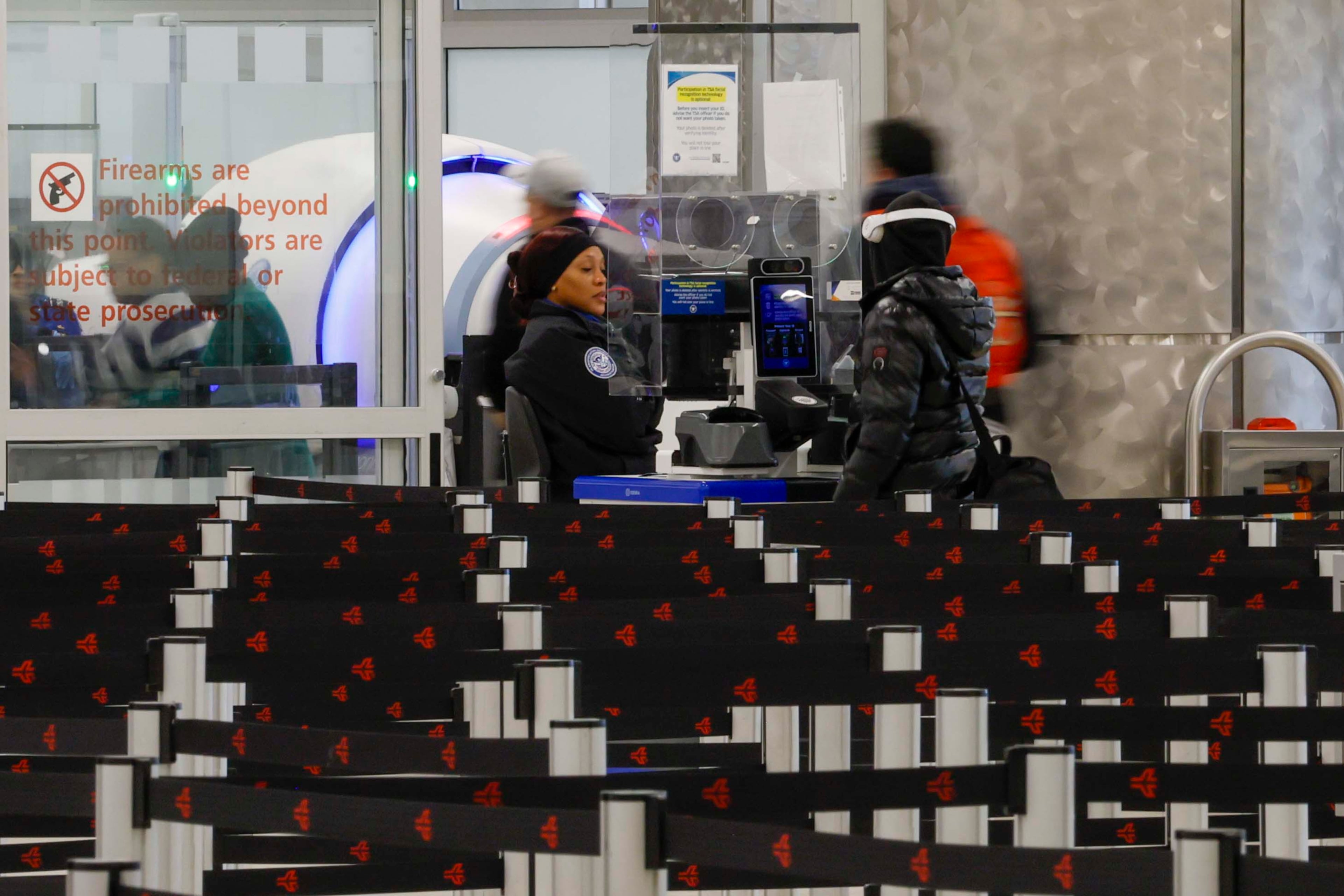
Passenger security wait impact
Atlanta and other U.S. airports saw several security “hot spot” days with abnormally long waits last fall, especially as the shutdown dragged on and TSA officers started missing paychecks.
“The mental and emotional toll that it takes on our workforce cannot be overstated,” McNeill testified, even though officers did ultimately receive back pay.
A second shutdown would be “unconscionable,” she said.
Based on the federal payroll schedule, employees are set to receive their first partial paycheck March 4. If the shutdown continues beyond that, they would receive zero pay for hours worked.
During last fall’s 43-day shutdown, the agency heard reports of officers sleeping in their cars to save gas money, taking on high-interest credit card debt, drawing on retirement savings and selling blood or plasma, McNeill said.
By the end of the shutdown TSA saw almost double its standard rate of unscheduled absences, she said, and triple at some airports, forcing consolidation of screening lanes and long lines.
Still, across the board the agency was largely able to maintain normal security wait times thanks to those who continued to work, she noted.
Long-term ramifications
TSA has already seen a lasting impact on recruiting and staffing levels after last fall’s shutdown, McNeill said. The agency saw a 25% higher attrition rate during the shutdown than the year prior, she said.
Some officers express continued concern about staying in the job given the ongoing financial risk of shutdowns.
A coalition of travel industry associations, including Airlines for America that represents Atlanta-based Delta Air Lines, issued a joint statement Friday demanding guaranteed funding for TSA and air traffic control during all government funding lapses.
“Travelers and the U.S. economy cannot afford to have essential TSA personnel working without pay, which increases the risk of unscheduled absences and call outs, and ultimately can lead to higher wait times and missed or delayed flights,” the statement read.
“Funding uncertainties create lasting damage to the entire travel ecosystem, especially the airlines, hotels and thousands of small businesses the travel industry supports. It also stifles recruitment, retention, preparedness and modernization efforts,” it read.
About the Author

As a business reporter, Emma Hurt leads coverage of the Atlanta airport, Delta Air Lines, UPS, Norfolk Southern and other travel and logistics companies. Prior to the Atlanta Journal-Constitution she worked as an editor and Atlanta reporter for Axios, a politics reporter for WABE News and a business reporter for the Arkansas Democrat-Gazette.