Atlanta Fortune 500 firm faces probe into potential racial discrimination

Genuine Parts Co., the Atlanta-based Fortune 500 parent of NAPA Auto Parts, is under investigation for allegations it violated federal law by discriminating against Black job applicants, according to new court filings.
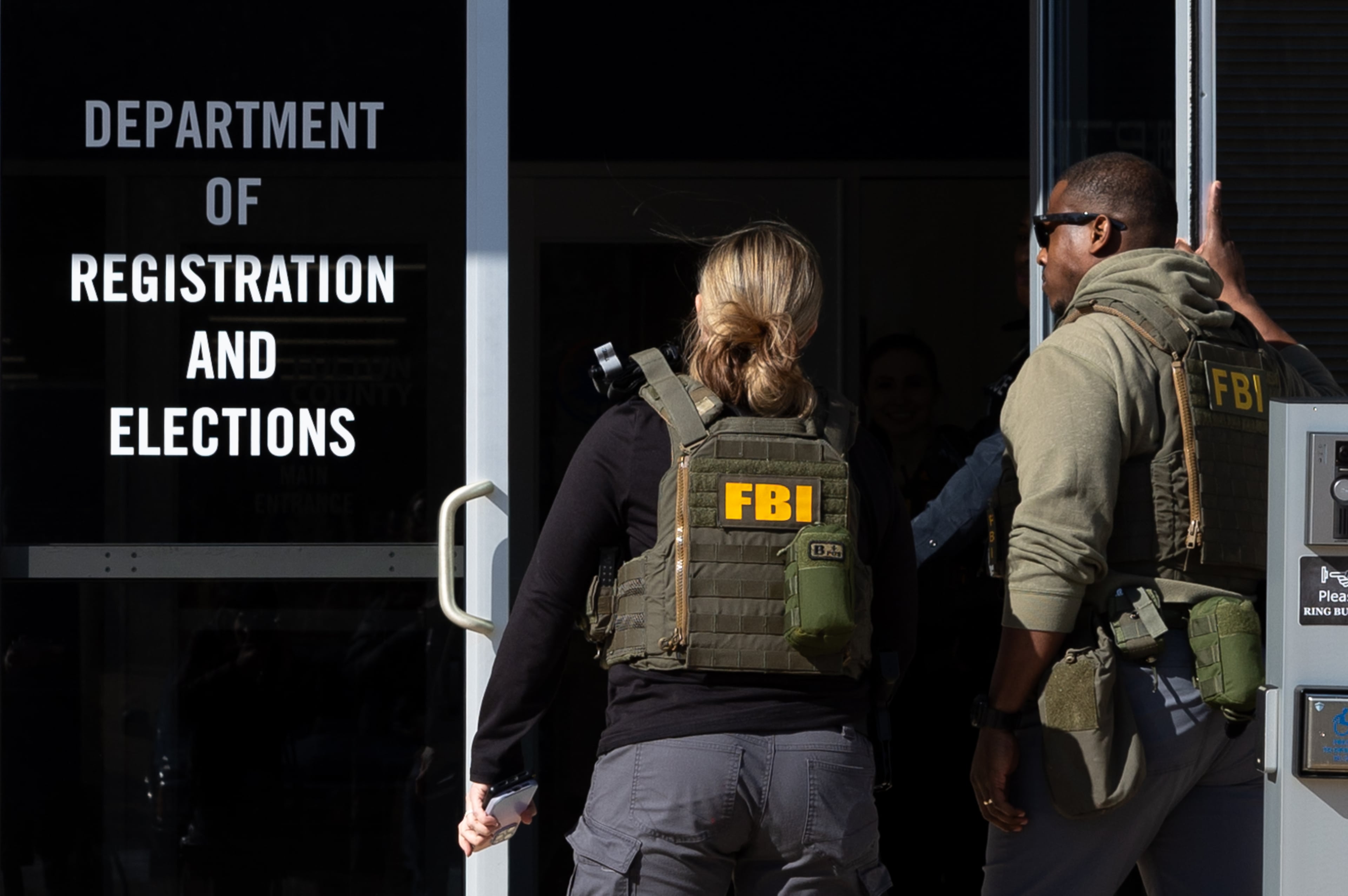
The investigation, started under the Biden administration and continuing under the Trump administration, dates to 2024. Details on the case are scant, and its existence only came to light late last week when the U.S. Equal Employment Opportunity Commission filed an action in Texas district court to enforce a subpoena in the case.
The alleged discriminatory practices include failures to recruit and hire Black candidates on the basis of their race, according to the charge. It does not detail specific instances of discrimination behind the allegations.
The charge was filed about a month after publication of a study on employment practices by U.S. companies that spurred a prominent civil rights group to write a letter urging an EEOC investigation into Genuine Parts and another company.
“Title VII’s prohibition on race-based employment discrimination is colorblind, and its protections apply equally to all workers,” EEOC Chair Andrea Lucas said in a news release announcing the subpoena enforcement action. “The Commission will continue to use every tool Congress has provided to enforce the law, and when employers refuse to comply, the EEOC will not hesitate to use its full legal authority.”
Genuine Parts and its lawyers did not respond to multiple requests by phone and email for comment by The Atlanta Journal-Constitution.
The case began in May 2024 when EEOC Commissioner Kalpana Kotagal filed a charge against Genuine Parts, writing that she had “reason to believe that since at least October 2019, on a nationwide basis, this employer may have violated, and may continue to violate Title VII (of the Civil Rights Act of 1964), based on race.”
Kotagal, who was appointed as commissioner by then-President Joe Biden in 2023, is still part of the agency.
“The aggrieved persons include all individuals who have been, continue to be, or will be adversely affected by the unlawful employment practices complained of herein,” Kotagal wrote.
Charges initiated by a commissioner are typically private unless revealed by the employer under investigation or court action, according to Bloomberg Law.
In a petition Genuine Parts filed to the EEOC asking the agency to revoke or modify the subpoena, the company did not directly address the allegations, but it said, “The Charge does not contain any specific facts or details that would allow the Company to fully investigate the allegations and provide a detailed response and defense.”
The month before Kotagal filed the charge, economists from the University of Chicago and the University of California, Berkeley released the results of an experiment looking at callback rates for Black versus white job applicants at U.S. companies.
Between October 2019 and April 2021, the researchers sent about 84,000 fictitious applications to 108 firms, including Genuine Parts. Roughly half the résumés had a “distinctively Black name” and the other half had a “distinctively White name,” the authors wrote. The researchers then measured whether an employer contacted that fake applicant within 30 days.
In April 2024, the researchers released a discrimination report card. Genuine Parts received one star for race discrimination, the researchers’ worst grade. The company was about 33% more likely to contact the fictitious applications with a distinctively white name relative to those with a distinctively Black name, the researchers found.
“We are always evaluating our practices to ensure inclusivity and break down barriers, and we will continue to do so,” Heather Ross, a spokesperson for Genuine Parts, said in a statement to the New York Times at the time.
The EEOC spoke with the researchers about their analysis around the time the report came out, said Christopher Walters, a professor of economics at the University of Chicago and one of the authors of the paper, in an interview with the AJC. He said he does not know what the agency did with that information.
In early May 2024, before the EEOC charge was filed, the NAACP Legal Defense and Educational Fund sent a letter to the EEOC asking it to investigate Genuine Parts and another company for possible discrimination in light of the study’s findings. The EEOC did not cite the study in its charging document.
In April 2025, nearly a year after the EEOC first filed its charge against Genuine Parts, the agency requested information from the company, including its recruitment firms, hiring practices, job positions, pay scales and personnel information about current and former employees, according to court documents.
Genuine Parts provided some of the requested information and asked for clarification on other points, but the EEOC told the company its initial response was incomplete, the agency detailed in a filing.
Genuine Parts then supplemented its responses. But in July, the EEOC issued a subpoena, claiming the company had “repeated deficient responses” to the agency’s requests for information.
In August, Genuine Parts pushed back against the scope of the subpoena in its own filing, likening the request to a fishing expedition and saying it was overly broad and burdensome, and sought information that went beyond the scope outlined in the commissioner’s charge. The company asked the EEOC to revoke or modify the subpoena.
“For example, it requests over 200 fields of data on hundreds of thousands of applicants, hires, and current or former employees nationwide, dating back to October 1, 2019, well beyond the statute of limitations and the scope of the hiring-related Charge,” Genuine Parts wrote in its petition to the EEOC.
But in September, the EEOC denied Genuine Parts’ request.
Since then, the agency said Genuine Parts has refused to comply with portions of the subpoena, which “has delayed and hampered EEOC’s investigation.”
The EEOC is now asking a judge to issue an order forcing Genuine Parts to comply with the subpoena. A judge has ordered the company to explain why a subpoena should not be enforced by March 4.
The case against Genuine Parts is the latest EEOC investigation to come to light from a subpoena enforcement action. In early February, the agency filed an action in federal court to compel Nike to provide information in its investigation that the sports giant allegedly discriminated against white employees through its diversity programs.
About the Author

Mirtha Donastorg is a reporter on The Atlanta Journal-Constitution’s business team focusing on Black wealth, entrepreneurship, and minority-owned businesses as well as innovation at Atlanta’s HBCUs.