How profitable is CNN? New filing shares details for first time in years.
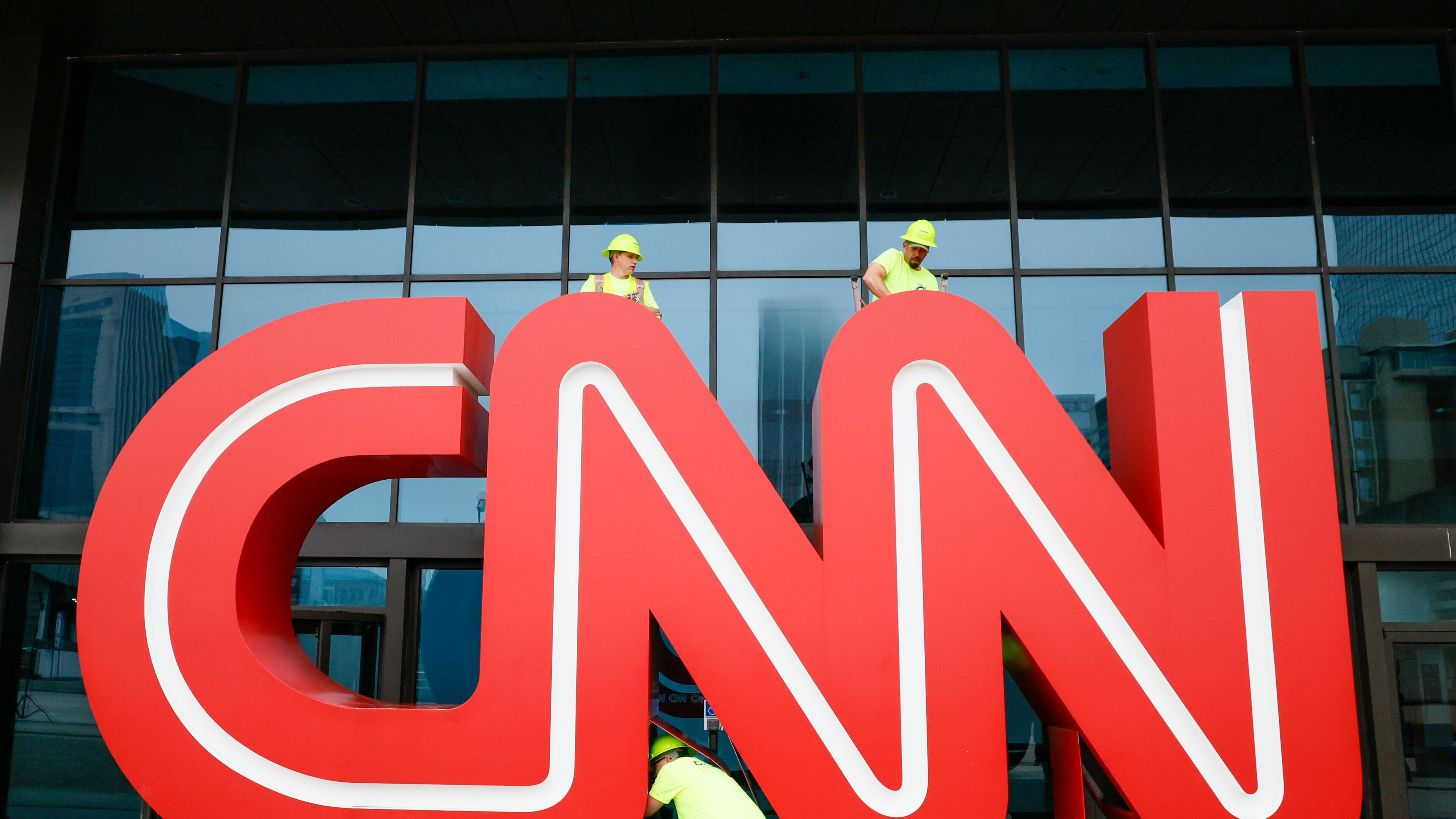
CNN’s owner expects revenue to grow in the years ahead as it transforms its business with streaming and subscriptions, a trajectory not shared by other traditional television networks also owned by Warner Bros. Discovery.
The revenue projections were disclosed Tuesday as WBD is preparing to split itself in two, with key growth businesses, including its studios, HBO and HBO Max streaming business, to be sold to Netflix. Most of WBD’s other cable networks, including CNN, are slated to be spun off into a new public company.
The numbers, which were included in a proxy filing with the Securities and Exchange Commission, show the cable news giant founded in Atlanta is projected to end 2026 with $1.8 billion in revenue, according to the filing. In 2027, this number is forecast to rise to $1.9 billion, $2 billion in 2028, $2.1 billion in 2029 and $2.2 billion in 2030.
CNN’s earnings before interest, taxes, depreciation and amortization is estimated to be about $600 million in 2026. It is forecast to fall to $500 million in 2027 before rising again to $600 million in 2028 and remaining stagnant through 2030, the filing said.
Though CNN has been part of public companies for decades, the network’s individual financials have not been known for several years, as its various corporate owners have lumped its performance in with other networks for some time.
The projected revenue estimates are rosy news for CNN, which is battling the same declines in viewership and advertising dollars as other cable television brands. In 2021, CNN’s revenue was about $2.2 billion. That’s according to then-Washington Post media reporter Jeremy Barr, who at the time cited an expert reading from tax documents during a 2025 defamation case. In 2023, it was $1.8 billion.
CNN did not respond to a request for comment from The Atlanta Journal-Constitution.
Revenue across WBD’s other U.S. linear networks, however, is projected to decline, the filing shows. In 2026, the networks combined are estimated to bring in $10 billion, followed by $9.4 billion in 2027, $8.8 billion in 2028, $8.3 billion in 2029 and $8.2 billion in 2030.
The proxy filing doesn’t include specific projections for each individual network, including other Atlanta-based Turner brands, which were cash cows at one point. In 2018, after AT&T had acquired Time Warner, the revenue from the Turner networks alone was about $3 billion, or about $3.9 billion in today’s dollars.
Still, the year-over-year decline is not massive, Dave Novosel, a senior analyst with bond research firm Gimme Credit.
“It shows that even though (WBD) is saying this is a declining business, it’s maybe not to the degree that others expected,” Novosel said.
WBD is splitting itself into two publicly traded companies as the fundamentals of the television business continue to shift. One company, to be called Warner Bros., would include its namesake studio, HBO and the HBO Max streaming services, as well as the DC Comics film and television studio. The other, to be called Discovery Global, would feature legacy cable networks, including CNN, the Atlanta-based Turner networks and TNT Sports portfolio, as well as the Discovery+ service, among other assets.
In December, Netflix announced it struck a deal with WBD to acquire the Warner Bros. division. The $83 billion deal would create a combined portfolio of many of Hollywood’s best-known properties. The deal is expected to be completed after the spinoff, which is planned for later this year.
Netflix revised its bid for the studio and streaming division Tuesday, announcing it would pay the sum in cash instead of both cash and stock, as previously announced. WBD also reduced the amount of debt being placed on Discovery Global by $260 million, which WBD said was because of better-than-expected cash-flow performance of the business in 2025. The modified bid comes after Paramount launched a hostile bid for both halves of WBD, which WBD has repeatedly rejected.
CNN has long been seen as a potential acquisition target for rivaling media companies. It’s possible WBD is trying to get ahead of further interest for the news organization by branching out its financials from the other networks.
The news organization is undergoing a digital transformation as its flagship cable channel experiences declines in viewership. Under CEO Mark Thompson, CNN has enacted a paywall on its website and plunged into subscription-based streaming with a new product called CNN All-Access.
“Every new product is an experiment,” he told the AJC in October. “It’s based on hypotheticals. But I’m feeling confident about the work being done and the quality of the product. Our task now is to put it out there and build an audience.”
In the proxy statement, WBD estimates CNN’s traditional revenue streams will decline by about 4% per year. This will be offset by the organization cutting costs and shifting its money toward growth areas in the business.
The future Discovery Global’s U.S. networks’ traditional revenue sources are also projected to decline. This number will be offset by the strength of linear sports performance and the planned launch of a sports-related direct-to-consumer offering, according to the filing.
About the Author

Savannah Sicurella is an entertainment business reporter with The Atlanta Journal-Constitution.