What is the future of local media in Atlanta?
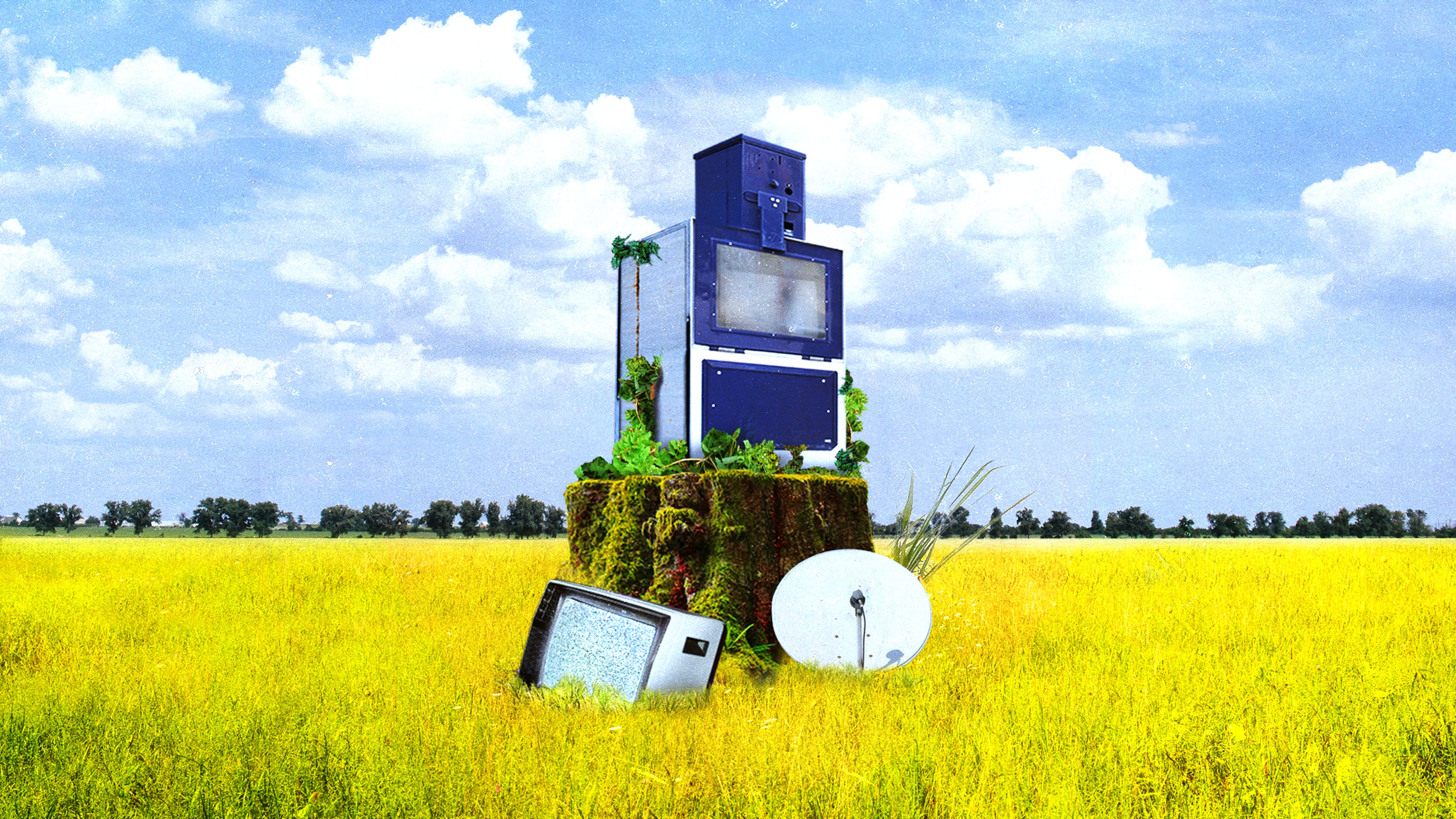
An Atlanta Journal-Constitution article in May 2002 warned that the internet was beginning to change the newspaper business, from ad revenue to subscribers.
The piece proved prescient. More than two decades later, today — Dec. 31, 2025 — marks the final printed edition of the AJC after more than 150 years. The newspaper is moving to pure digital publication, transforming itself into a modern digital media company.
But the disruption of the internet, artificial intelligence and changing media habits is impacting all forms of news and entertainment: newspapers, radio stations, television and the titans of Hollywood.
The AJC’s decision to end print, which Publisher and President Andrew Morse calls a difficult one, is one of the many ways Atlanta’s media outlets are adapting to changing economics in the industry and charting a new path for the future.
“We’re at a point where the industry is going through just an unprecedented period of disruption for a whole variety of reasons,” Morse said. “So we had a choice: Do we hold on to the past, or do we fully embrace the future?”

Viewership and listenership across Atlanta’s TV and radio stations also have declined, as has traffic to news organizations’ websites. Revenue has declined, too.
Audiences are splintered across a number of platforms, and oftentimes the people keeping communities informed are not trained reporters. Trust in the media has soured, and artificial intelligence threatens to erode what remains of the business.
They’re not just problems specific to Atlanta, the eighth-largest news market in the country, according to Nielsen rankings.
There is no panacea to solve fractures in the local news environment. But there is one thing stakeholders in Atlanta’s media industry agree on: there will always be a need for quality, local journalism. What it looks like, however, might challenge what viewers traditionally think about the news business.
How we ended up here
The news industry is no stranger to disruptions. Some feared the death of print when radio arrived, and then predicted its demise again during the dawn of television news, said Tim Franklin, a longtime newspaper editor who now leads the Medill Local News Initiative at Northwestern University, a project dedicated to boosting the sustainability of local journalism.
“[Print newspapers] have really endured remarkably, really, for the last two centuries,” Franklin said.
Newspaper circulation in the U.S. peaked in the late 2000s, Franklin said. The AJC topped out in 2004, with its Sunday edition reaching about 630,000 households. Print was lucrative, owing to classified ads, which were almost like an annuity for newspapers, and display advertising.
In 1999, major newspaper chains reported near-record profits. But their shares lagged over concerns about competition from the next seismic disruptor: the internet.
The web didn’t change the business immediately. It was a slow burn, beginning when advertising revenue began to shift from print to digital in the mid-2000s. There was no stopping that avalanche once it started, Franklin said, and the revenue decline worsened over time.
Over the past 20 years, print newspaper circulation in the U.S. has fallen by about 80 million, down 70% from 2005 levels, according to the most recent edition of Medill’s annual “State of Local News” report. Advertising revenue fell from $49.4 billion in 2005 to an estimated $9.8 billion in 2022, according to a separate report from the Pew Research Center.
During this time, news organizations became reliant on — or, as Morse puts it, developed an unhealthy addiction to — search result traffic. But that has also begun to decline. Over the last four years, monthly pageviews to the 100 largest newspapers dropped by more than 45%, according to the Medill report.
Technology is changing how consumers search for information. People are increasingly getting news from generative AI, which is integrated into Google searches. These platforms generate information in summary form, which can sometimes be incorrect altogether. Consumers also are increasingly seeking out information from social content creators.
“We’re in the early innings of this remaking of the local news landscape,” Franklin said.
Other media
For years, television news seemed immune to many of the financial pressures afflicting newspapers. But the way viewers consume content has changed dramatically in the streaming and social media eras, skipping newscasts and finding information across other platforms.
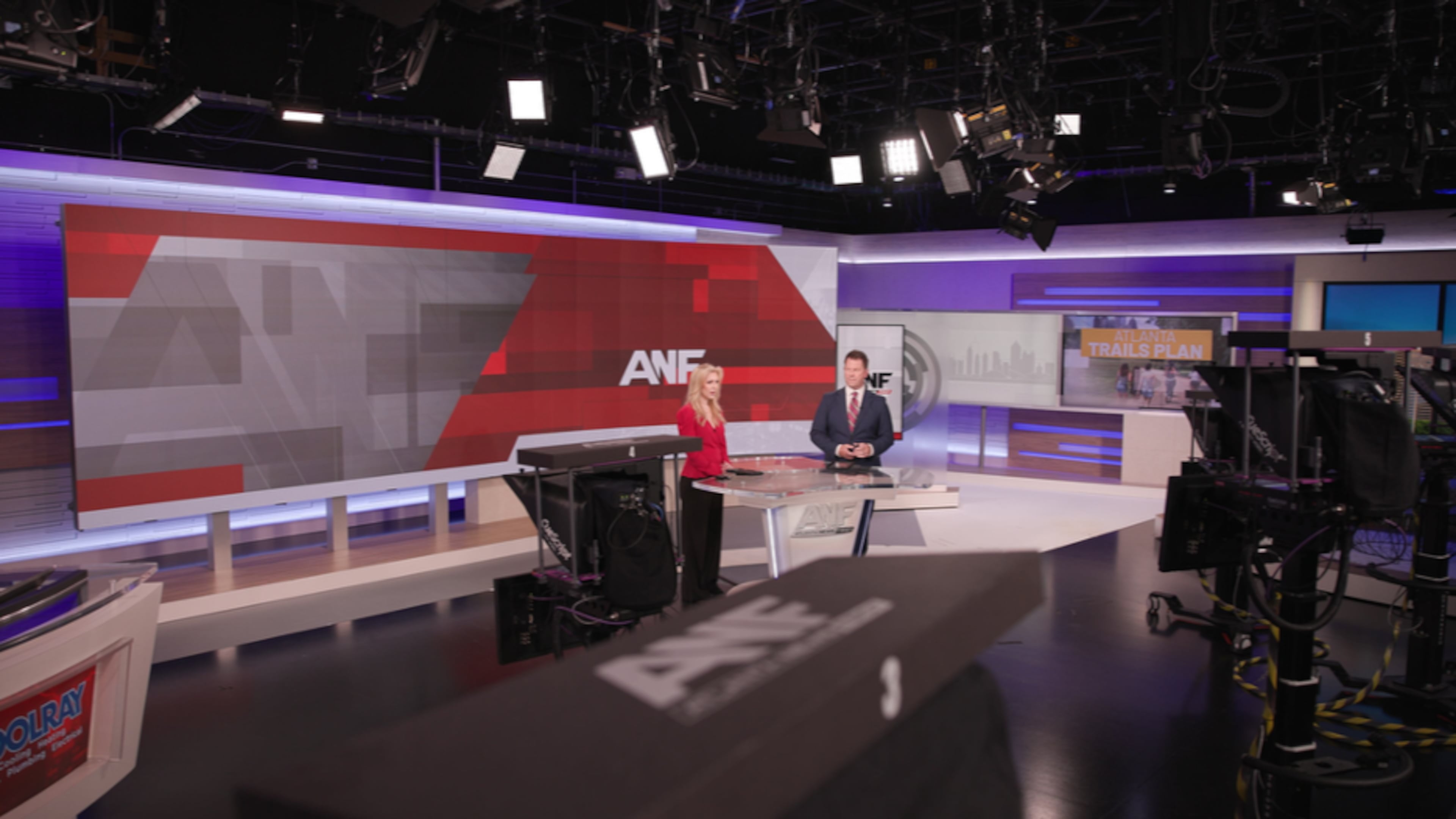
Atlanta’s stations are trying to adapt. Atlanta News First ended its affiliation with CBS and went independent in hopes that adding more local news to their schedule will win over viewers. They also launched a streaming channel. 11Alive, WSB-TV, Fox 5 and the city’s new CBS affiliate, CBS Atlanta, all have streaming options, too, which air original programming and a continuous feed from the linear station. They’ve also grown their presence across social media platforms and pushed further into vertical video popularized by TikTok and Instagram.
But they’ve also looked to cut costs. In June, Fox 5 dismantled its vaunted I-Team, a fixture in Atlanta journalism for 48 years, and offered buyouts to its veteran reporters last year. Nationwide, layoffs have affected stations owned by ABC, Scripps and others.
Station owners are beginning to push for consolidation, including Atlanta-based Gray Media. The Federal Communications Commission has long prohibited groups from owning more than two stations ranked in the top four within the same local market, as well as reaching more than 39% of total U.S. households. But owners argue those rules are outdated and do not account for new competition from digital media.
Atlanta is home to a giant in cable news: CNN. The media organization founded by Ted Turner faces its own uncertain future as its parent company Warner Bros. Discovery plans to separate its studio and streaming divisions and cable networks into separate companies. Netflix has announced plans to acquire the streaming and studio company.

CNN, which is battling the same headwinds as all other news networks, has become somewhat of a political football in discussions over the future of WBD. Paramount submitted a bid to acquire the entirety of the company, which could put the network in the hands of a company with ties to President Donald Trump. Paramount CEO David Ellison also expressed interest in combining CNN and CBS to create a news service that speaks to “the 70% of Americans that are in the middle.”
CNN is also trying to become a direct-to-consumer news outlet with a paywall and new streaming options, including the newly launched All-Access.
Also caught in political crossfire are American public radio and television stations. Earlier this summer, Congress clawed back about $1.1 billion in funding for the Corporation for Public Broadcasting over the next two years. Part of this funding would’ve supported stations across the country, including Atlanta’s WABE, the network of stations under Georgia Public Broadcasting and jazz station 91.9 WCLK-FM.
Within a month’s time, WABE raised $1.6 million through donors, which was just $300,000 short of the funding they lost. The station also saved money by renegotiating their affiliation and licensing agreements with NPR and PBS, which made them stable through June 30, said President and CEO Jennifer Dorian. Next year, WABE will still have a deficit of $1.9 million.
Finding what works
There is still a desire to find a model that works to deliver local news to the community.
When Atlanta native Keith Pepper bought Springs Publishing, the parent company of what was then-called Reporter Newspapers, in 2020, skeptics came out of the woodwork.
“If you want your friends to look at you like you have two heads, tell them you’re buying a newspaper,” Pepper told the AJC at the time. “I told friends, ‘Talk me out of this.’ No one did.”

Pepper, who had spent the previous two decades working in digital marketing and with tech companies, suddenly had six papers on his hands that distributed across neighborhoods in Atlanta. His vision was simple: satisfying a demand for community news in a way that meets audiences where they are. That meant preserving print, but investing more in the company’s digital future.
In five years’ time, Pepper has rechristened the company as Rough Draft Atlanta and transformed it into a multiplatform news organization. Rough Draft has more than doubled its editorial staff and increased both its full-time salaries by 50% and freelance budget threefold, according to numbers from Pepper. It added a new print edition serving Tucker, acquired longtime Atlanta LGBTQ+ publication The Georgia Voice and bolstered its coverage of the city’s dining, film and arts scenes.
It also leaned further into newsletters to directly reach audiences. Rough Draft’s morning newsletter has about 44,000 subscribers and an open rate of 48%, which is about 13 points above the industry average. The organization also recently began turning the newsletters into 60-second vertical videos.
This year, Rough Draft beat revenue numbers from 2016, the strongest year of the company. Its revenue in 2025 is up 20% from the previous year, according to Pepper. Print remains a vital part of the business, accounting for about 70% of its revenue in 2025.
Pepper isn’t alone in his pursuit of trying to solve the puzzle of local media. Within the last five years, more than 300 news startups have emerged, according to Medill. About 80% of them have been digital organizations. Atlanta has its own strong share of independent organizations, such as Canopy Atlanta and 285 South.
Rough Draft has a road map to expand profitably, but the macroeconomics make growth a challenge. Pepper says he’s not a risk-taker by nature and doesn’t want to rush things.
“It’s really hard to to be sustainable and profitable in local media,” Pepper said. “You have to constantly be building an audience and building a relationship with them, and then you got to find ways to monetize that and to keep going.”
What is the future?
To gauge the future of local media, look to the future generations.
Atlanta is home to one of the largest student-run newspapers in the state. The Southerner at Midtown High School, which counts about 80 students on staff this year, publishes articles each day on its website, and designs and distributes a print edition once a month that reaches more than 400 households. The size of the program, paid subscriptions and the number of visits to the website, has grown over time.
Led by six editors-in-chief, the students mobilize like a real newsroom, writing about issues happening at their school and the larger Atlanta community.
The editors have different reasons for joining the program, but the same themes ring true: it allows them to become involved with the community and tell stories they believe matter. Becoming involved with the program has also given the students a better understanding of how the media works.
“While people say that journalism is maybe not in its greatest shape, our journalism program would say the exact opposite,” said editor Fairlie Mercer, senior. “We are reaching people in our community, and we’re also reaching people in the school.”
The students are an anomaly, however. In a survey of more than 700 teens between 13-18, almost half said journalists do more to harm democracy than to protect it, according to the News Literacy Project. About 80% said journalists fail to produce information that is more impartial than online content creators.
The larger public also has issues with the media. Just 56% of U.S. adults say they have a lot of or some trust in the information they receive from the national news, according to Pew. This is down 20 percentage points from 2016. Trust is higher in information from local news organizations, though it has dropped from 82% in 2016 to 70% in 2025.
As generative AI technologies become more engrained in people’s lives, there is a belief that support for local news will eventually rebound. Chatbots are notorious for spitting out false information and the internet has become crowded with AI‑generated false images. Even the companies developing these tools are seeing the advantage of providing information to its users from reliable news sources. In January, OpenAI announced it was helping Axios expand to four new cities. The AJC and Axios are both part of Cox Enterprises.
“I think there will be a movement toward a few trusted, credible and engaging news brands that understand how to create really powerful fact-based essential journalism,” Morse said.
About the Author

Savannah Sicurella is an entertainment business reporter with The Atlanta Journal-Constitution.