Brian Kemp seeks $175 million to cover soaring liability costs in Georgia
From collisions and potholes to fatal accidents, liability claims against Georgia have soared in recent years prompting Gov. Brian Kemp to seek $175 million in state money to cover the costs.
Outstanding liability insurance claims jumped 343% to $394 million over the last nine years, according to the Department of Administrative Services. Claims are expected to rise another 14% in fiscal year 2026 and 19% the following year.
The Department of Corrections ― which oversees Georgia’s troubled prison system — cost the state more than $24 million in legal, compensatory and other expenses related to liability claims from fiscal years 2022-24, according to a review of data by The Atlanta Journal-Constitution. That’s more than any other state agency, an AJC analysis found The Department of Transportation was second at $21 million, the analysis found.
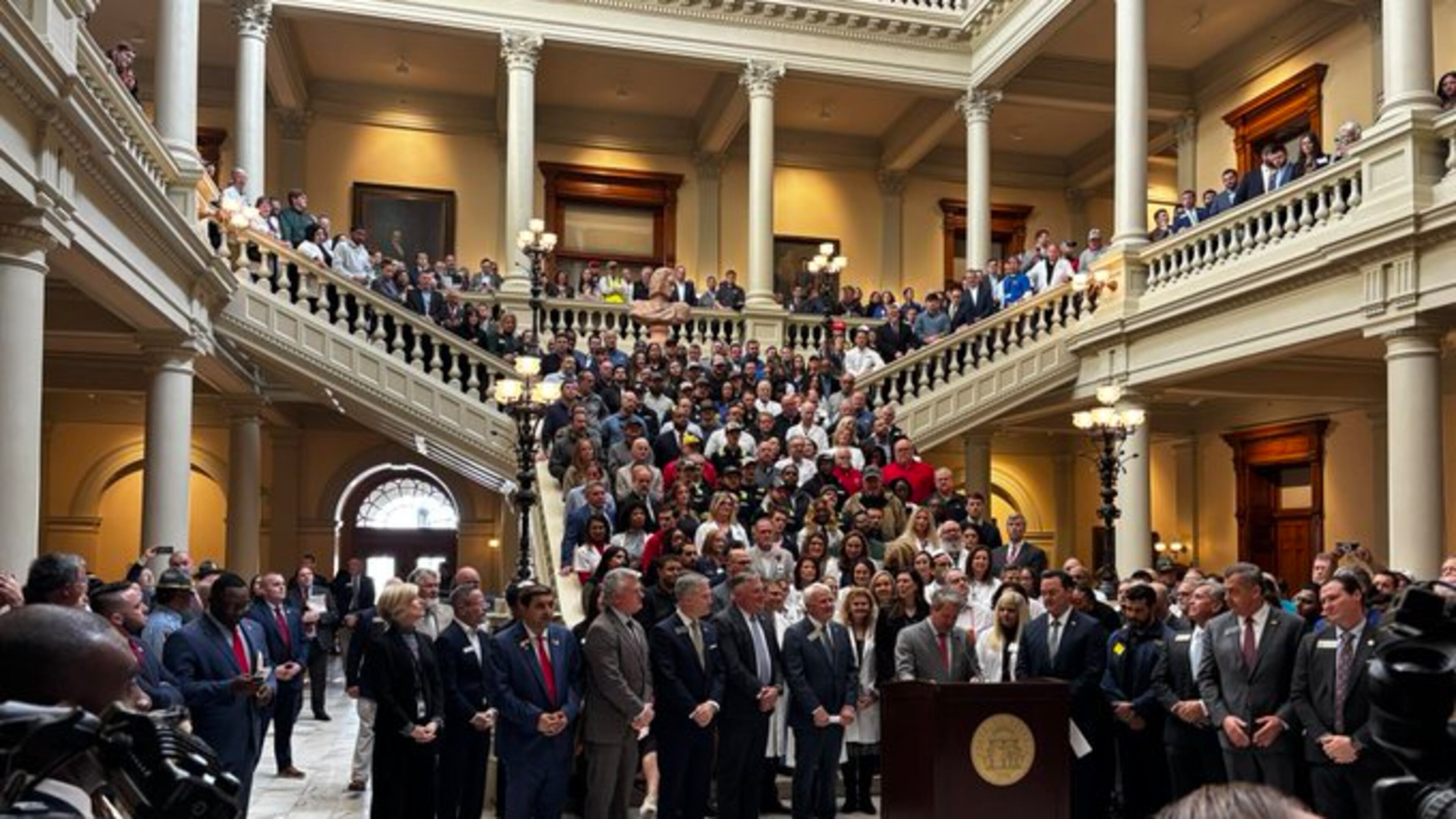
Kemp’s budget request comes as he presses lawmakers to pass legislation reining in civil litigation costs for the private sector, which he says contributes to higher insurance premiums for businesses and consumers. Though damage claims against the state are limited by law, the legislation could also help curtail some claims against state employees and agencies.
“Whether it’s at the grocery store or in a courtroom, there is no denying that it’s hardworking Georgians who pay the price for an out of balance legal environment.” said Kemp spokesman, Garrison Douglas.
Georgia uses a mix of self-insurance and commercial carriers to provide liability insurance for some 130,000 employees and 325 state agencies. An organization that large faces significant costs for property damage, bodily injury and other liability claims.
The AJC reviewed nearly 13,500 liability claims filed with the state from 2020-24. The vast majority of closed claims resulted in no payments to the claimants, and a third of closed claims cost the state less than $10,000 in legal bills, compensation to the claimant and other costs.
The review found thousands of mundane claims, such as $117.50 paid for damage to an automobile caused by a pothole in the GDOT Cartersville division.
But some were far more serious. The AJC found 17 closed claims that cost the state more than $1 million. Among them:
- A $5 million settlement in a lawsuit brought by the family of an Augusta State Medical Prison inmate who died in 2020 after being left for hours in a smoke-filled cell. A private insurer paid $2 million of the settlement.
- A $3 million settlement to the parents of twin 3-year-old girls who died in a hot car in 2019 while in foster care through the Georgia Department of Human Services.
- A $1.8 million settlement with a DeKalb County man and his wife, who blamed GDOT when a tree fell on their vehicle in 2023, leaving him paralyzed. They said GDOT was negligent in failing to remove the decaying tree.
Rebecca Sullivan, commissioner of the Department of Administrative Services, told legislators at a recent budget hearing that liability costs have been escalating across the country. She said inflation and an increase in more complex litigation have contributed to rising costs.
Sullivan said the state is examining ways to reduce its exposure. One example: Kemp has proposed spending more than $600 million to boost safety and security at Georgia prisons. She said that would address liability caused by staffing shortages, delayed maintenance and other problems.
In the meantime, Sullivan told the lawmakers that more money is needed to shore up Georgia’s liability insurance fund. Without more money, the fund balance is expected to drop to $66 million this year — just 17% of outstanding liability, Sullivan said.
Sullivan told lawmakers that Kemp’s funding proposal is “crucial to strengthen the program’s financial foundation.”
State Rep. Marcus Wiedower, R-Watkinsville, told Sullivan he’s glad her department is looking for long-term solutions to long-term liability costs.
“I want to treat the problem, not the symptom,” Wiedower said. “If we’re not making efforts to mitigate that, then what are we spending the money for?”
AJC data specialist Jennifer Peebles contributed to this report