Donor beware: That campaign website could be a fake
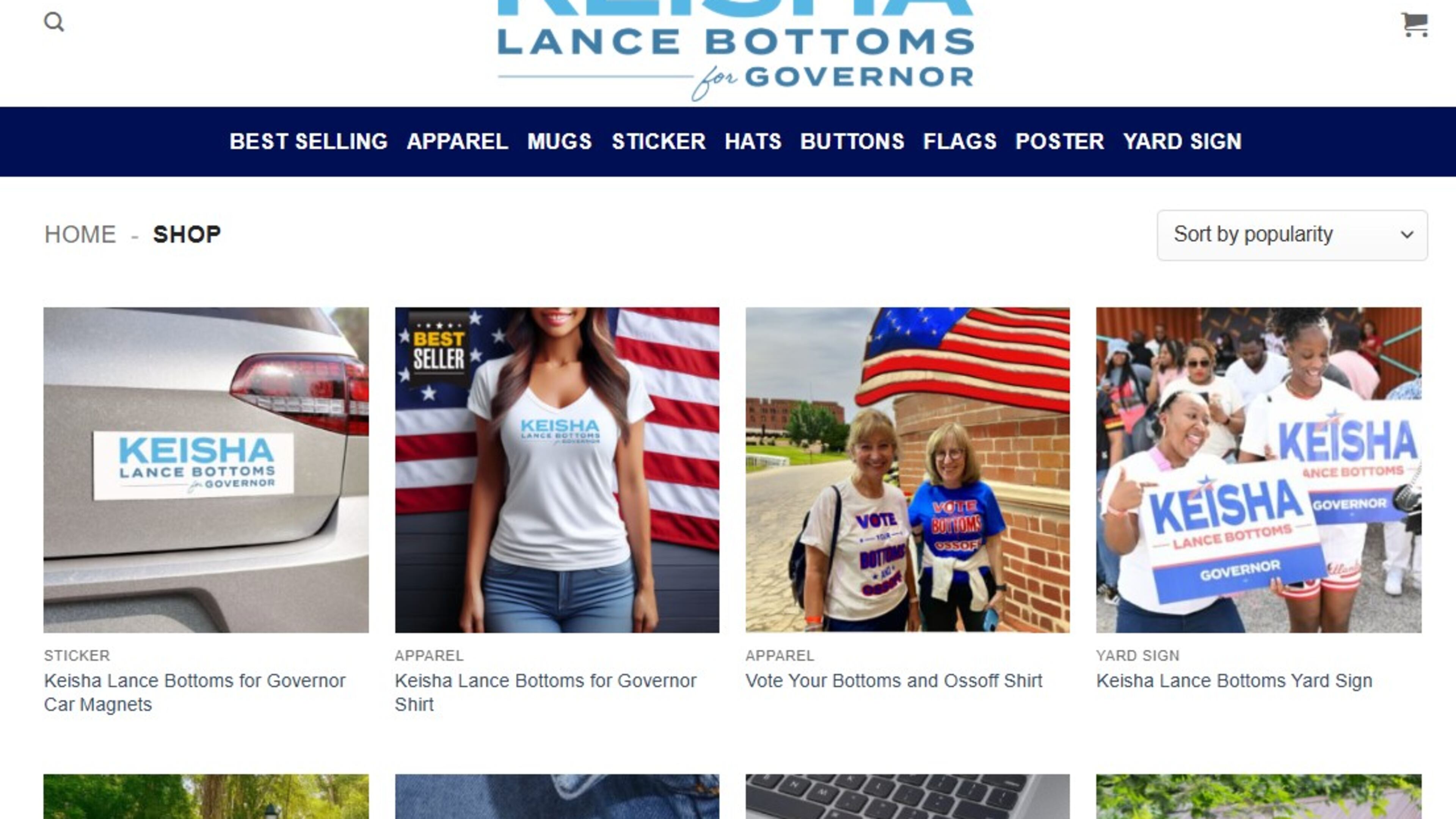
Georgia voters should look twice before donating money to candidates this election season. Some websites registered around the U.S. 2026 midterm elections are fraudulently selling merchandise and collecting donations in candidates’ names, new research shows.
A new study by domain intelligence company WhoisXML API flagged 270 web domains tied to Georgia campaigns, the third most after Texas and Florida. Some of these websites look like official storefronts for campaigns but are scams. And because of domain registration companies that shield their customers’ information, who runs the sites or where the money is going is not clear.
One site flagged in the research appears to be a store for U.S. Sen. Jon Ossoff’s reelection campaign with a full selection of items featuring Ossoff’s image and logo. Supporters can add a cash donation to the campaign at checkout, but that money is likely not going to Ossoff’s campaign.
The site was registered from a building address in Iceland that houses a museum of mammal penises and an H&M. Two years ago, the New York Times reported this building is the virtual home to many sketchy sites, including perpetrators of identity theft, ransomware and disinformation.
Ossoff’s campaign spokesperson Valeria Rivadeneira-Crandell said the campaign is aware of the fraudulent websites and is trying to get them taken down.
Several of the sites flagged in the report were registered outside of the U.S. and share nearly identical layouts and inventory, including a site impersonating the campaign of Democratic gubernatorial candidate Keisha Lance Bottoms. That site was registered from an address in Vietnam shared with 30 other domains, the report showed.
Digital director of the Bottoms campaign Ja’niyah Blanton-Carter said they are aware of the fake site and are also trying to get it removed.
The telltale signs of a fake site are not easy to detect. The foreign registration is a detail voters would miss without investigating registration records, said WhoisXML API researcher Alexandre Francois.
“It is difficult to prevent (fake websites) entirely because anyone can register a domain name,” he said. “It only takes minutes.”
The fake sites can be difficult to differentiate from real ones because they use familiar domain constructions featuring a candidate’s name combined with the office they are seeking. A domain’s name rarely shows on its own whether it belongs to a real campaign or a deceptive one, Francois said.
Most of the apparently fraudulent websites are new. The study found that more than 62,000 domains linking themselves to campaigns across the country have been registered since September 2025. Francois said election years are ripe for fake website scams.
“Elections can drive a lot of emotion and emotional decisions, notably for donations,” he said.
Francois found that many of the registered domains are legitimate sites owned by the candidates registering multiple domain names, such as common misspellings, to protect their brand and prevent others from purchasing them. For instance, the Ossoff campaign owns both ElectJon.com and ElectJohn.com.
Other sites found in the report were purchased to resell at a profit. But about a fifth of them appear fraudulent.
Research for the study revealed that dozens of the suspicious sites are tied to just two email addresses. They look like official campaign stores, selling merchandise like T-shirts and yard signs and taking donations of up to $1,000 in candidates’ names. The Bottoms’ impersonation site is one of 12 confirmed live “look-alike” online storefronts, according to the report.
Checkout requires full billing details — including name, street address, email and phone number — meaning voters may hand over sensitive personal and financial information to unknown operators rather than the campaign they intended to support.
Under federal election law, impersonating a political candidate or campaign to solicit contributions or donations is illegal. But it is nearly impossible to track these impersonators down, Francois said.
Registrant data is self-reported, so researchers only have access to what the registrants willingly reveal about themselves. And even that information is unverifiable.
Third-party traffic estimates show some of the fake online stores finding an audience. Visits are growing every month, with one of the sites drawing roughly 1,500 visits in June, according to the report.
Francois said artificial intelligence makes it easier and faster to create these “look-alike” pages.
But there are ways campaigns and voters can avoid falling into the trap.
Candidates should clearly and consistently promote their official domain names as well as their official donation links.
Voters should avoid any links sent via anonymous text or social media and look for official donation channels such as Act Blue and Win Red.
Donors could also start with the campaign’s verified social media page which usually include a link to an official campaign site, Francois recommended.