Infighting, ‘Epstein’ pledge shape Georgia’s race for lieutenant governor
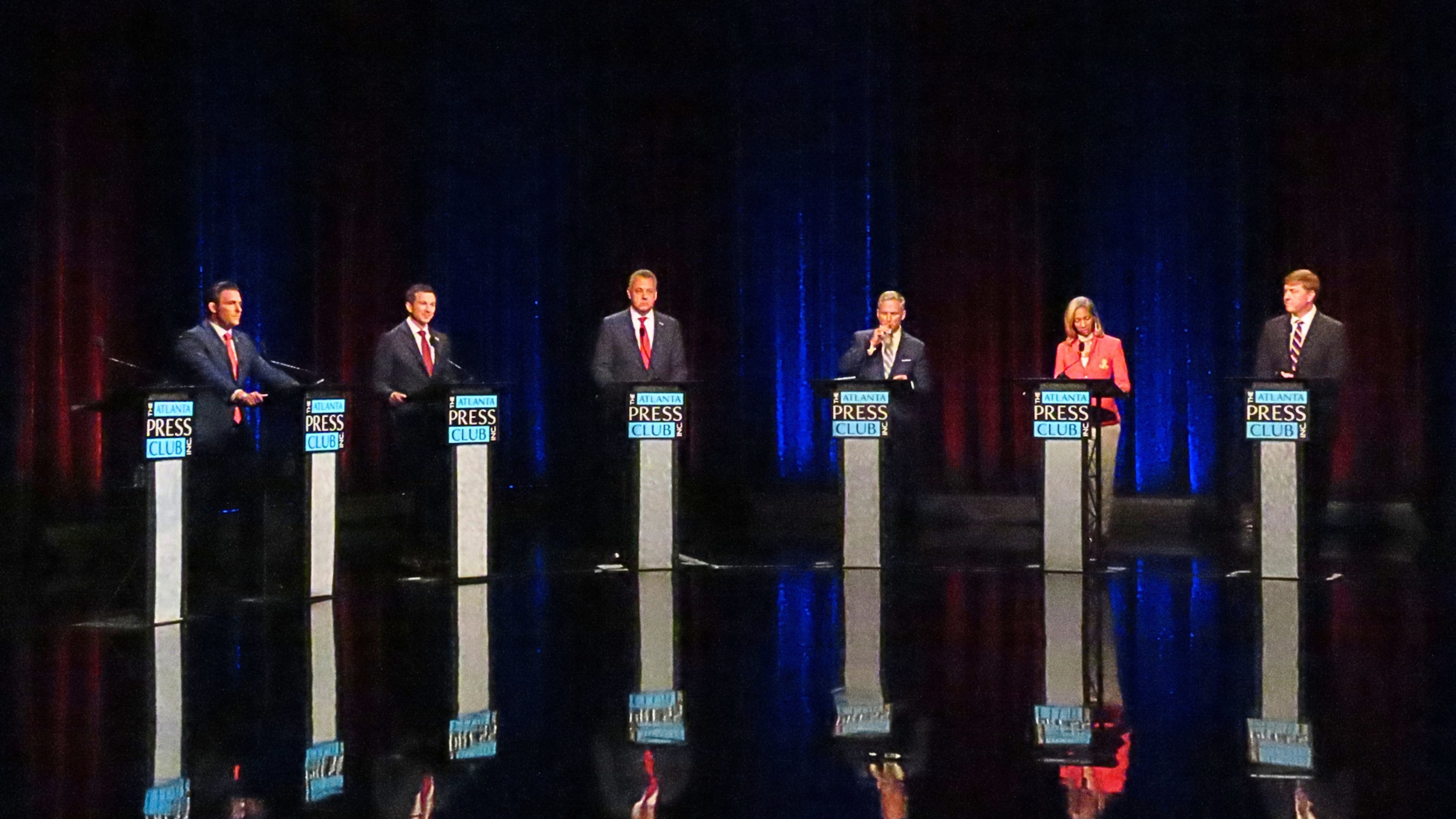
Republicans have pledged to reveal any sexual harassment claims filed against them while Democrats have spent more time attacking each other than their potential GOP opponents.
Welcome to the 2026 race to become Georgia’s next lieutenant governor.
Unlike most states, Georgia’s lieutenant governor has real power. As the presiding officer of the state Senate, the lieutenant governor controls what bills get a vote on the Senate floor.
It’s why some of the most powerful state lawmakers in Georgia are vying for the job this year. On the Republican side, five of the seven candidates are either current or former state lawmakers. Two of them were once senior leaders in the state Senate: state Sen. Steve Gooch, the former majority leader, and former Sen. John F. Kennedy, who was once the president pro tem.
The field also includes state Sens. Greg Dolezal and Blake Tillery — the vice chair and chair of the Senate committee that decides how billions of tax dollars are spent each year — and state Rep. David Clark, known for his willingness to buck the state’s Republican leadership.
Two political newcomers — Brenda Nelson-Porter, a Newnan technology consultant who did not attend Sunday’s debate, and Conyers business consultant Takosha Swan — also are seeking the party’s nomination.
With so many state lawmakers in the race, the Georgia Legislature passed a bill earlier this month — informally known as the “Epstein amendment” — that would make sexual harassment settlements involving lawmakers open to the public. All of the Republican candidates who were legislators voted for the bill, except for Kennedy, who was not in the Senate when it passed.
Republican Gov. Brian Kemp has until May 12 — or one week before the May 19 primary — to decide whether to sign the bill into law. During a televised debate on Sunday, Tillery challenged his Republican opponents to sign a waiver making their records, if they exist, open to the public immediately.
All of them signed it.
“We hope Gov. Kemp signs the bill. But if he doesn’t, the folks in this lieutenant governor’s race, you’ll know if there were any claims made against us,” Tillery said. “We want to be more transparent.”
The signatures highlighted what has been a relatively tame race between the legislative heavyweights as they have focused most of their attention on criticizing Democrats instead of each other.
During Sunday’s debate, most of the legislators cited their accomplishments cutting income or property taxes or advancing other conservative priorities. Clark and Swan portrayed themselves as outsiders who would represent the interests of everyday Georgians.
“Before this race, these men and women were all my friends, and they will be after,” said Dolezal, a comment that set the tone for the debate.
Meanwhile, two of the three Democrats seeking the post have been attacking each other. Sen. Josh McLaurin, D-Sandy Springs, for awhile was the only major Democrat in the race. But that changed when Nabilah Parkes resigned from the state Senate to challenge him in the Democratic primary.
McLaurin accused Parkes, a Duluth Democrat, of neglecting her constituents and being afraid to meet ordinary Georgians on the campaign trail.
“I don’t think you actually want this job,” McLaurin said. “I think you don’t really want to meet with voters or go pound the pavement and do real democracy.”
Parkes, in turn, accused McLaurin of being too cozy with Republicans and having insufficient zeal for fighting them.
“We need Democrats with a spine who will stand up to Republicans instead of coddling them,” Parkes said.
McLaurin cited his reputation as a creative critic of President Donald Trump and the Georgia Republicans who go along with him. Despite that, he said he’s successfully worked with Republicans to pass laws, like the first statewide regulations of car booting.
“It’s time to put real experience and a steady hand in the nomination position so that we can flip the state for Democrats and have a new era in Georgia,” he said.
Parkes has focused on her family history, noting she is the daughter of working-class immigrants from Bangladesh who understand the needs of ordinary Georgians.
“My story is Georgia’s story, and that’s why I know I can connect with voters,” she said.
The third Democrat, Richard Wright, an Atlanta certified public accountant, portrayed himself as a moderate alternative who could work with the Republicans who are likely to maintain a majority in the Senate.
Wright touted his financial expertise and pledged to focus civility, visionary leadership and affordability issues.
“My money is just like your money, and our money isn’t going far enough,” he said.
— Staff writer Greg Bluestein contributed to this report.
Clarification
This story has been updated to clarify that the Republicans in the race who were legislators at the time voted for the bill to require disclosure of sexual harassment settlements.