We ask children to act justly. Demand that Georgia leaders to do the same.

My wife and I recently sat in a middle school auditorium full of proud parents as we watched our familiar tweens awkwardly parade across the stage to receive their National Beta Club certificates and pins.
Once the students had crossed the stage, the club’s creed was proclaimed, which included eight core principles. Justice made the list. It also happens to be a pillar we state lawmakers recite during our Georgia flag pledge — along with wisdom, moderation and courage.

In that moment, more than 100 students pledged to practice justice, defined as fairness and impartiality. If we expect our students to embrace this principle, shouldn’t we, as legislators and leaders, hold ourselves to that same standard?
These bright scholars deserve leaders in politics, industry and their communities who test each decision with the same question: “Is it just?”
‘No-politics environment’ turned political
In a previous guest opinion column, I presented a Georgia four-way test framework that can help us apply these virtues across our state. Our world is complicated and moving fast, and problems seem to be outpacing the principles that hold us together.
The challenges of tomorrow are daunting, but they still require the solutions of yesterday. Since our country’s founding 250 years ago, the pursuit of justice has helped shape our nation, from the calls for liberty that sparked the American Revolution to the generations that followed. Over generations, justice has remained a standard worthy of our sacrifices. Upholding that standard requires us to examine whether our actions reflect it.
In that pursuit, I often think of the landmark speech delivered by one of our most famous Georgians in 1963: “ … We will not be satisfied until justice rolls down like waters and righteousness like a mighty stream.”
These refreshing words settle in my spirit every time I find a semichallenging hiking trail in Georgia’s Appalachians. The Rev. Martin Luther King Jr. and his theologian namesake both knew Old Testament Scriptures well. The Hebrew prophet Amos was an appropriate citation when calling for divine justice. We celebrate King’s call for justice. We urge our students toward the standard. Somehow, we fail to demand it from our leaders.
In government, the judicial branch is a necessity to balance power between the executive and legislative branches. In our communities, a just society requires us to recognize right and wrong, even when doing so challenges our assumptions or allegiances. Whether in government or in our daily lives, the question remains: “Is it just?”
During my time as a Cobb County Board of Education member, I saw how easily justice could take a backseat to the preservation of power. As board members, we expected our students and educators to uphold worthy standards, yet those same standards were not consistently applied to district leadership. The standards were consistently bent, changed or disregarded at the discretion of those in power. Justice was cast aside to protect a well-established reputation, order and loyalty.
The district’s leaders publicly declared a no-politics environment, all while consistently providing a platform for favored elected officials and candidates. Board members aligned with district leadership had their voices amplified, while those who challenged it had their voices silenced. In an environment that claimed to be nonpolitical, it was worth asking whether the same standards were being applied to everyone. Was it just?
Those inconsistencies continued during the coronavirus pandemic, when district leadership routinely and publicly praised state leadership while ignoring the massive federal financial efforts by Georgia’s U.S. senators. When our accrediting body asked questions in response to concerns about literacy rates and racial dynamics, state lawmakers quickly got involved and threatened the accrediting body to either back down or get out of Georgia altogether.
The yearslong cycle culminated in President Donald Trump’s July 22, 2026, visit to Cobb County’s Wheeler High School, billed as an event to promote Trump Accounts. Yet coverage by The Atlanta Journal-Constitution and Axios described the event as turning into a campaign rally, raising renewed questions about the district’s continued claim that it was not political.

Justice cannot be an afterthought
Most of us have witnessed our fair share of injustice on stages both small and large. We have seen troubling power dynamics emerge and watched leaders mock the very idea of justice simply because they can. Meanwhile, trust in our institutions continues to erode.
Rebuilding that trust begins with holding ourselves and our leaders accountable to the principles we ask others to uphold. Although we may not have the power to do everything, we all have the power to do something.

Let’s boldly stand for justice in every part of our state. During this upcoming legislative session, I’m challenging myself to put my decisions, interactions and motives through this Georgia four-way test. “Is it wise? Is it just? Is it moderate? Is it courageous?”
Justice cannot be an afterthought or a principle we invoke only when it serves our interests. It must remain at the forefront of our decisions, even when the answers are difficult or the consequences are uncomfortable. If we can ask our students to pledge themselves to justice, we should be willing to hold ourselves to that same promise.
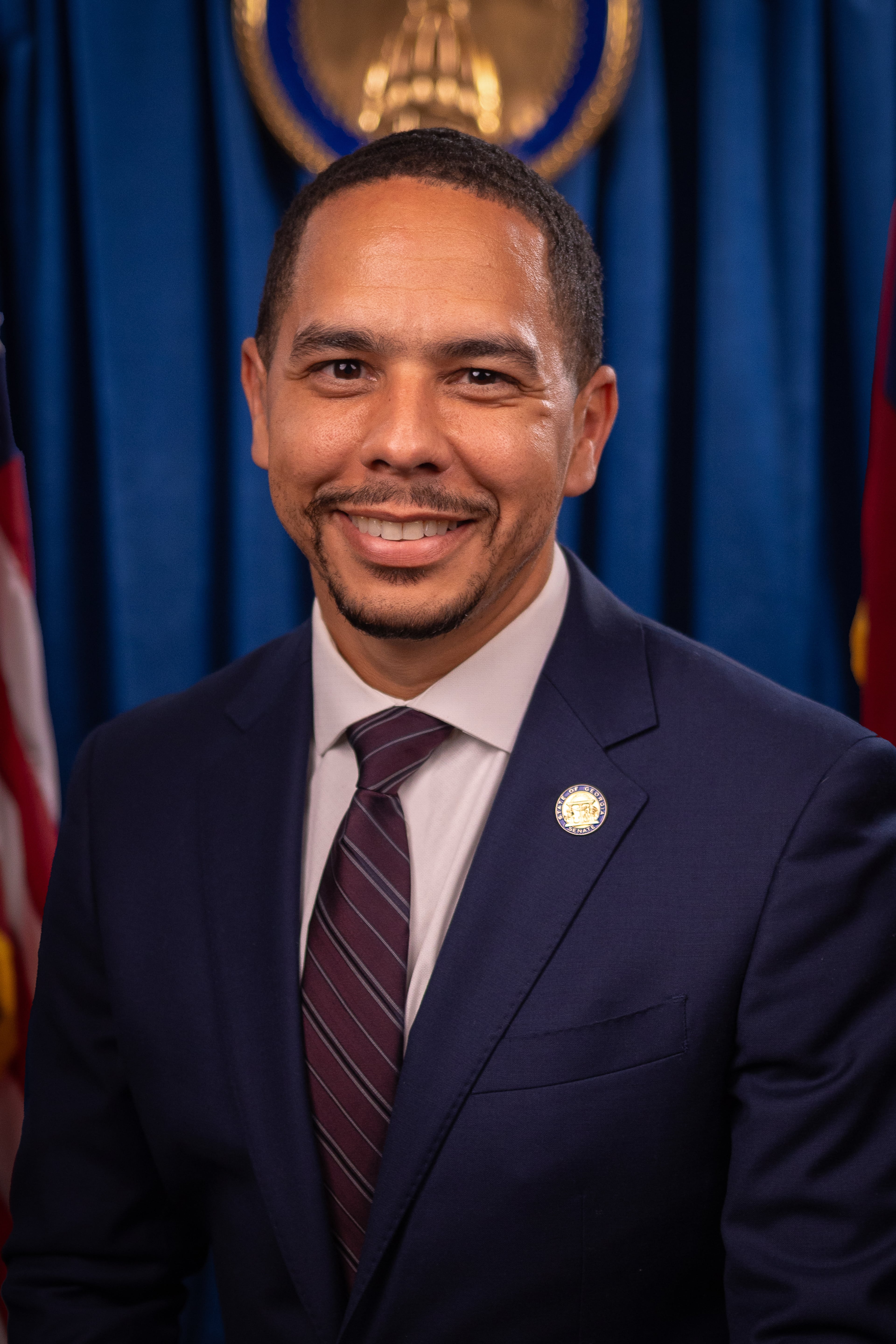
Sen. Jaha Howard, D-Smyrna, represents the 35th Senate District which includes portions of Cobb and Fulton counties. He may be reached by phone at (404) 657-2099 or by email at Jaha.Howard@senate.ga.gov.
The opinions expressed are those of the writer and do not necessarily reflect the views of The Atlanta Journal-Constitution.
Send letters to the editor of 250 words or fewer with your name, city or town and contact information to letters@ajc.com.