Keisha Lance Bottoms didn’t let Atlanta ‘burn.’ Don’t tell her critics.
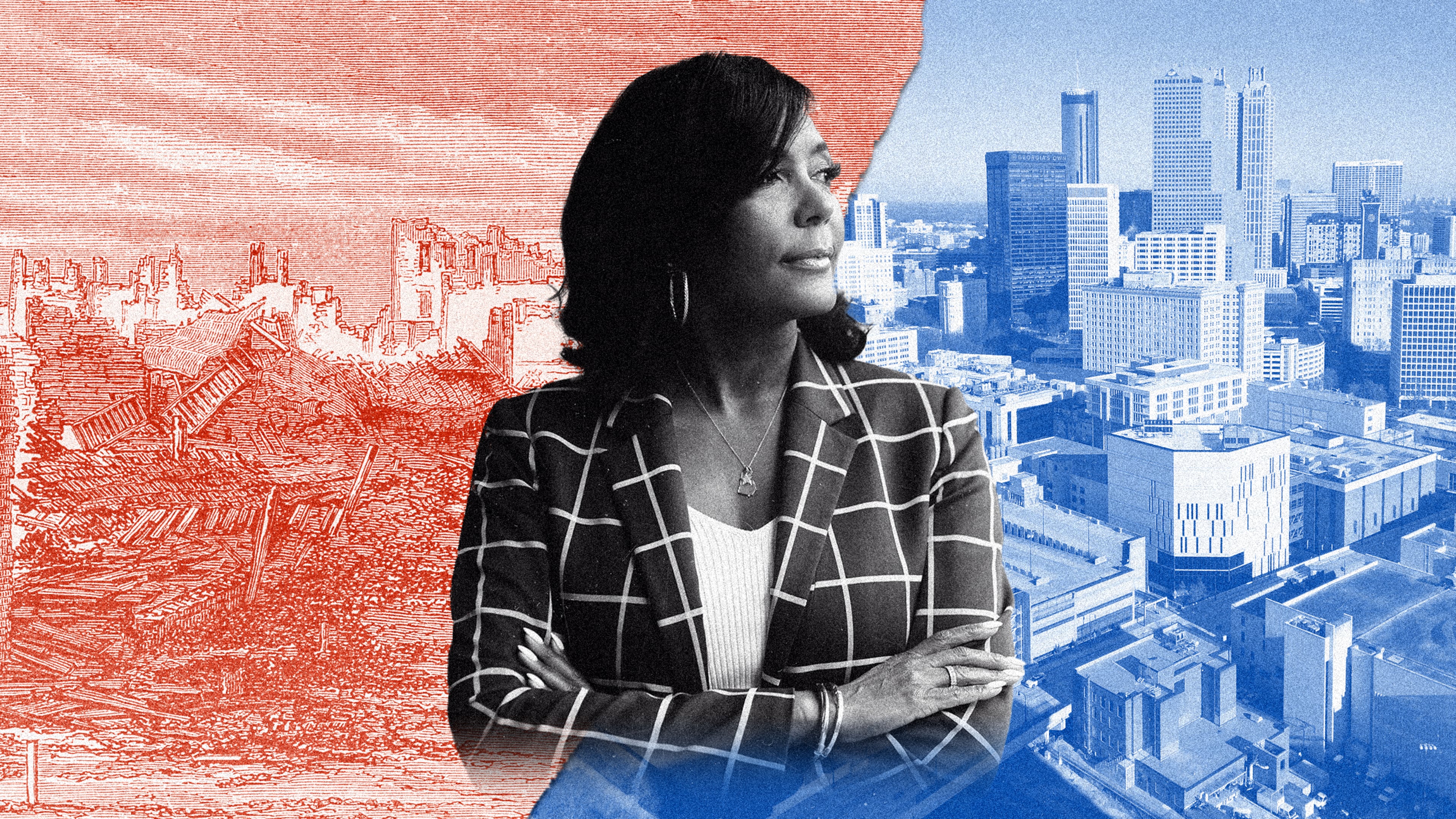

An internet meme shows a split screen of Civil War Union General William Tecumseh Sherman on the left and former Atlanta Mayor Keisha Lance Bottoms on the right.
The message claims they are the only two people to “burn Atlanta.” Sherman ordered the city — which was not yet Georgia’s capital — to be destroyed in November 1864 near the end of the war.
Critics accuse Bottoms, the 2026 Democratic nominee for Georgia governor, of letting the city “burn” in 2020 in the midst of the COVID outbreak and in the aftermath of the murder of George Floyd, which sparked protests nationwide.
She remembers things differently.
“Atlanta didn’t burn. A police car, a Wendy’s, and a dumpster burned. That’s very different than an entire city burning,” Bottoms said during an Atlanta Journal-Constitution editorial board meeting on Oct. 2 at the AJC’s newsroom in Midtown.
Her quote appeared in an AJC story by my colleague, Senior Politics Reporter Greg Bluestein, who was also in the room with Bottoms, and it sparked a variety of comments, including this one by Senate Majority Leader Jason Anavitarte, R-Dallas, on X: “As a native son of this state and Atlanta, what Bottoms will never understand is that she let the soul of ATL, our Capitol city, burn to the ground literally and figuratively and then walked away from it.”
Let’s not minimize what happened. The homicide rate rose by 55% from 2019 to 2020 and climbed higher than most other cities. Eight-year-old Secoriea Turner was killed while her mother tried to escape an area that gangs seized. People felt scared by what they perceived to be lawlessness and a city out of control.
But I am writing about this issue because I’m the editorial board member who asked Bottoms the question about the comparisons to Sherman.
That was the narrative I recall hearing from several news reports in 2020 when I still lived in Nashville — a city that literally endured the bombing of a downtown street on Christmas Day that year.
That didn’t happen in Atlanta, but Bottoms’ opponent, Republican Rick Jackson, has leaned into the city ablaze narrative with his ads.
Atlanta experienced a ‘Great Fire’ more than a century ago
I met Bottoms for the first time in May 2025 in Buckhead at the Good Trouble Gala, honoring the legacy of the late civil rights icon Congressman John Lewis and his wife Lillian Miles Lewis.
The former mayor greeted people near the entrance and asked them for their votes — a year before the Democratic primary.
I moved to metro Atlanta that week and politely told her, as a journalist, that I could not commit to voting for any candidate. In my head, though, I had that narrative of Atlanta burning and wondered why she was bothering to run. Then again, I was so new and didn’t have the whole picture.
For anyone who has visited the Atlanta History Center in Buckhead, gone to the Cyclorama exhibit of the Battle of Atlanta and seen the companion film, a viewer gets a much fuller story of what happened in 1864. Several months after the battle, Sherman ordered his troops to destroy Atlanta to cripple the Confederacy.
“Before leaving on Nov. 15, Sherman’s forces had burned the industrial district of Atlanta and left little but a smoking shell,” according to History.com.
It took years for the city to recover.
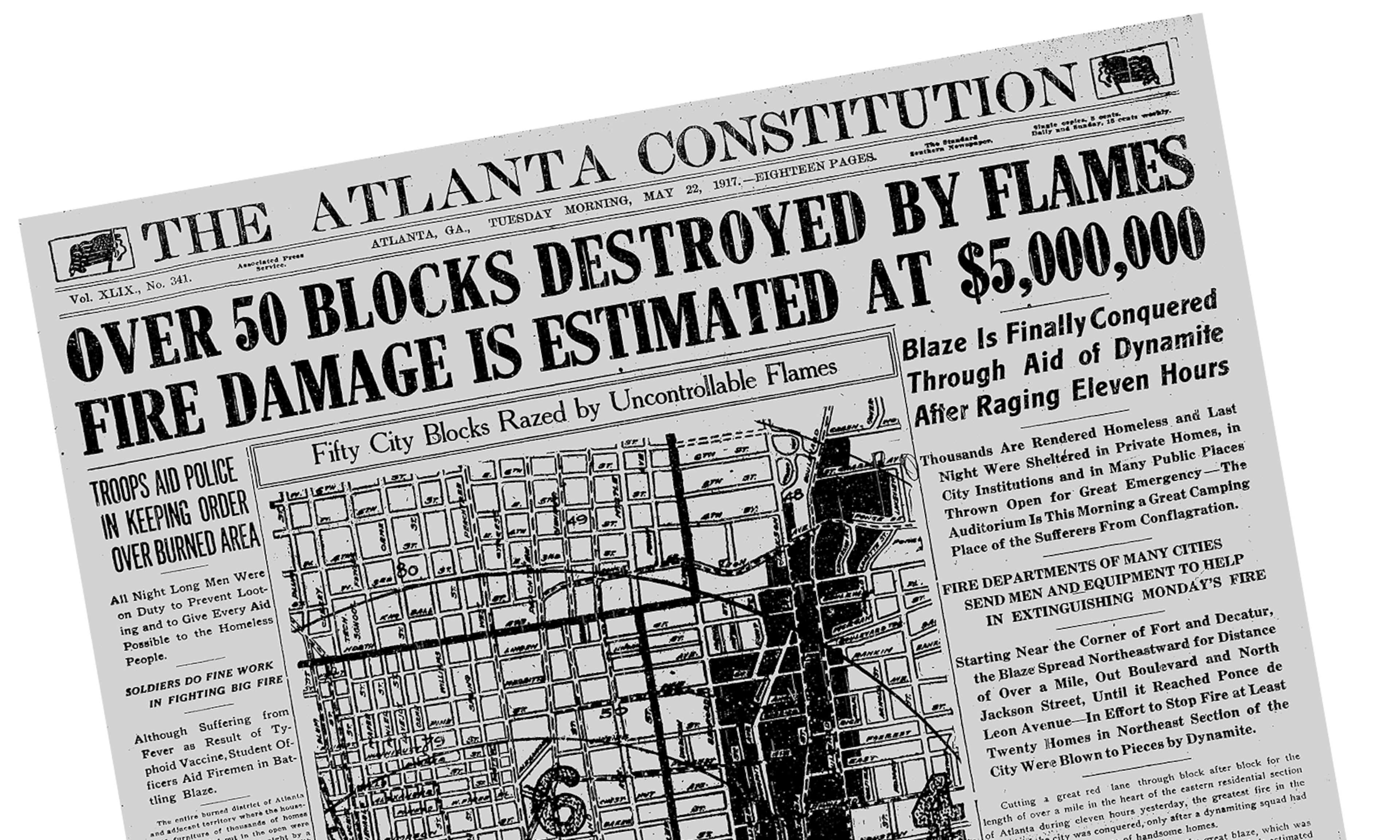
More than half a century later, the Great Fire of 1917 devastated more than 50 blocks of Atlanta. The origins of the fire are unclear, according to an AJC story, but the conflagration left 10,000 people without homes and destroyed nearly 2,000 buildings.
“Much of the east side of Atlanta looked like a wasteland,” according to another AJC story.
What happened in 2020 paled in comparison.
Leaders should seek to learn from mistakes and experiences

Fast forward to today. It’s been a year and a half since I arrived in Atlanta, and I have regularly traveled through much of the city, and what I have witnessed is a thriving, dynamic metropolis that has recovered from the worst of the 2020 violence, isolation and pestilence.
What’s telling is that the city is not scarred by fire.
Politics, being what they are, will continue to push this narrative especially without sufficient pushback. Bottoms and her supporters would benefit from countering this narrative rather than being on the defensive or saying little to nothing about it at all during the campaign. Her time as mayor is a key part of her resume, after all.
For example, after the CNN Center was vandalized, Bottoms forcefully spoke out in a news conference: “This is not a protest. This is not in the spirit of Martin Luther King Jr. This is chaos.”
But several residents recall a dark time full of fear, uncertainty and violence, and Bottoms’ critics claim she was absent. That anxiety was reflected in last May’s primary contest for governor. While Bottoms — who chose not to run for reelection as mayor in 2021 — handily won the Democratic primary election with 56% of the vote statewide, she earned only a plurality of the vote in Fulton (48%) and DeKalb (42%) counties. Atlantans demonstrated that they had reservations about her candidacy.
The murder of Secoriea Turner haunts the former mayor, and the girl’s memory has now been invoked by the Jackson campaign in an ad to highlight Bottoms’ tenure in office. Secoriea’s family has demanded Jackson take down the ad.
“Secoriea Turner is not a campaign slogan, she’s not a political talking point, she’s a child,” said attorney Shean Williams. “She was someone’s daughter, and her life mattered. Some things are just bigger than politics.”
These are words worth reflecting upon in the midst of a heated contest.
Bottoms reflects on her leadership
My impressions from the Oct. 6 town-hall style gubernatorial debate and her ads is that she has spent more time going after Jackson than talking about her record as mayor.
What I hadn’t heard from Bottoms until the Oct. 2 editorial board meeting was an assessment of what happened and her responsibility as leader of the city.
“To put it in perspective, that was the summer of 2020 where America watched — the world watched — George Floyd be killed by police officers in the street, where Ahmaud Arbery was lynched in the middle of the street, where Breonna Taylor was killed,” she said.
“So, there were a lot of dynamics in the summer of 2020 that my opponent has tried to erase.”
We asked her about mistakes and lessons learned.
“I think any great leader, any good leader, will look back and look at the lessons learned from 2020,” she said. “But we didn’t have a blueprint for 2020, and we were all navigating as best we knew how in the moment.”
Bottoms acknowledged that more collaboration among leaders daily could have resolved some of the challenges the city faced.
For me, this was a fuller picture of her role and her thinking than I ever received.
Voters have a right to hold Bottoms accountable for her term as mayor, but they should do so with all the facts and without exaggeration.
And the fact is, Atlanta didn’t burn in 2020.
David Plazas is the AJC’s opinion editor and a member of the AJC editorial board. Email him at david.plazas@ajc.com.
Send letters to the editor of 250 words or fewer with your name, city or town and contact information to letters@ajc.com.