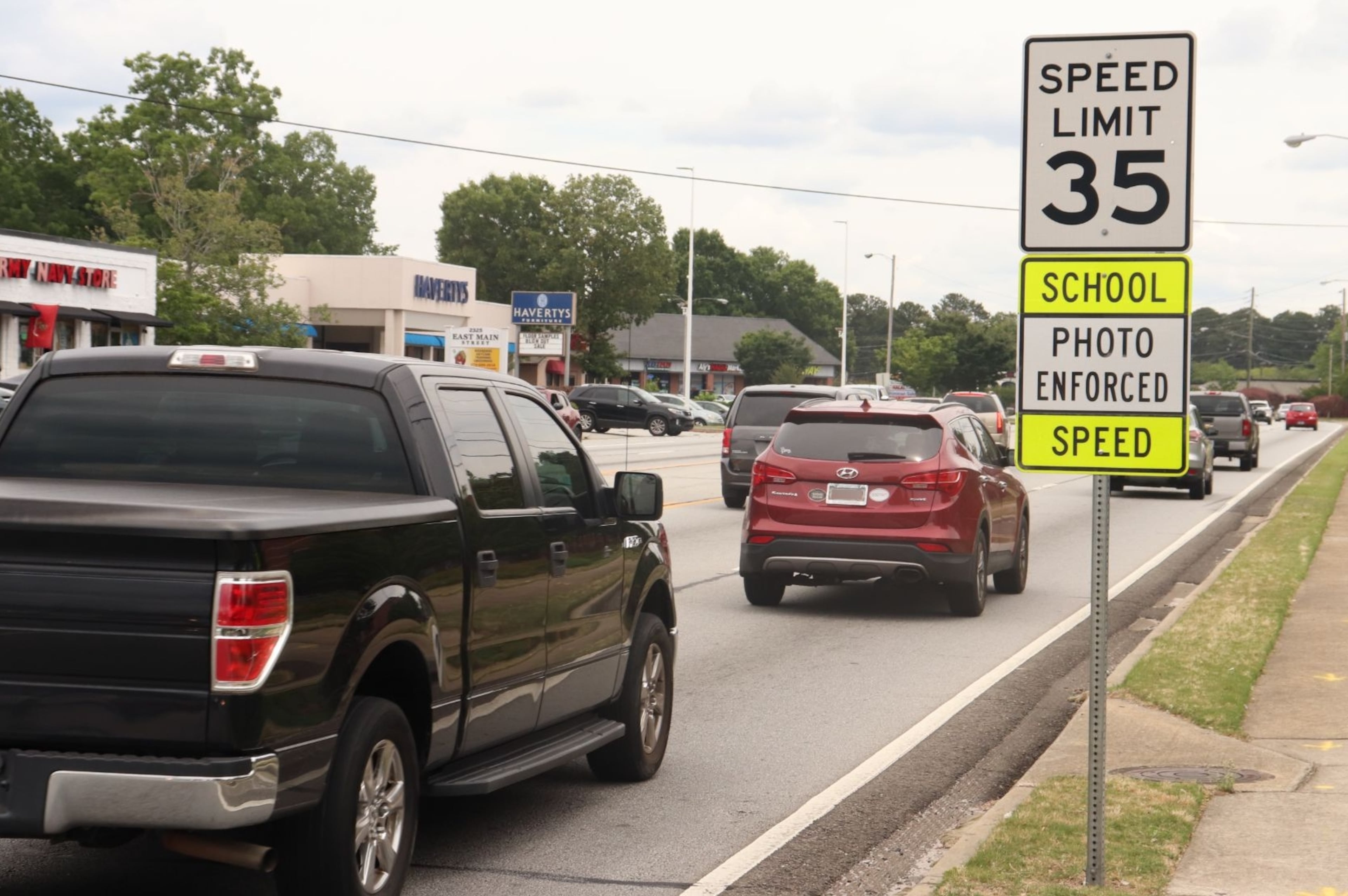
School zone cameras slow down drivers. Let’s protect Georgia kids from harm.

As a former elementary school principal and a mom, I have always believed that a school zone should be a sanctuary for our children, not a place of danger.
However, the reality on our roads often tells a different story. Every morning and afternoon, thousands of students across Georgia navigate a gantlet of distracted and speeding drivers. It is a mix that simply doesn’t work: School zones and speeding don’t mix well.
Recent data from across the state proves that we have a solution that works. A program allowing communities to use automated cameras in school zones is drastically changing driver behavior and creating a vital safety bubble around our students.
Data is clear: Behavior is changing

The results from recent studies in Georgia cities are nothing short of remarkable. In Canton, Duluth, Hamilton and Riverdale, speeding in school zones has dropped by a staggering 99%.
In Albany and Conyers, we’ve seen a 96% reduction. These aren’t just statistics; they represent a fundamental shift in how people drive when our children are most vulnerable.
Critics often worry that these programs are “speed traps,” but the data suggests otherwise. These cameras are educational tools.
In Albany, 90% of violators do not speed in the school zone again after receiving their first citation. In Wrens, that number climbs to 97%.
The vast majority of drivers are not “repeat offenders” — they are people who needed a wake-up call to slow down, and once they received it, they changed their behavior for good.
Protecting locals from pass-through danger
One of the most revealing aspects of this data is who is actually doing the speeding.
In Chamblee, a massive 99% of violations were committed by drivers from outside the area. In Whitesburg and Wrens, that figure is 96%.
Our local families are following the rules, but our children are being put at risk by commuters passing through who may not be as mindful of local school schedules.
These cameras serve as a necessary shield against outside traffic that ignores our local safety zones.
Investing in the front lines of safety
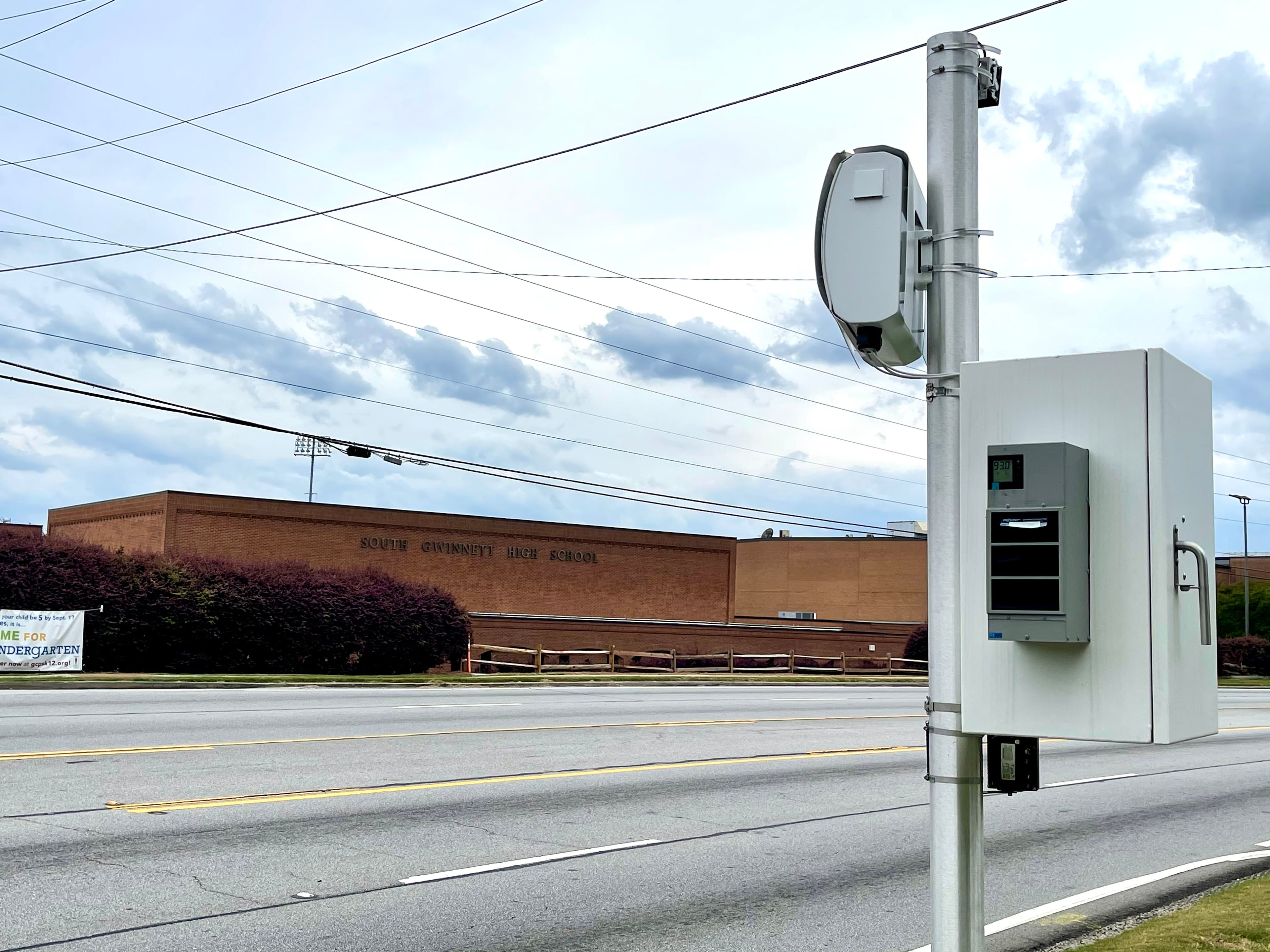
Beyond the immediate reduction in speed, these programs are providing critical resources for our first responders.
In Henry County, funds generated by these citations have been reinvested into 70 automated external defibrillators for patrol units, two dual-purpose K-9s and advanced drones for collision reconstruction.
In Roswell, the program has funded officer safety equipment like load-bearing vests and a command vehicle for serious accident investigations.
This isn’t about revenue; it’s about reinvestment.
By holding speeders accountable, we are directly funding the public safety initiatives that keep our entire community secure.
Saving lives, one zone at a time
Reducing speeding this dramatically is going to save lives — in fact, it already has.
Speed safety cameras can reduce crashes near their locations by 8% to 50%, reduce fatal or serious injury crashes by 11% to 44% and reduce fatal or serious injury crashes over a broader area by 17% to 58%, according to a Cochrane Library database study of 28 camera programs noted by the Vision Zero Network, an organization committed to eliminating traffic fatalities and injuries.
In Georgia, crashes around schools have declined 14% since the camera program began in 2019, according to the Georgia Department of Transportation.
Whether it is an 81% drop in violations in Canton or a 68% improvement in Milledgeville, the trend is undeniable: When drivers know they are being watched, they choose to drive safely.
Every child deserves a safe walk to the classroom door. Automated school zone cameras are a proven, data-backed way to ensure that “sanctuary” remains intact. It is time we give all our schoolkids a brake.
Ashley Rose-Toomer is the executive director of Give School Kids a Brake, a former school principal, holder of a doctorate in curriculum and instruction and a mom.