Trump and Jon Meacham came to Georgia with different messages about America

The same day President Donald Trump came to Rome to decry 2020 election cheating without evidence — a loss he has never conceded — a full house gathered at the Atlanta History Center to seek answers on how to save the American republic.
The center on Thursday night hosted Pulitzer Prize-winning presidential biographer and historian Jon Meacham who came to talk about his new book “American Struggle: Democracy, Dissent, and the Pursuit of a More Perfect Union” in a discussion with Emory University professor Patrick Allitt.
Meacham referenced Georgia a few times both because of the civil rights legacy of the late Congressman John Lewis — whom he described as the closest thing to a living saint — and the 2020 election.
“If you reject (election) results simply because you don’t like the results, chaos results. I don’t have to tell you that,” Meacham said to the audience. “A huge part of why we’re still here is because what your Secretary of State (Brad Raffensperger) did.”
Raffensperger defied Trump’s demands to “find” enough votes to give the president a victory in Georgia instead of former President Joe Biden.
American history offers us a road map
While several of my colleagues were in Rome to cover the president’s visit, I was at the history center to reflect on words so I could better understand this moment through the lens of history.

It’s been less than a month since FBI agents raided the Fulton County Election Hub and Operation Center, based on already baseless and debunked claims about fraud and corruption during the 2020 election, which several opinion writers in the AJC say will undermine the people’s faith in the electoral system.
At the history center, Meacham started his remarks by addressing two questions:
- Has it ever been like this?
- How do we get out of it?
He reminded the audience about the rancor in the U.S. prior to the start of the Civil War in 1861. Before he was president, Abraham Lincoln’s refusal to compromise on expanding slavery led to Southern states seceding but eventually resulted in keeping the union intact.
Meacham told the audience that a century ago in the 1920s, the U.S. was in a postwar, postpandemic era filled with anxiety over foreign influence on the country, mass migration, government violation of civil rights, and seismic demographic and social shifts from more Americans living in cities than rural areas to the emergence of radio as a mass medium.
Sound familiar? Today, the nation faces similar political conditions and polarization, but replace radio with social media and artificial intelligence.
July Fourth should be about U.S., not one man
In 2017, Meacham wrote an open letter to Trump before his visit to seventh president Andrew Jackson’s home, the Hermitage, in Nashville, Tennessee.
The daily newspaper, The Tennessean, published his letter on the front page. The headline online was “Jon Meacham to Donald Trump: ‘Lead all of us. Jackson did. You can, too.’”
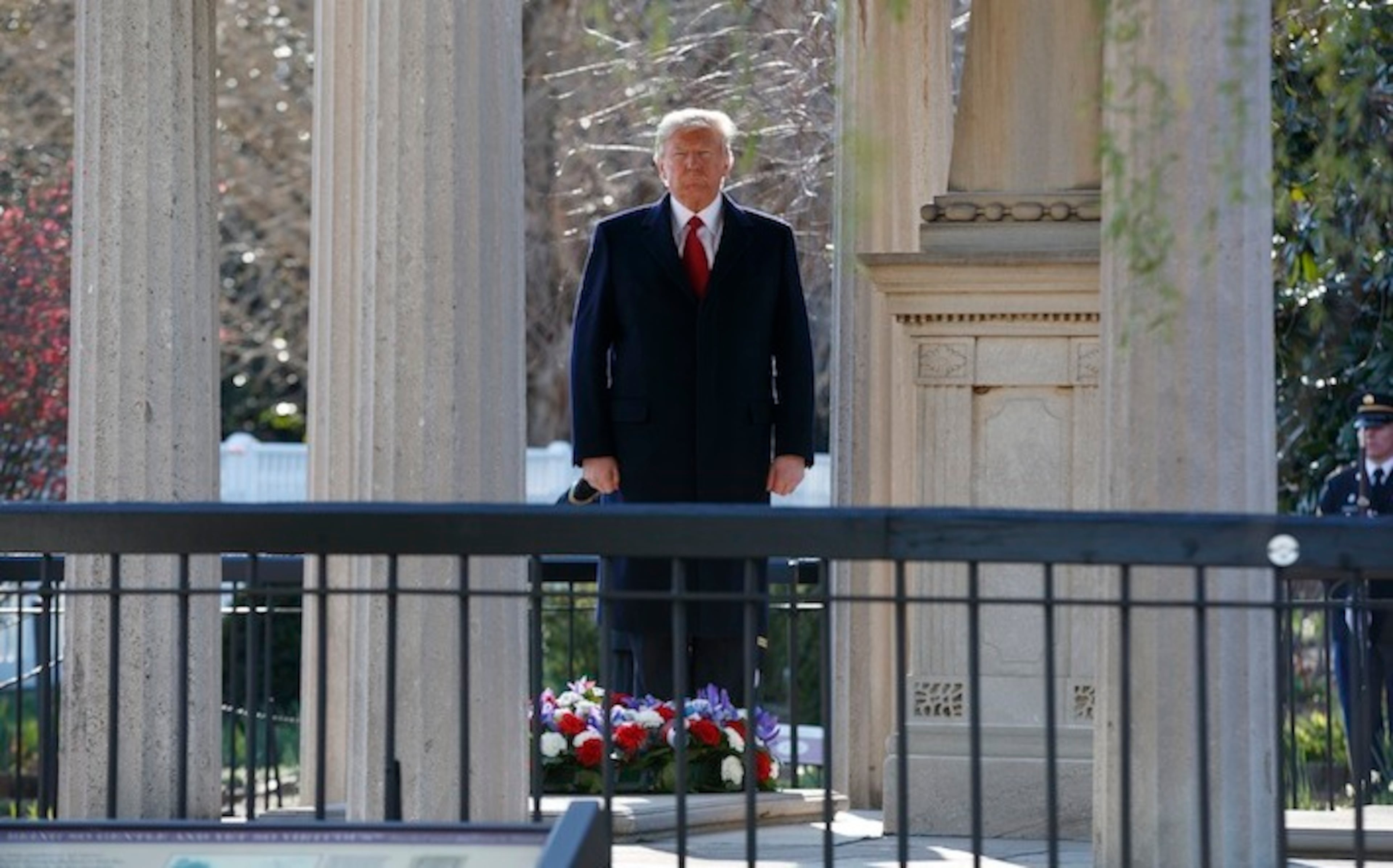
I remember that well. I was on staff as opinion editor at The Tennessean then, worked on helping edit that letter and put together a series of 160 letters to the editor on what people — including critics and supporters — expected from the president who had only been in his first term for a few months.
Trump today is now past a quarter into his second term and doubling down on false election conspiracy theories during a year when Americans will be celebrating the 250th anniversary of Independence on July 4 — and should be examining their common purpose.
The nation is polarized. Those who oppose him oppose him more.
There are fissures in his base. Once hard core supporters such as former Republican Congresswoman Marjorie Taylor Greene, who represented Rome for five years, now says that the Make America Great Again slogan was “all a lie.”
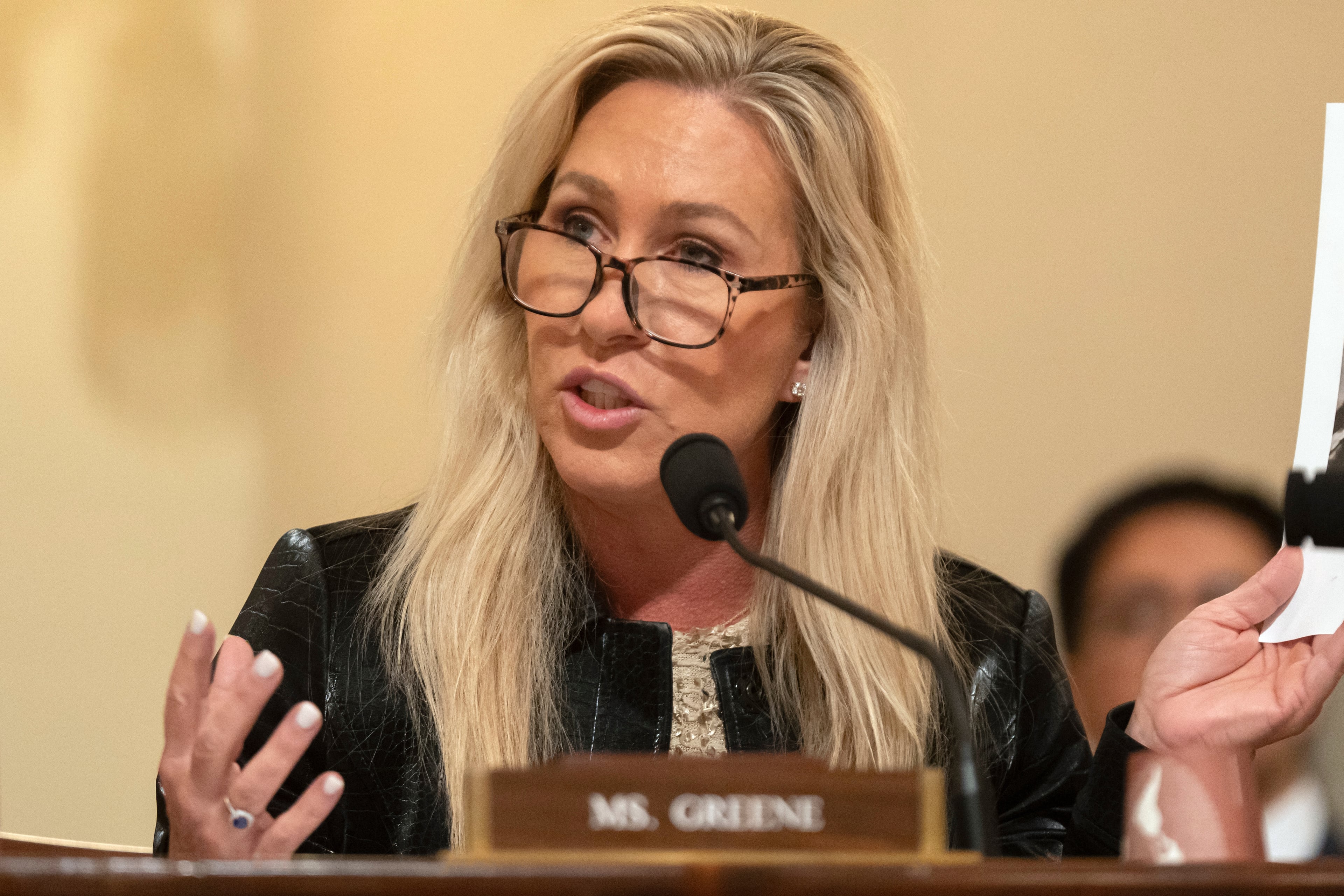
Meanwhile, contenders for statewide and congressional offices in the Peach State are doing all they can to seek Trump’s favor, secure his endorsement or claim they will be his favorite (name the office).
“If you send someone in power for the perpetuation of their own power, chaos ensues,” Meacham said.
Is pleasing one man more important than serving the entire interests of the nation — the only country Meacham said was formed out of an idea?
That idea, outlined in the Declaration of Independence, is that Americans are created equal and endowed with “unalienable rights” including life, liberty and the pursuit of happiness — truths described as “self-evident” by the Founders.
U.S. citizens have a personal reason and incentive to preserve this republic, Meacham said.
“We’re not asking people to be saintly,” he said. “We’re asking them to be self-interested.”
Of course, in the 18th century, those freedoms were limited to white, wealthy landowning men.
That’s why Meacham asserted that the U.S., after centuries of struggle, really became a nation in 1965, the year after the Civil Rights Act passed and the year the Voting Rights Act passed — two laws rectifying decades of legalized racial discrimination — and both under scrutiny by the Trump administration and the U.S. Supreme Court.

John Lewis played a pivotal role in the fight for those laws and nearly paid for it with his life — the man who would later represent Atlanta’s 5th Congressional District from 1987 until his death on July 17, 2020.
Americans owe it to themselves and each other to preserve, sustain and enhance a nation built on the idea of freedom and equality.
This is simply, but importantly, about self-preservation.
David Plazas is the AJC’s opinion editor. Email him at david.plazas@ajc.com.
About the Author

David Plazas joined the AJC as opinion editor in 2025. His goal is to create the ultimate platform for conversations, debates and idea exchanges in the South. He spent 25 years at the USA TODAY Company working his way from reporter at The News-Press in Fort Myers, Florida, to statewide opinion and engagement editor at The Tennessean in Nashville.
