Taiwan is not a distant headline. Here’s why it matters to Georgia’s success.
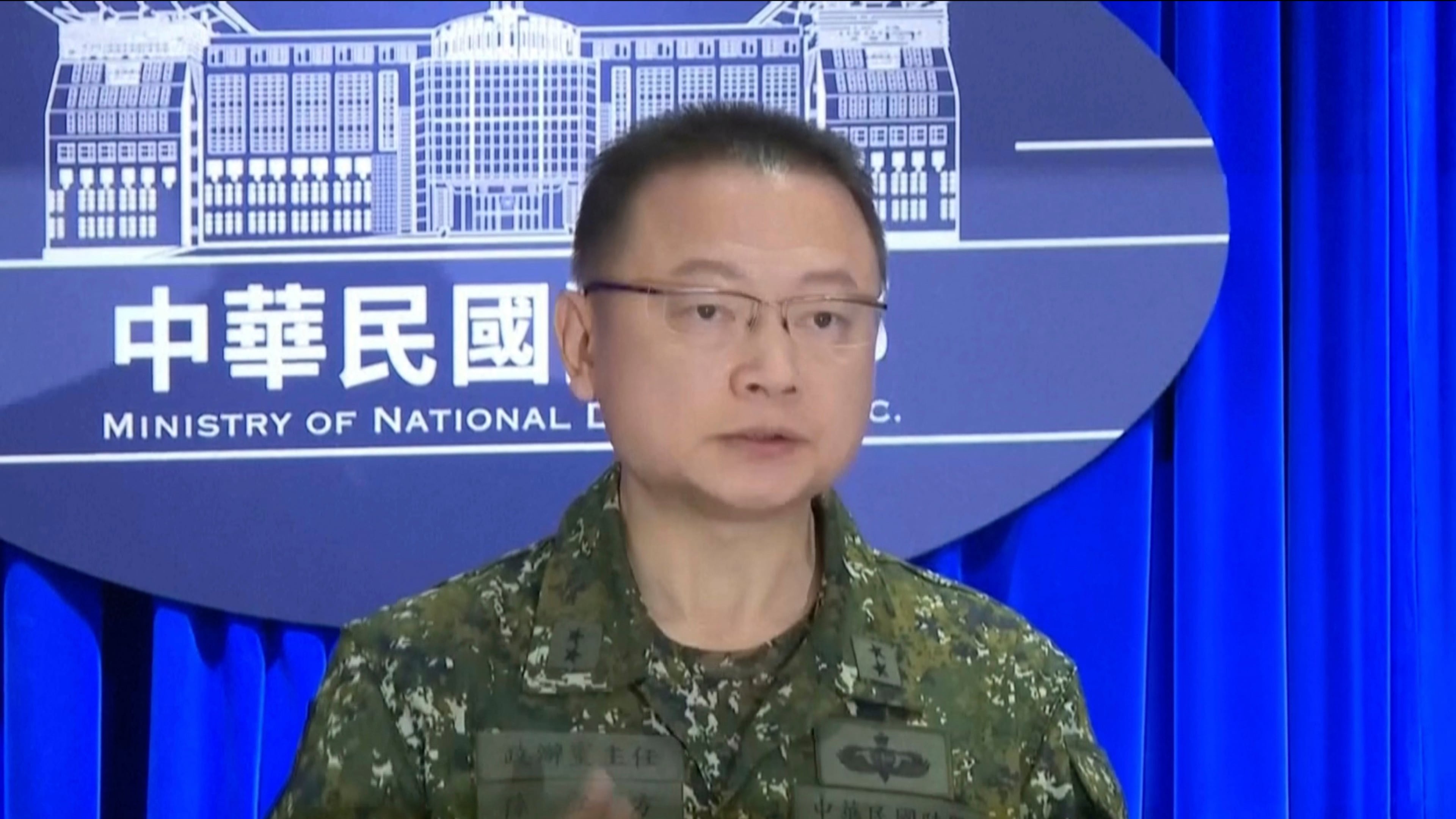
What happened near the Republic of China, Taiwan, Dec. 29-30 isn’t a distant story — it’s a warning with real consequences for families and businesses in the American Southeast.
For decades, China has steadily intensified military pressure on Taiwan in an increasingly overt attempt to coerce the island’s future.
On those two days, Beijing, on dubious pretexts, carried out one of its largest live-fire military exercises around Taiwan, dubbed “Justice Mission 2025,” deploying air, naval and missile forces, and rehearsing scenarios that resembled blockade pressure and port denial rather than routine training.
Reports indicated live-fire activity, including rockets fired into waters as close as 24 nautical miles from Taiwan’s main island.
The scale itself is the point. These drills were coercive, not defensive. Each iteration tests how far China can push before the world grows numb to intimidation. The pattern is unmistakable: whenever Taiwan deepens engagement with the international community, Beijing chooses intimidation over dialogue.
It then tries to shift blame, claiming Taiwan “provoked” instability, as if a democracy simply showing up in the world is an offense. That narrative is wrong. Taiwan is not the source of tension; coercion and threats are.
Military blockade would disrupt commerce and raise prices
We are grateful that partners spoke up. The United States warned that China’s actions unnecessarily raise tensions and called for restraint and meaningful dialogue.
Other like-minded partners — from Europe to the Indo-Pacific — have also voiced support for peace and stability across the Taiwan Strait. When democracies speak with clarity, we reduce the room for miscalculation.
Still, many Americans may assume the Indo-Pacific is far away and irrelevant to the six states of the U.S. Southeast, including Georgia. In fact, the opposite is true.
The Taiwan Strait is a vital global shipping corridor, closely linked to port activity across the U.S. Southeast, a gateway to international commerce. If these drills ever turn into a blockade, a collision at sea, or a serious accident in the air, ships will change course, and insurance premiums will climb sharply, among other things. Those are not abstract consequences. They hit the economy first — especially regions that run on ports, logistics and manufacturing. For many families, that is the difference between comfort and stress at the end of the month.
The Southeast’s strength is also its vulnerability: tightly coordinated supply chains. Automotive plants, aerospace suppliers, medical device manufacturers, and small businesses depend on components arriving on time at a predictable cost.
Even brief instability around Taiwan can raise shipping and financial costs, disrupt delivery schedules, and inject uncertainty into contracts. Over time, those shocks show up as higher consumer prices and weaker job security.
Then there is the technology reality. Taiwan sits at the heart of the global tech supply chain, producing over 60% of the world’s semiconductors and more than 90% of the most advanced chips, which are the backbone of modern manufacturing and daily life. When they become scarce or expensive, it’s not just Silicon Valley that notices — it’s the auto supplier, the hospital, the farmer using GPS‑guided equipment and the family paying more for essentials.
U.S. is committed to strengthening ties with Taiwan
Beijing’s drills make clear who is trying to change facts on the ground. They spotlight a troubling pattern: military pressure designed to intimidate a democracy and rewrite international behavior through fear. That is bullying. We reject it. We seek peace, but we will not accept coercion as normal, and we will not allow threats to dictate our future.
Taiwan’s position is consistent and clear: we do not provoke, but preserve the status quo, defend democracy, and replace force with dialogue. At the same time, we can be a force for good in the U.S. and the Southeast — serving as a trusted partner on trade and the economy, public health, aviation safety, climate governance and combating transnational crime, to name just a few.
Amid growing global challenges, Taiwan-U.S. cooperation continues to move forward. On Jan. 15, the two sides signed an investment memorandum of understanding, advancing trade and investment in high-tech realms for supply-chain cooperation and supporting Taiwan’s expanding U.S. presence in semiconductors and information and communications technology.
On Jan. 22, the fifth high-level dialogue of the U.S.-Taiwan Education Initiative reached new understandings on developing talent in semiconductors and artificial intelligence, strengthening two-way educational exchanges and encouraging state support for the Taiwan Center for Mandarin Learning.
For our American friends — especially in Georgia and across the Southeast — standing for peace in the Taiwan Strait is a practical investment in the security and stability of our daily lives. It is safeguarding the Southeast’s prosperity.
Taiwan is not a distant headline. We are a capable partner. We urge leaders and communities across this land to oppose any attempt to change the status quo by force, but to support freedom of navigation and strengthen our shared cooperation through practical Taiwan-U.S. cooperation.
TECO Atlanta will keep serving as a bridge to advance cooperation across trade, investment, technology, education, and people-to-people ties.
Jared Lin is the director general of the Taipei Economic and Cultural Office in Atlanta, Taiwan’s representative office covering Georgia, Alabama, Kentucky, North Carolina, South Carolina and Tennessee.