Legislation would limit military equipment going to police
What did the Pentagon give local police in your county?
A few examples from the 1033 program that sends surplus equipment from the Defense Department to law enforcement agencies:
Clayton: Four observation helicopters, eight pairs of night-vision goggles, 22 pairs of combat boots
Cobb: 33 5.56mm rifles, one armored truck, 20 binoculars
DeKalb: One mine-resistant vehicle, 16 12-gauge shotguns, six bayonets
Fulton: Two fixed-wing aircraft, 62 utility trucks, 20 duffel bags
Gwinnett: Two armored trucks, 40 infrared illuminators, 51 incandescent lamps
Source: Department of Defense
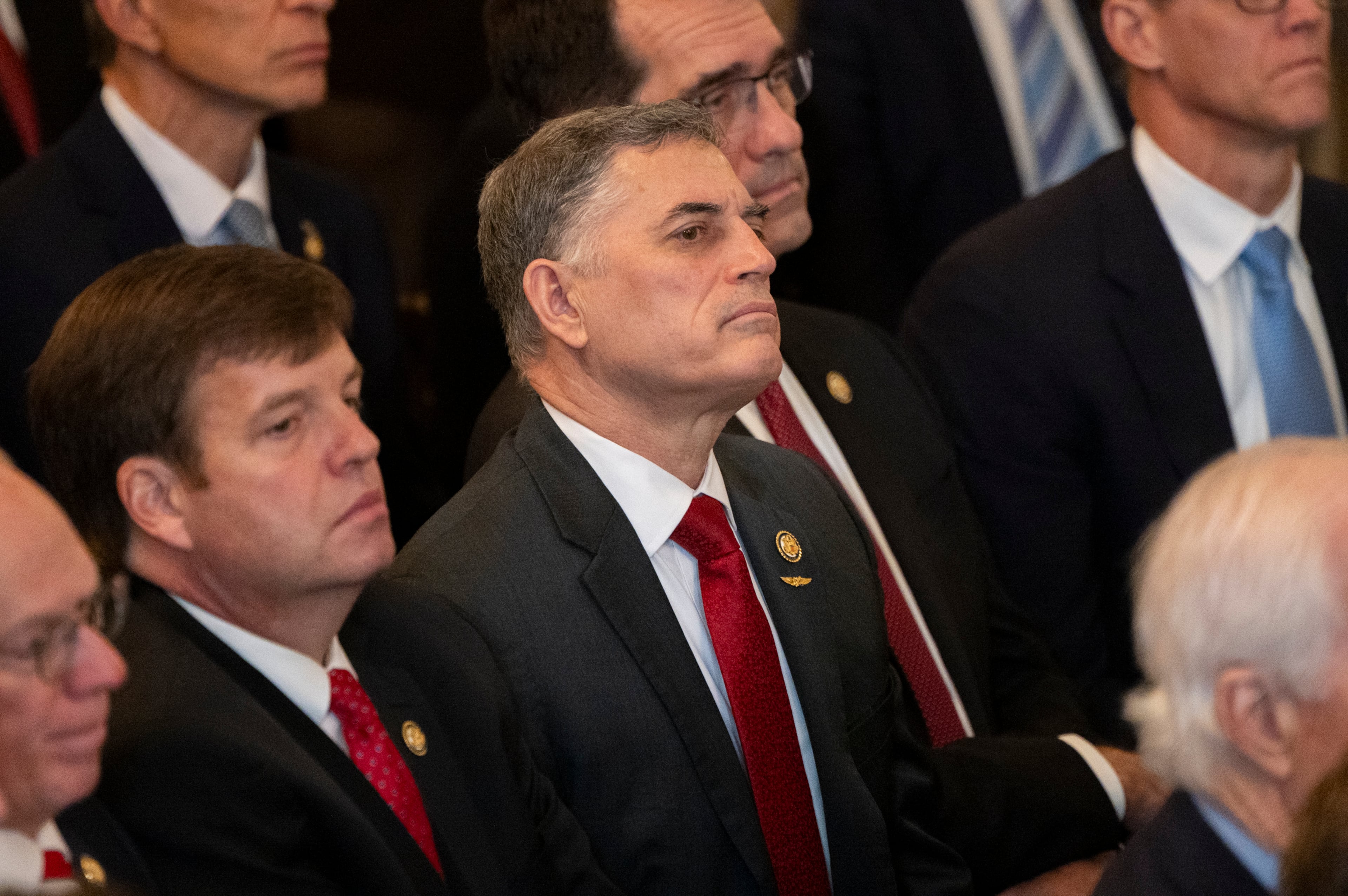
To U.S. Rep. Hank Johnson of DeKalb County, the images from Ferguson, Mo., of cops in military gear quelling protests served as striking confirmation that the transfer of Pentagon surplus to local police should be reined in.
To Gwinnett County Sheriff Butch Conway, the media overhyped Ferguson, and he knows from experience how valuable his armored troop carrier can be against an active shooter.
Police militarization will be a major topic as Congress returns from its summer break next week, when Johnson plans to introduce a high-profile bill to ban local law enforcement from picking up mine-resistant vehicles and heavy weapons from the Pentagon’s “1033” program.
Congress first authorized the Department of Defense to transfer excess items to local law enforcement in the early 1990s. In all, 600 Georgia law enforcement agencies have brought home $200 million worth of equipment. The items range from helicopters to first-aid kits.
President Barack Obama ordered a review of the program in the wake of the unrest in Ferguson, but the White House won’t say how long it will take.
Johnson, a liberal Democrat, is joining forces with U.S. Rep. Raul Labrador, a conservative Republican from Idaho, to push the issue along in the House. There will be action in the Senate as well, though chances are slim of passing a law soon.
“I do think that the visuals that came out of Ferguson will linger for a long time,” Johnson said.
“There are people who are now attuned to the militarization of police departments throughout the country,” he said. “And they realize there need to be some restrictions on the ability of a department to get free surplus weaponry without regard to whether or not they actually are trained and capable of using it.”
Limiting heavy equipment
In the days after a Ferguson policeman killed 18-year-old Michael Brown, police clashes with demonstrators dominated the news. Johnson sent a timely letter to his House colleagues asking for support for a yet-to-be-filed bill.
The bill would ban the Pentagon from transferring tactical vehicles, automatic weapons, drones, combat aircraft, grenades, silencers and sound cannons to local law enforcement under the 1033 program. It also would require local police to be trained on the equipment they do get, and it would put in place other accountability measures.
Johnson said if a police department wants that kind of heavy equipment, it can go through a normal budget process — and justify it to local elected leaders and the public.
Conway thinks the proposal goes too far.
“They’re talking about throwing a baby out with the bathwater,” Conway said. “If there’s any abuse of the program, then certainly they need to address that. But for the agencies that are utilizing the equipment like it’s meant to be utilized, it’s a very valuable asset.”
As for buying his own troop carrier, Conway added: “If they’re not going to pass this equipment down to law enforcement, are they going to scrap it and totally waste taxpayers’ money?”
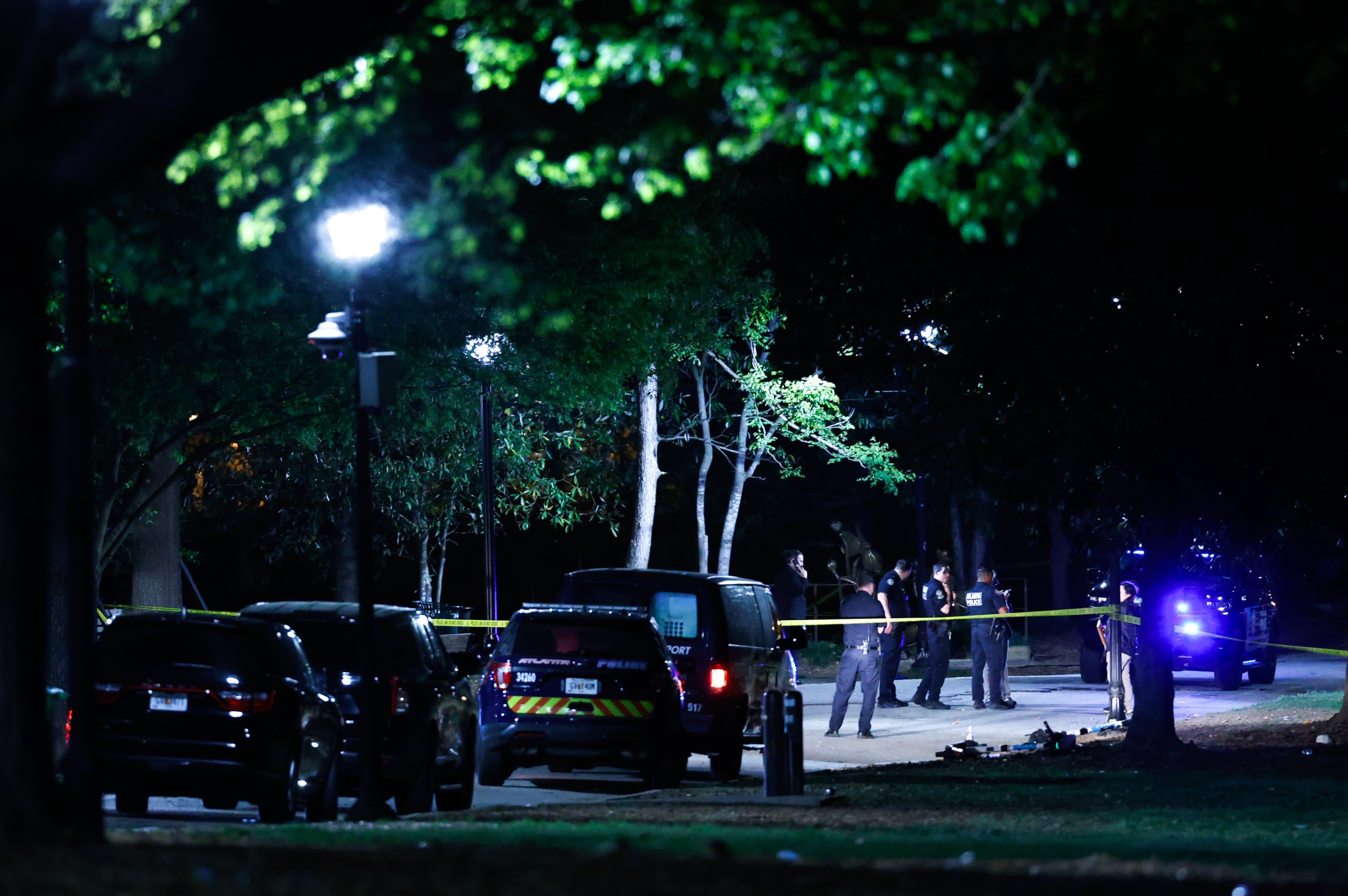
The light-armored vehicle was put to use Thursday night, when the Gwinnett SWAT team sought the suspect in a killing who barricaded himself in his Duluth home with children inside. SWAT team members used the vehicle to safely approach the house and then used its loudspeaker to communicate with Devon Jenkins after his cellphone died.
Jenkins surrendered peacefully.
Conway called to invite Johnson to come to Gwinnett to see the vehicle in action — after the two had sparred over the militarization issue in the media. Deputy Shannon Volkodav, a Sheriff's Department spokeswoman, reported that the two were not able to connect.
Tough road in Congress
The legislative effort is generating a lot of national buzz but will face a long road.
As of this week, Johnson had garnered 13 co-sponsors for the effort, including two Republicans. Labrador, a tea party favorite who ran unsuccessfully for House majority leader this past summer, plans to take a leadership role in recruiting fellow Republicans.
“Americans across the political spectrum are troubled by this issue, and I’m hopeful that we’ll have strong bipartisan support,” Labrador said through a spokesman.
“Our country was founded on the principle of a clear line between the military and civilian policing,” he added. “The Pentagon’s surplus property program blurs that line by introducing a military model of overwhelming force in our cities and towns. Our bill would restore the focus of local law enforcement on protecting citizens and providing due process for the accused.”
The debate will play out on both sides of the Capitol. U.S. Sen. Claire McCaskill, D-Mo., plans to hold a hearing on the issue, while U.S. Sen. Rand Paul, R-Ky., lent his support to the effort in a Time magazine op-ed.
In a recent interview with WABE-FM 90.1 radio, Republican U.S. Sen. Saxby Chambliss of Georgia said there should be safeguards to make sure local police are trained to use the surplus, but lawmakers should not get involved.
“Congress tends to sort of mess things up when we get involved in the weeds and in the details of something like that,” Chambliss said.
“And I don’t mean to be dodging it,” he said, “but I just think the right kind of relationship between the Department of Defense, the National Guard and local law enforcement agencies can solve this problem.”
Law enforcement resistance
There was little appetite for this before Ferguson.
When the House passed a Pentagon funding bill in June, U.S. Rep. Alan Grayson, D-Fla., introduced an amendment that would ban many of the same items under 1033 as Johnson's bill. The vote failed, 355-62.
Johnson said the lack of support was because members did not know enough about the issue and were “pro law enforcement reflexively.”
And the law enforcement establishment will fight attempts to scale back the program.
For example, the head of the national Fraternal Order of Police, Chuck Canterbury, wrote in a USA Today op-ed that "Access to equipment that assists law enforcement in carrying out their mission does not 'militarize' them."
But law enforcement opinion is not universal.
Cedric Alexander, the DeKalb County police chief and president of the National Organization of Black Law Enforcement Executives, worked with Johnson on the bill, even though his own department has gotten M-16 rifles from the program.
Alexander said he only wants tougher scrutiny, not a ban on certain types of equipment.
“They have to apply for it; they have to show reason for it; they have to be trained in it; and they’ve got to show where they can (pay for) the maintenance of that kind of heavy equipment,” Alexander said.
“In other words,” he said, “far more accountability than, ‘Hey, I have an extra tank. Do you want it?’”