Georgia's senators lean toward backing $1.1 trillion spending bill

Thursday night's nail biter in the House sends Congress' $1.1 trillion spending bill to the Senate. After most of the Georgia House delegation voted yes, the state's senators appeared to be leaning towards support in interviews with us over the last couple days.
Departing U.S. Sen. Saxby Chambliss was still reviewing the bill as of Wednesday night, but talked up all of the goodies Georgia's military bases are getting -- which premium and print subscribers can learn more about here. From Chambliss:
"Omnibuses scare me. There's always a lot in there you don't know about. It's easy to vote no on it so you don't have to answer as to why you voted for some project that's going to get criticized. But Georgia's getting a lot. From a defense standpoint, we're getting an awful lot."
On Thursday afternoon, U.S. Sen. Johnny Isakson sounded a similar cautionary note about
omnibuses (omnibi?) but was pleased with the strategy behind staging an immigration fight in February -- when Republicans have the Senate -- and new curbs on the Environmental Protection Agency:
"I'm sure y'all will find an organ grinder and a monkey somewhere that's going to make us all look silly. I'm just acknowledging I know that early. ...
"I know of no reason as of you and I sitting here that I'm not going to support it. That leaves me the wiggle room to change my mind."
A vote could come as early as today, but it's the Senate so no one really knows.
***
We told you Thursday of U.S. Rep. David Scott, D-Atlanta, giving a "100 percent" endorsement of DuBose Porter to stay on as chairman of the Democratic Party of Georgia.
Neighboring U.S. Rep. Hank Johnson, D-Lithonia, disagrees. He says he will make up his mind once he sees who is running for the post:
"The people really support our policies; they just won't go out and vote for us. So that's a leadership issue. So all Democrats should be looking at the party leadership. Nobody's job should be safe. So there should always be questions being asked and challenges being brought, and then the members have to decide how best to proceed based on what we hear from our leaders."
***
As lawmakers prepare to study whether to give the state new powers to create charter schools, here's a number they're sure to hear: An estimated 12,000 students were on the waiting lists to attend a charter school at the start of this academic year.
That's according to Andrew Lewis of the Georgia Charter Schools Association, who opined that it "clearly indicates a demand for more charter school options."
"As we approach the upcoming 2015 session of the Georgia General Assembly, elected officials who support and oppose charter public schools should keep in mind the many factors driving the growth of charter public schools in Georgia, and heed the alarming growth of waiting lists across the state."
Deal has included the creation of so-called Recovery School Districts, popularized in Louisiana after Hurricane Katrina, a part of his education agenda. He sees it as an escape valve for students stuck in failing schools.
"It's time we did something about it," he said this week.
It's also sure to rile up teacher groups like the Georgia Association of Educators, which endorsed Deal's rival Jason Carter. Sid Chapman, the group's president, has likened the spread of charter schools to the privatization of public education.
"It's not OK. It's not right. It's not moral. And it's just not going to happen," he said at one campaign event.
***
Stefan Passantino, the super-connected political lawyer at McKenna Long and Aldridge, was none too pleased with the House Ethics Committee's decision to give U.S. Rep. Phil Gingrey, R-Marietta, a kick in the rear on his way out the door in the form of a letter admonishing him for giving favors to the now-defunct Bank of Ellijay.
Passantino, who represented Gingrey in the case, gave a lengthy rebuttal in our post Thursday on the letter. One piece worth noting: "press accounts concerning the treatment of other, remaining members of Congress have caused me a great deal of concern that the Committee isn't following its own past precedent."
That's a likely reference to Rep. Maxine Waters, D-Calif., who was cleared of wrongdoing by the Ethics Committee in 2012 for setting up TARP-related meetings for a bank in which her husband owned stock.
***
U.S. Rep. Paul Broun, R-Athens, sent a farewell email to his constituents Thursday as the House attempted to wrap up its business for the year.
And Broun -- who has taken an "I'm not ruling anything out" stance when it comes to his future -- included this sentence (emphasis ours): "While my time in Congress has come to an end for now, I will continue to stay in the fight."
***
Rep. Jack Kingston, R-Savannah, delivered his farewell speech after the spending bill vote Thursday night. Here it is:
***
State Rep. Stacey Evans, who often takes the lead for Democrats on higher education legislation, has unveiled a quartet of pre-filed bills paving the way for expanded HOPE scholarship benefits.
They would restore full tuition funding for HOPE recipients, expand eligibility for some applicants and make it easier for children of veterans to apply for the awards.
Yet Evans may be fortunate just to land a hearing for her bills.
Why? State Rep. Earl Ehrhart, a Republican who chairs the higher education committee, took issue with an Evans column about her support for Democrat Jason Carter days before the election. He said it was filled with "blatant untruths" and questioned her political motivations.
And then he dropped the hammer.
"I will continue to work on good ideas like Hope Grant changes with Governor Deal who truly cares, and will continue to work with democrat colleagues who are interested in substantive issues and the students of Georgia. I will however not be working with Representative Evans ever again."
***
Another hint of the of troubles facing Georgia's hospital network: Cash-strapped St. Francis Hospital in Columbus is exploring a partnership to help bail it out of financial problems.
The Columbus Ledger-Enquirer reports that St. Francis chief executive Robert Granger said the medical center was "operating for at least three years with reports that overestimated the hospital's revenues and underestimated its expenses by $29.7 million."
The corrected financial information released in November showed that St. Francis is currently operating at a $12.8 million deficit for 2014. They expect that to increase before the end of the year.
About the Author
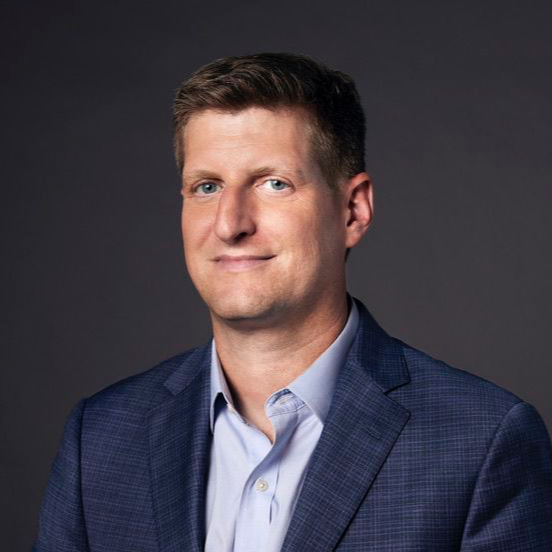
Greg Bluestein is the Atlanta Journal Constitution's chief political reporter. He is also an author, TV analyst and co-host of the Politically Georgia podcast.
