Atlanta’s Carter Center plowing ahead despite federal foreign aid cuts

Carter Center CEO Paige Alexander remembers her Atlanta nonprofit was still grieving the loss of its namesake at the beginning of this year when it was faced with a new challenge to its mission of advancing health, human rights and peace around the world.
Former President Jimmy Carter, the only Georgian ever elected to the White House, died Dec. 29 of last year at 100. The following month, President Donald Trump signed an executive order suspending all federal foreign aid for a 90-day review. Two months later, his administration announced it was dismantling the U.S. Agency for International Development and canceling 83% of its programs.
The Carter Center would ultimately lose about $11 million in USAID and State Department funding. That has affected its work in upholding democracy and the rule of law and fighting river blindness, a skin and eye disease caused by a parasitic worm.
The Trump administration’s spending overhaul has also impacted the center’s work with Sudanese youths who were monitoring the deadly civil war raging in their country. Additionally, the nonprofit substantially cut back a program for empowering marginalized people in Bangladesh.
But the center has been able to continue nearly all of its work, partly through belt-tightening and by drawing on private donations and its own endowment investment earnings.
Focusing on these pivots, Alexander said, helped the nonprofit’s employees grieve in the wake of Carter’s homegoing.
“It gave us some peace of mind knowing that Jimmy Carter would want us to keep moving on, and so we have,” Alexander said. “We have doubled down in areas where we know this work has to be done.”

The nonprofit’s budget for its peace and health programs totaled $150.6 million this year before the federal funding cuts. About 20 of its more than 3,200 overseas employees have lost their jobs amid the cuts.
Carter and former first lady Rosalynn Carter co-founded the center in 1982, a year after leaving the White House. Since then, the nonprofit has worked in more than 90 countries to resolve conflicts, advance democracy, protect human rights, prevent disease and improve mental health. The former first lady died in 2023 at 96.
As Alexander spoke earlier this month about what’s ahead for the center, she quoted the former president and referred to a green bumper sticker that sits prominently on her desk. It asks: “What Would Jimmy Carter Do?”
“Some of us probably buried the loss of our founder because we just had work to do,” she said. “And we did it in his legacy and his name, and we will continue to do it that way.”
Federal cuts hit other Georgia nonprofits harder
Jimmy and Rosalynn Carter traveled regularly for decades between their hometown, Plains, and the Carter Center, where they would sleep in a Murphy bed. Those trips became rarer in their final years because of declining health and the coronavirus pandemic. Grandson Jason Carter chairs the center’s board of trustees.

Alexander, a former USAID assistant administrator, empathizes with other Atlanta-area humanitarian organizations that have been hit much harder this year. For example, CARE USA said in May that it had laid off hundreds of employees across the nation and thousands abroad in the wake of the federal foreign aid cuts.
“I feel like I have survivor’s guilt,” said Alexander, who was appointed the Carter Center’s CEO in 2020. “I try to take anyone in who comes highly recommended. But there are just not that many jobs.”
The White House did not respond to requests for comment. But the State Department issued a statement, saying federal foreign aid is “now strategically aligned with ensuring that every taxpayer dollar advances concrete U.S. national interests. Programs that promoted ideological initiatives, such as those at the Carter Center, were discontinued because they did not directly contribute to making America stronger, safer, or more prosperous.”
“While the United States remains the world’s most generous provider of humanitarian assistance,” the agency added, “we are committed to safeguarding taxpayer resources and focusing assistance on initiatives that deliver measurable benefits for the American people.”
Alexander underscored that doing humanitarian work overseas helps Americans at home and abroad.
“We have discovered that with diseases there are no borders,” she said, adding: “Our north star has always been to work on global health and peace. That is what we continue to work on, and those two things are under direct threat.”
Sharp words for Donald Trump from Jimmy Carter, Carter Center CEO
Meanwhile, the Carter Center has expanded its work protecting democracy in the United States, including by observing elections and fighting polarization and political violence.
Former President Carter was sharply critical of Trump, saying in 2019 that it would be a “disaster” to have the Republican back in the White House. As Carter neared his 100th birthday in 2024, the Democrat told his family he was “only trying to make it to vote for” Vice President Kamala Harris for president, which he did.
Trump repeatedly mocked Carter when he was alive, calling him a “terrible president.” Trump struck a different tone after the Nobel Peace Prize recipient died last year, calling him “a truly good man” who was “very consequential, far more than most presidents, after he left the Oval Office.”

During a speech Alexander gave in July at the Chautauqua Institution in New York, the Carter Center CEO spoke about the state of democracy in America. She criticized the Trump administration, saying it had “consolidated and expanded executive power. They disregarded the rule of law and due process and hollowed out the civil service and replaced it with loyalists.”
“And all of this was done,” she added moments later, “while attacking and delegitimizing every possible means of dissent and accountability, from Congress to the free press to universities to our allies to scientists to cultural institutions to medicine to Rosie O’Donnell.”
Going forward, Alexander said, the nonprofit will remain outspoken about its missions.
“Arguably, this is the most unprecedented, unexpected and unparalleled time that we have ever faced,” she said about her center’s history. “We are going to say what we have been saying about executive overreach. And we are going to do it carefully enough that we protect the organization so we can still get the work done. But we are not going to stay silent.”
About the Author
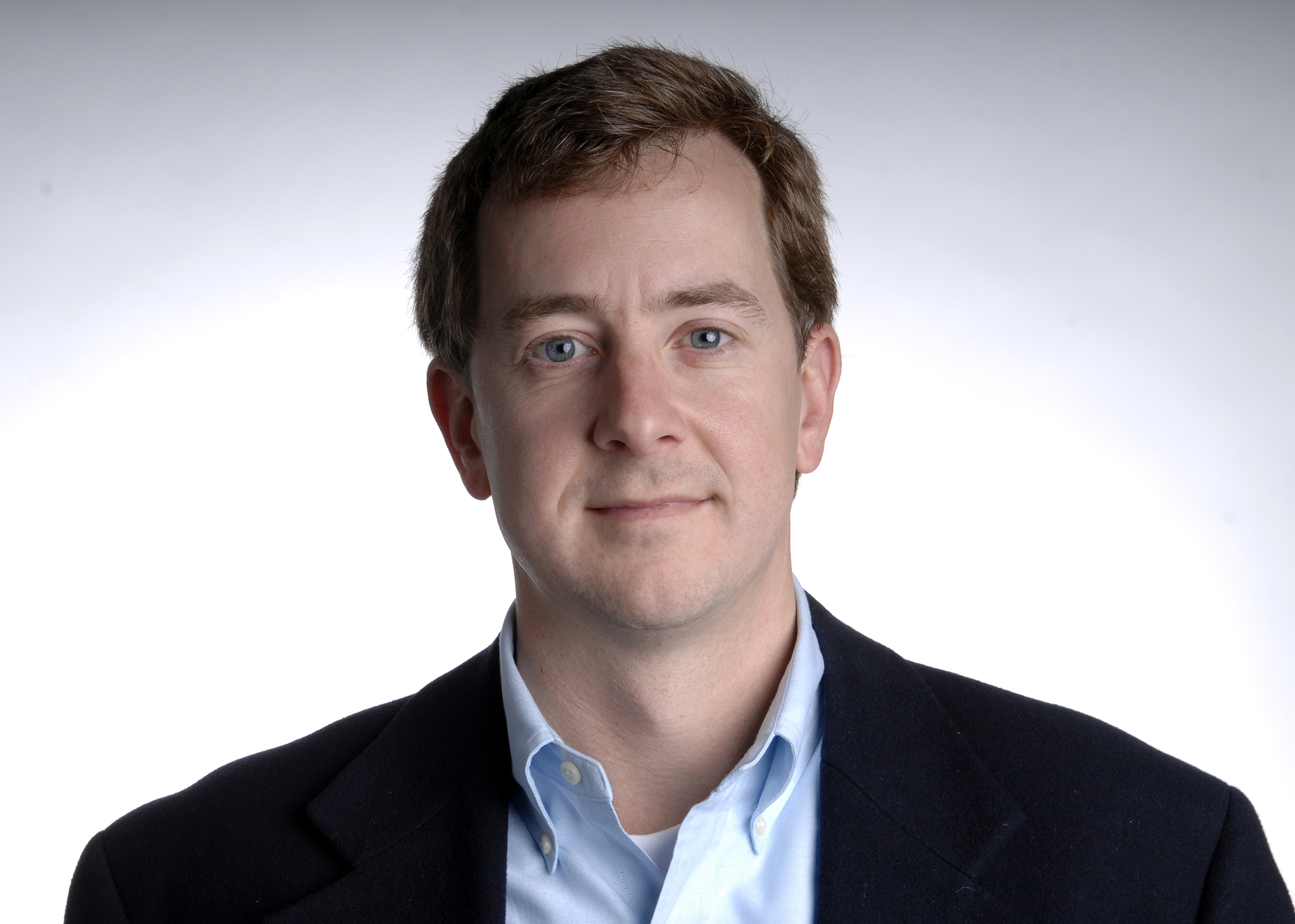
Jeremy Redmon is an award-winning journalist, essayist and educator with more than three decades of experience reporting for newspapers.


