Kitchen knife basics every home cook should know
There are few meals I can think of — other than perhaps a can of soup — that can be prepared without a knife. In a professional kitchen, knives are like personal pieces of platinum (and can sometimes cost as much). Chefs and cooks take great pride and care of their knives — they have to, or they simply can’t do their jobs.
Home cooks? Meh … some care, some don’t. As a pastry chef, I admit I am guilty of letting my knives get dull. But if I had to slice a stack of carrots or potatoes into brunoise, it would be a different story. Knives are the most important tool a home cook invests in, too — so why not learn to use and care for them properly?
Turns out it’s actually pretty easy to care for knives. “Never wash your knives in the dishwasher or let them sit in water,” advises chef Andrew Cacioppo of Brezza Cucina inside Ponce City Market. The high heat of the dishwasher is bad for the blade, handle and rivets, and soaking to clean a knife not only dulls it, it’s also bad for the handle. To wash a knife, simply hand wash in hot soapy water, rinse, and dry with a soft towel. Never put knives away wet, or leave to air-dry.
"There are three main things to keep in mind when it comes to maintaining your knife," says Lapeer's executive chef Blake Hartley. "Continually wiping the blade, keeping it dry and an end-of-day (or week depending on how much you're using the knife) maintenance routine."
Hartley recommends maintaining the blade by using a whetstone to retain the edge and then applying oil. “I use a Tsubaki Japanese knife maintenance oil that’s available on Amazon. Just apply a few drops to prevent rust and corrosion, and then wipe completely dry with a clean towel,” he says.
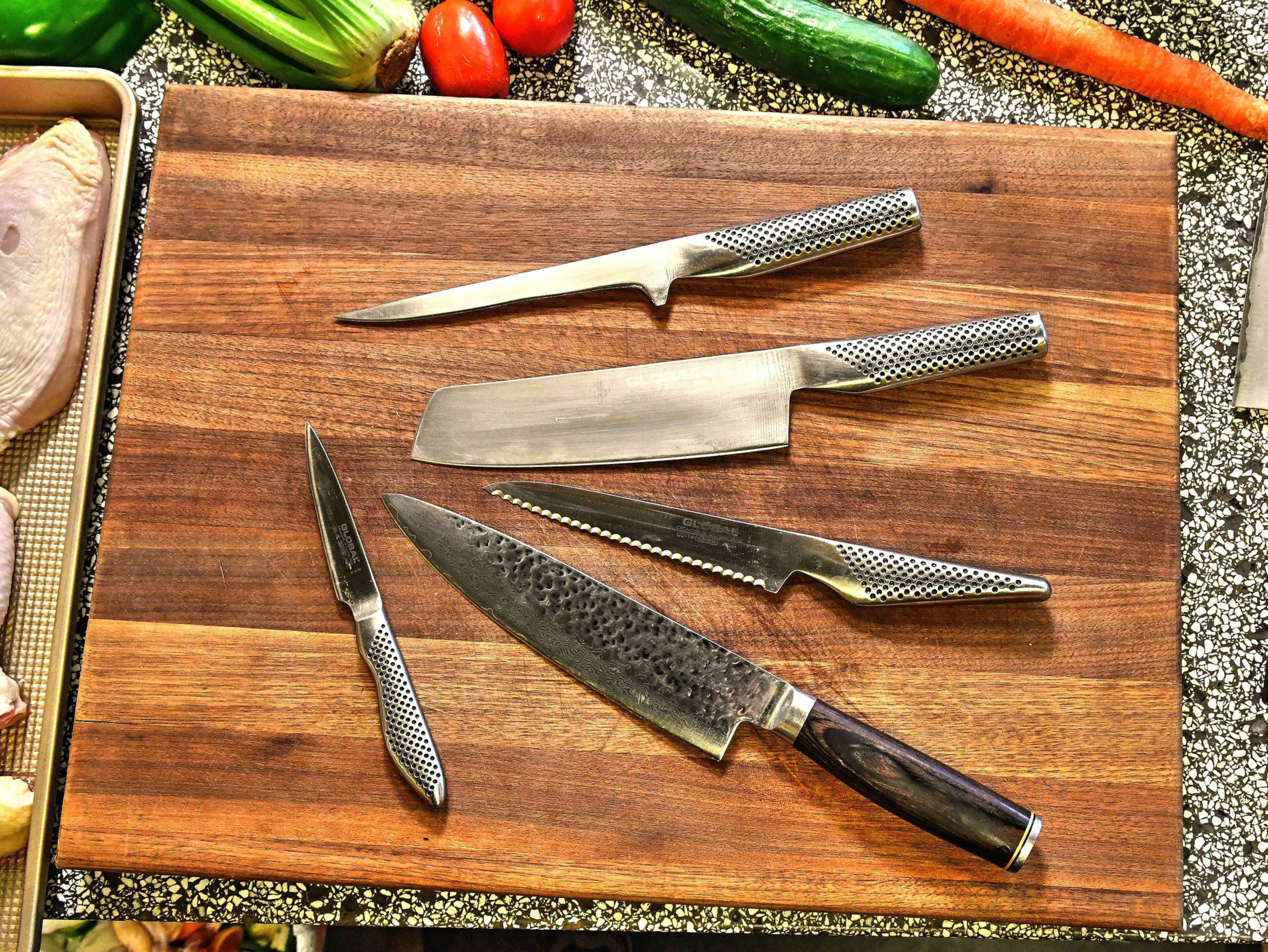
Since knives can be expensive, it’s important to understand which knives are crucial in the home kitchen. Every cutting task requires a knife. Here’s a primer:
Chef's knife, also called a utility knife: This is the heavyweight; an all-purpose blade that works well with most foods and cutting methods. If you can only have one knife, this is the one.
Paring knife: The curved "bird's beak" blade allows this small knife to peel and "torne" (turn) vegetables easily.
Serrated knife: This knife has a serrated, or scalloped, edge. Shorter serrated knives are used to slice firm fruits and vegetables. Longer, wider serrated knives are perfect for cutting through bread and pastries.
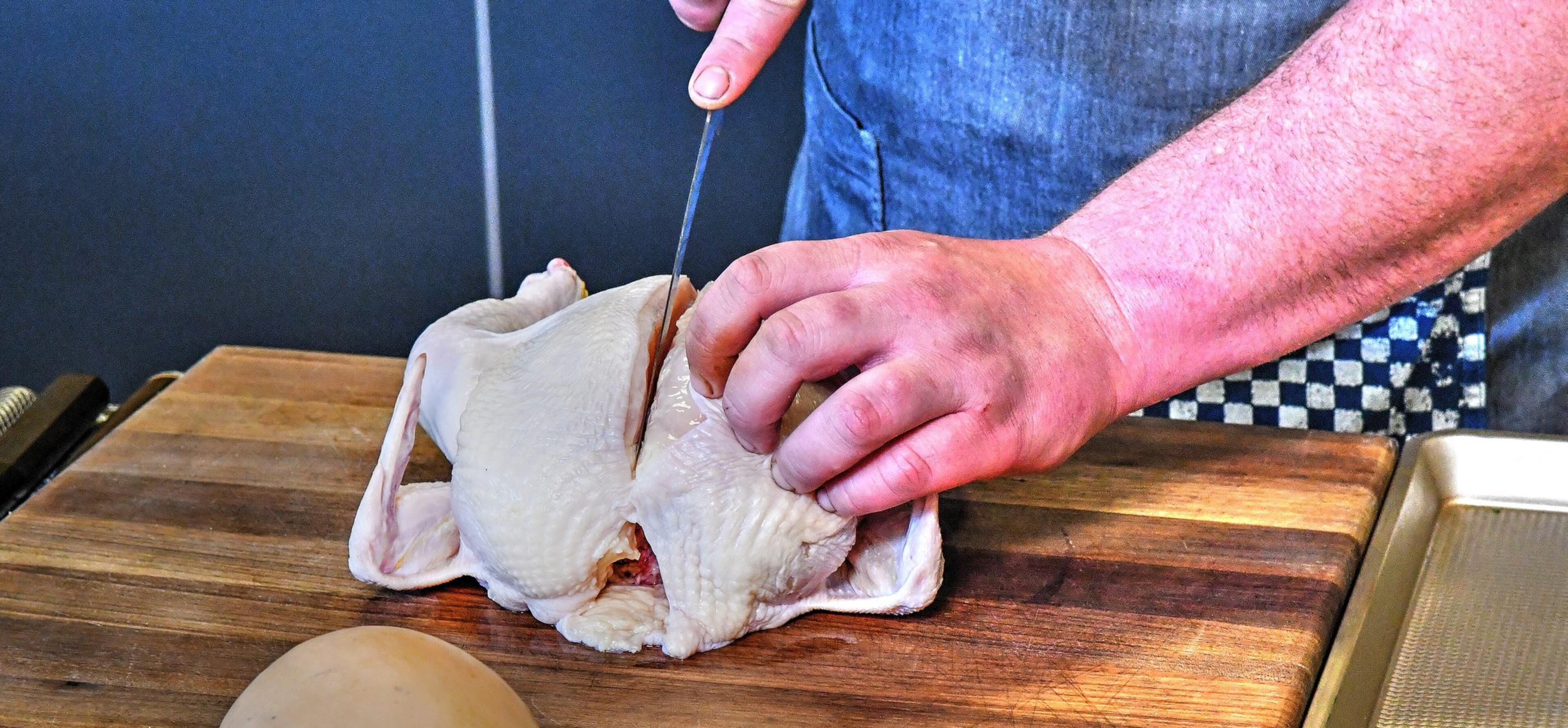
Boning knife: The long, thin blade of this knife is designed like a dagger for removing bones, fat and sinew from meats.
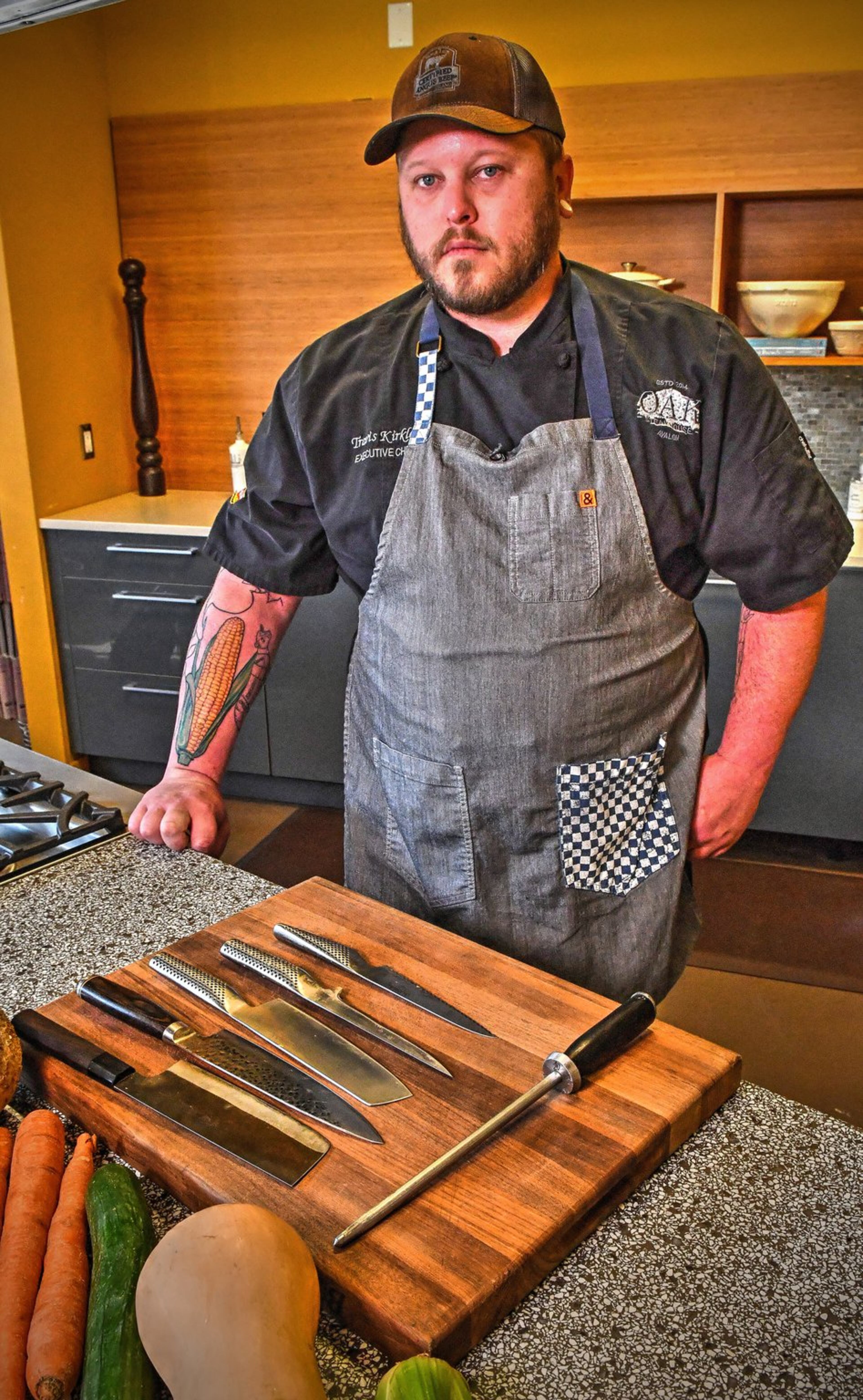
Steel (ceramic, diamond or traditionally ridged): Easy and portable, a sharpening steel "cleans" the blade. A whetstone is best for sharpening.
Cutting boards: Thick wood boards are best; these boards are kind to the blade and resilient. Synthetic boards are less expensive, and easier to clean, but harder on the blade of your knife.
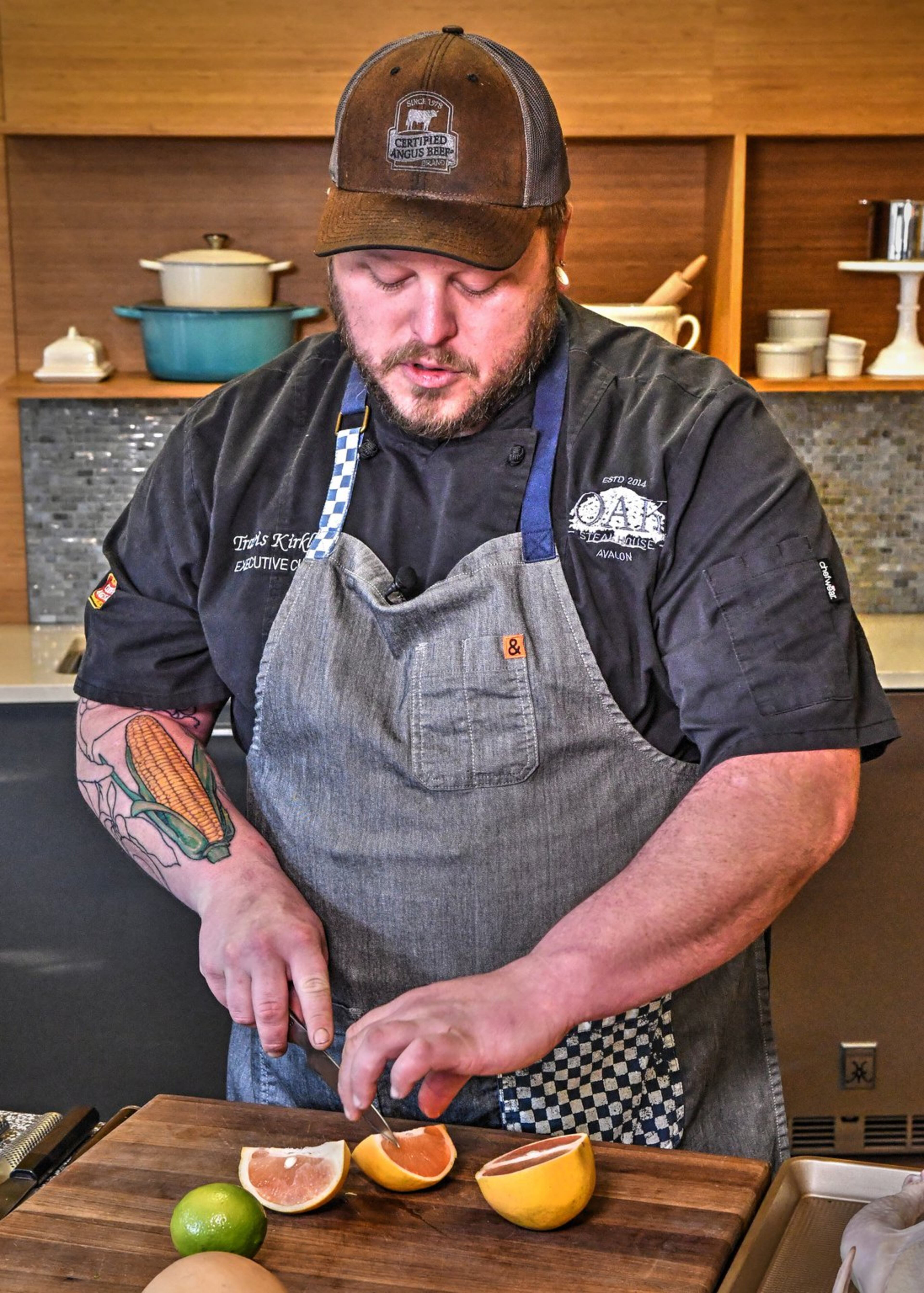
Finally, what about using your knife? If you don't know your claw grip from your cross chop, check out our video above where you can learn techniques and cuts from chef Travis Kirkley of Oak Steakhouse. When it comes to cutting, practice makes perfect.
Keep in mind that cutting methods and “cuts” mean something different: The first is the grip and way in which you hold the knife. The latter is the style in which you make a cut, for instance, brunoise, or dice.
Some common cutting methods:
Rolling chop, or "rocking the baby": The entire length of the blade is rocked back and forth, using the tip as support, in a rocking or "rolling" motion. This method uses a chef's knife, and is a good grip for cutting just about anything.
Cross chop: This is the perfect method for mincing herbs or garlic. It's employed by roughly chopping, then placing the heel of the non-dominant hand over the tip of the knife to steady it, moving the handle from left to right quickly with the other hand.
Lever chop: This can be a difficult chop to manage, and care should be taken when using it. It's generally used to cut through large vegetables or melons. Use a knife that is longer than what's being chopped, and place the knife at a 90-degree angle to the ingredient. Use your free, non-dominant hand to steady and cut your way through with a firm chop downward, decreasing the angle until your hand hits the cutting board.
As for cuts, the recipe will dictate what’s needed. “I like a baton cut, but I also love a simple brunoise or dice,” says Hartley. “At Lapeer, we’re constantly working on knife skills as a team, and these are some of our most used cuts because they’re classic. They’re the basis for some of our menu staples like the Octopus Escabeche with celery, peppers, carrots, chive and annatto oil.”
“I really like the classic oblique cut,” says Cacioppo. “You don’t see it too often, anymore, so it is a bit more unique and not just a slice or a dice. I use this on carrots, parsnips, squash and the like. Holding the knife at a 45-degree angle, you slice through the vegetable. Then you roll it over to the other side and do that same 45-degree angle cut. It has to be the exact same length and angle as the previous cut, so as to form a triangle. It creates a great look for vegetables.”
Other cuts to try? Here are just a few:
Julienne: The "small matchstick" cut, this is a common cut and can be easily mastered by the home cook. The shape resembles a long matchstick and is perfect for certain vegetables like carrots or peppers.
Baton, or batonnet: A larger matchstick cut.
Chiffonade: This creates "little ribbons" of leafy vegetables and herbs by stacking the leaves, rolling them tightly, then slicing crosswise.
Brunoise: This classic "dice" cut is made by cutting vegetables into julienne, then cutting them into small cubes.
RECIPES
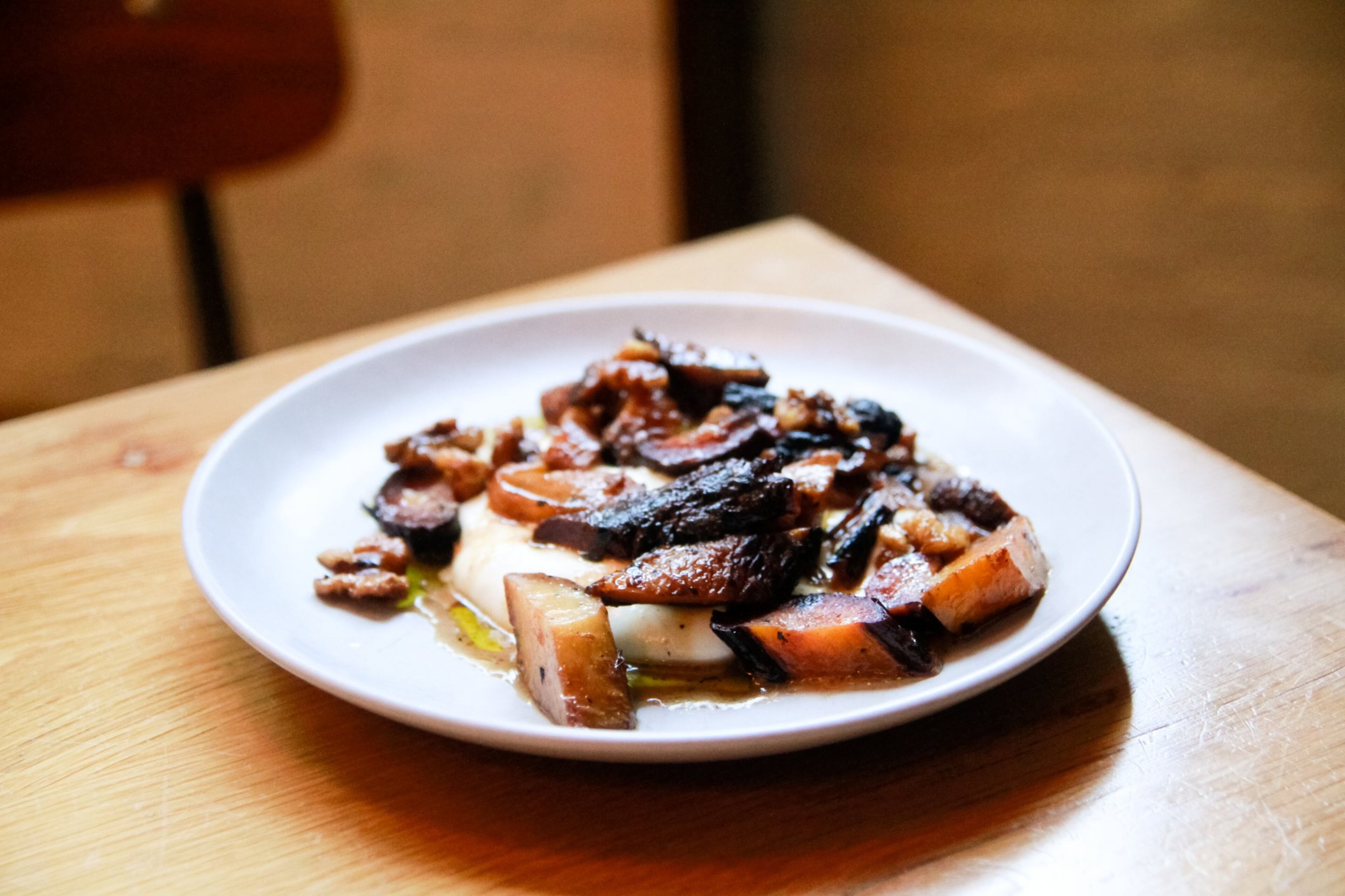
Ember-Roasted Carrots with Burrata
“The technique for cooking the carrots is what is important in this recipe,” says chef Andrew Cacioppo of Brezza Cucina. What’s important is the char of the carrots. At the restaurant, the carrots are cooked in a wood-burning oven. However, you can re-create these flavors by cooking the carrots in a fire pit or on a wood or charcoal grill. “Putting them in a perforated pan helps protect parts of the carrots from burning. It is a pretty quick process from start to finish, and while you want to burn your carrots, you don’t want to over-burn your carrots so that they just crumble when you touch them. With the oblique cuts, the points of the carrots are all over the place, so they give the dish a little bit of a rustic, more earthy feel. All of these simple little elements come together, and it’s so easy and full of flavor and character.”
- 8-10 medium multicolored carrots
- Salt and black pepper, to taste
- Olive oil, as needed
- 1/4 cup honey
- 1/4 cup apple cider vinegar
- 2 tablespoons rosemary, roughly chopped
- 2 ounces vegetable stock
- 1 ounce butter
- 1/4 cup toasted walnuts
- 4 ounces burrata (available at Whole Foods, or Tuscany at Your Table in Virginia-Highland)
- Season the carrots with salt, pepper and a little olive oil. Place them in a perforated pan and set the pan directly on burning embers in a fire pit or grill. Allow carrots to roast for a few minutes undisturbed, so that parts of the carrots are burnt and crispy, but the center is still slightly firm. Once charred, remove from fire and cool completely.
- Once cooled, cut the carrots into obliques and marinate them in honey, vinegar, rosemary, and a little more black pepper for at least 30 minutes or more. They can be stored, refrigerated, until ready to use.
- When ready to serve, heat the carrots in a skillet with the vegetable stock and butter. Add toasted walnuts. Stir until the butter and stock have emulsified with the carrots. Pour mixture over burrata and serve. Serves 4.
Nutritional information
Per serving: Per serving: 357 calories (percent of calories from fat, 51), 10 grams protein, 36 grams carbohydrates, 5 grams fiber, 21 grams fat (9 grams saturated), 41 milligrams cholesterol, 344 milligrams sodium.
Scallop Crudo with Cara Cara Orange
Executive chef Blake Hartley of Lapeer adds compressed Asian pears as a garnish to this beautifully simple dish, and uses Georges Bank scallops, which may be hard to source for the home cook. Make it easy by omitting the pears and using diver scallops, which are easy to find at local grocers, as are red-fleshed Cara Cara oranges.
- 2 ounces Georges Bank scallops
- 3 Cara Cara oranges
- 2 whole Calabrian chiles, seeded and minced
- 2 tablespoons agrumato lemon olive oil (available at Whole Foods and specialty grocers, or Amazon) or substitute with olive oil
- Peruvian pink salt, to finish
- Dice the scallops. Juice 2 of the oranges. Cut the remaining orange into segments. Place the citrus juice and segments, minced chiles and oil in a small bowl and add the scallops. Marinate, chilled, turning frequently, for 2 hours.
- To serve: Divide the mixture evenly between two shells or small plates. Garnish with the salt. Serve ice cold. Serves 2.
Nutritional information
Per serving: Per serving: 179 calories (percent of calories from fat, 68), 6 grams protein, 9 grams carbohydrates, 2 grams fiber, 14 grams fat (2 grams saturated), 9 milligrams cholesterol, 46 milligrams sodium.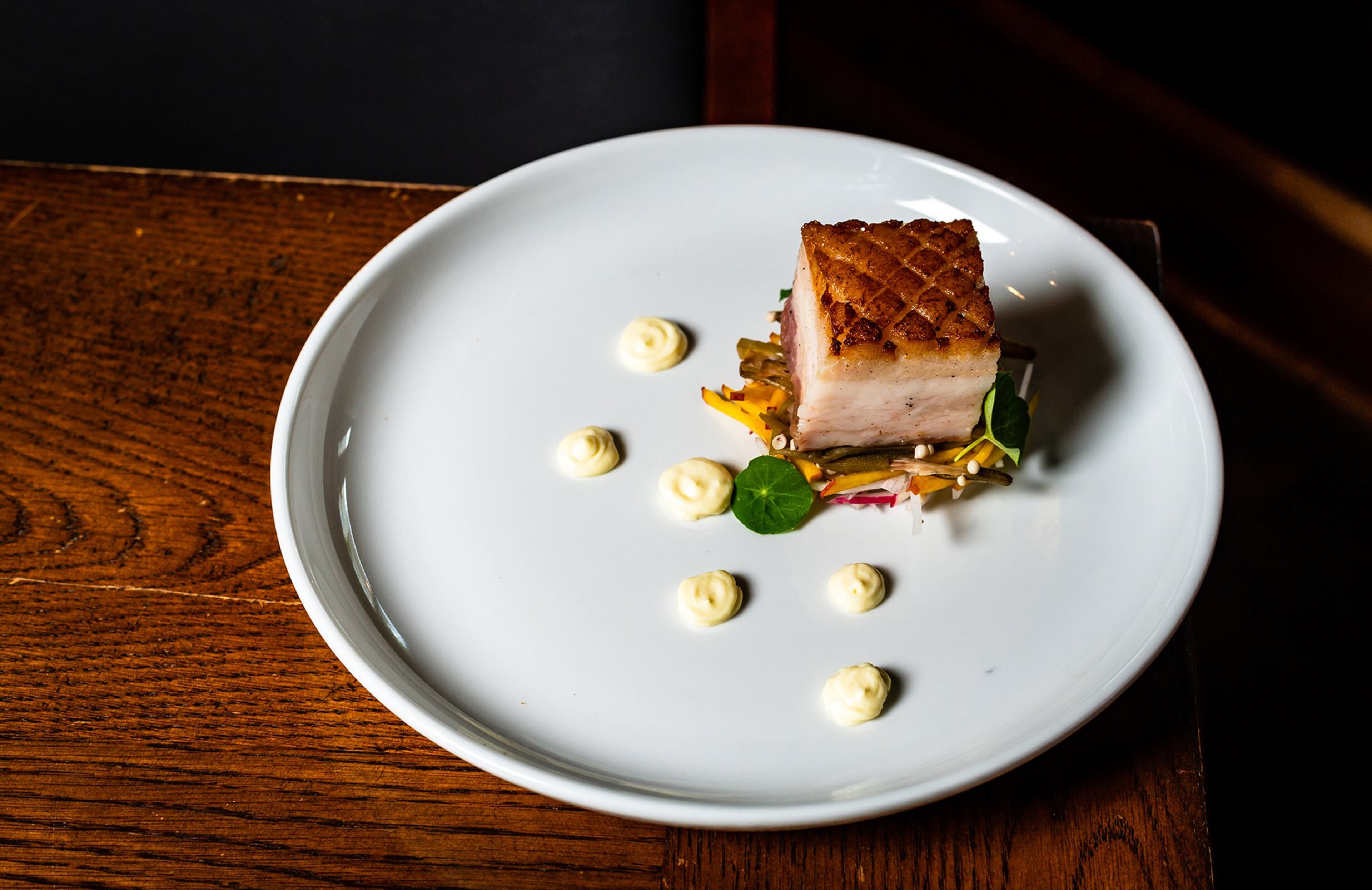
Pork Belly with Pickled Okra and Fried Egg Puree
Chef Travis Kirkley of Oak Steakhouse uses the sous vide method for a super tender pork belly, but at home, you can braise the belly if you don’t have an immersion circulator. He also makes his own pickled okra, but feel free to use your own or a brand you love from your grocer.
- 3 pounds pork belly
- 1/2 cup brown sugar
- 1/2 cup kosher salt, plus salt to taste for fried egg puree
- 2 eggs
- 1/2 cup of heavy cream
- 2 spears pickled okra, julienned
- 1/2 a Fuji apple, thinly sliced
- Score the skin side of the belly by cutting 1-inch diagonal lines across the belly, then rotate the belly and score 1-inch diagonal lines across the original cuts.
- Mix the brown sugar and salt in a small bowl. Place the belly in a 2-inch-deep baking dish, completely cover in the sugar/salt mixture and let rest in the fridge overnight. Once cured, wash the sugar/salt mixture completely off and pat dry with paper towels.
- Heat the oven to 300 degrees. Place the belly fat side down in a deep baking dish and cook slowly for 2 hours. Remove from oven.
- Heat a large cast-iron skillet to medium high heat. Sear the pork belly, skin-side-down in the skillet for 3-6 minutes until golden brown and crispy.
- Prepare the fried egg puree: Fry the eggs sunny-side up. Add the eggs to a blender or food processor. Add the heavy cream and salt to season. Blend or process until smooth. Refrigerate until chilled. You can do this ahead of time, or while the pork belly is slow cooking.
- To serve: Place okra and apple on a plate, and top with the seared pork belly. Spoon dots of chilled egg puree neatly around the plate. Serves 4.
Nutritional information
Per serving: Per serving: 228 calories (percent of calories from fat, 75), 11 grams protein, 3 grams carbohydrates, 1 gram fiber, 19 grams fat (7 grams saturated), 64 milligrams cholesterol, 517 milligrams sodium.LOOKING FOR RESOURCES?
Browse through the knife section at Atlanta's own Cook's Warehouse (1544 Piedmont Ave., Atlanta, 404-815-4993, and 5001 Peachtree Blvd., Chamblee, 678-691-8600, cookswarehouse.com) and you'll find a plethora of blades. For reading and reference, try Marianne Lumb's "Kitchen Knife Skills" (Firefly Books, 2009, $24.95); it's a brief bible of knife knowledge perfect for any cook, but especially easy for the uninitiated.
RELATED:
Read more stories like this by liking Atlanta Restaurant Scene on Facebook, following @ATLDiningNews on Twitter and @ajcdining on Instagram.